
Filter
488
Featured
31
17
Language
Document type
90
70
55
50
50
45
31
26
18
15
10
9
7
6
6
Countries
107
27
20
12
7
7
7
7
6
6
6
6
6
5
5
5
4
4
4
4
3
3
3
3
3
3
3
3
3
2
2
2
2
2
2
2
2
2
1
1
1
1
1
1
1
1
1
1
1
1
1
1
1
1
1
1
1
1
1
1
1
1
1
1
1
1
1
1
Authors & Publishers
Publication Years
Category
111
62
45
32
27
19
6
Breakthrough ACTION a développé des affiches, des spots audiovisuels et des bannières pour le lancement du vaccin antipaludique R21/Matrix M en la République du Congo. Ces messages visent à promouvoir l’acceptation et l’utilisation du vaccin contre le paludisme. Cet effort a impliqué une c
...
The Severe Malaria Observatory (SMO) is a global knowledge platform designed to enable professionals working on severe malaria, such as researchers, clinicians, public health experts, programme managers, policymakers and technical partners, to access, share and analyse reliable data on malaria compl
...
The ACT Consortium was an international research collaboration dedicated to evaluating the effectiveness, safety and implementation of artemisinin-based combination therapies (ACTs) for treating malaria. Operating across multiple countries in Africa and Asia, the consortium conducted over 25 studies
...
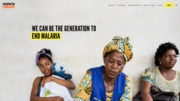
Malaria No More is a non-profit organisation dedicated to eradicating malaria, a preventable and treatable disease, in our lifetime. Through innovative partnerships, advocacy and data-driven solutions, Malaria No More works globally to ensure access to prevention tools, diagnostics and treatment, pa
...
The Malaria Atlas Project (MAP) is a global research initiative that provides high-resolution, evidence-based spatial data on malaria transmission, risk and impact. MAP combines field data, satellite imagery, and advanced geostatistical modelling to deliver open-access maps, datasets, and analytical
...
The African Leaders Malaria Alliance (ALMA) is a coalition of African heads of state and government who are committed to accelerating the elimination of malaria and improving health outcomes across the continent. Through its scorecard tools, advocacy campaigns, and partnerships with regional and glo
...
RBM Partnership to End Malaria
recommended
The RBM Partnership to End Malaria is a global coalition comprising over 500 partners, including governments, international organisations, the private sector and civil society, who are all dedicated to ending malaria worldwide. Through coordinated advocacy, resource mobilisation and technical suppor
...
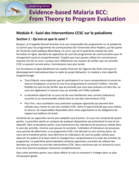
Evidence-based Malaria BCC Module 4 e-learning series.
Accessed July 2025
Malaria Mini: The Basics is an accredited video course led by Dr John F. Fisher. It provides clinicians with the essential knowledge needed to recognise, prevent and treat malaria. In under an hour, it covers the parasite’s life cycle, transmission, diagnostic methods and the treatment of both unc
...

This global guidance was developed to support malaria-free countries and those that are close to malaria elimination to prevent re-establishment. The document outlines key concepts and principles for preventing re-establishment and provides guidance on strategies, interventions, planning and managem
...

Growing emergencies and displacements across the world demand increasingly complex interventions and responses. The World Health Organization (WHO) has developed Malaria control in emergencies: a field manual to provide technical guidance to help partners respond effectively to malaria in emergency
...
In November 2022, WHO launched a strategy to address antimalarial drug resistance in Africa, emphasizing the need for stronger surveillance. While regional monitoring networks have been active in other regions, most in Africa have not convened since 2017–2018. To renew collaboration, WHO organized
...
The WHO Mekong Malaria Elimination programme hosted a two-day workshop in Nha Trang City, Viet Nam, from 31 October to 1 November 2024, gathering representatives from the Greater Mekong Subregion (GMS) countries of Cambodia, China, the Lao People’s Democratic Republic, Thailand and Viet Nam, as we
...
Malaria remains a significant public health concern, particularly in sub-Saharan Africa, where the majority of cases and fatalities occur, especially among children under five. Although there was a significant decline in global mortality and incidence between 2000 and 2015, progress has stalled sinc
...

The ongoing global pandemic of SARS-CoV-2 (Covid-19) poses unique diagnostic and clinical management challenges in regions where seasonal epidemic-prone diseases are endemic. Diseases such as dengue, malaria, seasonal influenza, leptospirosis, chikungunya, scrub typhus and bacterial infections often
...
The emergence of SARS-CoV-2 has significantly altered the epidemiology of other infectious diseases, making investigations into its co-infection with malaria particularly relevant in endemic regions. This review examines the epidemiological, incubation and clinical features of the two diseases, high
...
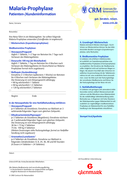
Malaria is a significant risk for travelers to endemic regions. This patient information highlights essential prevention through mosquito protection and, when indicated, chemoprophylaxis with Atovaquone/Proguanil, Doxycycline, or Mefloquine. Emergency self-treatment options may be carried in specifi
...
The Centrum für Reisemedizin (CRM) is a comprehensive source of information, guidelines and resources on travel medicine for healthcare professionals and travellers. Its website offers up-to-date recommendations on disease prevention, vaccinations, malaria prophylaxis and health risks in different
...
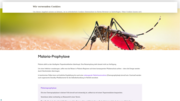
The website "Bereit zu Reisen" provides comprehensive guidance on malaria prophylaxis for travelers to endemic regions. It emphasizes preventive strategies, including mosquito bite avoidance through protective clothing, insect repellents, and sleeping under treated nets. In addition, the site detail
...
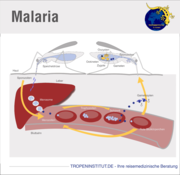
This infographic from the Tropeninstitut illustrates the malaria transmission cycle. It begins when an Anopheles mosquito bites a human and injects its sporozoites into the bloodstream. The sporozoites then travel to the liver where they mature and release merozoites back into the bloodstream. The m
...
