
Filter
178
Featured
20
1
Language
Document type
51
30
26
17
16
15
6
5
4
4
3
1
Countries
29
14
12
11
8
8
8
7
7
7
7
7
6
4
4
4
4
4
3
3
3
3
3
3
3
3
3
3
3
3
3
3
3
2
2
2
2
2
2
2
2
2
2
2
2
2
2
2
2
2
2
2
2
2
1
1
1
1
1
1
1
1
1
1
1
1
1
1
1
1
1
1
1
1
1
1
1
1
1
1
1
1
1
1
1
1
1
1
1
1
1
1
1
1
1
1
Authors & Publishers
Publication Years
Category
87
4
1
Bisher hat die STIKO empfohlen, dass alle im Ausland mit einem nicht in der EU zugelassenen Impfstoff geimpften Personen eine erneute Impfserie mit einem in der EU zugelassenen Impfstoff erhalten sollen. Ziel der im Epidemiologischen Bulletin 13/2022 veröffentlichten aktualisierten COVID-19-Impfemp
...

Seit August 2021 empfiehlt die Ständige Impfkommission (STIKO) allen Kindern und Jugendlichen ab 12 Jahren die Corona-Schutzimpfung mit Comirnaty® von BioNTech/Pfizer. Seit Mitte Dezember können auch Kinder zwischen 5 und 11 Jahren mit dem darauf angepassten Impfstoff von BioNTech/Pfizer geimpft
...
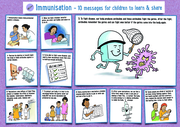
Large File: 28 MB
Das neue Coronavirus Kindern einprägsam erklärt. Was sind Viren? Wie soll man sich verhalten? Und warum ist das so wichtig?
Are the symptoms of COVID-19 different in children? Do the new variants impact children differently? What can parents do to keep children safe from COVID-19. WHO's Dr Maria Van Kerkhove explains in Science in 5.
Science in 5 is WHO’s conversations in science. Watch WHO experts explain science
...
The following print-only materials are developed to support COVID-19 recommendations. All materials are free for download. They may be printed on a standard office printer, or you may use a commercial printer.
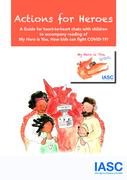
The Actions for Heroes Guide is developed by the Inter-Agency Standing Committee Reference Group on Mental Health and Psychosocial Support in Emergency Settings (IASC MHPSS RG) to accompany reading the children’s storybook My Hero is You, How kids can fight COVID-19! Available in English, French,
...

Actions pour les héros
recommended
Guide pour des discussions franches avec les enfants destiné à accompagner la lecture de Mon héroïne, c’est toi : comment combattre le COVID-19 quand on est un enfant
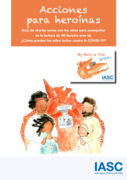
Acciones para heroínas
recommended
Guía de charlas serias con los niños para acompañar en la lectura de Mi heroína eres tú, ¿Cómo pueden los niños luchar contra la COVID-19?

Рекомендації з ведення душевних розмов із дітьми у процесі читання казки«Мій герой – це ти, Як діти можуть боротися з коронавірусом COVID-19!»

What is the guidance for vaccination of women with breastfeeding infants, women who are pregnant or planning to get pregnant and women who are menstruating? What about vaccines and fertility? WHO’s Dr Soumya Swaminathan explains in Science in 5.
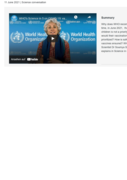
Why does WHO recommend at this time, in June 2021, that vaccinating children is not a priority? When would their vaccination be prioritized? How is safety of these vaccines ensured? WHO’s Chief Scientist Dr Soumya Swaminathan explains in Science in 5.
If you have COVID-19, is it safe to breastfeed your baby? Is it safe to get vaccinated against COVID-19 if you are breastfeeding? How can you keep your baby safe while breastfeeding if you have COVID-19? Dr Laurence Grummer- Strawn explains in Science in 5.
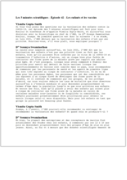
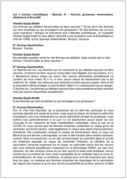
Transcript Francais
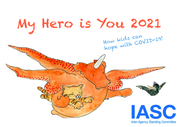
The story-book, a sequel to the immensely successful ‘My Hero is You: How kids can fight COVID-19!’, is being released in the second year of the COVID-19 pandemic. The new story, aimed primarily at children aged 6-11 years, sees the return of Ario, a fantasy creature who travels the world helpin
...
The story-book, a sequel to the immensely successful ‘My Hero is You: How kids can fight COVID-19!’, is being released in the second year of the COVID-19 pandemic. The new story, aimed primarily at children aged 6-11 years, sees the return of Ario, a fantasy creature who travels the world helpin
...
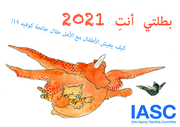
A new story book that aims to help children understand and come to terms with COVID-19 has been produced
With the help of a fantasy creature, Ario, “My Hero is You, How kids can fight COVID-19!” explains how children can protect themselves, their families and friends from coronavirus and how to
...
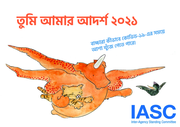
A new story book that aims to help children understand and come to terms with COVID-19 has been produced
With the help of a fantasy creature, Ario, “My Hero is You, How kids can fight COVID-19!” explains how children can protect themselves, their families and friends from coronavirus and how to
...
