
Filter
626
Featured
81
40
Language
Document type
167
167
70
65
36
28
28
25
12
7
5
4
3
2
Countries
30
21
15
13
12
8
7
6
4
4
4
4
4
3
3
3
3
3
3
2
2
2
2
2
2
2
2
1
1
1
1
1
1
1
1
1
1
1
1
1
1
1
1
1
1
1
1
1
Authors & Publishers
Publication Years
Category
122
27
11
7
6
4
3
From passive beneficiaries to active agents of change

A super-fast-track Framework for ending AIDS among children, adolescents and young women by 2020
Accessed: 02.11.2019
Best Practices Guidelines
Accessed: 06.11.2019
As a new chapter in the response to the world drug problem begins, UNAIDS calls on countries to adopt the recommendations contained within this report, and to rapidly transform those commitments into laws, policies, services and support that allow people who use drugs to live healthy and dignified l
...
he Guidelines are an example of the support that UNDP provides to practically integrate international human rights commitments into national, regional and global policy and programmes.

Evidence supports the need for a shift in the global approach to drug use. In this report, Do no harm: health, human rights and people who use drugs, UNAIDS shows what works to reduce the impact of HIV and other harms related to drug use. Countries that have moved away from laws and policies that ar
...

This publication integrates human rights principles into measuring HIV service effectiveness, ensuring accountability for equity and health. It focuses on reducing stigma, removing punitive laws, and ensuring access to care for key populations, aiming to achieve 2030 targets.
Accessed: 08.11.2020
Accessed: 24.11.2019

Helping Children Live with HIV offers a holistic approach by building on the existing knowledge of parents and caregivers and respecting the importance of other local resources. It integrates health care, illness prevention, and psychosocial support for children and families coping with poverty, foo
...
ThisWHO pol icy brief highlights that people who inject drugs (PWID) and prisoners are disproportionately affected by hepatitis C (HCV), with 23% of new infections and one in three deaths linked to injection drug use. It urges expanded access to testing, harm reduction services, and direct-acting an
...
Social network-based HIV testing is an approach for engaging sexual and drug injecting partners and social contacts of key population members with HIV and of those who are HIV-negative and at ongoing risk in voluntary HTS.
By addressing people’s confidentiality concerns and broadening the reach
...
Policy Brief.
WHO recommends that pregnant women receive testing for HIV, syphilis and hepatitis B (HBSAg) at least once during pregnancy, preferably in the first trimester.
Dual HIV/syphilis rapid diagnostic tests (RDTs) can be used as the first test for pregnant women as part of antenatal care (
...

Policy brief.
HIV self-testing (HIVST) is a convenient and confidential option for HIV testing. In 2016 WHO recommended HIVST as a safe, accurate and effective way to reach people who may not test otherwise, including people from key populations, men and young people. Lay users can perform HIVST r
...
The Guide to operationalize HIV viral load testing HIV presents 60 lessons learnt from the project in a systemic approach including: viral load strategy, laboratories, procurement and supply management, patient care and economy.

UNAIDS / 2019 Guidance
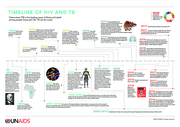
Tuberculosis (TB) is the leading cause of illness and death among people living with HIV. TB can be cured.
L’Organisation mondiale de la Santé (OMS) recommande aux services de dépistage du VIH (SDV) de remplacer les Western blots et les immunodosages sur bandelettes par des tests plus simples de dépistage du VIH, comme des tests de diagnostic rapide TDR) qui peuvent être utilisés sur les lieux de
...
Intensificar o reforço das abordagens de monitorização do tratamento através dos testes da carga viral, assim como o diagnóstico pediátrico precoce, será fundamental para garantir cuidados e tratamentos de boa qualidade e o êxito dos programas. Considerar uma boa rede de diagnósticos, tipos
...
