Search database
Filter
23
Text search: benzene
Featured
Language
Document type
No document type
15
Studies & Reports
4
Manuals
1
Training Material
1
Guidelines
1
Fact sheets
1
Countries / Regions
USA
2
Philippines
2
Western and Central Europe
2
Nigeria
1
India
1
Kenya
1
South Africa
1
Namibia
1
Authors & Publishers
World Health Organization WHO
4
World Health Organization (WHO)
2
Agency for Toxic Substances & Disease Registry
1
Bhatnagar, A.
1
Circulation Research
1
Colette van Hees and Ben Naafs
1
Daniel D. Moos
1
Department of Health, National Center for Health Promotion, National Center for Disease Prevention and Control
1
Directorate General of Health Services Ministry of Health & Family Welfare Government of India
1
et al.
1
Federal Ministry of Health Nigeria , World Health Organisation (WHO)
1
Food and Agriculture Organization (FAO)
1
Jackson, J., Kheng Heng, L., Eklund, G. et al.
1
Ministry of Health and Social Services (MOHSS) & Ministry of Education, Arts and Culture (MOEAC)
1
Ministry of Health, Republic of Kenya
1
National Department of Health, South Africa
1
National Institute for Health and Care Excellence (NICE)
1
R. Humeniuk, S. Henry-Edwards, R. Ali
1
U.S. Department of Health and Human Services, Agency for Toxic Substances and Disease Registry (ATSDR)
1
WHO and DOH Philippines
1
World Health Organisation (WHO)
1
World Health Organization (Europe)
1
World Health Organization, Regional Office for Africa
1
Publication Years
Category
Countries
7
Clinical Guidelines
2
Key Resources
2
Capacity Building
1
Toolboxes
Mental Health
3
Planetary Health
3
Specific Hazards
2
Ebola & Marburg
1
Natural Hazards
1
Rapid Response
1
HIV
1
AMR
1
Caregiver
1
Pharmacy
1
NCDs
1
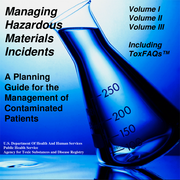
The Agency for Toxic Substances and Disease Registry (ATSDR) has produced a three-volume series entitled Managing Hazardous Material Incidents. The series is designed to help emergency response and health care professionals plan for and respond to hazardous material emergencies. - Volume I Emergenc ... more
The technical note calls for raising awareness among practitioners and policymakers about the importance of strong tobacco control measures for protecting the health and development of children, including banning tobacco advertising, implementing 100% smoke-free environments and raising taxes on tob ... more
Drinking-water quality regulations and standards developed or revised in accordance with this guidance will reflect the best practices identified in the WHO Guidelines for Drinking-water Quality to most effectively protect public health. Moreover, the regulations and standards will consider local ne ... more
Manual for use in primary care. There is substantial evidence for the benefits of screening and brief intervention in primary health care for alcohol problems. However, there is a need for screening and brief interventions with cross-cultural relevance for substances other than alcohol or tobacco, ... more
Many features of the environment have been found to exert an important influence on cardiovascular disease (CVD) risk, progression, and severity. Changes in the environment due to migration to different geographic locations, modifications in lifestyle choices, and shifts in social policies and cultu ... more
A role for nuclear techniques Antimicrobials play a critical role in the treatment of human and animal (aquatic and terrestrial) diseases, which has led to their widespread application and use. Antimicrobial resistance (AMR) is the ability of microorganisms to stop an antibiotic, such as an antimic ... more
PARTICIPANT GUIDE. This Participant Guide has been designed to assist health facilities and community based non-clinicians to develop skills to provide linkage to care, adherence and retention in care services for chronic conditions
When setting national drinking-water quality regulations and standards, many countries consider the WHO Guidelines for drinking-water quality (GDWQ). To better understand the extent to which the GDWQ are used and reflected in these standards, this global review summarizes information from 104 ... more
This guideline covers road-traffic-related air pollution and its links to ill health. It aims to improve air quality and so prevent a range of health conditions and deaths.
Findings, interpretations and conclusions expressed in this document are based on infor- mation gathered by GIZ and its consultants, partners and contributors from reliable sources.
In 2015, 5.9 million children under age five died (1). The major causes of child deaths globally are pneumonia, prematurity, intrapartum-related complications, neonatal sepsis, congenital anomalies, diarrhoea, injuries and malaria (2). Most of these diseases and conditions are at least partially cau ... more