
Filter
2103
Text search:
political
actors
Featured
169
615
Language
2058
54
43
34
23
17
9
5
3
3
2
2
2
2
2
1
1
1
1
1
1
1
1
1
1
1
1
1
Document type
1069
476
184
155
146
26
18
17
7
3
Countries
148
63
59
51
46
45
43
41
41
40
37
37
35
33
29
28
27
26
23
23
22
20
20
19
19
18
18
17
17
16
15
14
12
11
11
11
11
10
10
10
9
9
9
9
8
8
8
8
8
8
8
7
7
7
7
6
6
6
5
5
5
4
4
4
4
4
4
4
4
3
3
3
3
3
3
2
2
2
2
2
2
2
2
2
2
2
2
2
2
1
1
1
1
1
1
1
1
1
1
1
1
1
1
1
1
1
1
1
1
1
1
1
1
1
1
1
1
1
1
1
1
1
1
1
1
Authors & Publishers
226
58
54
49
39
38
29
22
20
19
18
16
16
15
14
14
13
13
12
12
12
12
12
10
9
9
9
9
9
9
9
8
8
8
8
8
8
7
7
7
7
7
7
7
7
7
7
6
6
6
6
6
6
6
6
6
6
6
5
5
5
5
5
5
5
5
5
5
5
5
5
5
4
4
4
4
4
4
4
4
4
4
4
4
4
4
4
4
4
4
4
4
4
3
3
3
3
3
3
3
3
3
3
3
3
3
3
3
3
3
3
3
3
3
3
3
3
3
3
3
3
3
3
3
3
3
3
3
3
3
3
3
3
3
3
3
3
3
3
2
2
2
2
2
2
2
2
2
2
2
2
2
2
2
2
2
2
2
2
2
2
2
2
2
2
2
2
2
2
2
2
2
2
2
2
2
2
2
2
2
2
2
2
2
2
2
2
2
2
2
2
2
2
2
2
2
2
2
2
2
2
2
2
2
2
2
2
2
2
2
2
2
2
2
2
2
2
2
2
2
2
2
2
2
2
2
2
2
2
2
2
2
2
2
2
2
2
2
2
2
2
2
2
2
2
2
2
2
2
2
2
2
2
2
2
2
2
2
2
2
2
2
2
2
2
2
2
2
2
2
2
2
2
2
2
2
2
2
2
2
2
2
2
2
2
1
1
1
1
1
1
1
1
1
1
1
1
1
1
1
1
1
1
1
1
1
1
1
1
1
1
1
1
1
1
1
1
1
1
1
1
1
1
1
1
1
1
1
1
1
1
1
1
1
1
1
1
1
1
1
1
1
1
1
1
1
1
1
1
1
1
1
1
1
1
1
1
1
1
1
1
1
1
1
1
1
1
1
1
1
1
1
1
1
1
1
1
1
1
1
1
1
1
1
1
1
1
1
1
1
1
1
1
1
1
1
1
1
1
1
1
1
1
1
1
1
1
1
1
1
1
1
1
1
1
1
1
1
1
1
1
1
1
1
1
1
1
1
1
1
1
1
1
1
1
1
1
1
1
1
1
1
1
1
1
1
1
1
1
1
1
1
1
1
1
1
1
1
1
1
1
1
1
1
1
1
1
1
1
1
1
1
1
1
1
1
1
1
1
1
1
1
1
1
1
1
1
1
1
1
1
1
1
1
1
1
1
1
1
1
1
1
1
1
1
1
1
1
1
1
1
1
1
1
1
1
1
1
1
1
1
1
1
1
1
1
1
1
1
1
1
1
1
1
1
1
1
1
1
1
1
1
1
1
1
1
1
1
1
1
1
1
1
1
1
1
1
1
1
1
1
1
1
1
1
1
1
1
1
1
1
1
1
1
1
1
1
1
1
1
1
1
1
1
1
1
1
1
1
1
1
1
1
1
1
1
1
1
1
1
1
1
1
1
1
1
1
1
1
1
1
1
1
1
1
1
1
1
1
1
1
1
1
1
1
1
1
1
1
1
1
1
1
1
1
1
1
1
1
1
1
1
1
1
1
1
1
1
1
1
1
1
1
1
1
1
1
1
1
1
1
1
1
1
1
1
1
1
1
1
1
1
1
1
1
1
1
1
1
1
1
1
1
1
1
1
1
1
1
1
1
1
1
1
1
1
1
1
1
1
1
1
1
1
1
1
1
1
1
1
1
1
1
1
1
1
1
1
1
1
1
1
1
1
1
1
1
1
1
1
1
1
1
1
1
1
1
1
1
1
1
1
1
1
1
1
1
1
1
1
1
1
1
1
1
1
1
1
1
1
1
1
1
1
1
1
1
1
1
1
1
1
1
1
1
1
1
1
1
1
1
1
1
1
1
1
1
1
1
1
1
1
1
1
1
1
1
1
1
1
1
1
1
1
1
1
1
1
1
1
1
1
1
1
1
1
1
1
1
1
1
1
1
1
1
1
1
1
1
1
1
1
1
1
1
1
1
1
1
1
1
1
1
1
1
1
1
1
1
1
1
1
1
1
1
1
1
1
1
1
1
1
1
1
1
1
1
1
1
1
1
1
1
1
1
1
1
1
1
1
1
1
1
1
1
1
1
1
1
1
1
1
1
1
1
1
1
1
1
1
1
1
1
1
1
1
1
1
1
1
1
1
1
1
1
1
1
1
1
1
1
1
1
1
1
1
1
1
1
1
1
1
1
1
1
1
1
1
1
1
1
1
1
1
1
1
1
1
1
1
1
1
1
1
1
1
1
1
1
1
1
1
1
1
1
1
1
1
1
1
1
1
1
1
1
1
1
1
1
1
1
1
1
1
1
1
1
1
1
1
1
1
1
1
1
1
1
1
1
1
1
1
1
1
1
1
1
1
1
1
1
1
1
1
1
1
1
1
1
1
1
1
1
1
1
1
1
1
1
1
1
1
1
1
1
1
1
1
1
1
1
1
1
1
1
1
1
1
1
1
1
1
1
1
1
1
1
1
1
1
1
1
1
1
1
1
1
1
1
1
1
1
1
1
1
1
1
1
1
1
1
1
1
1
1
1
1
1
1
1
1
1
1
1
1
1
1
1
1
1
1
1
1
1
1
1
1
1
1
1
1
1
1
1
1
1
1
1
1
1
1
1
1
1
1
1
1
1
1
1
1
1
1
1
1
1
1
1
1
1
1
1
1
1
1
1
1
1
1
1
1
1
1
1
1
1
1
1
1
1
1
1
1
1
1
1
1
1
1
1
1
1
1
1
1
1
1
1
1
1
1
1
1
1
1
1
1
1
1
1
1
1
1
1
1
1
1
1
1
1
1
1
1
1
1
1
1
1
1
1
1
1
1
1
1
1
1
1
1
1
1
1
1
1
1
1
1
1
1
1
1
1
1
1
1
1
1
1
1
1
1
1
1
1
1
1
1
1
1
1
1
1
1
1
1
1
1
1
1
1
1
1
1
1
1
1
1
1
1
1
1
1
1
1
1
1
1
1
1
1
1
1
1
1
1
1
1
1
1
1
1
1
1
1
1
1
1
1
1
1
1
1
1
1
1
1
1
1
1
1
1
1
1
1
1
1
1
1
1
1
1
1
1
1
1
1
1
1
1
1
1
1
1
1
1
1
1
1
1
1
1
1
1
1
1
1
1
1
1
1
1
1
1
1
1
1
1
1
1
1
1
1
1
1
1
1
1
1
1
1
1
1
1
1
1
1
1
1
1
1
1
1
1
1
1
1
1
1
1
1
1
1
1
1
1
1
1
1
1
1
1
1
1
1
1
1
1
1
1
1
1
1
1
1
1
1
1
1
1
1
1
1
1
1
1
1
1
1
1
1
1
1
1
1
1
1
1
1
1
1
1
1
1
1
1
1
1
1
1
1
1
1
1
1
1
1
1
1
1
1
1
1
1
1
1
1
1
1
1
1
1
1
1
1
1
1
1
1
1
1
1
1
1
1
1
1
1
1
1
1
1
1
1
1
1
1
1
1
1
1
1
1
1
1
1
1
1
1
1
1
1
1
1
1
1
1
1
1
1
1
1
1
1
1
1
1
1
1
1
1
1
1
1
1
1
1
1
1
1
1
1
1
1
1
1
1
1
1
1
1
1
1
1
1
1
1
1
1
1
1
1
1
1
1
1
1
1
1
1
1
1
1
1
1
1
1
1
1
1
1
1
1
1
1
1
1
1
1
1
1
1
1
1
1
1
1
1
1
1
1
1
1
1
1
1
1
1
1
1
1
1
1
1
1
1
1
1
1
1
1
1
1
1
1
1
1
1
1
1
1
1
1
1
1
1
1
1
1
1
1
1
1
1
1
1
1
1
1
1
1
1
1
1
1
1
1
1
1
1
1
1
1
1
1
1
1
1
1
1
1
1
1
1
1
1
1
1
1
1
1
1
1
1
1
1
1
1
1
1
1
1
1
1
1
1
1
1
1
1
1
1
1
1
1
1
1
1
1
1
1
1
1
1
1
1
1
1
1
1
1
1
1
1
1
1
1
1
1
1
1
1
1
1
1
1
1
1
1
1
1
1
1
1
1
1
1
1
1
1
1
1
1
1
1
1
1
1
1
1
1
1
1
1
1
1
1
1
1
1
1
1
1
1
1
1
1
1
1
1
1
1
1
1
1
1
1
1
1
1
1
1
1
1
1
1
1
1
1
1
1
1
1
1
1
1
1
1
1
1
1
1
1
1
1
1
1
1
1
1
1
1
1
1
1
1
1
1
1
Publication Years
1
718
1254
126
4
Category
703
276
149
117
48
36
4
2
Toolboxes
158
149
142
136
125
87
80
77
66
51
48
44
43
41
32
31
28
27
24
14
12
11
6
6
5
2
Despite high regional demand for vaccines valued at over US$ 1 billion annually, Africa’s vaccine industry provides only 0.1% of global supply. Vaccine inequity and hoarding at the start of the pandemic, which resulted in delays in obtaining COVID-19 doses, stimulated new resolve to address future
...
supply security. In 2021, the AU set a target to produce and supply more than 60% of the vaccine doses on the continent by 2040.
In the last 18 months alone, more than 30 new African manufacturing projects have been announced and estimates indicate that the African vaccine market across all existing and projected novel products could range between US$ 2.8 billion and US$ 5.6 billion by 2040*, demonstrating the potential for a thriving regional industry to emerge.
more
The power of the Global Drug Policy Index lies in its key objective: to score and
rank how countries are faring in different areas of drug policy as identified in the
UN report ‘What we have learned over the last ten years: A summary of knowledge
acquired and produced by the UN system on drug-r
...
elated matters’,1 and derived
from the landmark UN System Common Position on Drug
more

This global progress report attempts to lay the groundwork for the kind of accelerated action needed. Section 1 presents key data, trends and developments in women’s, children’s and adolescents’ health and well-being. That is followed in Section 2 by a deeper dive into the impact of the COVID-
...
19 pandemic, which has created and contributed to many threats and challenges to progress for women, children and adolescents. In Section 3, the report concludes with recommendations for accelerating progress towards the achievement of the 2030 Agenda even in such challenging times, with an emphasis on partnership
and clear-eyed recognition of the consequences of failing to do better.
more
This study emphasizes the contribution that women can play in the prevention of violent extremism within the family and society and analyzes the drivers and roles of women taking part in violent extremism and supporting violent and extremist groups.
UNDP Iraq is pleased to make this study and its r
...
ecommendations available to national and international partners and to all interested experts and researchers working in the field of preventing violent extremism to contribute to enriching the discussion and strengthening programmes to prevent violent extremism in the Arab region.
more

2014-2020, Draft March 2014

Women have less access to the development services and support – such as adequate healthcare, education and
modern technology – that make people more resilient to climate change and other shocks and stressors.2
Women’s unequal access to resources, their disproportionate responsibility for ca
...
re of dependents (typically unpaid),
and the insecurity and precariousness of their paid labour all contribute to the feminisation of poverty and women’s
heightened vulnerability to climate hazards. Climate change is a multiplier of existing vulnerabilities and threatens to
reverse hard-earned development gains for all people, and particularly for women.
more

An estimated 1.3 billion people – or 16% of global population worldwide – experience a significant disability today. Persons with disabilities have the right to the highest attainable standard of health as those without disabilities. However, the WHO Global report on health equity for persons w
...
ith disabilities demonstrates that while some progress has been made in recent years, the world is still far from realizing this right for many persons with disabilities who continue to die earlier, have poorer health, and experience more limitations in everyday functioning than others. These poor health outcomes are due to unfair conditions faced by persons with disabilities in all facets of life, including in the health system itself. Countries have an obligation under international human rights law to address the health inequities faced by persons with disabilities. Furthermore, the Sustainable Development Goals and global health priorities will not progress without ensuring health for all.
more

The World Health Organization's fourth Country Cooperation Strategy 2022-2026 is an outcome of a consultative process with inputs from the Ministry of Health, various agencies in the health sector, and other relevant stakeholders. It has been developed to provide strategic direction and support towa
...
rd achieving the priorities of the Government of the Kingdom of Eswatini.
It is designed to support the strengthening of health systems and services toward the attainment of Universal Health
Coverage (UHC) and the Sustainable Development Goals targets. The CCS 2022-2026 also presents the collaborative
agenda between the Kingdom of Eswatini and the three levels of WHO, aligns with the strategic priorities of WHO’s
13th General Programme of Work (2019 – 2025), as well as Eswatini’s United Nations Sustainable Development Cooperation Framework (UNSDCF) 2021-2025
more

The executive summary of the WHO Global oral health status report presents a snapshot of the most recent data on major oral diseases, risk factors, health system challenges and opportunities for reform. The report’s clear conclusion is that the status of global oral health is alarming and requires
...
urgent action. The report will serve as a reference for policy-makers and an orientation for a wide range of stakeholders across different sectors to guide advocacy towards better prioritization of oral health in global, regional and national contexts. In addition, the report provides, as a separate online resource, the first-ever country oral health profiles for all 194 WHO Member States, giving unique insights into key areas and markers of oral health that are relevant for decision-makers.
more
Travailler avec les dirigeants communautaires pour lutter contre la VBG est une très bonne et prometteuse approche, car les dirigeants communautaires sont les gardiens de toutes nos croyances et coutumes. Étant donné que la VBG est enracinée dans les croyances et les coutumes, essayer de sâ€
...
™attaquer à la VBG sans impliquer les dirigeants communautaires peut mener à un grand conflit, et vous n’aurez aucun résultat. Les dirigeants communautaires ont également des rôles à jouer dans la réponse aux survivantes de la VBG. Les survivantes s’adressent aux chefs de villages pour faire part de leurs préoccupations et de leurs expériences, et les dirigeants ont des pratiques pour traiter les préoccupations et une approche de la justice qui se base d’abord sur le maintien de la cohésion sociale, mais la VBG ne peut pas être résolue comme n’importe quel autre conflit. D’après mon expérience des programmes de VBG dans mon propre pays et ailleurs, j’ai appris qu’il est plus difficile d’impliquer les dirigeants communautaires dans certains endroits que dans d’autres. Parfois, les aspects religieux rendent les choses plus difficiles. Mais si vous demandez à n’importe quel dirigeant de décrire ce qu’est un dirigeant, ce qu’un dirigeant fait, il parlera de la protection de la communauté. Et c’est aussi ce que nous voulons — protéger les femmes et les filles dans la communauté.
more

This new guidance aims to support programme implementers, coordinators and others in humanitarian settings in their actions to counter suicide and self-harm in humanitarian contexts and to save lives.
Rev. Panam Salud Publica. 2017;41:e153. doi: 10.26633/RPSP.2017.153
Worldwide, over 6 million people are infected with Trypanosoma cruzi, the pathogen that causes Chagas disease (CD). In the Americas, CD creates the greatest burden in disability-adjusted life years of any parasitic infection. In Co
...
lombia, 437 000 people are infected with T. cruzi, of whom 131 000 suffer from cardiomyopathy. Colombia’s annual costs for treating patients with advanced CD reach US$ 175 016 000. Although timely etiological treatment can significantly delay or prevent development of cardiomyopathy—and costs just US$ 30 per patient—fewer than 1% of people with CD in Colombia and elsewhere receive it.
more

The sixteenth meeting of the Strategic and Technical Advisory Group for Neglected Tropical Diseases (STAG-NTD) was held as a hybrid meeting, 27–28 September 2022.
Dr Ren Minghui, Assistant Director-General, Universal Health Coverage/Communicable and Noncommunicable Diseases, welcomed participan
...
ts to the meeting. He said the World Health Organization’s Department of Control of Neglected Tropical Diseases (WHO/NTD) was in a state of transition. Following the death of the late esteemed Director Dr Mwelecele Ntuli Malecela earlier in the year, Dr Gautam Biswas had taken over as Acting Director but would soon retire; the appointment of a new Director was under way. Owing to rotation of STAG-NTD members, this would be the last meeting for some and the first meeting for several new participants. The work however would continue with the same commitment. Discussions over the next two days would focus on critical issues regarding recovery of NTD services following the disruptions caused by coronavirus disease (COVID-19), which had impacted many health services worldwide. He looked forward to receiving the advice and guidance of STAG-N
more
Lymphatic filariasis (LF) infection if untreated results in fluid accumulation in the limbs or breasts (lymphedema) or genitalia (hydrocele) that is painful and causes great discomfort. Morbidity management and disability prevention (MMDP) strategies such as surgery for hydrocele, treatment of acute
...
attacks and management of lymphedema are necessary for the management of the advanced stages of LF. However, very few countries including Zambia, have adequate information on the health beliefs and health seeking behavior of communities living in endemic areas towards MMDP services for LF. This study sought to explore community and health provider perspectives towards MMDP services for LF in a highly endemic region, Luangwa District, Zambia, between February and April 2019.
more
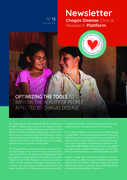
To support its R&D activities on Chagas disease, DNDi launched the Chagas Clinical Research Platform (CCRP). The platform brings together partners, experts, and stakeholders to provide support for evaluation and development of new treatments for Chagas disease. The patient-centred platform aims to f
...
acilitate clinical research, provide a forum for technical discussions, develop a critical mass of expertise, and strengthen institutional research capacities. In addition, it identifies and reviews priority needs, works towards standardization of methodology to assess drug efficacy and reviews alternatives for using current approved drugs (new schemes, doses, combination) and special scenarios (resistance).
more

Access to health workers who are fit for purpose, motivated and protected is a fundamental force of health service delivery and the achievement of universal health coverage and the health and health-related Sustainable Development Goals. Data and knowledge of the distribution, skill mix and future d
...
evelopment needs of the health workforce can mean the difference between enabling or impeding health systems performance, inclusive economic growth and global health security preparedness and response
more

Schistosomiasis is widely recognized as a disease that is socially determined. An understanding of the social and behavioural factors linked to disease transmission and control should play a vital role in designing policies and strategies for schistosomiasis prevention and control. To this must be a
...
dded the awareness that schistosomiasis is also a disease of poverty. It still survives in poverty-stricken, remote areas where there is little or no safe water or sanitation, and health care is scarce or non-existent. For a variety of complex reasons, many of which are addressed in this book, the disease is particularly prevalent in sub-Saharan Africa, and persists in certain areas of rural China. This concern for human behaviour in an environment of poverty echoes the concerns of the new research priority for “diseases of poverty” identified by the Special Programme for Research & Training in Tropical Diseases.
more

This sourcebook aims to detail why health needs to be part of urban and territorial planning and how to make this happen. It brings together two vital elements we need to build habitable cities on a habitable planet: 1) Processes to guide the development of human settlements – in this document ref
...
erred to as “urban and territorial planning (UTP)”; and 2) concern for human health, well-being and health equity at all levels – from local to global, and from human to planetary health.
This sourcebook identifies a comprehensive selection of existing resources and tools to support the incorporation of health into UTP, including advocacy frameworks, entry points and guidance, as well as tools and illustrative case studies. It does not provide prescriptions for specific scenarios – these should be determined by context, people and available resources.
more

Conflicts and disasters, including pandemics, affect women and men in all their diversity differently, and women and girls often suffer the most. Crisis-related hardships combine and compound pre-existing disadvantages, for example, they often cause women’s working conditions to worsen while incre
...
asing their overall workload and care responsibilities. At the same time, crises can give rise to changes that enable women to take up roles that were previously available only to men, and crises can open opportunities to address existing gender-based discrimination and violations of rights.
more

This document provides an overview of strategic purchasing of nutrition services within primary health care. It introduces key terms and payment methods for countries to use in preparing to transform their health financial systems to scale up nutrition services. It does so by introducing nutritional
...
perspectives to strategic health purchasing core areas: What to buy, From whom to buy and How to buy.
more
