
Filter
1840
Text search:
Concern
Worldwide
Featured
166
444
Language
1808
53
42
32
26
16
14
5
3
3
3
2
2
2
2
2
2
2
2
2
2
2
1
1
1
1
1
1
1
1
1
1
1
1
1
1
1
1
1
1
1
1
1
1
Document type
915
469
195
102
73
33
29
11
7
2
2
1
Countries / Regions
115
70
43
41
36
35
33
31
30
30
28
26
25
23
23
22
20
19
19
17
16
15
14
12
12
11
11
11
10
9
9
9
9
8
7
7
7
6
6
6
6
5
5
5
5
5
5
5
5
5
4
4
4
4
3
3
3
3
3
3
3
3
3
2
2
2
2
2
2
2
2
2
2
2
2
2
2
2
2
2
2
2
1
1
1
1
1
1
1
1
1
1
1
1
1
1
1
1
1
1
1
1
1
1
1
1
1
1
1
1
Authors & Publishers
256
104
71
56
52
28
25
22
21
20
19
18
15
14
11
11
10
9
9
9
8
8
7
7
6
5
5
5
5
5
5
5
5
5
5
5
4
4
4
4
4
4
4
4
4
4
4
4
4
4
4
4
4
4
4
3
3
3
3
3
3
3
3
3
3
3
3
3
3
3
3
3
3
3
3
3
3
3
3
3
3
3
3
3
3
3
3
3
3
3
3
3
3
3
3
3
3
3
3
3
3
3
3
2
2
2
2
2
2
2
2
2
2
2
2
2
2
2
2
2
2
2
2
2
2
2
2
2
2
2
2
2
2
2
2
2
2
2
2
2
2
2
2
2
2
2
2
2
2
2
2
2
2
2
2
2
2
2
2
2
2
2
2
2
2
2
2
2
2
2
2
2
2
2
2
2
2
2
2
2
2
2
2
2
2
2
2
2
2
2
2
2
2
2
2
2
2
2
2
2
2
2
2
2
2
2
2
2
2
2
2
2
2
2
2
2
2
1
1
1
1
1
1
1
1
1
1
1
1
1
1
1
1
1
1
1
1
1
1
1
1
1
1
1
1
1
1
1
1
1
1
1
1
1
1
1
1
1
1
1
1
1
1
1
1
1
1
1
1
1
1
1
1
1
1
1
1
1
1
1
1
1
1
1
1
1
1
1
1
1
1
1
1
1
1
1
1
1
1
1
1
1
1
1
1
1
1
1
1
1
1
1
1
1
1
1
1
1
1
1
1
1
1
1
1
1
1
1
1
1
1
1
1
1
1
1
1
1
1
1
1
1
1
1
1
1
1
1
1
1
1
1
1
1
1
1
1
1
1
1
1
1
1
1
1
1
1
1
1
1
1
1
1
1
1
1
1
1
1
1
1
1
1
1
1
1
1
1
1
1
1
1
1
1
1
1
1
1
1
1
1
1
1
1
1
1
1
1
1
1
1
1
1
1
1
1
1
1
1
1
1
1
1
1
1
1
1
1
1
1
1
1
1
1
1
1
1
1
1
1
1
1
1
1
1
1
1
1
1
1
1
1
1
1
1
1
1
1
1
1
1
1
1
1
1
1
1
1
1
1
1
1
1
1
1
1
1
1
1
1
1
1
1
1
1
1
1
1
1
1
1
1
1
1
1
1
1
1
1
1
1
1
1
1
1
1
1
1
1
1
1
1
1
1
1
1
1
1
1
1
1
1
1
1
1
1
1
1
1
1
1
1
1
1
1
1
1
1
1
1
1
1
1
1
1
1
1
1
1
1
1
1
1
1
1
1
1
1
1
1
1
1
1
1
1
1
1
1
1
1
1
1
1
1
1
1
1
1
1
1
1
1
1
1
1
1
1
1
1
1
1
1
1
1
1
1
1
1
1
1
1
1
1
1
1
1
1
1
1
1
1
1
1
1
1
1
1
1
1
1
1
1
1
1
1
1
1
1
1
1
1
1
1
1
1
1
1
1
1
1
1
1
1
1
1
1
1
1
1
1
1
1
1
1
1
1
1
1
1
1
1
1
1
1
1
1
1
1
1
1
1
1
1
1
1
1
1
1
1
1
1
1
1
1
1
1
1
1
1
1
1
1
1
1
1
1
1
1
1
1
1
1
1
1
1
1
1
1
1
1
1
1
1
1
1
1
1
1
1
1
1
1
1
1
1
1
1
1
1
1
1
1
1
1
1
1
1
1
1
1
1
1
1
1
1
1
1
1
1
1
1
1
1
1
1
1
1
1
1
1
1
1
1
1
1
1
1
1
1
1
1
1
1
1
1
1
1
1
1
1
1
1
1
1
1
1
1
1
1
1
1
1
1
1
1
1
1
1
1
1
1
1
1
1
1
1
1
1
1
1
1
1
1
1
1
1
1
1
1
1
1
1
1
1
1
1
1
1
1
1
1
1
1
1
1
1
1
1
1
1
1
1
1
1
1
1
1
1
1
1
1
1
1
1
1
1
1
1
1
1
1
1
1
1
1
1
1
1
1
1
1
1
1
1
1
1
1
1
1
1
1
1
1
1
1
1
1
1
1
1
1
1
1
1
1
1
1
1
1
1
1
1
1
1
1
1
1
1
1
1
1
1
1
1
1
1
1
1
1
1
1
1
1
1
1
1
1
1
1
1
1
1
1
1
1
1
1
1
1
1
1
1
1
1
1
1
1
1
1
1
1
1
1
1
1
1
1
1
1
1
1
1
1
1
1
1
1
1
1
1
1
1
1
1
1
1
1
1
1
1
1
1
1
1
1
1
1
1
1
1
1
1
1
1
1
1
1
1
1
1
1
1
1
1
1
1
1
1
1
1
1
1
1
1
1
1
1
1
1
1
1
1
1
1
1
1
1
1
1
1
1
1
1
1
1
1
1
1
1
1
1
1
1
1
1
1
1
1
1
1
1
1
1
1
1
1
1
1
1
1
1
1
1
1
1
1
1
1
1
1
1
1
1
1
1
1
1
1
1
1
1
1
1
1
1
1
1
1
1
1
1
1
1
1
1
1
1
1
1
1
1
1
1
1
1
1
1
1
1
1
1
1
1
1
1
1
1
1
1
1
1
1
1
1
1
1
1
1
1
1
1
1
1
1
1
1
1
1
1
1
1
1
1
1
1
1
1
1
1
1
1
1
1
1
1
1
1
1
1
1
1
1
1
1
1
1
1
1
1
1
1
1
1
1
1
1
1
1
1
1
1
1
1
1
1
1
1
1
1
1
1
1
1
1
1
1
1
1
1
1
1
1
1
1
1
1
1
1
1
1
1
1
1
1
1
1
1
1
1
1
1
1
1
1
1
1
1
1
1
1
1
1
1
1
1
1
1
1
1
1
1
1
1
1
1
1
1
1
1
1
1
1
1
1
1
1
1
1
1
1
1
1
1
1
1
1
1
1
1
1
1
1
1
1
1
1
1
1
1
1
1
1
1
1
1
1
1
1
1
1
1
1
1
1
1
1
1
1
1
1
1
1
1
1
1
1
1
1
1
1
1
1
1
1
1
1
1
1
1
1
1
1
1
1
1
1
1
1
1
1
1
1
1
1
1
1
1
1
1
1
1
1
1
1
1
1
1
1
1
1
1
1
1
1
1
1
1
1
1
1
1
1
1
1
1
1
1
1
1
1
1
1
1
1
1
1
1
1
1
1
1
1
1
1
1
1
1
1
1
1
1
1
1
1
1
1
1
1
1
1
1
1
1
1
1
1
1
1
1
1
1
1
1
1
1
1
1
1
1
1
1
1
1
1
1
1
1
1
1
1
1
1
1
1
1
1
1
1
1
1
1
1
1
1
1
1
1
1
1
1
1
1
1
1
1
1
1
1
1
1
1
1
1
1
1
1
1
1
1
1
1
1
1
1
1
1
1
1
1
1
1
1
1
1
1
1
1
1
1
1
1
1
1
1
1
1
1
1
1
1
1
1
1
1
1
1
1
1
1
1
1
1
1
1
1
1
1
1
1
1
1
1
1
1
1
1
1
1
1
1
1
1
1
1
1
1
1
1
1
1
1
1
1
1
1
1
1
1
1
1
1
1
1
1
1
1
1
1
1
1
1
1
1
1
1
1
1
1
1
1
1
1
1
1
1
1
1
1
1
1
1
1
1
1
1
1
1
1
1
1
1
1
1
1
1
1
1
1
1
1
1
1
1
1
1
1
1
1
1
1
1
1
1
1
1
1
1
1
1
1
1
1
1
1
1
1
1
1
1
1
1
1
1
1
1
1
1
1
1
1
1
1
1
1
1
1
1
1
1
1
1
1
1
1
1
1
1
1
1
1
1
1
1
1
1
1
1
1
1
1
1
1
1
1
1
1
1
1
1
1
1
1
1
1
1
1
1
1
1
1
1
1
1
1
1
1
1
1
1
1
1
1
1
1
1
1
1
1
1
1
1
1
1
1
1
1
1
1
1
1
1
1
1
1
1
1
1
1
1
1
1
1
1
1
1
1
1
1
1
1
1
1
1
1
1
1
1
1
1
1
1
1
1
1
1
1
1
1
1
1
1
1
1
1
1
1
1
1
1
1
1
1
1
1
1
1
1
1
1
1
1
1
1
1
1
1
1
1
1
1
1
1
1
1
1
1
1
1
1
1
1
1
1
1
1
1
1
1
1
Publication Years
1
567
1091
168
11
1
1
Category
523
138
138
114
104
29
15
1
Toolboxes
186
150
113
99
85
81
81
57
57
55
53
51
35
35
31
29
20
19
18
18
16
16
12
11
5
1
The Global Vaccine Action Plan (GVAP) 2011-2020, endorsed by Member States during the May 2012 World Health Assembly, has set ambitious targets to improve access to immunization and tackle vaccine-preventable diseases. This responsibility has been translated into firm commitments in February 2016, t
...
hrough the signature of the Addis Declaration on Immunization (ADI) by African Ministers and subsequently endorsed by the Heads of States from across Africa at the 28th African Union Summit held in January 2017. This commitment from the highest level of government comes as a catalyst to immunization efforts on the continent to deliver on the promise of universal immunization
more

The purpose of these guidelines is to help health workers to participate in the process of continuous surveillance of safety and efficacy of the pharmaceutical products which are used in clinical practice, thus help to achieve the ultimate goal to make safer and more effective treatment available to
...
patients. This guideline addresses specifically the issues on what to report, why to report, when to report, where to report and how to report.
more

These guidelines for the National Pharmacovigilance and Medicine Information System in Rwanda have been developed to ensure that safe, efficacious and quality medicines are made available to all Rwandans.
This report outlines the Ministry of Health’s National Health Research Agenda in which it identifies research priorities in health. It will be implemented in the same time frame as the Health Sector Strategic Plain 2012-2018. The Ministry of Health being the implementing agency of this document, i
...
s calling upon all partners, relevant ministries, higher learning institutions, students, development partners, etc to embrace this research agenda and ensure that researches conducted in Rwanda address priority areas identifies.
more
Ebola Synthesis Reference Document
Powell, Steve and others
International Federation of Red Cross and Red Crescent Societies (IFRC)
(2017)
C1
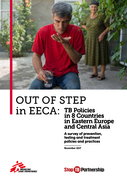
A survey of prevention, testing and treatment policies and practices

ECDC Technical Report
In line with ECDC’s recommendations provided in the ’Risk Assessment of HTLV-1/2 transmission by tissue/cell transplantation’ dated 14 March 2012, this Directive replaces the term ‘incidence’ with ‘prevalence’ in the description of endemic areas of HTLV-1/2 i ... nfection. According to the new requirements ‘HTLV-1 antibody testing must be performed for donors living in, or originating from high-prevalence areas or with sexual partners originating from those areas or where the donor’s parents originate from those areas’ and this applies to both donors of non-reproductive tissues and cells and reproductive cells.
ECDC contracted experts from the Institut Pasteur in Paris to systematically review the published evidence on the distribution of HTLV-1 infection prevalence throughout the world and to identify high-prevalence countries and areas. more
In line with ECDC’s recommendations provided in the ’Risk Assessment of HTLV-1/2 transmission by tissue/cell transplantation’ dated 14 March 2012, this Directive replaces the term ‘incidence’ with ‘prevalence’ in the description of endemic areas of HTLV-1/2 i ... nfection. According to the new requirements ‘HTLV-1 antibody testing must be performed for donors living in, or originating from high-prevalence areas or with sexual partners originating from those areas or where the donor’s parents originate from those areas’ and this applies to both donors of non-reproductive tissues and cells and reproductive cells.
ECDC contracted experts from the Institut Pasteur in Paris to systematically review the published evidence on the distribution of HTLV-1 infection prevalence throughout the world and to identify high-prevalence countries and areas. more

Review of International, Regional and National Policies and Legal Frameworks that Promote Migrants and Mobile Populations' Access to Health and Malaria Services in the Greater Mekong Subregion (Cambodia, Lao People's Democratic Republic, Myanmar, Thailand and Viet Nam)
Migrants and mobile popul ... ations face many obstacles in accessing equitable essential health care services due to factors such as living and working conditions, education level, gender, irregular migration status, language and cultural barriers, anti-migrant sentiments, and lack of migrant-inclusive health policies among others. Despite significant progress having been made in the context of malaria control in the Greater Mekong Subregion (GMS), human movements can impact malaria transmission patterns and potentially introduce drug-resistant parasites. This legal framework review therefore serves as a guidance document on approaches to address malaria and malaria elimination for migrant and mobile populations (MMPs) in five countries of the GMS. more
Migrants and mobile popul ... ations face many obstacles in accessing equitable essential health care services due to factors such as living and working conditions, education level, gender, irregular migration status, language and cultural barriers, anti-migrant sentiments, and lack of migrant-inclusive health policies among others. Despite significant progress having been made in the context of malaria control in the Greater Mekong Subregion (GMS), human movements can impact malaria transmission patterns and potentially introduce drug-resistant parasites. This legal framework review therefore serves as a guidance document on approaches to address malaria and malaria elimination for migrant and mobile populations (MMPs) in five countries of the GMS. more
The Report describes the evaluation of WHO's contribution to the Maternal Health Program in South-East Asia Region. This was an independent evaluation conducted in 2015 by Amaltas, a Delhi based organization. The evaluation highlights the progress in five countries, namely Bangladesh, Indonesia, Mya
...
nmar, Nepal and Sri Lanka and provides specific recommendations for Organizational Learning and Development. This report will be useful for all those interested in WHO's work on Maternal Health Program in the Region.
more

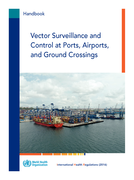
The purpose of this handbook is to provide guidance to Member States on the practical aspects of maintaining sanitary standards at international borders at ports, airports, and ground crossings (points of entry) as set out in the International Health Regulations (2005). It provides technical advice
...
for developing a comprehensive programme for systematic monitoring of disease vectors and integrated vector control at points of entry. This includes standardizing procedures at points of entry and ensuring a sufficient monitoring and response capacity with the necessary infrastructure for surveillance and control of vectors. In addition, this handbook to serves as reference material for port health officers, regulators, port operators, and other competent authorities in charge of implementing the IHR (2005) at points of entry and on conveyances.
more

Advances have been made through expanded interventions delivered through five public health approaches: innovative and intensified disease management; preventive chemotherapy; vector ecology and management; veterinary public health services; and the provision of safe water, sanitation and hygiene. I
...
n 2015 alone nearly one billion people were treated for at least one disease and significant gains were achieved in relieving the symptoms and consequences of diseases for which effective tools are scarce; important reductions were achieved in the number of new cases of sleeping sickness, of visceral leishmaniasis in South-East Asia and also of Buruli ulcer.
The report also considers vector control strategies and discusses the importance of the draft WHO Global Vector Control Response 2017–2030. more
The report also considers vector control strategies and discusses the importance of the draft WHO Global Vector Control Response 2017–2030. more

The Zimbabwe Multi-Sectoral Cholera Elimination Plan (2018–2028) aims to eradicate cholera by improving water, sanitation, and healthcare infrastructure, strengthening disease surveillance, and expanding oral cholera vaccination (OCV). The strategy focuses on five pillars, including public health
...
response, WASH, infrastructure, community empowerment, and financing. A multi-sectoral approach involving government, international organizations, and local communities targets cholera hotspots to prevent outbreaks and ensure long-term disease control.
more

Every day, health-care providers are being attacked, patients discriminated against, ambulances held up at checkpoints, hospitals bombed, medical supplies looted and entire communities cut off from critical services around the world.
Between January 2012 and December 2014, the ICRC documented n ... early 2,400 violent incidents against health care in 11 countries experiencing armed conflict or other violence. In over 90% of cases, local health-care providers were affected, seriously threatening the effectiveness and sustainability of national health-care systems. These numbers might well just be the tip of the iceberg more
Between January 2012 and December 2014, the ICRC documented n ... early 2,400 violent incidents against health care in 11 countries experiencing armed conflict or other violence. In over 90% of cases, local health-care providers were affected, seriously threatening the effectiveness and sustainability of national health-care systems. These numbers might well just be the tip of the iceberg more

The guide is designed to help disaster managers in national Governments gain basic knowledge of how to use international tools and services. It aims to support the growing disaster response and disaster response preparedness capabilities that exist at national level across Asia and the Pacific.
... The guide is for national disaster management organizations (NDMOs) and line ministries involved in disaster response and disaster response preparedness. It is also a reference document for representatives of intergovernmental organizations, civilsociety actors and disaster-affected people.
The guide concentrates on key tools and services that can be helpful to disaster managers during the response and response preparedness phases of the disaster programme cycle. more
... The guide is for national disaster management organizations (NDMOs) and line ministries involved in disaster response and disaster response preparedness. It is also a reference document for representatives of intergovernmental organizations, civilsociety actors and disaster-affected people.
The guide concentrates on key tools and services that can be helpful to disaster managers during the response and response preparedness phases of the disaster programme cycle. more


The purpose of the situation assessment was to execute a situation analysis for Autism and Neurodevelopment Disorder (NDD) in Bangladesh. The situation assessment covers the following areas: a review of the scale and prevalence of NDD with trends of the disorder in the recent past in Bangladesh (see
...
page 17); estimation of likely disease burden in the near future (see page 27); assessment of the social response to NDD in Bangladesh (see page 67); overview of the support and services required by persons with NDD (see page 79); an inventory of service providers working with NDD in Bangladesh (see page 85); an assessment of the adequacy of the existing services and support available for addressing NDD in country (see page 97); an overview of the role and preparedness of MOHFW and other stakeholders in addressing NDD in Bangladesh (see page 108); recommendations for monitoring, supervision and reporting mechanisms for NDD services at the national level (see page 167); and recommended key activities that should be undertaken by the Health and other relevant ministries in the short and medium term (see page 167).
more

The report reflects on the trends, achievements and challenges in global health over the past decade during which Dr Margaret Chan has been Director-General of WHO. It discusses the role of WHO in dealing with such issues as the rise of noncommunicable diseases, leaps in life expectancy, and emergin
...
g threats like climate change and antimicrobial resistance.
more
more
