
Filter
1753
Text search:
Institute
for
Security
Studies
Featured
126
485
Language
1709
32
30
26
18
10
6
4
2
2
2
1
1
1
1
1
1
1
1
1
1
1
1
1
1
1
1
Document type
943
429
162
90
72
23
17
13
3
1
Countries / Regions
82
71
63
48
45
42
41
36
36
35
34
32
32
31
31
30
25
21
21
19
19
17
16
15
15
14
14
13
13
13
13
13
12
12
12
11
11
11
11
10
10
10
9
8
8
7
7
7
7
7
6
6
6
6
6
6
6
6
6
5
5
5
5
5
5
4
4
4
4
4
4
3
3
3
3
3
3
3
3
2
2
2
2
2
2
2
2
2
2
2
2
2
2
2
2
2
1
1
1
1
1
1
1
1
1
1
1
1
1
1
1
1
1
1
1
1
1
1
1
1
1
1
1
1
1
1
Authors & Publishers
185
73
62
43
38
30
21
20
17
14
13
13
11
11
11
11
10
9
9
9
8
8
8
7
7
7
7
7
7
7
7
6
6
6
6
6
5
5
5
5
5
5
5
5
5
5
4
4
4
4
4
4
4
4
4
4
4
4
4
4
4
4
4
4
4
4
3
3
3
3
3
3
3
3
3
3
3
3
3
3
3
3
3
3
3
3
3
3
3
3
3
3
3
3
3
3
3
3
3
3
3
3
3
2
2
2
2
2
2
2
2
2
2
2
2
2
2
2
2
2
2
2
2
2
2
2
2
2
2
2
2
2
2
2
2
2
2
2
2
2
2
2
2
2
2
2
2
2
2
2
2
2
2
2
2
2
2
2
2
2
2
2
2
2
2
2
2
2
2
2
2
2
2
2
2
2
2
2
2
2
2
2
2
2
2
2
2
2
2
2
2
2
2
2
2
2
2
2
2
2
2
2
2
2
2
2
2
2
2
2
1
1
1
1
1
1
1
1
1
1
1
1
1
1
1
1
1
1
1
1
1
1
1
1
1
1
1
1
1
1
1
1
1
1
1
1
1
1
1
1
1
1
1
1
1
1
1
1
1
1
1
1
1
1
1
1
1
1
1
1
1
1
1
1
1
1
1
1
1
1
1
1
1
1
1
1
1
1
1
1
1
1
1
1
1
1
1
1
1
1
1
1
1
1
1
1
1
1
1
1
1
1
1
1
1
1
1
1
1
1
1
1
1
1
1
1
1
1
1
1
1
1
1
1
1
1
1
1
1
1
1
1
1
1
1
1
1
1
1
1
1
1
1
1
1
1
1
1
1
1
1
1
1
1
1
1
1
1
1
1
1
1
1
1
1
1
1
1
1
1
1
1
1
1
1
1
1
1
1
1
1
1
1
1
1
1
1
1
1
1
1
1
1
1
1
1
1
1
1
1
1
1
1
1
1
1
1
1
1
1
1
1
1
1
1
1
1
1
1
1
1
1
1
1
1
1
1
1
1
1
1
1
1
1
1
1
1
1
1
1
1
1
1
1
1
1
1
1
1
1
1
1
1
1
1
1
1
1
1
1
1
1
1
1
1
1
1
1
1
1
1
1
1
1
1
1
1
1
1
1
1
1
1
1
1
1
1
1
1
1
1
1
1
1
1
1
1
1
1
1
1
1
1
1
1
1
1
1
1
1
1
1
1
1
1
1
1
1
1
1
1
1
1
1
1
1
1
1
1
1
1
1
1
1
1
1
1
1
1
1
1
1
1
1
1
1
1
1
1
1
1
1
1
1
1
1
1
1
1
1
1
1
1
1
1
1
1
1
1
1
1
1
1
1
1
1
1
1
1
1
1
1
1
1
1
1
1
1
1
1
1
1
1
1
1
1
1
1
1
1
1
1
1
1
1
1
1
1
1
1
1
1
1
1
1
1
1
1
1
1
1
1
1
1
1
1
1
1
1
1
1
1
1
1
1
1
1
1
1
1
1
1
1
1
1
1
1
1
1
1
1
1
1
1
1
1
1
1
1
1
1
1
1
1
1
1
1
1
1
1
1
1
1
1
1
1
1
1
1
1
1
1
1
1
1
1
1
1
1
1
1
1
1
1
1
1
1
1
1
1
1
1
1
1
1
1
1
1
1
1
1
1
1
1
1
1
1
1
1
1
1
1
1
1
1
1
1
1
1
1
1
1
1
1
1
1
1
1
1
1
1
1
1
1
1
1
1
1
1
1
1
1
1
1
1
1
1
1
1
1
1
1
1
1
1
1
1
1
1
1
1
1
1
1
1
1
1
1
1
1
1
1
1
1
1
1
1
1
1
1
1
1
1
1
1
1
1
1
1
1
1
1
1
1
1
1
1
1
1
1
1
1
1
1
1
1
1
1
1
1
1
1
1
1
1
1
1
1
1
1
1
1
1
1
1
1
1
1
1
1
1
1
1
1
1
1
1
1
1
1
1
1
1
1
1
1
1
1
1
1
1
1
1
1
1
1
1
1
1
1
1
1
1
1
1
1
1
1
1
1
1
1
1
1
1
1
1
1
1
1
1
1
1
1
1
1
1
1
1
1
1
1
1
1
1
1
1
1
1
1
1
1
1
1
1
1
1
1
1
1
1
1
1
1
1
1
1
1
1
1
1
1
1
1
1
1
1
1
1
1
1
1
1
1
1
1
1
1
1
1
1
1
1
1
1
1
1
1
1
1
1
1
1
1
1
1
1
1
1
1
1
1
1
1
1
1
1
1
1
1
1
1
1
1
1
1
1
1
1
1
1
1
1
1
1
1
1
1
1
1
1
1
1
1
1
1
1
1
1
1
1
1
1
1
1
1
1
1
1
1
1
1
1
1
1
1
1
1
1
1
1
1
1
1
1
1
1
1
1
1
1
1
1
1
1
1
1
1
1
1
1
1
1
1
1
1
1
1
1
1
1
1
1
1
1
1
1
1
1
1
1
1
1
1
1
1
1
1
1
1
1
1
1
1
1
1
1
1
1
1
1
1
1
1
1
1
1
1
1
1
1
1
1
1
1
1
1
1
1
1
1
1
1
1
1
1
1
1
1
1
1
1
1
1
1
1
1
1
1
1
1
1
1
1
1
1
1
1
1
1
1
1
1
1
1
1
1
1
1
1
1
1
1
1
1
1
1
1
1
1
1
1
1
1
1
1
1
1
1
1
1
1
1
1
1
1
1
1
1
1
1
1
1
1
1
1
1
1
1
1
1
1
1
1
1
1
1
1
1
1
1
1
1
1
1
1
1
1
1
1
1
1
1
1
1
1
1
1
1
1
1
1
1
1
1
1
1
1
1
1
1
1
1
1
1
1
1
1
1
1
1
1
1
1
1
1
1
1
1
1
1
1
1
1
1
1
1
1
1
1
1
1
1
1
1
1
1
1
1
1
1
1
1
1
1
1
1
1
1
1
1
1
1
1
1
1
1
1
1
1
1
1
1
1
1
1
1
1
1
1
1
1
1
1
1
1
1
1
1
1
1
1
1
1
1
1
1
1
1
1
1
1
1
1
1
1
1
1
1
1
1
1
1
1
1
1
1
1
1
1
1
1
1
1
1
1
1
1
1
1
1
1
1
1
1
1
1
1
1
1
1
1
1
1
1
1
1
1
1
1
1
1
1
1
1
1
1
1
1
1
1
1
1
1
1
1
1
1
1
1
1
1
1
1
1
1
1
1
1
1
1
1
1
1
1
1
1
1
1
1
1
1
1
1
1
1
1
1
1
1
1
1
1
1
1
1
1
1
1
1
1
1
1
1
1
1
1
1
1
1
1
1
1
1
1
1
1
1
1
1
1
1
1
1
1
1
1
1
1
1
1
1
1
1
1
1
1
1
1
1
1
1
1
1
1
1
1
1
1
1
1
1
1
1
1
1
1
1
1
1
1
1
1
1
1
1
1
1
1
1
1
1
1
1
1
1
1
1
1
1
1
1
1
1
1
1
1
1
1
1
1
1
1
1
1
1
1
1
1
1
1
1
1
1
1
1
1
1
1
1
1
1
1
1
1
1
1
1
1
1
1
1
1
1
1
1
1
1
1
1
1
1
1
1
1
1
1
1
1
1
1
1
1
1
1
1
1
1
1
1
1
1
1
1
1
1
1
1
1
1
1
1
1
1
1
1
1
1
1
1
1
1
1
1
1
1
1
1
1
1
1
1
1
1
1
1
1
1
1
1
1
1
1
1
1
1
1
1
1
1
1
1
1
1
1
1
1
1
1
1
1
1
1
1
1
1
1
1
1
1
1
1
1
1
1
1
1
1
1
1
1
1
1
1
1
1
1
1
1
1
1
1
1
1
1
1
1
1
1
1
1
1
1
1
1
1
1
1
1
1
1
1
1
1
1
1
1
1
1
1
1
1
1
1
1
1
1
1
1
1
1
1
1
1
1
1
1
1
1
1
1
1
1
1
1
1
1
1
1
1
1
1
1
1
1
1
1
1
1
1
1
1
1
1
1
1
1
1
1
1
1
1
1
1
1
1
1
1
1
1
1
1
1
1
1
1
1
1
1
1
1
1
1
1
1
1
1
1
1
1
1
1
1
1
1
1
1
1
1
1
1
1
1
1
1
1
1
1
1
1
1
1
1
1
1
1
1
1
Publication Years
527
1087
131
6
2
Category
674
139
94
70
53
16
9
Toolboxes
163
158
129
83
70
69
61
54
52
49
47
35
34
34
33
26
24
20
19
19
14
9
8
5
3
2
1

We can't stop at almost. 2025 Goalkeeper Report
recommended
2025 is the first year of this century where child deaths will increase.
But we can stop this reversal before it becomes a trend, even in a time of tight budgets.
With proven solutions and next-generation innovations that do more with less, we can save millions of children's lives, protect the pro
...
gress we've fought so hard for, and wipe out diseases that have plagued humanity for generations.
You can download different languages : English, German, French, Spanish, Russian, Chinese
more
Data on the essential building blocks of mental health systems, including mental health
governance, financing, service delivery, human resources and information, are reported. For
mental health planning, it is important to know not only the level
...
of resources in these six areas,
but also how those resources are being organized and utilized. Thus, data on efficiency, access,
equity, linkages with other sectors and respect for human rights are reported as well.
more
Governments have dedicated a pivotal role to the private sector in the implementation and financing of the 2030 Agenda and the SDGs. This has pushed a turn towards the private sector, the promotion of multi-stakeholder partnerships between public and private actors. However, far too often there is a
...
considerable gap between the social and environmental commitments companies make publicly in political fora like the UN and the actual effects of their production patterns and investment strategies on people and the environment. A new working paper, published by Brot für die Welt, Global Policy Forum and MISEREOR provides an overview of the ways and means by which the UN involves business actors in the debates around the implementation of the 2030 Agenda. It describes new initiatives and alliances of business actors around SDG implementation at the international level, and their main messages and policy proposals. With a few selected examples it contrasts the sustainability rhetoric of corporations with their business reality. And finally, the working paper draws conclusions and formulates recommendations for policymakers on how to increase the benefits of UN-business interactions in implementing the 2030 Agenda - and how to reduce associated risks and negative side effects.
more
This third booklet of the World Drug Report 2022 has a dual focus: opioids and cannabis.
The first chapter of the booklet provides an overview of opioids as a group of substances and their patterns of non-medical use at the global level. It also reviews the latest trends in the global supply of opi
...
ates and synthetic opioids and the availability of pharmaceutical opioids for medical consumption. Issues specific to regional patterns and trends in opioid markets are also analysed, including the opioid crisis in North America and in Africa and the Middle East. The chapter also includes a discussion of the potential impact, in the region and worldwide, of changes in opium poppy cultivation and opium production in Afghanistan. reireg
more

Policy brief, 24 July 2020
The COVID-19 pandemic has affected older people disproportionately, especially those living in long-term care facilities. In many countries, evidence shows that more than 40% of COVID-19 related deaths have been linked to long-term care facilities, with figures being as h
...
igh as 80% in some high-income countries. Concerted action is needed to mitigate the impact across all aspects of long-term care, including home- and community-based care, given that most users and providers of care are those who are vulnerable to severe COVID-19.
This policy brief provides 11 policy objectives and key action points to prevent and manage COVID-19 across long-term care. Its intended audience is policy makers and authorities (national, subnational and local) involved in the COVID-19 pandemic. The brief builds on currently available evidence on the measures taken to prevent, prepare for and respond to the COVID‑19 pandemic across long-term care services including care providers
more

The WHO Guidance on community mental health services: Promoting person-centred and rights-based approaches document is part of the WHO Guidance and technical packages on community mental health services set of publications. It provides a detailed description of person-centred and human rights-based
...
approaches in mental health, and summary examples of good practice services around the world. It describes the linkages needed with housing, education, employment and social protection sectors, and presents examples of integrated regional and national networks of community-based mental health services. Specific recommendations and action steps are presented for developing community mental health services that respect human rights and focus on recovery. This comprehensive document is accompanied by a set of seven technical packages focused on specific categories of mental health services and guidance for setting up new services.
The WHO Guidance on community mental health services: Promoting person-centred and rights-based approaches is a set of publications that provides information and support to all stakeholders who wish to develop or transform their mental health system and services to align with international human rights standards including the UN Convention on the Rights of Persons with Disabilities.
more

The WHO Guidance on community mental health services: Promoting person-centred and rights-based approaches document is part of the WHO Guidance and technical packages on community mental health services set of publications. It provides a detailed description of person-centred and human rights-based
...
approaches in mental health, and summary examples of good practice services around the world. It describes the linkages needed with housing, education, employment and social protection sectors, and presents examples of integrated regional and national networks of community-based mental health services. Specific recommendations and action steps are presented for developing community mental health services that respect human rights and focus on recovery. This comprehensive document is accompanied by a set of seven technical packages focused on specific categories of mental health services and guidance for setting up new services.
The WHO Guidance on community mental health services: Promoting person-centred and rights-based approaches is a set of publications that provides information and support to all stakeholders who wish to develop or transform their mental health system and services to align with international human rights standards including the UN Convention on the Rights of Persons with Disabilities.
more

The WHO Guidance on community mental health services: Promoting person-centred and rights-based approaches document is part of the WHO Guidance and technical packages on community mental health services set of publications. It provides a detailed description of person-centred and human rights-based
...
approaches in mental health, and summary examples of good practice services around the world. It describes the linkages needed with housing, education, employment and social protection sectors, and presents examples of integrated regional and national networks of community-based mental health services. Specific recommendations and action steps are presented for developing community mental health services that respect human rights and focus on recovery. This comprehensive document is accompanied by a set of seven technical packages focused on specific categories of mental health services and guidance for setting up new services.
The WHO Guidance on community mental health services: Promoting person-centred and rights-based approaches is a set of publications that provides information and support to all stakeholders who wish to develop or transform their mental health system and services to align with international human rights standards including the UN Convention on the Rights of Persons with Disabilities.
more

When situations occur in which unwanted events are rightly or wrongly connected with vaccination, they may erode confidence in vaccines and the authorities delivering them. This document presents the scientific evidence behind WHO’s recommendations on building and restoring confidence in vaccines
...
and vaccination, both in ongoing work and during crises. The evidence draws on a vast reserve of laboratory research and fieldwork within psychology and communication. It examines how people make decisions about vaccination; why some people are hesitant about vaccination; and the factors that drive a crisis, covering how building trust, listening to and understanding people, building relations, communicating risk and shaping messages to the audiences may mitigate crises. This document provides a knowledge base for stakeholders who develop communication strategies or facilitate workshops on communication and trust-building activities in relation to vaccines and immunization, such as immunization programme units, ministries of health, public relations and health promotion units, vaccine safety communication trainers and immunization advisory bodies.
more

Cancer centres are a major resource in ensuring a comprehensive approach to cancer treatment and its planning. As part of a new roadmap developed by WHO and IAEA to help countries design national cancer control programmes, this publication proposes a framework to develop a cancer centre and/or to st
...
rengthen the provision of services in an existing cancer centre. The publication provides the features of multidisciplinary cancer care and details the infrastructure, human resources and equipment for different services. This framework is expected to be used as a guide to implementation, taking into consideration the local context and resources.
more

In 2015, 26% of the deaths of 5.9 million children who died before reaching their fifth birthday could have been prevented
through addressing environmental risks – a shocking missed opportunity. The prenatal and early childhood period represents
a window of particular vulnerability, where enviro
...
nmental hazards can lead to premature birth and other complications,
and increase lifelong disease risk including for respiratory disorders, cardiovascular disease and cancers. The environment
thus represents a major factor in children’s health, as well as a major opportunity for improvement, with effects seen in every
region of the world.
more

The WHO Global Antimicrobial Resistance and Use Surveillance System (GLASS) was launched in 2015 to foster AMR surveillance and inform strategies to contain AMR. The system started with surveillance of AMR in bacteria causing common human infections and has expanded its scope to include surveillance
...
of antimicrobial consumption (AMC), invasive fungal infections, and a One Health surveillance model relevant to human health. To meet future challenges, it is in continuous evolution to enhance the quality and representativeness of data to inform the AMR burden accurately. As of the end of 2022, 127 countries, territories and areas participate in GLASS.
The fifth GLASS report, produced in collaboration with Member States, summarizes 2020 data on AMR rates in common bacteria from countries, territories, and areas. The report brings new features, including analyses of population testing coverage or AMR trends. For the first time, the report presents 2020 data on AMC at the national level. A new interactive dashboard allow users to explore AMR and AMC global data, country profiles and download the data.
This report marks the end of the early implementation phase of GLASS. In addition to presenting data collected through the latest data call, this report provides a summary of five years of national AMR surveillance data contributed to GLASS from its initiation, presents AMR findings in the context of progress of country participation in GLASS and in global AMR surveillance coverage and laboratory quality assurance systems at (sub)national level.
Patterns of antimicrobial consumption are presented by country with a particular focus on antibacterials. The report also presents the antimicrobial consumption according to the WHO AWaRe antibiotic classification, for penicillins and cephalosporines. From a One Health perspective, the report presents antimicrobial consumption data in the human sector expressed in tons to allow a comparison with antimicrobial consumption from other sectors (not included in this report).
more

National Disability Mainstreaming Strategy and Implementation Plan (NDMS&IP) 2018-2023
Department of Disability and elderly affairs
Ministry of Gender, Children, Disability and Social Welfare
(2019)
CC
The NDMS&IP focuses on mainstreaming disability to promote equitable access to services in the six thematic areas of health, education, livelihoods, empowerment, and social inclusion and cross-cutting issues.
The first part of the NDMS&IP outlines incongruences between national and sectoral policie
...
s and pieces of legislation on one hand, and practice on the other and identifies key priority areas/themes of the strategy,
medium-term outcomes and strategies for each identified priority area/ theme. This process is largely informed by key findings and recommendations from a study on the Situation of Persons with Disabilities
in Malawi (CBMM/NAD, 2011). The study provides background descriptive information on existing national and sectoral policy and legal framework, level of access by children, adult women and males with disabilities to services in the areas of education, health, livelihoods and other social services as well as of participation by persons with disabilities through self-representation in development activities at various levels. A review of relevant documents at the international level further describes the disability situation in Malawi in the global context.
The second part of the NDMS&IP consists of the operational matrix, (Annex 1), a monitoring and evaluation framework (Annex 2) and budget estimates (Annex 3). This part outlines specific actions by various actors both in the public, private and civil society sectors to prioritise disability in their routine policy, programming, resource mobilisation and allocation, monitoring, evaluation and reporting routines. The action plan lays out priority sectors and concrete actions by setting out implementation schedules, defining targets, assigning responsibility to key duty bearers and rights holders for coordination, decision-making, monitoring and reporting, mobilisation and allocation and control of resources.
more

The 2023 meeting of the WHO Clinical Consortium on Healthy Ageing (CCHA) was the group’s ninth gathering and took place in Geneva 5–7 December 2023. The meeting was structured around seven panels, with a series of technical presentations, plenary discussions and group work, and a final session o
...
utlining the work programme for 2024.
more

Indoor residual spraying (IRS) involves applying residual insecticide to potential vector resting sites on the interior surfaces of human dwellings or other buildings. The main aim of IRS is to kill vectors before they are able to transmit pathogens to humans. When carried out correctly, IRS has his
...
torically been shown to be a powerful intervention to reduce adult vector density and longevity for mosquitoes, sand flies and triatomine bugs and can reduce the transmission of vector-borne diseases.
more

The objectives of this guideline are the same as those of the 2011 edition, namely to provide evidence-based normative guidance on interventions to improve adolescent morbidity and mortality by reducing the chances of early pregnancy and its resulting poor health outcomes. The specific objectives of
...
the guideline were to: 1. identify effective interventions to prevent early pregnancy by influencing factors such as early marriage, coerced sex, unsafe abortion, access to contraceptives and access to maternal health services by adolescents; and 2. provide an analytical framework for policy-makers and programme managers to use when selecting evidence-based interventions to prevent early pregnancy and negative health outcomes when they occur that are most appropriate for the needs of their countries and context. The recommendations and best practice statements described in this document aim to enable evidence-based decision-making with respect to preventing early pregnancy and poor reproductive outcomes among adolescents in low- and middle-income country contexts.
more
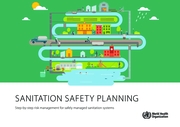
Manual for step-by-step risk management for safely managed sanitation systems. 2nd edition.
This Sanitation safety planning (SSP) manual provides practical, step-by-step guidance to assist in the i
...
mplementation of the 2018 World Health Organization (WHO) Guidelines on sanitation and health and the 2006 WHO Guidelines for safe use of wastewater, excreta and greywater in agriculture and aquaculture. The approach and tools should be applied to all sanitary systems to ensure that they are managed to meet health objectives.
The SSP manual is targeted at a variety of users at different levels including; health authorities and regulators, local authorities, sanitation utility managers, sanitation enterprises and farmers, community-based organizations, farmers associations and nongovernmental organizations.
more

In view of the ongoing political, peace and reconciliation, administrative and economic reforms as well as plans to establish the United Nations Development Assistance Framework (UNDAF) in 2018, WFP extended the current Protracted Relief and Recovery Operation (PRRO 200299), launched in January 2
...
013, by two years to include 2016 and 2017, with approved budget USD 343 million. To echo this extension and provide a more appropriate response to the country's rapid and multi-pronged transition, WFP adopted a transition strategy with gradually reduced emphasis on humanitarian assistance and greater focus on early recovery and development interventions. WFP's strategic engagement in-country was driven by the overarching goal to assist Myanmar to achieve the national Zero Hunger Challenge by 2025, and was guided by three priorities: emergency preparedness and response; nutrition; and provision of social safety nets.
more
Climate change triggers mounting food insecurity, poverty and displacement in Africa
The state of the Guinean health workforce is one of the country’s bottlenecks in advancing health outcomes. The impact of the 2014–2015 Ebola virus disease outbreak and resulting international attention has provided a policy window to invest in the workforce and reform the health system. This re
...
search constitutes a baseline study on the health workforce situation, professional education, and retention policies in Guinea. The study was conducted to inform capacity development as part of a scientific collaboration between Belgian and Guinean health institutes aiming to strengthen public health systems and health workforce development. It provides initial recommendations to the Guinean government and key actors.
more
