
Filter
6242
Text search:
stakeholders
Featured
Recommendations
521
New Publications
1835
Language
Document type
No document type
3416
Studies & Reports
1027
Guidelines
805
Manuals
374
Strategic & Response Plan
344
Fact sheets
96
Training Material
87
Situation Updates
50
Resource Platforms
16
Online Courses
10
Brochures
9
Infographics
7
Countries / Regions
Global
283
Kenya
236
India
187
Uganda
158
Nigeria
154
Ethiopia
152
Sierra Leone
149
Myanmar / Burma
133
South Africa
130
Nepal
129
Liberia
123
Malawi
112
Zambia
110
Tanzania
106
Ghana
100
Africa
97
Rwanda
90
Bangladesh
85
Western and Central Europe
85
Namibia
80
Latin America and the Carribbean
64
Syria
63
Congo, Democratic Republic of
56
Lesotho
53
Philippines
51
Ukraine
50
South Sudan
48
Indonesia
48
South–East Asia Region
43
Cambodia
42
East and Southern Africa
41
Guinea
40
West and Central Africa
37
Zimbabwe
35
Botswana
34
Asia
33
Senegal
32
Haiti
30
Mozambique
29
Middle East and North Africa
28
Eastern Europe
28
Pakistan
21
Burkina Faso
20
Venezuela
20
Eswatini/ Swaziland
19
Cameroon
18
Central African Republic
18
Yemen
18
Jordan
16
Afghanistan
16
Thailand
16
Germany
14
Lebanon
14
Colombia
14
Western Pacific Region
14
Benin
13
Eastern Europe and Central Asia
13
Vietnam
13
Mali
12
Somalia
12
Sudan
12
Sri Lanka
12
Moldova
12
Laos
11
Russia
11
Brazil
9
Madagascar
9
Albania
9
Tajikistan
9
Georgia
9
Côte d’Ivoire / Ivory Coast
8
USA
7
China
7
Papua New Guinea
7
Iran
7
Togo
6
Turkey
6
Peru
6
Timor Leste/ East Timor
6
Jamaica
6
Iraq
5
Chad
5
Gambia
5
North Macedonia
5
Burundi
5
Libya
5
Mexico
5
Bhutan
5
Armenia
5
Romania
5
Guinea-Bissau
4
Argentina
4
Paraguay
4
Poland
4
Palestine
4
Southern Africa
4
Kyrgyzstan
4
Turkmenistan
4
Niger
3
Egypt
3
Serbia
3
Hungary
3
Croatia
3
El Salvador
3
Greece
3
Angola
3
Guatemala
3
Nicaragua
3
Fiji
3
Estonia
3
Kazakhstan
3
Portugal
3
Belarus
3
Morocco
2
Saudi Arabia
2
Malaysia
2
Singapore
2
Honduras
2
Ecuador
2
Bolivia
2
Chile
2
Bulgaria
2
Slovakia
2
North America
2
Mauritius
2
Tunisia
2
United Kingdom
2
Spain
2
Mauritania
1
Ireland
1
Vanuatu
1
Dominican Republic
1
Other region
1
North Korea
1
Djibouti
1
Canada
1
Lithuania
1
Uzbekistan
1
Gabon
1
Japan
1
Denmark
1
Belgium
1
Maldives
1
Norway
1
Algeria
1
Azerbaijan
1
French Guyana
1
Israel
1
Bosnia and Herzegovina
1
Belize
1
Costa Rica
1
Panama
1
Authors & Publishers
Publication Years
Category
Countries
2516
Key Resources
477
Public Health
357
Clinical Guidelines
342
Women & Child Health
309
Capacity Building
98
Pharmacy & Technologies
45
Toolboxes
HIV
508
COVID-19
415
Mental Health
325
Disability
320
TB
283
Planetary Health
264
AMR
202
Conflict
171
Caregiver
169
Ebola & Marburg
168
NTDs
157
Rapid Response
133
Global Health Education
117
Refugee
104
Pharmacy
100
NCDs
95
2.0 Rapid Response
95
Natural Hazards
94
Malaria
79
Health Financing Toolbox
72
Cholera
37
Polio
32
Zika
28
Specific Hazards
26
Social Ethics
20
Typhoon
2

In the absence of a such a measure, and building on the success of developing the APCA African
Palliative Outcome Scale (POS) for adults, the African Palliative Care Association has developed the
APCA African Children’s POS. The tool has been validated across diseases, countries, settings and
...
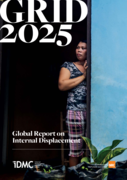
IDMC's Global Report on Internal Displacement (GRID) is the authoritative source for data and analysis on the state of internal displacement for the previous year.

Public health challenges over the past decade have highlighted the importance of approaching health through a holistic lens of human, animal, and environmental sectors, recognizing the need for a collaborative response against shared threats. Zoonotic diseases, transmitted between humans and animals
...

WHO guideline on balanced national controlled medicines policies to ensure medical access and safety
Access to medicines is essential for attainment of universal health coverage, which is central to achievement of the health-related Sustainable Development Goals. Controlled medicines include those such as opioids, benzodiazepines, barbiturates, amphetamines and others with identified or emergent cl
...

WHO, as the coordinating authority on international health, supports countries in protecting public health through evidence-based policies and actions. Considering the significant health burden and the multiple potential benefits of interventions, the WHO Air Quality, Energy and Health Unit aims to
...
Lesotho’s Social and Behaviour Change Communication Strategy is a strategic response to the high levels of HIV and TB prevalence in the country that are exacerbated by the persistence of structural and sio-economic difficulties, such as poverty, unemployment, gender inequality and more. This strat
...

The health impacts of climate change are no longer a distant threat. They are being felt here and now and becoming more extreme.
To address these threats, the WHO Asia-Pacific Centre for Environment and Health in the Western Pacific Region (ACE) was established in 2019 through a partnership with
...

he UNFPA “Programmatic guidelines: Cash and Voucher Assistance in Sexual and Reproductive Health programming in Emergencies” explains how CVA can be effectively integrated into humanitarian responses to help women, girls, and other vulnerable groups access lifesaving and comprehensive SRH servic
...
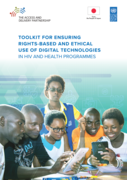
This Toolkit for ensuring rights-based and ethical use of digital technologies in HIV and health programmes is derived from the comprehensive UNDP Guidance on the rights-based and ethical use of digital technologies in HIV and health programmes document. The foundational UNDP Guidance document outli
...

The Best Buys for Disease Elimination is a practical, evidence-based guide to the most effective actions for countries to implement in order to eliminate communicable diseases. The guide highlights the efficient use of resources and prioritizing populations in vulnerable situations.
“The Region
...

On 4 September 2025, the Ministry of Health of the Democratic Republic of the Congo (DRC) declared an outbreak of Ebola Virus Disease (EVD) in Kasai Province, following confirmation of Zaire ebolavirus by the National Institute of Biomedical Research (INRB) in Bulape and Mweka Health Zones. As of 19
...

Building on the WHO guidelines for disclosure to children up to age 12 in 2011, this implementation guidance provides evidence on existing interventions that support children and adolescents living with HIV in the process of disclosure. It includes interventions that focuses on safe disclosure, as w
...

Adolescents and young adults aged 10-24 remain underserved in the global response against HIV. Combination prevention, treatment and care programmes use a mix of evidence-based interventions to meet the current HIV prevention needs of adolescents and young adults. However, there needs to be a focus
...

Strengthening global health security to protect the world against future epidemics and pandemics requires well-tested and decentralized capacities for the local detection and rapid containment of outbreaks of infectious disease. For such capacities to translate into effective response actions, ind
...

This document, with a focus on the built environment and health care facilities, intends to guide the audience in preparing for and responding to SARI pandemics caused by existing and novel pathogens. It provides technical guidance on designing, establishing, and managing health care facilities for
...


The document provides a standardized protocol for evaluating the Early Warning Alert and Response Network (EWARN), a surveillance system used during humanitarian emergencies when regular national health surveillance may be disrupted. The purpose of EWARN is to detect outbreaks of communicable diseas
...

In an era of constrained resources and tightening budgets, strategic prioritization in tuberculosis (TB) programming is more critical than ever. Countries must make informed decisions to allocate limited resources effectively - maximizing impact, preventing avoidable deaths, and sustaining progress
...

Global tuberculosis report 2025
recommended
The WHO Global tuberculosis report 2025 provides a comprehensive and up-to-date assessment of the TB epidemic and of progress in prevention, diagnosis and treatment of the disease, at global, regional and country levels. This is done in the context of global TB commitments, strategies and targets.
...
