
Filter
1421
Text search:
neonatal
death
Featured
130
509
Language
Document type
868
201
179
65
46
25
19
10
3
2
2
1
Countries
100
60
60
50
49
44
43
39
38
32
31
29
29
27
27
25
23
21
16
15
15
14
14
13
11
9
9
9
9
9
8
7
7
6
6
6
6
5
5
4
4
4
4
4
3
3
3
3
3
3
3
3
2
2
2
2
2
2
2
2
2
2
2
2
2
2
1
1
1
1
1
1
1
1
1
1
1
1
1
1
1
1
1
1
1
1
1
1
Authors & Publishers
Publication Years
Category
809
193
146
66
43
31
6
Toolboxes
73
70
35
33
27
26
25
25
22
19
18
17
17
14
12
12
12
11
11
11
10
5
2

Updated May 2021

UNHCR’s Public Health Strategy 2021-2025 is based on the lessons learnt, and builds on the achievements, of the Global Strategy for Public Health 2014-2018.
Progress was made on policies favouring inclusion and integration into national systems3 with 92% of 48 operations surveyed reporting refuge
...


Kenya Quality Model for Health - Health Facilities

Kenya Quality Model for Health - Hospitals
Infectious Diseases in Ukraine
recommended
Data on Infectious Diseases in Ukraine Now Available as a Free eBook to Help Medics and Relief Efforts During the War.
• Data on the 215+ infectious diseases endemic to Ukraine
• All published data on infections imported into Ukraine
To download the book, please click the button below and use
...

Safe water, sanitation and hygiene (collectively known as WASH) are crucial for human health and well-being. Yet, millions of people globally lack adequate WASH services and consequently suffer from or are exposed to a multitude of preventable illnesses.
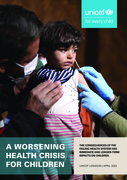
The consequences of the failing health system has immediate and longer-term impacts on children . April 2022
Available in English and Arabic
WHO invites Member States, health facilities and other entities to participate in the global effort to collect anonymized clinical data relating to suspected or confirmed cases of monkeypox and contribute data to the WHO Global Clinical Platform.
WHO has developed a clinical characterization case
...

This Guideline, the first for the country, draws from national health sector reforms and integration agenda as outlined in the key national strategic documents. The Guide applies lessons learnt from the SRH/HIV Linkages project and its scale-up; other national experiences and from regional and globa
...

The revision of the SRHR Policy is based on the results of the analysis of the implementation process of the past policy, which has provided evidence to
ensure that the revised policy is relevant and effective. The revision has also been done with the participation of all national stakeholders who
...

To better adapt current case management practices and address excess mortality in otherwise treatable
cases will require better knowledge of the demographic characteristics of the patients and comorbidities
which can make severe dehydration harder to tolerate physiologically. With this in mind, a
...

Ethiopia has been repeatedly affected by conflict, flooding, drought, and disease outbreaks in the past years. As of January 2024, the country is actively responding to the longest recorded cholera outbreak which started in August 2022, recurrent measles outbreaks which started in August 2021, and t
...
Heart and circulatory diseases is an umbrella term for all diseases of the heart and circulation. It includes everything from conditions that are inherited or that a person is born with, to those that develop later, such as coronary heart disease, atrial fibrillation, heart failure, stroke and vascu
...

Diabetes mellitus, also called diabetes, is a chronic metabolic condition in which the hormone insulin is not produced by the
pancreas in sufficient quantities or is not utilized effectively by the body to control blood glucose levels. As a result, blood
glucose levels are abnormally high (hypergl
...

The Global Status Report on Noncommunicable Diseases (NCDs) 2014 by the World Health Organization outlines the global impact of NCDs, including cardiovascular diseases, cancer, diabetes, and chronic respiratory diseases, which are responsible for a significant portion of global mortality, particular
...
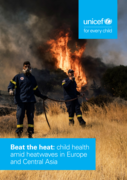
Beat the heat: child health amid heatwaves in Europe and Central Asia finds that half of these children died from heat-related illnesses in their first year of life. Most children died during the summer months.
"Around half of children across Europe and Central Asia – or 92 million children –
...
