
Filter
792
Text search:
World
Health
Organization
WHO,
FAO
Featured
53
212
Language
Document type
284
242
109
68
40
19
11
8
4
3
1
1
1
Countries
45
24
18
15
14
14
14
13
13
13
12
11
9
9
9
8
8
7
7
7
7
7
7
7
7
6
6
6
5
5
5
5
4
4
4
4
4
4
4
4
3
3
3
3
3
3
3
3
3
3
3
3
3
3
3
3
3
3
2
2
2
2
2
2
2
2
2
2
2
2
2
2
2
1
1
1
1
1
1
1
1
1
1
1
1
1
1
1
1
1
1
1
1
1
1
1
1
1
1
1
1
1
1
1
1
1
1
1
1
1
Authors & Publishers
Publication Years
Category
237
95
35
28
24
8
2
Toolboxes
149
131
60
47
42
33
27
25
20
19
8
7
7
6
6
5
5
5
4
4
3
3
2
1
1
1
Making the Case for Alcohol as a Public Health Threat in the Region. The purpose of this document is to explain the need for making alcohol a top public health priority in the region and the need fo
...
World Humanitarian Data and Trends presents global- and country-level data-and-trend analysis about humanitarian
crises and assistance. Its purpose is to consolidate this information and present it in an accessible way, providing policymakers, rese
...
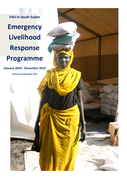
Strengthening resilient agricultural livelihoods
Level 3 responses are activated in the most complex and challenging humanitarian emergencies, when the highest level of mobilization is required across the humanitarian system. Even before the conflict escalated, the country suffered high levels of p
...

Core Knowledge for Emergency Preparedness and Response

This report sets out the compelling case for repurposing harmful agricultural producer support to reverse this situation, by optimizing the use of scarce public resources, strengthening economic recovery from the COVID-19 pandemic, and ultimately driving a food systems transformation that can suppor
...

The Food and Agriculture Organization of the United Nations (FAO) launched a new Framework for Environmental and Social Management (FESM) to ensure that both people and the environment are protected
...

Tsetse traps and targets (insecticide-impregnated screens) function by attracting the flies to a device that collects and/or kills them. Traps can be used for entomological surveillance, and also for control. Targets are simpler than traps, but are not used for surveillance. They are impregnated wit
...

The OIE has been working on the AMR issue for a long
time. In undertaking its role as a standard- setting organisation*
for animal health, including zoonoses, the OIE has developed
a wide range of international standards on antimicrobial
agents,
...

A role for nuclear techniques
Antimicrobials play a critical role in the treatment of human and animal (aquatic and terrestrial) diseases, which has led to their widespread application and use. Antimicrobial resistance (AMR) is the ability of microorganisms to stop an antibiotic, such as an antimic
...
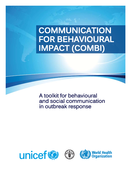
A toolkit for behavioural and social communication in outbreak response

Compared to the previous five-year assessment period 2011–2015, the current five-year period 2015–2019 has seen a continued increase in carbon dioxide (CO2 ) emissions and an accelerated increase in the atmospheric concentration of major greenhouse gases (GHGs), with growth rates nearly 20% high
...
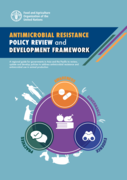
A regional guide for governments in Asia and the Pacific to review, update and develop policies to address antimicrobial resistance and antimicrobial use in animal production
El informe de este año presenta una actualización de la situación de la seguridad alimentaria y la nutrición en América Latina y el Caribe, incluyendo también estimaciones actualizadas sobre el costo y la asequibilidad de una dieta saludable (Parte 1). Además, el informe examina el complejo e
...
In aquaculture, antibiotics have been used mainly for therapeutic purposes and as prophylactic agents. The contribution to antimicrobial resistance of antibiotics used in aquaculture is reviewed here, using a risk analysis framework. Some recommendations on responsible conduct in this context are pr
...

State of the Climate in Asia 2023
recommended
Asia remained the world’s most disaster-hit region from weather, climate and water-related hazards in 2023. Floods and storms caused the highest number of reported casualties and economic losses, whilst the impact of heatwaves became more severe,
...

Unlike foot and mouth disease, the avian flu, e-coli or listeria, the COVID-19 pandemic has not spread directly through livestock or agriculture commodities, and has therefore not directly disrupted on-farm production. However, the crisis is undermining the ability of farms and agri-enterprises to e
...
The guide book provides a set of tools and methods to assess existing structures and capacities of national, district and local institutions with responsibilities for Disaster Risk Management (DRM) in order to improve their effectiveness and the integration of DRM concerns into development planning,
...
