
Filter
3690
Text search:
fever
Featured
428
1094
Language
3475
140
118
49
47
24
24
16
12
7
7
6
6
6
6
6
5
5
5
4
4
4
4
4
4
4
3
3
3
2
2
2
2
2
2
2
2
2
1
1
1
1
1
1
1
1
1
1
1
1
1
1
1
1
1
1
1
1
1
1
1
1
1
1
1
1
1
1
1
Document type
1864
614
452
212
139
121
99
51
47
43
24
13
10
1
Countries
263
161
148
142
111
97
90
87
78
73
61
60
57
56
55
52
45
45
44
44
44
37
37
36
35
29
26
24
24
23
22
21
21
20
20
20
16
16
14
13
13
12
11
11
10
10
10
10
10
9
9
9
9
9
9
7
7
7
7
7
7
7
6
6
6
5
5
5
5
4
4
4
4
4
4
3
3
3
3
3
3
3
3
3
3
2
2
2
2
2
2
2
2
2
2
2
2
2
2
2
2
1
1
1
1
1
1
1
1
1
1
1
1
1
1
1
1
1
1
1
1
1
1
1
1
1
1
1
1
1
1
1
1
1
1
Authors & Publishers
522
187
107
97
86
75
67
65
61
45
38
26
24
22
22
20
20
19
17
17
17
17
17
17
17
16
16
15
14
13
12
11
11
11
10
10
10
10
10
10
10
10
10
10
10
10
10
9
9
9
9
9
9
8
8
8
8
8
8
8
8
8
8
8
8
8
8
8
7
7
7
7
7
7
7
7
7
6
6
6
6
6
6
6
6
6
6
6
6
6
6
6
6
6
6
6
6
6
6
6
6
6
6
6
5
5
5
5
5
5
5
5
5
5
5
5
5
5
5
5
5
5
5
5
5
5
5
4
4
4
4
4
4
4
4
4
4
4
4
4
4
4
4
4
4
4
4
4
4
4
4
4
4
4
4
4
4
4
4
4
4
4
4
4
4
4
4
4
4
4
3
3
3
3
3
3
3
3
3
3
3
3
3
3
3
3
3
3
3
3
3
3
3
3
3
3
3
3
3
3
3
3
3
3
3
3
3
3
3
3
3
3
3
3
3
3
3
3
3
3
3
3
3
3
3
3
3
3
3
3
3
3
3
3
3
3
3
3
3
3
3
3
3
3
3
3
2
2
2
2
2
2
2
2
2
2
2
2
2
2
2
2
2
2
2
2
2
2
2
2
2
2
2
2
2
2
2
2
2
2
2
2
2
2
2
2
2
2
2
2
2
2
2
2
2
2
2
2
2
2
2
2
2
2
2
2
2
2
2
2
2
2
2
2
2
2
2
2
2
2
2
2
2
2
2
2
2
2
2
2
2
2
2
2
2
2
2
2
2
2
2
2
2
2
2
2
2
2
2
2
2
2
2
2
2
2
2
2
2
2
2
2
2
2
2
2
2
2
2
2
2
2
2
2
2
2
2
2
2
2
2
2
2
2
2
2
2
2
2
2
2
2
2
2
2
2
2
2
2
2
2
2
2
2
2
2
2
2
2
2
2
2
2
2
2
2
2
2
2
2
2
2
2
2
2
2
2
2
2
2
2
2
2
2
2
2
2
2
2
2
2
2
2
2
2
2
2
2
2
2
2
2
2
2
2
2
1
1
1
1
1
1
1
1
1
1
1
1
1
1
1
1
1
1
1
1
1
1
1
1
1
1
1
1
1
1
1
1
1
1
1
1
1
1
1
1
1
1
1
1
1
1
1
1
1
1
1
1
1
1
1
1
1
1
1
1
1
1
1
1
1
1
1
1
1
1
1
1
1
1
1
1
1
1
1
1
1
1
1
1
1
1
1
1
1
1
1
1
1
1
1
1
1
1
1
1
1
1
1
1
1
1
1
1
1
1
1
1
1
1
1
1
1
1
1
1
1
1
1
1
1
1
1
1
1
1
1
1
1
1
1
1
1
1
1
1
1
1
1
1
1
1
1
1
1
1
1
1
1
1
1
1
1
1
1
1
1
1
1
1
1
1
1
1
1
1
1
1
1
1
1
1
1
1
1
1
1
1
1
1
1
1
1
1
1
1
1
1
1
1
1
1
1
1
1
1
1
1
1
1
1
1
1
1
1
1
1
1
1
1
1
1
1
1
1
1
1
1
1
1
1
1
1
1
1
1
1
1
1
1
1
1
1
1
1
1
1
1
1
1
1
1
1
1
1
1
1
1
1
1
1
1
1
1
1
1
1
1
1
1
1
1
1
1
1
1
1
1
1
1
1
1
1
1
1
1
1
1
1
1
1
1
1
1
1
1
1
1
1
1
1
1
1
1
1
1
1
1
1
1
1
1
1
1
1
1
1
1
1
1
1
1
1
1
1
1
1
1
1
1
1
1
1
1
1
1
1
1
1
1
1
1
1
1
1
1
1
1
1
1
1
1
1
1
1
1
1
1
1
1
1
1
1
1
1
1
1
1
1
1
1
1
1
1
1
1
1
1
1
1
1
1
1
1
1
1
1
1
1
1
1
1
1
1
1
1
1
1
1
1
1
1
1
1
1
1
1
1
1
1
1
1
1
1
1
1
1
1
1
1
1
1
1
1
1
1
1
1
1
1
1
1
1
1
1
1
1
1
1
1
1
1
1
1
1
1
1
1
1
1
1
1
1
1
1
1
1
1
1
1
1
1
1
1
1
1
1
1
1
1
1
1
1
1
1
1
1
1
1
1
1
1
1
1
1
1
1
1
1
1
1
1
1
1
1
1
1
1
1
1
1
1
1
1
1
1
1
1
1
1
1
1
1
1
1
1
1
1
1
1
1
1
1
1
1
1
1
1
1
1
1
1
1
1
1
1
1
1
1
1
1
1
1
1
1
1
1
1
1
1
1
1
1
1
1
1
1
1
1
1
1
1
1
1
1
1
1
1
1
1
1
1
1
1
1
1
1
1
1
1
1
1
1
1
1
1
1
1
1
1
1
1
1
1
1
1
1
1
1
1
1
1
1
1
1
1
1
1
1
1
1
1
1
1
1
1
1
1
1
1
1
1
1
1
1
1
1
1
1
1
1
1
1
1
1
1
1
1
1
1
1
1
1
1
1
1
1
1
1
1
1
1
1
1
1
1
1
1
1
1
1
1
1
1
1
1
1
1
1
1
1
1
1
1
1
1
1
1
1
1
1
1
1
1
1
1
1
1
1
1
1
1
1
1
1
1
1
1
1
1
1
1
1
1
1
1
1
1
1
1
1
1
1
1
1
1
1
1
1
1
1
1
1
1
1
1
1
1
1
1
1
1
1
1
1
1
1
1
1
1
1
1
1
1
1
1
1
1
1
1
1
1
1
1
1
1
1
1
1
1
1
1
1
1
1
1
1
1
1
1
1
1
1
1
1
1
1
1
1
1
1
1
1
1
1
1
1
1
1
1
1
1
1
1
1
1
1
1
1
1
1
1
1
1
1
1
1
1
1
1
1
1
1
1
1
1
1
1
1
1
1
1
1
1
1
1
1
1
1
1
1
1
1
1
1
1
1
1
1
1
1
1
1
1
1
1
1
1
1
1
1
1
1
1
1
1
1
1
1
1
1
1
1
1
1
1
1
1
1
1
1
1
1
1
1
1
1
1
1
1
1
1
1
1
1
1
1
1
1
1
1
1
1
1
1
1
1
1
1
1
1
1
1
1
1
1
1
1
1
1
1
1
1
1
1
1
1
1
1
1
1
1
1
1
1
1
1
1
1
1
1
1
1
1
1
1
1
1
1
1
1
1
1
1
1
1
1
1
1
1
1
1
1
1
1
1
1
1
1
1
1
1
1
1
1
1
1
1
1
1
1
1
1
1
1
1
1
1
1
1
1
1
1
1
1
1
1
1
1
1
1
1
1
1
1
1
1
1
1
1
1
1
1
1
1
1
1
1
1
1
1
1
1
1
1
1
1
1
1
1
1
1
1
1
1
1
1
1
1
1
1
1
1
1
1
1
1
1
1
1
1
1
1
1
1
1
1
1
1
1
1
1
1
1
1
1
1
1
1
1
1
1
1
1
1
1
1
1
1
1
1
1
1
1
1
1
1
1
1
1
1
1
1
1
1
1
1
1
1
1
1
1
1
1
1
1
1
1
1
1
1
1
1
1
1
1
1
1
1
1
1
1
1
1
1
1
1
1
1
1
1
1
1
1
1
1
1
1
1
1
1
1
1
1
1
1
1
1
1
1
1
1
1
1
1
1
1
1
1
1
1
1
1
1
1
1
1
1
1
1
1
1
1
1
1
1
1
1
1
1
1
1
1
1
1
1
1
1
1
1
1
1
1
1
1
1
1
1
1
1
1
1
1
1
1
1
1
1
1
1
1
1
1
1
1
1
1
1
1
1
1
1
1
1
1
1
1
1
1
1
1
1
1
1
1
1
1
1
1
1
1
1
1
1
1
1
1
1
1
1
1
1
1
1
1
1
1
1
1
1
1
1
1
1
1
1
1
1
1
1
1
1
1
1
1
1
1
1
1
1
1
1
1
1
1
1
1
1
1
1
1
1
1
1
1
1
1
1
1
1
1
1
1
1
1
1
1
1
1
1
1
1
1
1
1
1
1
1
1
1
1
1
1
1
1
1
1
1
1
1
1
1
1
1
1
1
1
1
1
1
1
1
1
1
1
1
1
1
1
1
1
1
1
1
1
1
1
1
1
1
1
1
1
1
1
1
1
1
1
1
1
1
1
1
1
1
1
1
1
1
1
1
1
1
1
1
1
1
1
1
1
1
1
1
1
1
1
1
1
1
1
1
1
1
1
1
1
1
1
1
1
1
1
1
1
1
1
1
1
1
1
1
1
1
1
1
1
1
1
1
1
1
1
1
1
1
1
1
1
1
1
1
1
1
1
1
1
1
1
1
1
1
1
1
1
1
1
1
1
1
1
1
1
1
1
1
1
1
1
1
1
1
1
1
1
1
1
1
1
1
1
1
1
1
1
1
1
1
1
1
1
1
1
1
1
1
1
1
1
1
1
1
1
1
1
1
1
1
1
1
1
1
1
1
1
1
1
1
1
1
1
1
1
1
1
1
1
1
1
1
1
1
1
1
1
1
1
1
1
1
1
1
1
1
1
1
1
1
1
1
1
1
1
1
1
1
1
1
1
1
1
1
1
1
1
1
1
1
1
1
1
1
1
1
1
1
1
1
1
1
1
1
1
1
1
1
1
1
1
1
1
1
1
1
1
1
1
1
1
1
1
1
1
1
1
1
1
1
1
1
1
1
1
1
1
1
1
1
1
1
1
1
1
1
1
1
1
1
1
1
1
1
1
1
1
1
1
1
1
1
1
1
1
1
1
1
1
1
1
1
1
1
1
1
1
1
1
1
1
1
1
1
1
1
1
1
1
1
1
1
1
1
1
1
1
1
1
1
1
1
1
1
1
1
1
1
1
1
1
1
1
1
1
1
1
1
1
1
1
1
1
1
1
1
1
1
1
1
1
1
1
1
1
1
1
1
1
1
1
1
1
1
1
1
1
1
1
1
1
1
1
1
1
1
1
1
1
1
1
1
1
1
1
1
1
1
1
1
1
1
1
1
1
1
1
1
1
1
1
1
1
1
1
1
1
1
1
1
1
1
1
1
1
1
1
1
1
1
1
1
1
1
1
1
1
1
1
1
1
1
1
1
1
1
1
1
1
1
1
1
1
1
1
1
1
1
1
1
1
1
1
1
1
1
1
1
1
1
1
1
1
1
1
1
1
1
1
1
1
1
1
1
1
1
1
1
1
1
1
1
1
1
1
1
1
1
1
1
1
1
1
1
1
1
1
1
1
1
1
1
1
1
1
1
1
1
1
1
1
1
1
1
1
1
1
1
1
1
1
1
1
1
1
1
1
1
1
1
1
1
1
1
1
1
1
1
1
1
1
1
1
1
1
1
1
1
1
1
1
1
1
1
1
1
1
1
1
1
1
1
1
1
1
1
1
1
1
1
1
1
1
1
1
1
1
1
1
1
1
1
1
1
1
1
1
1
1
1
1
1
1
1
1
1
1
1
1
1
1
1
1
1
1
1
1
1
1
1
1
1
1
1
1
1
1
1
1
1
1
1
1
1
1
1
1
1
1
1
1
1
1
1
1
1
1
1
1
1
1
1
1
1
1
1
1
1
1
1
1
1
1
1
1
1
1
1
1
1
1
1
1
1
1
1
1
1
1
1
1
1
1
1
1
1
1
1
1
1
1
1
1
1
1
1
1
1
1
1
1
1
1
1
1
1
1
1
1
1
1
1
1
1
1
1
1
1
1
1
1
1
1
1
1
1
1
1
1
1
1
1
1
1
1
1
1
1
1
1
1
1
1
1
1
1
1
1
1
1
1
1
1
1
1
1
1
1
1
1
1
1
1
1
1
1
1
1
1
1
1
1
1
1
1
1
1
1
1
1
1
1
1
1
1
1
1
1
1
1
1
1
1
1
1
1
1
1
1
1
1
1
1
1
1
1
Publication Years
1186
2117
352
32
2
1
Category
1502
401
174
162
155
93
32
Toolboxes
412
390
229
165
121
113
107
97
96
90
88
67
62
61
51
44
43
40
39
35
26
22
21
15
2

This technical briefing paper details the construction and setup of medical isolation facilities in support of infectious disease outbreak responses.
On May 17, 2026, the World Health Organization (WHO) declared the Ebola outbreak in the Democratic Republic of Congo (DRC) and Uganda as a Public Health Emergency of International Concern (PHEIC). This was followed by Africa Centres for Disease Control and Prevention (Africa CDC) declaration on 18 M
...
ay 2026 as a Public Health Emergency of Continental Security (PHECS) signalling the seriousness of the situation and calling for immediate actions. Unlike previous outbreaks of Ebola Virus Disease (EVD) caused by zaire strain for which validated countermeasures have been available, there is currently lack of vaccines and therapeutics for the Bundibugyo ebolavirus strain that is driving the current outbreak. In addition, only a limited number of clinical diagnostics tests have been approved or validated for use. These gaps in effective medical countermeasures are constraining the outbreak response efforts.
more

Ebola virus (EBOV) and Marburg virus (MARV) are associated with severe, potentially fatal, systemic diseases. During the development of the Infection Prevention and Control Guideline for Ebola Disease and Marburg Disease, the Guideline Development Group (GDG) identified multiple research gaps in key
...
areas and practices that lacked strong evidence to help in the formulation of recommendations. Because of the lack of strong evidence, there exists an array of research questions related to infection prevention and control (IPC) in the context of Ebola Disease (EBOD) and Marburg Disease (MARD). Identifying those that are priorities would help policy-makers target efforts and funding to support the most relevant studies. The objective of this research prioritization exercise was to identify the short- to medium-term (over the next two years) priority research questions for IPC in health care settings based on the gaps identified during the EBOD/MARD IPC guideline development process.
more

- The goal of diagnostic testing for Ebola and Marburg virus diseases is to identify cases to provide timely and appropriate care and to stop disease transmission.
- All individuals meeting the case definition for Ebola or Marburg virus diseases should be tested.
- The recommended sample type
...
for testing for orthoebolaviruses and orthomarburgviruses is whole blood or plasma for living patients, and oral swab for deceased individuals.
- Laboratory confirmation of Orthoebolavirus and Orthomarburgvirus infections and further species identification should be done using nucleic acid amplification testing (NAAT).
- If a suspected case tests negative (living patient) and the blood was drawn less than 72 hours after symptom onset, a second test should be performed with blood drawn more than 72 hours after symptom onset.
- All manipulations in laboratory settings of samples originating from suspected, probable or confirmed cases of Ebola and Marburg virus diseases should be conducted with appropriate biosafety measures according to a risk-based approach.
- Whole or partial genome sequencing can be used to characterize viruses and complement epidemiologic investigations.
- Member States are strongly encouraged to share genetic sequence data (GSD) in publicly accessible databases.
- Member States are required to immediately notify the World Health Organization (WHO) under the International Health Regulations (IHR) 2005 of positive laboratory results.
more
Sudan virus disease is a severe, often fatal illness affecting humans and other primates that is due to Orthoebolavirus sudanense (Sudan virus), a viral species belonging to the same genus of the virus causing Ebola virus disease. This webinar will provide an overview of the current outbreak of Suda
...
n virus disease: what we know, the current outbreak in Uganda, and prevention and control measures.
more
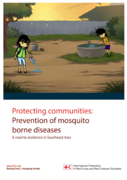
This comic book is a children-friendly tool to support school safety, to raise awareness and prevention of mosquito-borne diseases such as dengue, zika and chikungunya, with the key messages: clean up, cover up and keep it up.
Available in Lao, Khmer and Vietnamese

On 4 September 2025, the Ministry of Health of the Democratic Republic of the Congo (DRC) declared an outbreak of Ebola Virus Disease (EVD) in Kasai Province, following confirmation of Zaire ebolavirus by the National Institute of Biomedical Research (INRB) in Bulape and Mweka Health Zones. As of 19
...
September, there have been 48 total cases (38 confirmed, 10 probable) with 31 deaths (21 confirmed, 10 probable) and a CFR of 64.5%. Among laboratory confirmed cases, 16 deaths were recorded (CFR: 45.7%). Four deaths occurred among health workers, underscoring the risk of nosocomial transmission. Most cases (39.7%) are among adults aged 20 years and above, in a densely populated, remote, and under-resourced area.
The outbreak is driven by multiple risk factors, including transmission in health facilities with limited infection prevention and control (IPC) measures and personal protective equipment (PPE), incomplete contact tracing, delayed detection, and unsafe burial practices. High population mobility between Bulape and Tshikapa, reliance on traditional healers, and the concurrent mpox outbreak are further straining the fragile health system and increasing the risk of geographic spread.
more
The West African Ebola virus disease (EVD) outbreak in 2014 emerged in a region in Africa that had previously not reported any EVD outbreak. Subsequently, the outbreak rapidly spread and was protracted in the three Mano River basin countries (Guinea, Sierra Leone and Liberia), with spillover cases i
...
n Nigeria, Senegal and Mali and, for the first time, importation into Europe and the USA. It became the most extensive and protracted EVD outbreak in history, followed by the 2018 outbreak in the Democratic Republic of the Congo (DRC). For the first time, cases were reported in urban centers, underscoring the urban spread of the disease. Its devastation had a far-reaching impact on lives in the three largely affected countries for years to follow. A total of 28,616 cases and 11,310 deaths were reported from Guinea, Sierra Leone and Liberia, with an additional 36 cases reported from Italy, Mali, Nigeria, Senegal, Spain, the UK and the USA.
more
L’épidémie de maladie à virus Ebola représente l’une des menaces sanitaires les plus graves pour la santé publique mondiale, en raison de sa létalité élevée, de sa propagation rapide et de ses conséquences sociales, économiques et sécuritaires. L’expérience des 16 précédentes fl
...
ambées en République Démocratique du Congo et dans d’autres pays d’Afrique de l’Ouest a montré que la préparation et la réponse rapide sont essentielles pour contenir efficacement la maladie et sauver des vies.
more
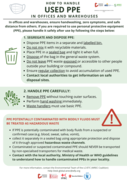
How to Handle PPE in Offices and Warehouses (WREC)
Introduction à la maladie d’Ebola
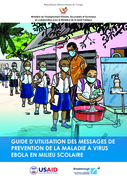
La récurrence des épidémies de la maladie à virus Ebola constitue un problème important de santé publique pour la République Démocratique du Congo. Cette situation épidémique qui sévit dans les communautés concerne toutes les couches de la population y compris dans la communauté scolair
...
e. Outre la maladie à virus Ebola et la Covid-19 pouvant se transmettre facilement en milieu scolaire, certaines maladies zoonotiques parasitaires et fungiques y sont fréquemment observées chez les élèves. Il est à noter que 60% des maladies infectieuses humaines sont zoonotiques. La protection des enfants et des établissements d’enseignement s’avère particulièrement importante. Il est nécessaire de prendre des précautions pour éviter la propagation éventuelle de la COVID-19 en milieu scolaire. Cependant, il faut également veiller à ne pas stigmatiser les élèves et le personnel susceptibles d’avoir été exposés au virus
more
Le monde est aujourd’hui confronté à de nombreux problèmes sanitaires, avec
des conséquences néfastes sur tous les plans, qui expliquent un changement de
paradigme en matière de gestion des risques. Aussi, compte tenu des limites notées
dans les cloisonnements entre les secteurs de la sa
...
nté humaine et de la santé animale
dans la gestion des problèmes de santé publique, il s’avère plus que nécessaire de
mutualiser les forces entre secteurs, entre disciplines, mais également, de bien gérer
les rumeurs sur les maladies.
more
Previous Ebola virus disease (EVD) outbreaks offer
lessons for public health experts responding to the 11th
outbreak. This review highlights that responders need
to build more trust with the communities they serve. It
suggests that language is fundamental to that.
Ce guide du dialogue communautaire a été élaboré pour promouvoir la participation active des communautés dans la réponse et la prévention des crises sanitaires en Côte d'Ivoire.
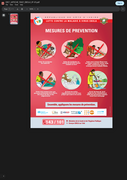
Infographic
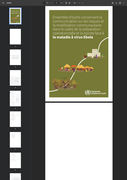
Cet ensemble d’outils constitue une panoplie complète d’outils et d’instruments pratiques conçus pour aider les professionnels, les responsables politiques et les partenaires impliqués dans la communication sur les risques et la mobilisation communautaire (CRMC) au niveau national à planif
...
ier et à mettre en œuvre des activités concernant la
préparation opérationnelle et la riposte en cas de flambée épidémique de maladie à virus Ebola
more
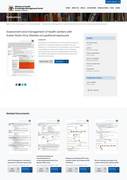
The webpage presents a guidance document developed by Uganda’s Ministry of Health for the assessment and management of healthcare workers who may have been exposed to Sudan Ebola Virus Disease (SVD) in the workplace. The document provides protocols for identifying and evaluating occupational expos
...
ure risks, monitoring exposed healthcare workers, and implementing appropriate infection prevention and control measures. Its main purpose is to support healthcare facilities in protecting staff, reducing the risk of transmission, and ensuring a safe and effective response to suspected Ebola exposures before infection is confirmed. The guidance specifically focuses on exposures related to the Sudan strain of the Ebola virus and serves as a practical tool for healthcare settings during Ebola outbreaks.
more
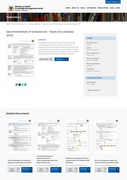
The webpage “Decontamination of Ambulances for Ebola Virus Disease (EVD)” provides guidance on how to safely clean and disinfect ambulances that have been used to transport suspected or confirmed Ebola patients. It outlines the procedures for decontaminating vehicle surfaces, medical equipment,
...
and potentially contaminated materials, while emphasizing the correct use of personal protective equipment (PPE) and infection prevention and control measures. The document aims to reduce the risk of Ebola transmission and ensure the safety of healthcare workers, ambulance personnel, and the public during outbreak response operations.
more
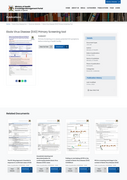
The Ebola Virus Disease (EVD) Primary Screening Tool is a job aid developed to help healthcare workers identify individuals who may have symptoms or risk factors associated with Ebola before they enter a health facility. The tool supports the early detection of suspected Ebola cases through an initi
...
al screening process, allowing for timely isolation, referral, and infection prevention measures. Its purpose is to reduce the risk of Ebola transmission within healthcare settings and strengthen outbreak preparedness and response efforts.
This screening tool was developed as part of Uganda’s Ebola preparedness and response activities during the 2022 Sudan Ebola Virus Disease outbreak.
more
