
Filter
507
Featured
54
69
Language
Document type
207
140
32
27
24
21
16
16
7
6
6
2
1
Countries
50
25
16
8
7
6
5
3
3
2
2
2
2
2
2
1
1
1
1
1
1
1
1
1
1
1
1
1
1
1
1
1
Authors & Publishers
Publication Years
Category
60
47
28
20
17
7
4

This training guide is designed to enable participants to understand the human rights perspective on migration, and how human rights laws and standards can be operationalized to make migration safer and an empowering experience for all. It provides an introduction to related principles and issues an
...
Los combustibles fósiles (carbón, petróleo y gas) son, con diferencia, los que más contribuyen al cambio climático mundial, ya que representan más del 75 % de las emisiones mundiales de gases de efecto invernadero y casi el 90 % de todas las emisiones de dióxido de carbono.
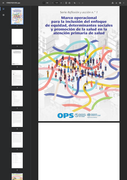
Este primer número de la serie Reflexión y acción presenta un marco operativo para incluir el enfoque de equidad, los determinantes sociales de la salud y la promoción de la salud en la atención primaria de salud (APS) en la Región de las Américas. La publicación responde a la necesidad de a
...

The Global Report on Food Crises 2026 provides a comprehensive overview of acute food insecurity, acute malnutrition and displacement in countries experiencing food crises. The report analyzes the scale, severity and drivers of food crises worldwide, highlighting the impacts of conflict, weather ext
...
Explore Global Health articles from The New England Journal of Medicine
Accessed August 2025.
The learning platform supports the learning needs of organizations and individuals with responsibilities in public health and other related sectors responsible for strengthening health security by implementing the IHR 2005 through a wide range of learning programs, activities
...
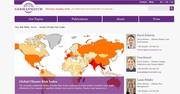
The Climate Risk Index (CRI) ranks countries by the human and economic toll of extreme weather. The latest edition highlights increasing losses and the urgent need for stronger climate resilience and action.
Poverty is both a cause and a consequence of poor health, and the scarcity of resources limits access to
essential health care services.
Le Tchad reste confronté à un cycle récurrent de crises alimentaires et nutritionnelles ayant un impact négatif sur la santé et l’état nutritionnel des populations en général et celle des personnes les plus vulnérables que sont les enfants, les femmes enceintes et/ou allaitantes et les pe
...
The place where you live, the communities you belong to, your education level, ethnicity, race, income and gender, and
whether you have a disability, all make a huge difference to how long you can expect to live a healthy life. People in the
country with the highest life expectancy will, on av
...

The brief on key findings from the 2025 edition of the WHO anaemia estimates provides a snapshot of the current status of anaemia among women aged 15–49 years at the country, regional, and global levels, along with progress toward achieving the global anaemia target by 2030, in alignment with the
...

We can't stop at almost. 2025 Goalkeeper Report
recommended
2025 is the first year of this century where child deaths will increase.
But we can stop this reversal before it becomes a trend, even in a time of tight budgets.
With proven solutions and next-generation innovations that do more with less, we can save millions of children's lives, protect the pro
...
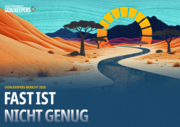
Fast ist nicht genug. 2025 Goalkeeper Report
recommended
2025 ist das erste Jahr dieses Jahrhunderts, in dem die Kindersterblichkeit steigen wird.
Aber wir können diese Umkehrung stoppen, bevor sie zu einem Trend wird, selbst in Zeiten knapper Budgets.
Mit bewährten Lösungen und Innovationen der nächsten Generation, die mit weniger mehr erreichen, k
...
Ne nous arrêtons pas à mi-chemin. Rapports
recommended
2025 sera la première année de ce siècle où le nombre de décès d'enfants augmentera.
Mais nous pouvons mettre fin à ce renversement de tendance avant qu'il ne devienne une norme, même en période de restrictions budgétaires.
Grâce à des solutions éprouvées et à des innovations de nou
...

2025 es el primer año de este siglo en el que aumentará la mortalidad infantil.
Pero podemos detener este retroceso antes de que se convierta en una tendencia, incluso en una época de presupuestos ajustados.
Con soluciones probadas e innovaciones de última generación que permiten hacer más c
...
The window to 2030, the SDG target year, is closing. Without accelerated and sustained progress, hard-won UHC gains risk being lost. Using revised and improved UHC indicators the report presents the latest available UHC data and concludes with a call to shared action.
Progress in reducing new HIV infections among children has stagnated in recent years
El cambio climático está intesificando el calor extremo, con efectos graves sobre la salud.

The State of Food Security and Nutrition in the World 2025 examines global progress towards ending hunger, food insecurity and malnutrition, with special attention to the impact of food price inflation. The report provides updated estimates on hunger, food insecurity, affordability of healthy diets
...

The risk of emergence and re-emergence of arboviruses with pandemic potential has increased as a global public health threat and will continue to do so in the years to come. The Global Arbovirus Initiative outlines an integrated approach across these viruses and disciplines that will enable optimal
...
