
Filter
938
Text search:
traumatic
experience
Featured
109
176
Language
Document type
572
127
104
69
24
17
10
6
5
3
1
Countries
31
30
26
22
22
18
17
15
12
10
10
10
9
9
9
9
8
7
7
7
7
6
6
6
6
6
5
5
5
4
4
4
4
4
3
3
3
3
3
3
3
2
2
2
2
2
2
2
2
2
2
2
2
2
2
2
1
1
1
1
1
1
1
1
1
1
1
1
1
1
1
1
1
1
1
1
1
Authors & Publishers
Publication Years
Category
185
79
73
61
28
27
3
1
Toolboxes
337
66
61
57
45
32
24
17
16
15
13
12
11
9
7
5
4
4
3
3
3
2
2
2
1

After a frightening or distressing experience (any kind of injury, a physical or sexual assault, car crash, fire, or other natural disaster), a child or teen may suffer psychological
stress in addition to any physical injuries.
When these reaction
...

Post-traumatic symptoms in Ghanaian children. Thesis for Master of Philosophy in Peace and Conflict Studies (PECOS). This study investigated whether Ghanaian children exposed to low intensity warfare exper
...
Background: Evidence based treatment interventions for young people with first-episode psychosis (FEP) and trauma histories is lacking. Although case formulation (CF) has been widely regarded in cognitive behavioural therapy manuals as beneficial, there is limited empirical research examining how cl
...
Children and youth can face emotional strains after a traumatic event such as a car crash or violence. Disasters also may leave them with long-lasting harmful effects. When children experience a tra
...
Refugee children and adolescents exhibit resilience despite a history of trauma. However, trauma can affect a refugee
child’s emotional and behavioral development. Mental health providers should consider how the refugee experience (e.g.,
exposur
...
Posttraumatic stress disorder (PTSD) in children and adolescents occurs as a result of a child’s exposure to one or more traumatic events: actual or threatened death, serious injury, or sexual violence. The victim may
...

The nature of humanitarian work has also drastically changed over the last
decade. Humanitarian workers have paid dearly in the face of violence and
terrorism. Burn out and after-effects of traumatic experiences constitute a
major risk for humani
...

Background: Traumatic stress may arise from various incidents often leading to posttraumatic stress disorder (PTSD). The lifetime prevalence of PTSD is estimated at 1% – 2% in Western Europe, 6% – 9% in North America and at just over 10% in coun
...
Information booklet on Post Traumatic Stress Disorder. What is Post-Traumatic Stress Disorder (PTSD)? Who develops PTSD? What are the symptoms of PTSD? Why do some people develop PTSD and other peo
...
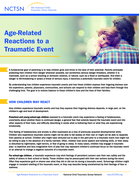

Post-Traumatic Stress Disorder (PTSD) in children and adolescents occurs when a child is exposed to one or more events that are unexpected, uncontrollable, life-threatening, and likely to cause serious harm or injury to himself/herself or someone si
...
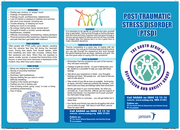
Brochure on PTSD: If you are like many South Africans and have been the victim of violent crime, abuse, accidents, loss, or illness, you may be suffering from a very real illness – Post Traumatic Stress Disorder or PTSD. Many victims of trauma in
...
The aim of this study is to research deeply on the post-traumatic stress disorder in sexually abused children. Proving the presence of forms of the disorder in children and the their treatment mode will be in the center of the study. The methods use
...
This brochure is designed to help people who have experienced traumatic events and their families.
Available in 10 languages: albanian, arabic, german, french, english, serbian/bosnian/croatian, farsi, tamil, tigrinya, turkish. For other versions
...
Several diagnostic criteria of Post-traumatic Stress Disorder (PTSD) are remarkably similar to symptoms reported by individuals with depression, particularly as they manifest as cognitive processing deficits in children. Because of this overlap in p
...
This brochure will briefly look at childhood trauma and PTSD, discussing the symptoms that may be seen in children and adults, as well as discussing some treatment options. If you do read this brochure and feel that your experiences and current symptoms match those of PTSD then we encourage you to s
...

Post-traumatic stress disorder: NICE guideline
recommended
NICE guideline | This guideline covers recognising, assessing and treating post-traumatic stress disorder (PTSD) in children, young people and adults. It aims to improve quality of life by reducing symptoms of PTSD such as anxiety, sleep problems an
...

Tips for Helping a Child or Teen Recover from Trauma to help your child regain emotional balance, restore his or her trust in the world,and move on from the traumatic event.
How to recognise Post-Traumatic Stress Disorder | The nature and cause of Post-Traumatic Stress Disorder | Treatment and referral | Sources of further information | Compiled by the Scientific & Advi
...
