
Filter
141
Text search:
nuclear
attack
Featured
12
17
Language
Document type
77
25
17
14
4
2
1
1
Countries
8
7
5
4
4
3
3
2
2
2
1
1
1
1
1
1
1
1
1
1
1
1
1
1
1
Authors & Publishers
Publication Years
Category
25
12
6
6
3
1
1
Toolboxes
50
28
8
7
7
7
2
2
2
2
2
1
1
1
1
1
1
1
1
1
1

The risks of the use of nuclear, radiological, biological or chemical (NRBC) weapons are heterogeneous. Each risk has its own implications for developing and deploying any capacity to assist victims of an NRBC event and, in parallel, for the health
...

Recently there have been increased concerns about the development and possible use of nuclear weapons by certain countries or by terrorists. This document provides advice to the general public on how best to act to minimize any health co
...
IAEA Safety Standards for protecting people and the environment
Successful detonation of an improvised nuclear device (IND) would be a catastrophic event, causing an unprecedented number of injuries and lives lost, as well as economic, political, and social disruption. However, an effective medical response and
...
The purpose of this guidance is to provide emergency planners with nuclear detonationspecific
response recommendations to maximize the preservation of life in the event of
an urban nuclear detonat
...

A fact sheet from the National Academies and the U.S. Department of Homeland Security on human pathogens, biotoxins and agricultural threats
The aim of this publication is to provide practical guidance for public information officers on the preparation for and response to a nuclear or radiological emergency, and to fulfil in part functions assigned to the IAEA in th
...
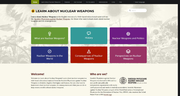
Welcome to Learn About Nuclear Weapons! Learn about nuclear weapons is a web-based educational material from the Swedish Physicians against Nuclear
...

In this paper, we review the most significant health and environmental facts and explain why — from a medical perspective — a proper understanding of what nuclear weapons will do invalidates all arguments for continued possession of t
...
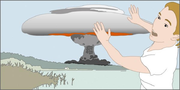
This course has been created for people with some experience in healthcare. It is particularly relevant to students in clinical healthcare professions (such as medicine, nursing, and allied health) and equally relevant to those working in broader disciplines (such as public health, global health, an
...

n view of the situation in Ukraine, IRSN has produced an information note presenting the nuclear facilities in Ukraine and an overview on the radiological monitoring of the country.
An increase of the radiological atmosphere around the Chernob
...
You can find manuals, guidelines and information in our Section Radiological & Nuclear Hazards in the SPECIFIC HAZARDS TOOLBOX
The purpose of this training is to prepare clinicians in first receiver settings to: (1) Identify factors impacting immediate medical response to mass casualties following major types of radiological incidents, and (2) Demonstrate appropriate patient assessment, triage, treatment and disposition dec
...
IAEA Safety Standards for protecting people and the environment
IAEA Safety Standards for protecting people and the environment
n view of the situation in Ukraine, IRSN has produced an information note presenting the nuclear facilities in Ukraine and an overview on the radiological monitoring of the country.
An increase of the radiological atmosphere around the Chernob
...
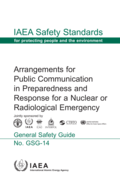
IAEA Safety Standards for protecting people and the environment

The main objective of the TMT Handbook project is to provide a practicable
handbook for the effective and timely triage, monitoring and treatment of people exposed to radiation following a malevolent act.
