Filter
72
Text search:
Rehabilitation
Council
of
India,
Ministry
of
Social
Justice
and
Empowerment
Featured
7
15
Language
Document type
49
8
6
6
3
Countries
20
5
4
3
3
2
1
1
1
1
1
1
1
1
1
1
1
1
1
1
1
1
Authors & Publishers
Publication Years
Category
31
8
4
3
2
Toolboxes
21
15
6
3
2
2
1
1
1
1
1
1
1


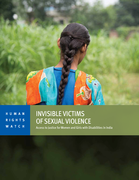
This report details the challenges many women and girls with disabilities face throughout the justice process: reporting abuse to the police, obtaining appropriate medical care, having complaints in
...



The aim of the WHO QualityRights tool kit is to support countries in assessing and
improving the quality and human rights
...
Ensuring mental health and well-being has become a worldwide imperative and an important target
of the Sustainable Development Goals.
But in all
...
The National Disaster Management Plan (NDMP) provides a framework and direction to the government agencies for all phases of disaster management cycle. The NDMP is a “dynamic document” in the se
...

Education of children with disabilities in India and Pakistan: An analysis of developments since
...
Recommendations to develop guidelines on community-based rehabilitation (CBR) were made during the International Consultation to Review Community-based Rehabilitation which was held in Helsinki, Fi
...
The WHO Guidance on community mental health services: Promoting person-centred and rights-based approaches document is part of the WHO Guidance and
...
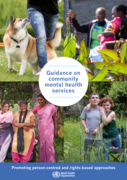
The WHO Guidance on community mental health services: Promoting person-centred and rights-based approaches document is part of the WHO Guidance and
...

Nearly 800 women die every day from preventable maternal causes, and in 2022 alone, an estimated 2.3 million newborns died. For every maternal death, countless more women endure life-altering injuries, infections,
...


Paper commissioned for the EFA Global Monitoring Report 2010, Reaching the marginalized