
Filter
579
Text search:
Post-exposure
prophylaxis
Featured
85
197
Language
Document type
319
131
46
27
25
11
11
3
2
2
1
Countries
36
33
24
21
21
19
17
14
10
10
10
10
10
10
9
8
8
7
6
6
5
5
4
4
4
4
3
3
3
3
3
2
2
2
2
2
2
2
1
1
1
1
1
1
1
1
1
1
1
1
1
1
1
1
Authors & Publishers
Publication Years
Category
281
68
47
33
30
8
6
Toolboxes
81
35
22
17
16
16
14
13
11
11
9
7
7
5
5
4
3
3
3
2
1
1
Joint WHO/ILO guidelines on post-exposure prophylaxis (PEP) to prevent HIV infection.

1PEP GUIDELINES | 2019 EDITION. The prevalence of both HIV and Hepatitis B is high in South Africa therefore there is a significant risk of acquiring these infections following exposure to infected material. Studies suggest that post-
...
Guide; revised 15 June 2010
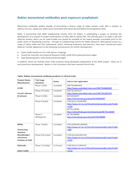
Accessed Nov. 28,2016
Medicines and medical devices for 10 000 people for approximately three months

Rabies is a neglected zoonotic disease with a global burden of approximately 59,000 human deaths a year. Once clinical symptoms appear, rabies is almost invariably fatal; however, with timely and appropriate post-
...

This document aims to provide Ministry of Health guidance on the implementation of PEP and PrEP to prevent HIV transmission and improve overall health outcomes. This comprehensive approach reflects the commitment of all involved in combating HIV and enhancing public health.
This document provides guidance on how to implement contact screening and chemoprophylaxis with single-dose rifampicin. The contents are logically ordered: counselling and obtaining consent, identification and listing of index case, listing of contacts, tracing of contacts, screening of contacts, ad
...
WHO strongly recommends discontinuation of the nerve tissue vaccine, and replacement with modern concentrated and purified cell culture derived vaccines (CCDV) and embryonated eggbased rabies vaccines.
These vaccines must comply with WHO criteria for potency and innocuity following satisfactory ass
...

Rabies is a public health problem in Asia and vaccine affordability is an issue.
There is no reduction in the number of persons seeking post-exposure pro
...

Southern African Journal of HIV Medicine

This eLearning course is for practicing health professionals around the globe who currently have a client population at high-risk for contracting HIV and provide or will provide Oral PrEP or Post-Exposure
...

Updated recommendations on first-line and second-line antiretroviral regimens and post-exposure prophylaxis and recommendations on early infant dia
...
Rabies is 100% fatal but also 100% preventable with prompt and complete post-exposure prophylaxis (PEP). All animal bites, scratches and licks must
...

The new WHO recommendations for rabies immunization supersede the 2010 WHO position
on pre-exposure prophylaxis (PrEP) and post-exposure
...

Rabies remains an under-reported neglected zoonosis with a case-fatality rate of almost 100% in humans and animals. Dog-mediated human rabies causes tens of thousands of human deaths annually despite being 100% preventable. More than 95% of human cases are caused by the bite of a rabies-infected dog
...
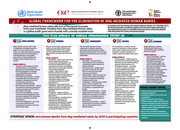
Rabies remains an under-reported neglected zoonosis with a case-fatality rate of almost 100% in humans and animals. Dog-mediated human rabies causes tens of thousands of human deaths annually despite being 100% preventable. More than 95% of human cases are caused by the bite of a rabies-infected dog
...
Overview
The aim of this guide is to support national immunization programme managers and others responsible for implementing human rabies vaccine programmes to:
inform policy discussions and operational planning for introducing or expanding rabies po
...
