
Filter
538
Text search:
PEP
Featured
61
185
Language
Document type
306
104
40
28
25
12
12
3
3
3
1
Countries
40
24
22
20
19
17
15
14
14
13
11
10
9
8
8
8
7
7
6
6
6
5
5
5
4
4
4
4
4
4
4
3
3
3
3
3
2
2
2
2
2
2
2
1
1
1
1
1
1
1
1
1
1
1
1
1
1
Authors & Publishers
Publication Years
Category
297
38
37
30
17
13
7
Toolboxes
80
29
19
14
14
13
11
11
9
9
8
6
4
4
3
3
2
2
2
1
1

Accessed: 29.02.2020
Medicines and medical devices for 10 000 people for approximately three months
La Profilaxis Post-Exposición para el VIH (PEP) constituye una herramienta de prevención que consiste en el uso de medicamentos antiretrovirales para reducir el riesgo de infección luego de situaciones de potencial exposición del virus. Su incor
...
Joint WHO/ILO guidelines on post-exposure prophylaxis (PEP) to prevent HIV infection.

This document aims to provide Ministry of Health guidance on the implementation of PEP and PrEP to prevent HIV transmission and improve overall health outcomes. This comprehensive approach reflects the commitment of all involved in combating HIV and
...
Rabies is 100% fatal but also 100% preventable with prompt and complete post-exposure prophylaxis (PEP). All animal bites, scratches and licks must be assessed for potential rabies virus exposure.

The new WHO recommendations for rabies immunization supersede the 2010 WHO position
on pre-exposure prophylaxis (PrEP) and post-exposure prophylaxis (PEP) for rabies. These updated
recommendations are based on new evidence and directed by public h
...

1PEP GUIDELINES | 2019 EDITION. The prevalence of both HIV and Hepatitis B is high in South Africa therefore there is a significant risk of acquiring these infections following exposure to infected material. Studies suggest that post- exposure prophylaxis (
...
Overview
The aim of this guide is to support national immunization programme managers and others responsible for implementing human rabies vaccine programmes to:
inform policy discussions and operational planning for introducing or expanding rabies post-exposure prophylaxis (
...

Rabies is a neglected zoonotic disease with a global burden of approximately 59,000 human deaths a year. Once clinical symptoms appear, rabies is almost invariably fatal; however, with timely and appropriate post-exposure prophylaxis (PEP) consistin
...
Rabies is a fatal viral disease, but is preventable in humans. The rabies virus is transmitted to humans through virus-laden saliva from a rabid animal, mostly dogs. The virus is shed in the saliva of an infected animal and can be introduced into another body through bites, scratches and any other
...

These new guidelines should help medical and paramedical professionals to provide the state of art rabies prophylaxis to all animal bite victims in the government hospitals and prevent human rabies deaths in the state. The medical officers whenever in doubt are encouraged to contact the state nodal
...

This eLearning course is for practicing health professionals around the globe who currently have a client population at high-risk for contracting HIV and provide or will provide Oral PrEP or Post-Exposure Prophylaxis (PEP). The course has four inter
...
These guidelines aim to guide all health care providers in Myanmar, accommodating the situation of different settings in the context of progressive decentralization of HIV services. Notable changes from the previous edition include:
• diagnosis of HIV
• update on the initiation of ART
...
• diagnosis of HIV
• update on the initiation of ART
...

Rabies remains an under-reported neglected zoonosis with a case-fatality rate of almost 100% in humans and animals. Dog-mediated human rabies causes tens of thousands of human deaths annually despite being 100% preventable. More than 95% of human cases are caused by the bite of a rabies-infected dog
...
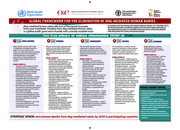
Rabies remains an under-reported neglected zoonosis with a case-fatality rate of almost 100% in humans and animals. Dog-mediated human rabies causes tens of thousands of human deaths annually despite being 100% preventable. More than 95% of human cases are caused by the bite of a rabies-infected dog
...
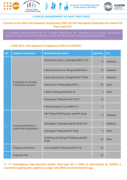
A Call for Action in Safeguarding Dignity and Saving Women’s Lives: Clinical and Psychosocial Support for Survivors of Sexual Violence in Eastern DRC's Protection Crisis
Tens of thousands: According to the GBV AoR’s 6W mapping tool, there is a significant increase in number of reported cases of
...

WHO strongly recommends discontinuation of the nerve tissue vaccine, and replacement with modern concentrated and purified cell culture derived vaccines (CCDV) and embryonated eggbased rabies vaccines.
These vaccines must comply with WHO criteria for potency and innocuity following satisfactory ass
...
