
Filter
456
Text search:
Ministry
of
Health
Republic
of
Indonesia,
WHO
Featured
38
136
Language
Document type
247
89
63
31
14
5
4
3
Countries
45
40
22
17
11
8
8
8
7
7
6
6
6
5
5
5
5
5
4
4
4
4
3
3
3
3
3
3
3
2
2
2
2
2
2
2
2
2
2
2
1
1
1
1
1
1
1
1
1
1
1
1
1
1
1
1
1
1
1
1
1
1
1
1
1
1
1
Authors & Publishers
Publication Years
Category
120
44
43
37
35
7
6
Toolboxes
44
36
23
21
19
19
15
15
14
13
13
11
10
9
8
7
7
6
4
3
3
2
2
1
1

Protect Yourself from the Smoke Fog Disaster ; a Book of Health Crisis Response for School Children in Indonesia
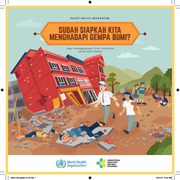
Guidance book about implementation of health crisis response for school children in Indonesia in facing earthquake as natural disaster
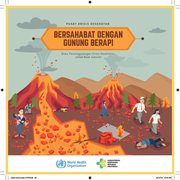
Be-Friended to the Volcano : a guidance or manual book for school children in Indonesia of health crisis prevention during the natural disaster

Are we ready to face the flood?
This book contains general knowledge about the flood, the efforts made before, during, and after the flood and what things can be done by children and adolescents while in evacuation. This book is done specifically for school children in
...
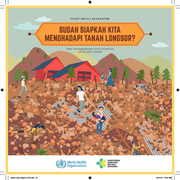
Are we ready to face landslide? A manual book of health crisis response for school children in facing landslide as a potential natural disaster in Indones
...

The Democratic Republic of Timor-Leste has the highest TB incidence rate in the South East Asian Region - 498 per 100,000, which is the seventh highest in the world. In Timor-Leste TB is the eighth
...



The Social and Behaviour Change Communication (SBCC) Strategy for the Prevention of the Re-establishment of Malaria Transmission in Timor-Leste forms part
...

Decree of the Minister of Health of the Republic
...
Regulation of the Minister of Health of the Republic
...

Regulation of the Minister of Health of the Republic
...
The study collected data on the impact of HIV-related diseases on income, revenues, economic dependency, consumption, education, health, food security, stigma, discrimination, quality
...
Pocket book for field officers and humanitarian helpers on the field in health crisis response and tackling health crisis situation in Indonesia

(Health Systems in Transition, Vol. 4, No. 3, 2014)

The Report describes the evaluation of WHO's contribution to the Maternal Health Program in South-East Asia Region. This was an independent evaluat
...

This document contains a series of desk reviews for the eight ENGAGE-TB priority countries supported by the Global Fund (DRC, Kenya, Indonesia, Mozambique, Myanmar, Nigeria, Pakistan and Tanzania).
...
