
Filter
234
Text search:
Insecurity
Insight
Featured
Recommendations
15
New Publications
79
Language
Document type
No document type
122
Studies & Reports
57
Strategic & Response Plan
21
Guidelines
17
Manuals
9
Training Material
3
Situation Updates
3
Brochures
1
Fact sheets
1
Countries / Regions
Syria
17
Global
11
Kenya
10
India
9
Ukraine
7
Myanmar / Burma
7
Congo, Democratic Republic of
6
Central African Republic
6
Yemen
6
Nigeria
5
Ethiopia
5
Afghanistan
5
Sierra Leone
4
Bangladesh
4
Malawi
4
Africa
4
Venezuela
4
Guinea
3
Liberia
3
Ghana
3
Haiti
3
Pakistan
3
South Africa
3
Senegal
2
Mali
2
USA
2
Cameroon
2
Somalia
2
Nepal
2
South Sudan
2
Iraq
2
Jordan
2
Lebanon
2
Rwanda
2
Sudan
2
Latin America and the Carribbean
2
Asia
2
Moldova
2
Burkina Faso
1
Guinea-Bissau
1
Uganda
1
Zimbabwe
1
Chad
1
Tanzania
1
Indonesia
1
Mozambique
1
Peru
1
Brazil
1
North Macedonia
1
Libya
1
Guatemala
1
Madagascar
1
Lesotho
1
Mexico
1
Chile
1
East and Southern Africa
1
West and Central Africa
1
Middle East and North Africa
1
South–East Asia Region
1
Western Pacific Region
1
Western and Central Europe
1
Eastern Europe
1
Palestine
1
Armenia
1
Southern Africa
1
Timor Leste/ East Timor
1
Lithuania
1
Iran
1
Authors & Publishers
Publication Years
Category
Countries
81
Key Resources
44
Women & Child Health
14
Public Health
10
Clinical Guidelines
4
Capacity Building
3
Toolboxes
Conflict
28
Mental Health
21
COVID-19
20
Planetary Health
18
HIV
16
Refugee
11
Natural Hazards
8
Ebola & Marburg
6
Global Health Education
6
NTDs
5
Disability
4
Caregiver
4
Rapid Response
2
Specific Hazards
2
AMR
2
Health Financing Toolbox
2
2.0 Rapid Response
2
Cholera
1
Polio
1
Zika
1
TB
1
Social Ethics
1
NCDs
1
Insecurity Insight Report 13-1.

Do men and women experience different types of security events? Are there differences in the attitudes within humanitarian agencies towards the same type of events affecting men or women? In this paper, using the Security in Numbers Database (SiND), the differences and similarities in men’s and wo
...
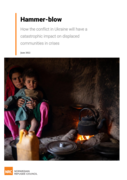
Global food insecurity has markedly increased over the last two-years due to conflict, economic and political instability, displacement, environmental degradation and disasters, and major disruptions to global food systems because of the Covid-19 pa
...

A major problem facing the world is how to build peace following the ravages of increasingly protracted armed conflict. Armed conflicts leave behind shattered, divided societies that are at risk of repeating cycles of violence, and therefore need concerted peacebuilding efforts. Conflicts also take
...
This baseline survey and report examine the Durable Peace Programme (DPP) in Myanmar, which delivers a broad range of activities. The report provides an insight into the current situation facing both internally displaced persons (IDPs) and conflict-
...

Women have less access to the development services and support – such as adequate healthcare, education and
modern technology – that make people more resilient to climate change and other shocks and stressors.2
Women’s unequal access to resources, their disproportionate responsibility for ca
...
These ICRC guidelines outline the organization’s approach to mental health and psychosocial support (MHPSS) during and after armed conflict and other situations of violence. They provide a framework for harmonizing MHPSS programmes within the organization, and an
...

This open access book not only describes the challenges of climate disruption, but also presents solutions. The challenges described include air pollution, climate change, extreme weather, and related health impacts that range from heat stress, vector-borne diseases, food and water
...
The report offers 20 top recommendations for getting ahead of future outbreaks in Yemen and similarly complex humanitarian settings.
In 2015, Yemen was declared a Level 3 emergency by the UN, kicking into gear the highest level of humanitarian support. A massive cholera outbreak followed, leading t
...
Large-Scale UN Response Needed to Address Health and Food Crises
This report is based on interviews with more than 150 health care professionals, Venezuelans seeking or in need of medical care who recently arrived in Colombia and Brazil, representatives from international and nongovernmental humani
...
In recent years Terre des Hommes Netherlands observed the steady rise of a new form of child sexual exploitation. One that is enabled and fuelled by rapid technological advances, increasing global connectivity, persisting poverty rates, and growing disparity in the global distribution of resources.
...
Current HIV/AIDS Reports (2022) 19:358–374. https://doi.org/10.1007/s11904-022-00615-z.
MINDSPACE is an acronym developed by the UK's behavioural insights team to summarise nine key influences on human behaviour: Messenger, Incentives, Norms, Default, Salience, Priming, Affect, Commitment, and E
...
How do security events affecting humanitarian agencies differ between urban and rural environments?
Previous pandemics have demonstrated that more people could die from the indirect consequences of an outbreak than from the disease itself. As the fight against the pandemic is pushing millions into poverty and hunger, COVID-19 will likely be no different.
Humanitarian NGOs have made increased use of Private Security Providers (PSPs) over the last decade. There is a gap between the ways that NGOs actually use PSPs and the regulation of this engagement. These guidelines aim to assist humanitarian NGOs in reaching an informed decision about when, how an
...
Security Risk Management and Religion: Faith and secularism in humanitarian assistance examines the impact that religion has on security risk management for humanitarian agencies, and considers whether a better understanding of religion can improve the security of organisations and individuals in th
...

Gender and security is a complex issue, and this research found that there are different levels of comprehension of what it means in humanitarian and development assistance practice. The aims of the paper are twofold: to raise general awareness about gender and how it relates to security risk manage
...

This EISF report provides an analysis of the issues surrounding the relationship between NGO’s and their local partners. It includes a section on the topic and its background, responsabilities towards the partner organisation and particularly in terms of security, how to enable and help the partne
...
