
Filter
2176
Text search:
diagnostics
Featured
293
492
Language
Document type
882
445
398
149
125
74
27
22
19
14
9
5
2
1
1
Countries
133
88
55
51
44
34
34
33
32
31
30
30
28
26
26
25
24
24
23
22
22
19
19
18
16
16
16
14
14
13
13
13
12
12
12
11
11
11
9
9
8
8
8
8
7
7
6
6
6
6
6
5
5
5
5
4
4
4
4
4
4
4
3
3
3
3
3
3
3
3
2
2
2
2
2
2
2
2
2
2
2
2
2
2
2
2
2
2
2
1
1
1
1
1
1
1
1
1
1
1
1
1
1
1
1
1
1
1
1
1
1
1
1
1
1
1
1
1
1
1
1
1
1
Authors & Publishers
Publication Years
Category
693
220
107
99
62
40
24
1
Toolboxes
326
276
153
133
99
76
62
61
56
47
46
41
41
36
33
32
28
25
22
16
11
10
10
4

A manual for impact assessments. The SCH Practical and Precision Assessment (SPPA) strategy is an evidence-based approach for conducting impact assessments for SCH. The SPPA was identified by programme managers and SCH experts from the African region as a feasible and sufficiently accurate approach
...
Lancet Infect Dis 2020 Published Online May 5, 2020 https://doi.org/10.1016/ S1473-3099(20)30254-1
Infect Dis Poverty (2021) 10:15.
Real-time polymerase chain reaction (PCR) is a sensitive and specific method for diagnosing schistoso-
miasis. However, this method should be performed in a laboratory, usually located distant from the sample collection
site. Therefore, it is important to have fas
...

Infectious Diseases of Poverty (2020) 9:74
To detect acute schistosomiasis, low-intensity infections, or to verify the success of treatment with
praziquantel, highly sensitive test methods are required. The aim of this study was therefore to demonstrate the
performance of Schistosoma mansoni spec
...
Parasite Epidemiology and Control Volume 27, November 2024, e00380
The planning and implementation of intervention measures against schistosomiasis, particularly mass administration, require knowledge of the current status of the infection. This is important for monitoring the impact of the interve
...

The South African WHO Country Cooperation Strategy (CCS) 2023–2027 focuses on four key strategic priorities based on the country’s health needs and disease epidemiology, while also considering the need for building resilient health systems for UHC and health security in the post pandemic period.
...

Schistosomiasis is a parasitic disease caused by infection with
Schistosoma trematodes. The disease affects poor rural communities
but has spread to urban areas and to tourists visiting endemic areas
Schweizerische Fachgesellschaft für Tropen‐ und Reisemedizin FMH

Infection 2023 Oct;51(5):1399-1406. doi: 10.1007/s15010-023-01999-9. Epub 2023 Feb 20.
The results indicate a significantly higher rate of infections with S. mansoni in street children compared with orphans. This might be explained by the lack of access to adequate sanitation for street children
...
A Mini Review of Antiparasitic Agents explored between 2010-2021. Frontiers in Chemistry 9:771143

This document is a compilation of all questions, justifications, and sources used to determine the 2021 Global Health Security Index scores for Zambia. For a category and indicator-level summary, please see the Country Profile for Zambia.

The Lancet Regional Health - Americas 2024;36: 100821 https://doi.org/10.1016/j.lana.2024.100821

The protracted humanitarian situation in northeastern Nigeria, particularly in Borno, Adamawa, and Yobe (BAY) States, remains a concern due to ongoing insecurity, displacement, food insecurity, disease outbreaks, and climate-related shocks. To address these complex challenges, the health sector has
...
recommandations à l’intention des agents de santé
Manuel destiné au personnel soignant.
Ce manuel s'adresse aux professionnels de la santé confrontés à la maladie à Mycobacterium ulcerans (ulcère de Buruli). Il vise à mieux faire comprendre la maladie, sa présentation clinique et sa prise en charge chirurgicale. Il s'adresse en particuli
...
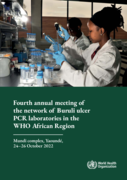
n October 2019, WHO convened the first meeting of the Buruli ulcer laboratory network (BU-LABNET) in Yaoundé, Cameroon, bringing together 11 laboratories from nine countries at the Pasteur Centre of Cameroon (CPC), the network’s Coordinating Centre. The network was formally established at th
...
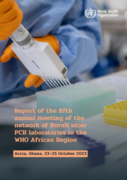
The aim of the meeting was to broaden the network’s initiatives. Preliminary work involved integrating laboratory testing for skin NTDs other than Buruli ulcer, such as cutaneous leishmaniasis, mycetoma, leprosy and yaws, while extending the network’s reach to encompass additional laboratories.


PLoS Negl Trop Dis 16(11): e0010885. https://doi.org/10.1371/journal.pntd.0010885
HAT diagnosis in non-endemic countries is rare and can be challenging, but alertness and
surveillance must be maintained to contribute to WHO’s elimination goals. Early detection is
particularly important as it co
...
