
Filter
2662
Text search:
case
investigation
Featured
317
682
Language
2527
88
52
38
37
28
12
10
5
4
4
3
3
3
3
3
3
2
2
2
2
2
2
2
2
2
2
2
2
2
1
1
1
1
1
1
1
1
1
1
1
1
1
1
1
1
1
1
1
1
1
1
Document type
1355
493
392
185
121
41
38
24
4
3
3
3
Countries
134
108
84
67
64
60
59
54
48
44
44
43
40
40
39
38
36
32
30
30
30
24
24
23
23
22
21
21
21
20
19
19
19
17
17
16
16
13
13
13
13
13
12
12
12
11
11
11
10
10
9
8
8
7
7
7
6
6
6
6
6
6
6
5
5
4
4
4
4
4
4
4
4
4
4
4
3
3
3
3
3
3
3
3
3
3
2
2
2
2
2
2
2
2
2
2
2
2
2
2
2
2
1
1
1
1
1
1
1
1
1
1
1
1
1
1
1
1
1
1
1
1
1
1
1
Authors & Publishers
469
140
87
73
56
38
25
25
24
21
20
20
17
17
16
14
14
14
13
13
11
10
10
10
10
10
9
9
9
8
8
8
8
8
8
7
7
7
7
7
7
7
7
6
6
6
6
6
6
6
6
6
6
6
6
5
5
5
5
5
5
5
5
5
5
5
5
5
5
5
5
5
5
4
4
4
4
4
4
4
4
4
4
4
4
4
4
4
4
4
4
4
4
4
3
3
3
3
3
3
3
3
3
3
3
3
3
3
3
3
3
3
3
3
3
3
3
3
3
3
3
3
3
3
3
3
3
3
3
3
3
3
3
3
3
3
3
3
3
3
3
3
3
3
3
3
3
3
3
3
3
3
2
2
2
2
2
2
2
2
2
2
2
2
2
2
2
2
2
2
2
2
2
2
2
2
2
2
2
2
2
2
2
2
2
2
2
2
2
2
2
2
2
2
2
2
2
2
2
2
2
2
2
2
2
2
2
2
2
2
2
2
2
2
2
2
2
2
2
2
2
2
2
2
2
2
2
2
2
2
2
2
2
2
2
2
2
2
2
2
2
2
2
2
2
2
2
2
2
2
2
2
2
2
2
2
2
2
2
2
2
2
2
2
2
2
2
2
2
2
2
2
2
2
2
2
2
2
2
2
2
2
2
2
2
1
1
1
1
1
1
1
1
1
1
1
1
1
1
1
1
1
1
1
1
1
1
1
1
1
1
1
1
1
1
1
1
1
1
1
1
1
1
1
1
1
1
1
1
1
1
1
1
1
1
1
1
1
1
1
1
1
1
1
1
1
1
1
1
1
1
1
1
1
1
1
1
1
1
1
1
1
1
1
1
1
1
1
1
1
1
1
1
1
1
1
1
1
1
1
1
1
1
1
1
1
1
1
1
1
1
1
1
1
1
1
1
1
1
1
1
1
1
1
1
1
1
1
1
1
1
1
1
1
1
1
1
1
1
1
1
1
1
1
1
1
1
1
1
1
1
1
1
1
1
1
1
1
1
1
1
1
1
1
1
1
1
1
1
1
1
1
1
1
1
1
1
1
1
1
1
1
1
1
1
1
1
1
1
1
1
1
1
1
1
1
1
1
1
1
1
1
1
1
1
1
1
1
1
1
1
1
1
1
1
1
1
1
1
1
1
1
1
1
1
1
1
1
1
1
1
1
1
1
1
1
1
1
1
1
1
1
1
1
1
1
1
1
1
1
1
1
1
1
1
1
1
1
1
1
1
1
1
1
1
1
1
1
1
1
1
1
1
1
1
1
1
1
1
1
1
1
1
1
1
1
1
1
1
1
1
1
1
1
1
1
1
1
1
1
1
1
1
1
1
1
1
1
1
1
1
1
1
1
1
1
1
1
1
1
1
1
1
1
1
1
1
1
1
1
1
1
1
1
1
1
1
1
1
1
1
1
1
1
1
1
1
1
1
1
1
1
1
1
1
1
1
1
1
1
1
1
1
1
1
1
1
1
1
1
1
1
1
1
1
1
1
1
1
1
1
1
1
1
1
1
1
1
1
1
1
1
1
1
1
1
1
1
1
1
1
1
1
1
1
1
1
1
1
1
1
1
1
1
1
1
1
1
1
1
1
1
1
1
1
1
1
1
1
1
1
1
1
1
1
1
1
1
1
1
1
1
1
1
1
1
1
1
1
1
1
1
1
1
1
1
1
1
1
1
1
1
1
1
1
1
1
1
1
1
1
1
1
1
1
1
1
1
1
1
1
1
1
1
1
1
1
1
1
1
1
1
1
1
1
1
1
1
1
1
1
1
1
1
1
1
1
1
1
1
1
1
1
1
1
1
1
1
1
1
1
1
1
1
1
1
1
1
1
1
1
1
1
1
1
1
1
1
1
1
1
1
1
1
1
1
1
1
1
1
1
1
1
1
1
1
1
1
1
1
1
1
1
1
1
1
1
1
1
1
1
1
1
1
1
1
1
1
1
1
1
1
1
1
1
1
1
1
1
1
1
1
1
1
1
1
1
1
1
1
1
1
1
1
1
1
1
1
1
1
1
1
1
1
1
1
1
1
1
1
1
1
1
1
1
1
1
1
1
1
1
1
1
1
1
1
1
1
1
1
1
1
1
1
1
1
1
1
1
1
1
1
1
1
1
1
1
1
1
1
1
1
1
1
1
1
1
1
1
1
1
1
1
1
1
1
1
1
1
1
1
1
1
1
1
1
1
1
1
1
1
1
1
1
1
1
1
1
1
1
1
1
1
1
1
1
1
1
1
1
1
1
1
1
1
1
1
1
1
1
1
1
1
1
1
1
1
1
1
1
1
1
1
1
1
1
1
1
1
1
1
1
1
1
1
1
1
1
1
1
1
1
1
1
1
1
1
1
1
1
1
1
1
1
1
1
1
1
1
1
1
1
1
1
1
1
1
1
1
1
1
1
1
1
1
1
1
1
1
1
1
1
1
1
1
1
1
1
1
1
1
1
1
1
1
1
1
1
1
1
1
1
1
1
1
1
1
1
1
1
1
1
1
1
1
1
1
1
1
1
1
1
1
1
1
1
1
1
1
1
1
1
1
1
1
1
1
1
1
1
1
1
1
1
1
1
1
1
1
1
1
1
1
1
1
1
1
1
1
1
1
1
1
1
1
1
1
1
1
1
1
1
1
1
1
1
1
1
1
1
1
1
1
1
1
1
1
1
1
1
1
1
1
1
1
1
1
1
1
1
1
1
1
1
1
1
1
1
1
1
1
1
1
1
1
1
1
1
1
1
1
1
1
1
1
1
1
1
1
1
1
1
1
1
1
1
1
1
1
1
1
1
1
1
1
1
1
1
1
1
1
1
1
1
1
1
1
1
1
1
1
1
1
1
1
1
1
1
1
1
1
1
1
1
1
1
1
1
1
1
1
1
1
1
1
1
1
1
1
1
1
1
1
1
1
1
1
1
1
1
1
1
1
1
1
1
1
1
1
1
1
1
1
1
1
1
1
1
1
1
1
1
1
1
1
1
1
1
1
1
1
1
1
1
1
1
1
1
1
1
1
1
1
1
1
1
1
1
1
1
1
1
1
1
1
1
1
1
1
1
1
1
1
1
1
1
1
1
1
1
1
1
1
1
1
1
1
1
1
1
1
1
1
1
1
1
1
1
1
1
1
1
1
1
1
1
1
1
1
1
1
1
1
1
1
1
1
1
1
1
1
1
1
1
1
1
1
1
1
1
1
1
1
1
1
1
1
1
1
1
1
1
1
1
1
1
1
1
1
1
1
1
1
1
1
1
1
1
1
1
1
1
1
1
1
1
1
1
1
1
1
1
1
1
1
1
1
1
1
1
1
1
1
1
1
1
1
1
1
1
1
1
1
1
1
1
1
1
1
1
1
1
1
1
1
1
1
1
1
1
1
1
1
1
1
1
1
1
1
1
1
1
1
1
1
1
1
1
1
1
1
1
1
1
1
1
1
1
1
1
1
1
1
1
1
1
1
1
1
1
1
1
1
1
1
1
1
1
1
1
1
1
1
1
1
1
1
1
1
1
1
1
1
1
1
1
1
1
1
1
1
1
1
1
1
1
1
1
1
1
1
1
1
1
1
1
1
1
1
1
1
1
1
1
1
1
1
1
1
1
1
1
1
1
1
1
1
1
1
1
1
1
1
1
1
1
1
1
1
1
1
1
1
1
1
1
1
1
1
1
1
1
1
1
1
1
1
1
1
1
1
1
1
1
1
1
1
1
1
1
1
1
1
1
1
1
1
1
1
1
1
1
1
1
1
1
1
1
1
1
1
1
1
1
1
1
1
1
1
1
1
1
1
1
1
1
1
1
1
1
1
1
1
1
1
1
1
1
1
1
1
1
1
1
1
1
1
1
1
1
1
1
1
1
1
1
1
1
1
1
1
1
1
1
1
1
1
1
1
1
1
1
1
1
1
1
1
1
1
1
1
1
1
1
1
1
1
1
1
1
1
1
1
1
1
1
1
1
1
1
1
1
1
1
1
1
1
1
1
1
1
1
1
1
1
1
1
1
1
1
1
1
1
1
1
1
1
1
1
1
1
1
1
1
1
1
1
1
1
1
1
1
1
1
1
1
1
1
1
1
1
1
1
1
1
1
1
1
1
1
1
1
1
1
1
1
1
1
1
1
1
1
1
1
1
1
1
1
1
1
1
1
1
1
1
1
1
1
1
1
1
1
1
1
1
1
1
1
1
1
1
1
1
1
1
1
1
1
1
1
1
1
1
1
1
1
1
1
1
1
1
1
1
1
1
1
1
1
1
1
1
1
1
1
1
1
1
1
1
1
1
1
1
1
1
1
1
1
1
1
1
1
1
1
1
1
1
1
1
1
1
1
1
1
1
1
1
1
1
1
1
1
1
1
1
1
1
1
1
1
1
1
1
1
1
1
1
1
1
1
1
1
1
1
1
1
1
1
1
1
1
1
1
1
1
1
1
1
1
1
1
1
1
1
1
1
1
1
1
1
1
1
1
1
1
1
1
1
1
1
1
1
1
1
1
1
1
1
1
1
1
1
1
1
1
1
1
1
1
1
1
1
1
1
1
1
1
1
1
1
1
1
1
1
1
1
1
1
1
1
1
1
1
1
1
1
1
1
1
1
1
1
1
1
1
1
1
1
1
1
1
1
1
1
1
1
1
1
1
1
1
1
1
1
1
1
1
1
1
1
1
1
1
1
1
1
1
1
1
1
1
1
1
1
1
1
1
1
1
1
1
1
1
1
1
1
1
1
1
1
1
1
1
1
1
1
1
1
1
1
1
1
1
1
1
1
1
1
1
1
1
1
1
1
1
1
1
1
1
1
1
1
1
1
1
1
1
1
1
1
1
1
1
1
1
1
1
Publication Years
846
1523
270
22
1
Category
991
241
159
139
111
45
40
Toolboxes
310
215
167
151
97
95
87
74
71
70
69
58
53
50
48
45
38
36
34
33
29
23
20
19
10
2
The purpose of this strategy is to guide the planning, management and development of human resources for health in Rwanda for the period 2011 - 2016. The overall aim of the plan is to increase the number of appropriately skilled, motivated and equitably distributed health service providers for Rwand
...
a.
more

A guidance document in simple language for health personnel, setting out their rights and responsibilities in conflict and other situations of violence. It explains how responsibilities and rights for health personnel can be derived from international humanitarian law, human rights law and medical e
...
thics.The document gives practical guidance on:
- The protection of health personnel, the sick and the wounded; - Standards of practice; - The health needs of particularly vulnerable people; - Health records and transmission of medical records; - "Imported" health care (including military health care);
- Data gathering and health personnel as witnesses to violations of international law; - Working with the media
more
Health Systems for Outcomes Publication | This report summarizes the findings of a qualitative study on health workers’ performance and career in Rwanda to identify bottlenecks, strengths and shortcomings for human resources in the health sector, as perceived by both health workers and users of he
...
alth services.
more
The key question addressed in this article is social inclusion, as an opposite concept of social exclusion. The author provides a historical of social inclusion/exclusion terminology. Further, some of the principles of social inclusion are presented. In the end, the article focuses on the role of ed
...
ucation as a very important and useful tool for ensuring social inclusion.Social inclusion through education, in particular through vocational education, considered by the author as the only way towards sustainable development of Albanian society.
more


2nd Generation HIV Surveillance in Pakistan, Round 5
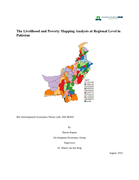
An attempt has been made to map the incidence of uni-dimensional and multi-dimensional poverty simultaneously arguably for the first time in Pakistan. While multi-dimensional poverty map is calculated using PSLM 2010-11; small area estimation technique is utilized to map uni-dimensional poverty usin
...
g both nationally representative HIES (Household Integrated Economic Survey) and district-level representative PSLM (Pakistan Standard of Living Measurement) for the same year of 2010-11. The result indicates the existence of spatial distribution of poverty pockets in each of the four provinces of Pakistan. Furthermore, it is also observed that these pockets of poverty are more concentrated in the desert and mountains regions of the country.
more
The provision of safe and efficacious blood and blood components for transfusion or manufacturing use involves a number of processes, from the selection of blood donors and the collection, processing and testing of blood donations to the testing of patient samples, the issue of compatible blood and
...
its administration to the patient. There is a risk of error in each process in this “transfusion chain” and a failure at any of these stages can have serious implications for the recipients of blood and blood products. Thus, while blood transfusion can be life-saving, there are associated risks, particularly the transmission of bloodborne infections.
Screening for transfusion-transmissible infections (TTIs) to exclude blood donations at risk of transmitting infection from donors to recipients is a critical part of the process of ensuring that transfusion is as safe as possible. Effective screening for evidence of the presence of the most common and dangerous TTIs can reduce the risk of transmission to very low levels. more
Screening for transfusion-transmissible infections (TTIs) to exclude blood donations at risk of transmitting infection from donors to recipients is a critical part of the process of ensuring that transfusion is as safe as possible. Effective screening for evidence of the presence of the most common and dangerous TTIs can reduce the risk of transmission to very low levels. more
External quality assessment (EQA) is an important component of quality systems for blood transfusion services. Establishing external quality assessment programmes for screening of donated blood for transfusion-transmissible infections (TTI): implementation guide aims to support WHO member States in
...
establishing and operating EQA programmes for screening donated blood for TTI. The guides has been designed for use by national health authorities and EQA organizing institutions in the development of EQA programme. It will also give participating laboratories an insight into the organization of EQA programmes for TTI screening and an understanding of the benefits of participation.
more

The overall goal of the Kenya Health Sector Referral Strategy is to improve client access to referral. The objectives of the strategy are to realise improved capacity of health providers to identify clients who require referral, develop protocols that will lead to referral system efficiency and effe
...
ctiveness, and promote and facilitate information and communication technology (ICT) to manage referrals, improve care, enhance capacity of the referral system in Kenya, provide communication and related equipment, and promote research and innovation for referrals.
more
Afr J Tradit Complement Altern Med. (2013) 10(5):210-229
Plants are important sources of medicines. Herbal medicines in Lesotho are exposed to excessive exploitation and habitat destruction. Comprehensive information to promote proper use and conservation of these herbal medicines is lacking. ... This study described the uses of medicinal plants in Lesotho with comparative reference between practice and the literature, highlighting important ethno-medicinal information and conservation status of the plants. Additionally, the study established a repository and monograph for the herbal medicines in Lesotho.
http://dx.doi.org/10.4314/ajtcam.v13i1.20 more
Plants are important sources of medicines. Herbal medicines in Lesotho are exposed to excessive exploitation and habitat destruction. Comprehensive information to promote proper use and conservation of these herbal medicines is lacking. ... This study described the uses of medicinal plants in Lesotho with comparative reference between practice and the literature, highlighting important ethno-medicinal information and conservation status of the plants. Additionally, the study established a repository and monograph for the herbal medicines in Lesotho.
http://dx.doi.org/10.4314/ajtcam.v13i1.20 more

Medicinal plants occupied an important position in the socio-cultural, spiritual and medicinal arena of rural people of India. T
The present report is based on contribution made by members of the task force and many other experts on medicinal plants. We hope the report on implementation will promot
...
e sustainable and equitable development of medicinal plants sector provide "Health for All", boost exports, and will improve livelihood of the people and green the country for the present and the
generation to come.
more
Chinese Medicine, (2016) 11:37
Medicinal plants are globally valuable sources of herbal products, and they are disappearing at a high speed. This article reviews global trends, developments and prospects for the strategies and methodologies concerning the conservation and sustainable use of me ... dicinal plant resources to provide a reliable reference for the conservation and sustainable use of medicinal plants. We emphasized that both conservation strategies (e.g. in situ and ex situ conservation and cultivation practices) and resource management (e.g. good agricultural practices and sustainable use solutions) should be adequately taken into account for the sustainable use of medicinal plant resources. We recommend that biotechnical approaches (e.g. tissue culture, micropropagation, synthetic seed technology, and molecular marker-based approaches) should be applied to improve yield and modify the potency of medicinal plants.
https://doi.org/10.1186/s13020-016-0108-7 more
Medicinal plants are globally valuable sources of herbal products, and they are disappearing at a high speed. This article reviews global trends, developments and prospects for the strategies and methodologies concerning the conservation and sustainable use of me ... dicinal plant resources to provide a reliable reference for the conservation and sustainable use of medicinal plants. We emphasized that both conservation strategies (e.g. in situ and ex situ conservation and cultivation practices) and resource management (e.g. good agricultural practices and sustainable use solutions) should be adequately taken into account for the sustainable use of medicinal plant resources. We recommend that biotechnical approaches (e.g. tissue culture, micropropagation, synthetic seed technology, and molecular marker-based approaches) should be applied to improve yield and modify the potency of medicinal plants.
https://doi.org/10.1186/s13020-016-0108-7 more
Final Evaluation
The project objectives were to promote the conservation, sustainable use and cultivation of endangered medicinal plants in Zimbabwe, by demonstrating effective models at the local level, and developing a legal framework for the conservation, sustainable use, and equitable shari ... ng of benefits from medicinal plants at the national level. After one year of implementation, the project rationale, indicators and targets were reviewed in order to make them more rigorous as per the new GEF focus on project impact. New indicators and targets were developed in December 2004. The project is composed of five closely linked output areas that have been allocated to different implementing partners to take a lead in. These include the National Herbarium and Botanical Gardens (Output 1), the University of Zimbabwe School of Pharmacy (Output 2), the Southern Alliance for Indigenous Resources (SAFIRE), a regional NGO (Output 2 and 4), and the Attorney General‟s Office (Output 5). more
The project objectives were to promote the conservation, sustainable use and cultivation of endangered medicinal plants in Zimbabwe, by demonstrating effective models at the local level, and developing a legal framework for the conservation, sustainable use, and equitable shari ... ng of benefits from medicinal plants at the national level. After one year of implementation, the project rationale, indicators and targets were reviewed in order to make them more rigorous as per the new GEF focus on project impact. New indicators and targets were developed in December 2004. The project is composed of five closely linked output areas that have been allocated to different implementing partners to take a lead in. These include the National Herbarium and Botanical Gardens (Output 1), the University of Zimbabwe School of Pharmacy (Output 2), the Southern Alliance for Indigenous Resources (SAFIRE), a regional NGO (Output 2 and 4), and the Attorney General‟s Office (Output 5). more

World report on child injury prevention
World Health Organization (WHO), the United Nations Children’s Fund (UNICEF)
Peden, Margie et al.
(2008)
C_WHO
Every year, around 830 000 children die from unintentional or "accidental" injuries. The vast majority of these injuries occur in low-income and middle-income countries. However, dozens of prevention strategies and programmes exist. If they were integrated into other child survival programmes and im
...
plemented on a larger scale, many of these deaths and much of the injury-related disability could be prevented.
The report documents the magnitude, risks and prevention measures for child injuries globally –particularly for drowning, burns, road traffic injuries, falls and poisoning. more
The report documents the magnitude, risks and prevention measures for child injuries globally –particularly for drowning, burns, road traffic injuries, falls and poisoning. more
The workshop is structured around 13 learning modules. The first module (Introduction) gives an overview of WSPs. The last module (Module 12) introduces participants to the quality assurance tool for WSPs (WHO & IWA, 2012). Modules 1–11 relate explicitly to the WSP manual produced by IWA and WHO (
...
Bartram et al., 2009), from which the workshop is designed.
more
This field guide is a practical tool for improving and maintaining drinking-water safety. It is designed to be used by YOU as a rural community member who shares responsibility for operation and management of the drinking-water supply in your community. It can also be used by YOU as a staff member o
...
f the local health or water supply office, local government authority, nongovernmental organization (NGO) or other community-based organization that supports drinking-water safety in rural communities. Ensuring the safety of the community water supply is a daily job, and community members and other stakeholders have to work jointly to achieve this goal.
more
more

Census Report Volume 4-F (Thematic report on Population Projections for the Union of Myanmar, States/Regions, Rural and Urban Areas, 2014-2050)
Key findings
- The total population of Myanmar is estimated to be 65 million by 2050. The projection is based on steadily declining population grow ... th rate over the projection period: from 0.9 per cent in 2015 to 0.3 per cent in 2050.
- The proportion of the urban population rises from 29.3 per cent in 2015 to 34.7 in 2050. The rural and urban crude birth rates both decline between 2015 and 2050, but the difference between them narrows to almost zero by the end of the period.
- The population of Yangon grows more rapidly than any other area, by 39 per cent between 2015 and 2031. Other rapidly growing areas include Kayah (37 per cent), Kachin (32 per cent), Nay Pyi Taw (27 per cent), and Shan (26 per cent). Ayeyawady, Magway and Mon lose population, mostly due to migration. more
Key findings
- The total population of Myanmar is estimated to be 65 million by 2050. The projection is based on steadily declining population grow ... th rate over the projection period: from 0.9 per cent in 2015 to 0.3 per cent in 2050.
- The proportion of the urban population rises from 29.3 per cent in 2015 to 34.7 in 2050. The rural and urban crude birth rates both decline between 2015 and 2050, but the difference between them narrows to almost zero by the end of the period.
- The population of Yangon grows more rapidly than any other area, by 39 per cent between 2015 and 2031. Other rapidly growing areas include Kayah (37 per cent), Kachin (32 per cent), Nay Pyi Taw (27 per cent), and Shan (26 per cent). Ayeyawady, Magway and Mon lose population, mostly due to migration. more

Together we can Prevent and Control the World's Most Common Diseases
Objectives of the training manual
(1) To improve knowledge of NCD trends, burdens, as well as systems for management and monitoring of NCD services for Township Medical Officers (TMOs), Township Public Health Officers (TP ... HOs), Medical Officers (MOs). The manual can also be used for training of Basic Health staff (BHS), TMOs, TPHOs and MOs,
(2) To equip trainers to train BHS to conduct PEN protocols at the primary care level health centers,
(3) To equip trainers to train in processes to conduct PEN scaling up monitoring , supervision and evaluation activities. more
Objectives of the training manual
(1) To improve knowledge of NCD trends, burdens, as well as systems for management and monitoring of NCD services for Township Medical Officers (TMOs), Township Public Health Officers (TP ... HOs), Medical Officers (MOs). The manual can also be used for training of Basic Health staff (BHS), TMOs, TPHOs and MOs,
(2) To equip trainers to train BHS to conduct PEN protocols at the primary care level health centers,
(3) To equip trainers to train in processes to conduct PEN scaling up monitoring , supervision and evaluation activities. more
