
Filter
2090
Text search:
digital
health
Featured
214
354
Language
Document type
647
538
378
175
169
68
49
27
13
9
7
4
3
2
Countries
150
90
58
57
49
45
36
33
33
31
30
29
25
24
24
23
23
23
22
22
20
19
19
19
18
18
18
16
15
15
14
14
13
13
12
11
11
10
10
10
9
9
8
8
8
7
7
7
7
6
6
6
6
6
6
5
5
5
5
5
5
5
5
4
4
4
4
4
4
4
4
3
3
3
3
3
3
3
3
3
3
3
2
2
2
2
2
2
2
2
2
2
2
1
1
1
1
1
1
1
1
1
1
1
1
1
1
1
1
1
1
1
1
1
1
1
1
1
1
1
1
1
1
1
Authors & Publishers
Publication Years
Category
744
155
140
132
93
28
25
1
Toolboxes
409
151
131
90
84
78
70
59
57
53
53
53
48
47
33
27
25
22
22
21
15
10
9
6
4
Die vorliegende Studie HLS-MIG liefert erstmals für Deutschland detaillierte Daten zur Gesundheitskompetenz von Menschen mit Migrationshintergrund. Sie konzentriert sich auf die beiden großen Einwanderungsgruppen: Menschen mit ex-sowjetischem und türkischem Migrationshintergrund. Die Studie schli
...

Cases of monkeypox (MPX) acquired in the EU have recently been reported in nine EU Member States (Austria, Belgium, France, Germany, Italy, Portugal, Spain, Sweden, and the Netherlands).
Monkeypox (MPX) does not spread easily between people. Human-to-human transmission occurs through close contact
...
Rev Saude Publica. 2022; 56: 22.
Published online 2022 Apr 11. doi: 10.11606/s1518-8787.2022056004040
As of September 2022, just over one million forced
migrants from Ukraine have entered Germany, making Germany the third largest recipient of migrants
(Ukraine Refugee Situation, 2022).
As early as March 2022, several news outlets reported that accommodation centers were at or near
capacity in ma
...
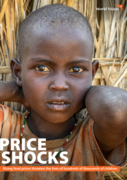
Conflict, climate change, the COVID-19 pandemic, and the economic effects of the Ukraine crisis are interacting to create new and worsen existing hunger hotspots, reversing the gains families had made to escape poverty.
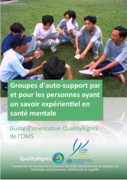
Les modules de formation et d’orientation QualityRights ont été élaborés pour renforcer les connaissances, les compétences et la compréhension des principales parties prenantes sur la manière de promouvoir les droits des personnes en situation de handicap psychosocial, intellectuel ou cogni
...

The indicators and questions in this document are designed for use by national AIDS programmes and partners to assess the state of a country’s HIV and AIDS response, and to measure progress towards achieving national HIV targets. Countries are encouraged to integrate these indicators and questions
...
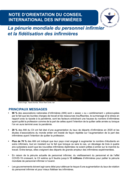
Un an après le début de la pandémie, la COVID-19 a changé le monde et continue de peser sur notre quotidien. La pandémie a mis en évidence les lacunes des systèmes de santé tandis que le personnel de santé a été exposé au virus de façon
disproportionnée. Tout au long de l’année pas
...

Cholera is a diarrheal disease caused by the bacterium Vibrio cholera. The infection primarily spreads through contaminated water and food. Symptoms include the onset of acute diarrhea and/or vomiting, muscle cramps, and body weakness. If untreated, the infection can result in rapid dehydration and
...

The 2022 Financing for Sustainable Development Report identifies a “great finance divide” as a main driver of the divergent recovery. Developed countries were able to borrow record sums at ultra-low interest rates to support their people and economies, but the pandemic response and investment in
...

The Mapping Antimicrobial Resistance and Antimicrobial Use Partnership (MAAP) project has conducted a multi-year, multi-country study that provides stark insights on the under-reported depth of the antimicrobial resistance (AMR) crisis across Africa and lays out urgent policy recommendations to addr
...
Peripheral artery disease (PAD) is the most underdiagnosed, underestimated and undertreated of the atherosclerotic vascular diseases despite its poor prognosis. There may be racial or contextual differences in the Asia-Pacific region as to epidemiology, availability of diagnostic and therapeutic mod
...

The Haiti Earthquake and Cholera Emergency appeal (MDRHT018) was implemented by the International Federation of Red Cross and Red Crescent Societies (IFRC) in collaboration with the Haitian Red Cross Society (HRCS) following the devastating earthquake on 14 August 2021, and the cholera outbreak on 2
...

The indicators and questions in this document are designed for use by national AIDS programmes and partners to assess the state of a country’s HIV and AIDS response, and to measure progress towards achieving national HIV targets. Countries are encouraged to integrate these indicators and questions
...
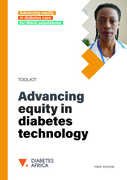
This toolkit suggests several approaches to addressing technology
access disparities. At its core is a comprehensive checklist that helps
teams systematically evaluate their current practices and identify
opportunities for improvement. This structured self-assessment
tool spans both team-level a
...

This handbook is designed to provide essential information as well as quick tips to improve foot care for people with dark skin tone living with diabetes.
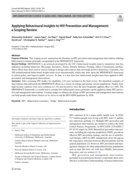
Current HIV/AIDS Reports (2022) 19:358–374. https://doi.org/10.1007/s11904-022-00615-z.
MINDSPACE is an acronym developed by the UK's behavioural insights team to summarise nine key influences on human behaviour: Messenger, Incentives, Norms, Default, Salience, Priming, Affect, Commitment, and E
...

The ILO has joined forces with Gallup to carry out a groundbreaking global survey covering 50 countries that sheds further light on the causes of the persistence of HIV-related stigma and discrimination in the world of work.

Panel Recommendations
