
Filter
6191
Text search:
delivery
care
services
Featured
581
1817
Language
6024
147
103
92
65
34
28
14
9
7
7
7
6
6
6
5
4
4
4
4
4
3
3
3
3
3
3
3
3
3
3
2
2
2
2
2
2
2
2
2
2
2
2
2
2
1
1
1
1
1
1
1
1
1
1
1
1
1
Document type
3355
1001
800
379
318
128
103
59
19
8
7
7
1
1
Countries
314
265
237
162
156
156
144
140
139
127
126
119
116
109
108
102
95
94
92
70
70
67
66
56
49
47
46
45
45
41
40
36
33
32
31
31
30
29
27
24
23
21
21
21
20
19
18
18
18
17
17
17
16
14
14
13
13
12
11
11
10
10
10
10
9
9
9
9
8
8
8
6
6
6
5
5
5
4
4
4
4
4
4
4
4
4
4
4
4
3
3
3
3
3
3
3
3
3
3
3
2
2
2
2
2
2
2
2
2
2
2
2
2
2
2
2
1
1
1
1
1
1
1
1
1
1
1
1
1
1
1
1
1
1
1
1
1
1
1
1
1
1
1
1
1
1
1
1
1
Authors & Publishers
894
222
184
178
162
122
119
88
85
56
52
40
36
33
32
31
30
29
27
27
27
26
25
24
24
23
23
23
22
22
22
21
21
21
20
19
19
19
18
18
18
18
18
17
17
16
16
16
16
16
16
15
15
14
14
13
13
13
13
13
12
12
12
12
12
12
12
11
11
11
11
11
11
11
11
11
10
10
10
10
10
10
10
9
9
9
9
9
9
9
9
9
9
9
9
9
9
8
8
8
8
8
8
8
8
8
8
8
8
8
7
7
7
7
7
7
7
7
7
7
7
7
7
7
7
7
7
7
6
6
6
6
6
6
6
6
6
6
6
6
6
6
6
6
6
6
6
6
6
6
6
6
6
6
6
6
6
6
6
6
6
6
5
5
5
5
5
5
5
5
5
5
5
5
5
5
5
5
5
5
5
5
5
5
5
5
5
5
5
5
5
5
5
5
5
5
5
5
5
5
5
5
5
5
5
5
5
5
5
5
5
5
5
5
4
4
4
4
4
4
4
4
4
4
4
4
4
4
4
4
4
4
4
4
4
4
4
4
4
4
4
4
4
4
4
4
4
4
4
4
4
4
4
4
4
4
4
4
4
4
4
4
4
4
4
4
4
4
4
4
4
4
4
4
4
4
4
4
4
4
4
4
4
4
4
3
3
3
3
3
3
3
3
3
3
3
3
3
3
3
3
3
3
3
3
3
3
3
3
3
3
3
3
3
3
3
3
3
3
3
3
3
3
3
3
3
3
3
3
3
3
3
3
3
3
3
3
3
3
3
3
3
3
3
3
3
3
3
3
3
3
3
3
3
3
3
3
3
3
3
3
3
3
3
3
3
3
3
3
3
3
3
3
3
3
3
3
3
3
3
3
3
3
3
3
3
3
3
3
3
2
2
2
2
2
2
2
2
2
2
2
2
2
2
2
2
2
2
2
2
2
2
2
2
2
2
2
2
2
2
2
2
2
2
2
2
2
2
2
2
2
2
2
2
2
2
2
2
2
2
2
2
2
2
2
2
2
2
2
2
2
2
2
2
2
2
2
2
2
2
2
2
2
2
2
2
2
2
2
2
2
2
2
2
2
2
2
2
2
2
2
2
2
2
2
2
2
2
2
2
2
2
2
2
2
2
2
2
2
2
2
2
2
2
2
2
2
2
2
2
2
2
2
2
2
2
2
2
2
2
2
2
2
2
2
2
2
2
2
2
2
2
2
2
2
2
2
2
2
2
2
2
2
2
2
2
2
2
2
2
2
2
2
2
2
2
2
2
2
2
2
2
2
2
2
2
2
2
2
2
2
2
2
2
2
2
2
2
2
2
2
2
2
2
2
2
2
2
2
2
2
2
2
2
2
2
2
2
2
2
2
2
2
2
2
2
2
2
2
2
2
2
2
2
2
2
2
2
2
2
2
2
2
2
2
2
2
2
2
2
2
2
2
2
2
2
2
2
2
2
2
2
2
2
2
2
2
2
2
2
2
2
2
2
2
2
2
2
2
2
2
2
2
2
2
2
2
2
2
2
2
2
2
2
2
2
2
2
2
2
2
1
1
1
1
1
1
1
1
1
1
1
1
1
1
1
1
1
1
1
1
1
1
1
1
1
1
1
1
1
1
1
1
1
1
1
1
1
1
1
1
1
1
1
1
1
1
1
1
1
1
1
1
1
1
1
1
1
1
1
1
1
1
1
1
1
1
1
1
1
1
1
1
1
1
1
1
1
1
1
1
1
1
1
1
1
1
1
1
1
1
1
1
1
1
1
1
1
1
1
1
1
1
1
1
1
1
1
1
1
1
1
1
1
1
1
1
1
1
1
1
1
1
1
1
1
1
1
1
1
1
1
1
1
1
1
1
1
1
1
1
1
1
1
1
1
1
1
1
1
1
1
1
1
1
1
1
1
1
1
1
1
1
1
1
1
1
1
1
1
1
1
1
1
1
1
1
1
1
1
1
1
1
1
1
1
1
1
1
1
1
1
1
1
1
1
1
1
1
1
1
1
1
1
1
1
1
1
1
1
1
1
1
1
1
1
1
1
1
1
1
1
1
1
1
1
1
1
1
1
1
1
1
1
1
1
1
1
1
1
1
1
1
1
1
1
1
1
1
1
1
1
1
1
1
1
1
1
1
1
1
1
1
1
1
1
1
1
1
1
1
1
1
1
1
1
1
1
1
1
1
1
1
1
1
1
1
1
1
1
1
1
1
1
1
1
1
1
1
1
1
1
1
1
1
1
1
1
1
1
1
1
1
1
1
1
1
1
1
1
1
1
1
1
1
1
1
1
1
1
1
1
1
1
1
1
1
1
1
1
1
1
1
1
1
1
1
1
1
1
1
1
1
1
1
1
1
1
1
1
1
1
1
1
1
1
1
1
1
1
1
1
1
1
1
1
1
1
1
1
1
1
1
1
1
1
1
1
1
1
1
1
1
1
1
1
1
1
1
1
1
1
1
1
1
1
1
1
1
1
1
1
1
1
1
1
1
1
1
1
1
1
1
1
1
1
1
1
1
1
1
1
1
1
1
1
1
1
1
1
1
1
1
1
1
1
1
1
1
1
1
1
1
1
1
1
1
1
1
1
1
1
1
1
1
1
1
1
1
1
1
1
1
1
1
1
1
1
1
1
1
1
1
1
1
1
1
1
1
1
1
1
1
1
1
1
1
1
1
1
1
1
1
1
1
1
1
1
1
1
1
1
1
1
1
1
1
1
1
1
1
1
1
1
1
1
1
1
1
1
1
1
1
1
1
1
1
1
1
1
1
1
1
1
1
1
1
1
1
1
1
1
1
1
1
1
1
1
1
1
1
1
1
1
1
1
1
1
1
1
1
1
1
1
1
1
1
1
1
1
1
1
1
1
1
1
1
1
1
1
1
1
1
1
1
1
1
1
1
1
1
1
1
1
1
1
1
1
1
1
1
1
1
1
1
1
1
1
1
1
1
1
1
1
1
1
1
1
1
1
1
1
1
1
1
1
1
1
1
1
1
1
1
1
1
1
1
1
1
1
1
1
1
1
1
1
1
1
1
1
1
1
1
1
1
1
1
1
1
1
1
1
1
1
1
1
1
1
1
1
1
1
1
1
1
1
1
1
1
1
1
1
1
1
1
1
1
1
1
1
1
1
1
1
1
1
1
1
1
1
1
1
1
1
1
1
1
1
1
1
1
1
1
1
1
1
1
1
1
1
1
1
1
1
1
1
1
1
1
1
1
1
1
1
1
1
1
1
1
1
1
1
1
1
1
1
1
1
1
1
1
1
1
1
1
1
1
1
1
1
1
1
1
1
1
1
1
1
1
1
1
1
1
1
1
1
1
1
1
1
1
1
1
1
1
1
1
1
1
1
1
1
1
1
1
1
1
1
1
1
1
1
1
1
1
1
1
1
1
1
1
1
1
1
1
1
1
1
1
1
1
1
1
1
1
1
1
1
1
1
1
1
1
1
1
1
1
1
1
1
1
1
1
1
1
1
1
1
1
1
1
1
1
1
1
1
1
1
1
1
1
1
1
1
1
1
1
1
1
1
1
1
1
1
1
1
1
1
1
1
1
1
1
1
1
1
1
1
1
1
1
1
1
1
1
1
1
1
1
1
1
1
1
1
1
1
1
1
1
1
1
1
1
1
1
1
1
1
1
1
1
1
1
1
1
1
1
1
1
1
1
1
1
1
1
1
1
1
1
1
1
1
1
1
1
1
1
1
1
1
1
1
1
1
1
1
1
1
1
1
1
1
1
1
1
1
1
1
1
1
1
1
1
1
1
1
1
1
1
1
1
1
1
1
1
1
1
1
1
1
1
1
1
1
1
1
1
1
1
1
1
1
1
1
1
1
1
1
1
1
1
1
1
1
1
1
1
1
1
1
1
1
1
1
1
1
1
1
1
1
1
1
1
1
1
1
1
1
1
1
1
1
1
1
1
1
1
1
1
1
1
1
1
1
1
1
1
1
1
1
1
1
1
1
1
1
1
1
1
1
1
1
1
1
1
1
1
1
1
1
1
1
1
1
1
1
1
1
1
1
1
1
1
1
1
1
1
1
1
1
1
1
1
1
1
1
1
1
1
1
1
1
1
1
1
1
1
1
1
1
1
1
1
1
1
1
1
1
1
1
1
1
1
1
1
1
1
1
1
1
1
1
1
1
1
1
1
1
1
1
1
1
1
1
1
1
1
1
1
1
1
1
1
1
1
1
1
1
1
1
1
1
1
1
1
1
1
1
1
1
1
1
1
1
1
1
1
1
1
1
1
1
1
1
1
1
1
1
1
1
1
1
1
1
1
1
1
1
1
1
1
1
1
1
1
1
1
1
1
1
1
1
1
1
1
1
1
1
1
1
1
1
1
1
1
1
1
1
1
1
1
1
1
1
1
1
1
1
1
1
1
1
1
1
1
1
1
1
1
1
1
1
1
1
1
1
1
1
1
1
1
1
1
1
1
1
1
1
1
1
1
1
1
1
1
1
1
1
1
1
1
1
1
1
1
1
1
1
1
1
1
1
1
1
1
1
1
1
1
1
1
1
1
1
1
1
1
1
1
1
1
1
1
1
1
1
1
1
1
1
1
1
1
1
1
1
1
1
1
1
1
1
1
1
1
1
1
1
1
1
1
1
1
1
1
1
1
1
1
1
1
1
1
1
1
1
1
1
1
1
1
1
1
1
1
1
1
1
1
1
1
1
1
1
1
1
1
1
1
1
1
1
1
1
1
1
1
1
1
1
1
1
1
1
1
1
1
1
1
1
1
1
1
1
1
1
1
1
1
1
1
1
1
1
1
1
1
1
1
1
1
1
1
1
1
1
1
1
1
1
1
1
1
1
1
1
1
1
1
1
1
1
1
1
1
1
1
1
1
1
1
1
1
1
1
1
1
1
1
1
1
1
1
1
1
1
1
1
1
1
1
1
1
1
1
1
1
1
1
1
1
1
1
1
1
1
1
1
1
1
1
1
1
1
1
1
1
1
1
1
1
1
1
1
1
1
1
1
1
1
1
1
1
1
1
1
1
1
1
1
1
1
1
1
1
1
1
1
1
1
1
1
1
1
1
1
1
1
1
1
1
1
1
1
1
1
1
1
1
1
1
1
1
1
1
1
1
1
1
1
1
1
1
1
1
1
1
1
1
1
1
1
1
1
1
1
1
1
1
1
1
1
1
1
1
1
1
1
1
1
1
1
1
1
1
1
1
1
1
1
1
1
1
1
1
1
1
1
1
1
1
1
1
1
1
1
1
1
1
1
1
1
1
1
1
1
1
1
1
1
1
1
1
1
1
1
1
1
1
1
1
1
1
1
1
1
1
1
1
1
1
1
1
1
1
1
1
1
1
1
1
1
1
1
1
1
1
1
1
1
1
1
1
1
1
1
1
1
1
1
1
1
1
1
1
1
1
1
1
1
1
1
1
1
1
1
1
1
1
1
1
1
1
1
1
1
1
1
1
1
1
1
1
1
1
1
1
1
1
1
1
1
1
1
1
1
1
1
1
1
1
1
1
1
1
1
1
1
1
1
1
1
1
1
1
1
1
1
1
1
1
1
1
1
1
1
1
1
1
1
1
1
1
1
1
1
1
1
1
1
1
1
1
1
1
1
1
1
1
1
1
1
1
1
1
1
1
1
1
1
1
1
1
1
1
1
1
1
1
1
1
1
1
1
1
1
1
1
1
1
1
1
1
1
1
1
1
1
1
1
1
1
1
1
1
1
1
1
1
1
1
1
1
1
1
1
1
1
1
1
1
1
1
1
1
1
1
1
1
1
1
1
1
1
1
1
1
1
1
1
1
1
1
1
1
1
1
1
1
1
1
1
1
1
1
1
1
1
1
1
1
1
1
1
1
1
1
1
1
1
1
1
1
1
1
1
1
1
1
1
1
1
1
1
1
1
1
1
1
1
1
1
1
1
1
1
1
1
1
1
1
1
1
1
1
1
1
1
1
1
1
1
1
1
1
1
1
1
1
1
1
1
1
1
1
1
1
1
1
1
1
1
1
1
1
1
1
1
1
1
1
1
1
1
1
1
1
1
1
1
1
1
1
1
1
1
1
1
1
1
1
1
1
1
1
1
1
1
1
1
1
1
1
1
1
1
1
1
1
1
1
1
1
1
1
1
1
1
1
1
1
1
1
1
1
1
1
1
1
1
1
1
1
1
1
1
1
1
1
1
1
1
1
1
1
1
1
1
1
1
1
1
1
1
1
1
1
1
1
1
1
1
1
1
1
1
1
1
1
1
1
1
1
1
1
1
1
1
1
1
1
1
1
1
1
1
1
1
1
1
1
1
1
1
1
1
1
1
1
1
1
1
1
1
1
1
1
1
1
1
1
1
1
1
1
1
1
1
1
1
1
1
1
1
1
1
1
1
1
1
1
1
1
1
1
1
1
1
1
1
1
1
1
1
1
1
1
1
1
1
1
1
1
1
1
1
1
1
1
1
1
1
1
1
1
1
1
1
1
1
1
1
1
1
1
1
1
1
1
1
1
1
1
1
1
1
1
1
1
1
1
1
1
1
1
1
1
1
1
1
1
1
1
1
1
1
1
1
1
1
1
1
1
1
1
1
1
1
1
1
1
1
1
1
1
1
1
1
1
1
1
1
1
1
1
1
1
1
1
1
1
1
1
1
1
1
1
1
1
1
1
1
1
1
1
1
1
1
1
1
1
1
1
1
1
1
1
1
1
1
1
1
1
1
1
1
1
1
1
1
1
1
1
1
1
1
1
1
1
1
1
1
1
1
1
1
1
1
1
1
1
1
1
1
1
1
1
1
1
1
1
1
1
1
1
1
1
1
1
1
1
1
1
1
1
1
1
1
1
1
1
1
1
1
1
1
1
1
1
1
1
1
1
1
1
1
1
1
1
1
1
1
1
1
1
1
1
1
1
1
1
1
1
1
1
1
1
1
1
1
1
1
1
1
1
1
1
1
1
1
1
1
1
1
1
1
1
1
1
1
1
1
1
1
1
1
1
1
1
1
1
1
1
1
1
1
1
1
1
1
1
1
1
1
1
1
1
1
1
1
1
1
1
1
1
1
1
1
1
1
1
1
1
1
1
1
1
1
1
1
1
1
1
1
1
1
1
1
1
1
1
1
1
1
1
1
1
1
1
1
1
1
1
1
1
1
1
1
1
1
1
1
1
1
1
1
1
1
1
1
1
1
1
1
1
1
1
1
1
1
1
1
1
1
1
1
1
1
1
1
1
1
1
1
1
1
1
1
1
1
1
1
1
1
1
1
1
1
1
1
1
1
1
1
1
1
1
1
1
1
1
1
1
1
1
1
1
1
1
1
1
1
1
1
1
1
1
1
1
1
1
1
1
1
1
1
1
1
1
1
1
1
1
1
1
1
1
1
1
1
1
1
1
1
1
1
1
1
1
1
1
1
1
1
1
1
1
1
1
1
1
1
1
1
1
1
1
1
1
1
1
1
1
1
1
1
1
1
1
1
1
1
1
1
1
1
1
1
1
1
1
1
1
1
1
1
1
1
1
1
1
1
1
1
1
1
1
1
1
1
1
1
1
1
1
1
1
1
1
1
1
1
1
1
1
1
1
1
1
1
1
1
1
1
1
1
1
1
1
1
1
1
1
1
1
1
1
1
1
1
1
1
1
1
1
1
1
1
1
1
1
1
1
1
1
1
1
1
1
1
1
1
1
1
1
1
1
1
1
1
1
1
1
1
1
1
1
1
1
1
1
1
1
1
1
1
1
1
1
1
1
1
1
1
1
1
1
1
1
1
1
1
1
1
1
1
1
1
1
1
1
1
1
1
1
1
1
1
1
1
1
1
1
1
1
1
1
1
1
1
1
1
1
1
1
1
1
1
1
1
1
1
1
1
1
1
1
1
1
1
1
1
1
1
1
1
1
1
1
1
1
1
1
1
1
1
1
1
1
1
1
1
1
1
1
1
1
1
1
1
1
1
1
1
1
1
1
1
1
1
1
1
1
1
1
1
1
1
1
1
1
1
1
1
1
1
1
1
1
1
1
1
1
1
1
1
1
1
1
1
1
1
1
1
1
1
1
1
1
1
1
1
1
1
1
1
1
1
1
1
1
1
1
1
1
1
1
1
1
1
1
1
1
1
1
1
1
1
1
1
1
1
1
1
1
1
1
1
1
1
1
1
1
1
1
1
1
1
1
1
1
1
1
1
1
1
1
1
1
1
1
1
1
1
1
1
1
1
1
1
1
1
1
1
1
1
1
1
1
1
1
1
1
1
1
1
1
1
1
1
1
1
1
1
1
1
1
1
1
1
1
1
1
1
1
1
1
1
1
1
1
1
1
1
1
1
1
1
1
1
1
1
1
1
1
1
1
1
1
1
1
1
1
1
1
1
1
1
1
1
1
1
1
1
1
1
1
1
1
1
1
1
1
1
1
1
1
1
1
1
1
1
1
1
1
1
1
1
1
1
1
1
1
1
1
1
1
1
1
1
1
1
1
1
1
1
1
1
1
1
1
1
1
1
1
1
1
1
1
1
1
1
1
1
1
1
1
1
1
1
1
1
1
1
1
1
1
1
1
1
1
1
1
1
1
1
1
1
1
1
1
1
1
1
1
1
1
1
1
1
1
1
1
1
1
1
1
1
1
1
1
1
1
1
1
1
1
1
1
1
1
1
1
1
1
1
1
1
1
1
1
1
1
1
1
1
1
1
1
1
1
1
1
1
1
1
1
1
1
1
1
1
1
1
1
1
1
1
1
1
1
1
1
1
1
1
1
1
1
1
1
1
1
1
1
1
1
1
1
1
1
1
1
1
1
1
1
1
1
1
1
1
1
1
1
1
1
1
1
1
1
1
1
1
1
1
1
1
1
1
1
1
1
1
1
1
1
1
1
1
1
1
1
1
1
1
1
1
1
1
1
1
1
1
1
1
1
1
1
1
1
1
1
1
1
1
1
1
1
1
1
1
1
1
1
1
1
1
1
1
1
1
1
1
1
1
1
1
1
1
1
1
1
1
1
1
1
1
1
1
1
1
1
1
1
1
1
1
1
1
1
1
1
1
1
1
1
1
1
1
1
1
1
1
1
1
1
1
1
1
1
1
1
1
1
1
1
1
1
1
1
1
1
1
1
1
1
1
1
1
1
1
1
1
1
1
1
1
1
1
1
1
1
1
1
1
1
1
1
1
1
1
1
1
1
1
1
1
1
1
1
1
1
1
1
1
1
1
1
1
1
1
1
1
1
1
1
1
1
1
1
1
1
1
1
1
1
1
1
1
1
1
1
1
1
1
1
1
1
1
1
1
1
1
1
1
1
1
1
1
1
1
1
1
1
1
1
1
1
1
1
1
1
1
1
1
1
1
1
1
1
1
1
1
1
1
1
1
1
1
1
1
1
1
1
1
1
1
1
1
1
1
1
1
1
1
1
1
1
1
1
1
1
1
1
1
1
1
1
1
1
1
1
1
1
1
1
1
1
1
1
1
1
1
1
1
1
1
1
1
1
1
1
1
1
1
1
1
1
1
1
1
1
1
1
1
1
1
1
1
1
1
1
1
1
1
1
1
1
1
1
1
1
1
1
1
1
1
1
1
1
1
1
1
1
1
1
1
1
1
1
1
1
1
1
1
1
1
1
1
1
1
1
1
1
1
1
1
1
1
1
1
1
1
1
1
1
1
1
1
1
1
1
1
1
1
1
1
1
1
1
1
1
1
1
1
1
1
1
1
1
1
1
1
1
1
1
1
1
1
1
1
1
1
1
1
1
1
1
1
1
1
1
1
1
1
1
1
1
1
1
1
1
1
1
1
1
1
1
1
1
1
1
1
1
1
1
1
1
1
1
1
1
1
1
1
1
1
1
1
1
1
1
1
1
1
1
1
1
1
1
1
1
1
1
1
1
1
1
1
1
1
1
1
1
1
1
1
1
1
1
1
1
1
1
1
1
1
1
1
1
1
1
1
1
Publication Years
1912
3727
529
20
2
1
Category
2754
433
408
385
349
149
51
1
Toolboxes
468
418
279
271
245
242
228
142
132
113
111
106
101
98
95
94
92
81
74
62
33
28
26
25
25
5
1
Fever Diagnostic Technology Landscape
recommended
1st edition.
Unitaid’s report describes a slate of new devices that can more efficiently identify dangerously ill children so that they can be treated immediately. These tools make it easier to recognize danger signs, and support integrated approaches to reducing childhood deaths from the three
...
greatest childhood killers: malaria, pneumonia and diarrhoea.
The report also highlights tests that can determine whether or not a child has an illness that can be treated with antibiotics. Viral infections are a common cause of childhood fevers, but cannot be cured with antibiotics. Although many children seeking care at clinics have fever, three-quarters by some estimates, only a small fraction of those have an illness that can be treated with an antimalarial or antibiotic drug
more
This Guide contains information, guidelines, diagrams and other materials addressed to medical practitioners who are engaged in the treatment of casualties of chemical weapons. It is made available to the public for information purposes, but is not intended to be used by the public. All decisions re
...
garding patient care must be made with a healthcare provider and consider the unique characteristics of each patient.
more
Frameworks for Victim Assistance: Monitor key findings and observations
International Campaign to Ban Landmines
(2013)
C3
For close to 15 years, the Monitor has tracked the impact of victim assistance on the lives of victims of landmines, cluster munitions,
and other explosive remnants of war (hereafter “mine/ERW victims”). Over this time, the international communi
...
ty has strengthened its resolve to promote the rights and address the needs of victims through programs and services that are accessible and adequate in quantity, quality, availability, and consistent with the high standards set by human rights as well as other international humanitarian law.
more

Disability-inclusive social protection research in Nepal
Banks, Lena M., Walsham, Matthew and others
International Centre for Evidence in Disability
(2018)
C1
A national overview with a case study from Tanahun district. The overall aims of this study are (1) to assess the extent to which social protection systems in Nepal address the needs of people with disabilities; and (2) to identify and document elements of good practice, as well as challenges, in th
...
e design and delivery of social protection for people with disabilities. As most social protection programmes in Nepal are targeted to various groups considered to be a high risk of poverty or marginalisation (e.g. orphans, widows), the research mainly focuses on disability-specific schemes, as they are relevant to a higher proportion of people with disabilities.
more
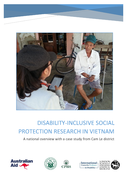
Disability-inclusive social protection research in Vietnam
Banks, Lena M., Walsham, Matthew and others
International Centre for Evidence in Disability
(2018)
C1
A national overview with a case study from Cam Le district
The overall aims of this study are (1) to assess the extent to which social protection systems in Vietnam address the needs of people with disabilities; and (2) to identify and document elements of good practice, as well as challenges, ... in the design and delivery of social protection for people with disabilities. As most social protection programmes in Vietnam are targeted to various vulnerable groups (e.g. orphans, widows, single parents), the research mainly focuses on disability-specific schemes, as they are relevant to a higher proportion of people with disabilities. more
The overall aims of this study are (1) to assess the extent to which social protection systems in Vietnam address the needs of people with disabilities; and (2) to identify and document elements of good practice, as well as challenges, ... in the design and delivery of social protection for people with disabilities. As most social protection programmes in Vietnam are targeted to various vulnerable groups (e.g. orphans, widows, single parents), the research mainly focuses on disability-specific schemes, as they are relevant to a higher proportion of people with disabilities. more
The National Integrated Comprehensive Cholera Prevention and Control Plan (2017-2022) outlines Uganda's strategy to reduce cholera cases and mortality by 50% by 2022. The plan focuses on improving access to clean water, sanitation, and hygiene (WASH), strengthening disease surveillance, enhancing ca
...
se management, and implementing oral cholera vaccination (OCV) in high-risk areas. It emphasizes multi-sectoral collaboration, involving government agencies, NGOs, and local communities to ensure a sustainable response. Key interventions include community engagement, improved health services, and better outbreak preparedness, aiming for long-term cholera elimination in Uganda.
more
Managing Sexual Violence against Aid Workers aims to support aid agencies in preventing, being prepared for and responding to incidents of sexual violence against their staff. It is intended as a good practice guide to help strengthen existing processes and support organisations as they set up their
...
own protocols.
This guide is aimed at anyone with a responsibility for staff care, safety and security, as well as anyone involved in processes aimed at preventing or responding to incidents of sexual violence against staff, such as security focal points, HR staff, project and programmes staff, and first responders to incidents of sexual violence within an aid organisation.
more
Q7. SCOPING QUESTION: In adults with moderate-severe depressive disorder, what is the effectiveness and safety of antidepressant medication (ADM) in comparison with psychological treatment?
The WHO mhGAP programme’s existing guidelines recommend that either structured brief psychological treatm
...
ents (e.g., interpersonal psychotherapy or cognitive behavioural therapy, including behavioural activation) or antidepressant medication (e.g., SSRIsi and tricyclic antidepressants) be considered in adults with moderate-severe depression. Health care workers need to know whether these treatments have different effects, including side-effects, in treating depressive disorder in the short and long term, in order to improve clinical decision-making.
more

Refugee 1 men and boys can be subjected to sexual and gender‑based violence (SGBV). Survivors have specific health, psychosocial, legal, and safety needs, but often find it hard to discuss their experience and access the support they need. It is important that UNHCR and its partners take steps to
...
address these difficulties. The objectives of this note are to emphasise that programmes on sexual and gender‑based violence need to include men and boys, and to provide guidance on how to access survivors, facilitate reporting, provide protection and deliver essential medical, legal and social services. 2
more

Malar J (2017) 16:174 DOI 10.1186/s12936-017-1808-x
Background: Since 2004, artemisinin-based combination therapy (ACT) has been the first-line treatment for uncomplicated malaria in Benin. In 2016, a medicine outlet survey was implemented to investigate the availability, price, and market share of
...
anti-malarial treatment and malaria diagnostics. Results provide a timely and important benchmark to measure future interventions aimed at increasing access to quality malaria case management services.
more
COVID-19 disproportionately affects the poor and vulnerable. Community health workers are poised to play a pivotal role in fighting the pandemic, especially in countries with less resilient health systems. Drawing from practitioner expertise across four WHO regions, this article outlines the targete
...
d actions needed at different stages of the pandemic to achieve the following goals: (1) PROTECT healthcare workers, (2) INTERRUPT the virus, (3) MAINTAIN existing healthcare services while surging their capacity, and (4) SHIELD the most vulnerable from socioeconomic shocks. While decisive action must be taken now to blunt the impact of the pandemic in countries likely to be hit the hardest, many of the investments in the supply chain, compensation, dedicated supervision, continuous training and performance management necessary for rapid community response in a pandemic are the same as those required to achieve universal healthcare and prevent the next epidemic.
BMJ Global Health2020;5:e002550. doi:10.1136/bmjgh-2020-002550
more

While many of the countries hit by the COVID-19 in the first few months of the year are now beginning to relax lockdown measures as infection and death rates fall, in the regions most affected by HIV, TB and malaria, such as Africa, South Asia and Latin America, the pandemic continues to accelerate.
...
In lower resource settings, lockdowns are less effective and hard to sustain, and clinical care facilities are extremely limited. In such environments, the response to COVID-19 must focus on containing the pandemic’s spread as far as possible through testing, contact tracing and isolation, protecting the health workforce through training and the provision of personal protective equipment (PPE) and minimizing the knock-on impact on other diseases through shoring up fragile health systems, and adapting existing disease programs.
more
7 Febr. 2021
As COVID-19 continues to wreak havoc in countries – decimating people’s livelihoods, and leaving health systems struggling to provide healthcare and vaccines for the entire population - governments and donors should look to the Church as a partner. The essential Church networks, tr
...
usted and rooted in local communities, can reach the most vulnerable people and remote places where governments often struggle to reach. DR Congo is among several countries where the Catholic Church is the main provider of community health services, particularly in more remote areas.
more
WHO has a unique combination of technical public health and scientific expertise, and a global operational footprint, with field offices in more than 150 countries. In 2020, this global, technical, and operational reach meant WHO was able to support countries around the world in every aspect of COVI
...
D-19 public health response, from surveillance and laboratory testing to maintaining essential health services in the most vulnerable and fragile contexts.
more

COVID-19 Vaccines: 1 Safety Surveillance 2 Manual
While there is no indication that pregnant women have an increased susceptibility to infection with SARS-CoV-2, there is evidence that pregnancy may increase the risk of severe illness and mortality from COVID-19 disease in comparison with non-pregn
...
ant women of reproductive age. As seen with non-pregnant women, a high proportion of pregnant women have asymptomatic SARS-CoV-2 infection and severe disease is associated with recognized medical (e.g., high body-mass index (BMI), diabetes, pre-existing pulmonary or cardiac conditions) and social (e.g., social deprivation, ethnicity) risk factors. Pregnant women with symptomatic COVID-19 appear to have an increased risk of intensive care unit admission, mechanical ventilation and death in comparison with non-pregnant women of reproductive age, although the absolute risks remain low. COVID-19 may increase the risk of preterm birth, compared with pregnant women without COVID-19, although the evidence is inconclusive.
more

This update of the Guidelines for poison control, entitled Guidelines for establishing a poison centre, reflects the development of the role of poison centres in public health and the sound management of chemicals, described in section 1, and the opportunities provided by new technology. Assessments
...
carried out under the IHR show
continuing gaps in capacity for managing chemicals (2). In particular, many countries still lack access to poison
centre services (3). There is therefore demand for updated guidance.
more

This report aims to support countries in the necessary transition toward healthier, more sustainable diets by integrating biodiversity in food-based interventions to support nutrition and health. It is intended to help guide decision-makers in the health, nutrition and other sectors, to:
Consider
...
the important role of biodiversity in food systems for the development of integrated interventions to support healthy, diverse and sustainable diets;
To focus investments and country support for more comprehensive, coordinated and cross-cutting public health and nutrition projects and policies; and
To strengthen the resilience of food systems, health systems, and societies, each of which are each increasingly compromised by widespread ecological degradation, biodiversity loss and climate change.
Biodiversity at every level (genetic, species and ecosystem level) is a foundational pillar for food security, nutrition, and dietary quality. It is the basic source of variety in essential foods, nutrients, vitamins and minerals, and medicines, and underpins life-sustaining ecosystem services. It is a core environmental determinant of health, often a vital ingredient of healthy nutritional outcomes and livelihoods, gender equality, social equity, and other health determinants.
Biodiversity can play a more prominent role in planning for nutritional outcomes in various ways, e.g. by facilitating the production of nutritious fruits and plant products, sustaining livelihoods through more efficient production and increasing the diversity of products available in markets. This Guidance presents and expands on six core building blocks for mainstreaming biodiversity for nutrition and health:
Cross-sectoral knowledge development and knowledge co-production;
Enabling environments;
Integration;
Conservation and the wider use of biodiversity;
Education and awareness-raising;
Monitoring and evaluation;
This WHO report builds on an unprecedented opportunity to mainstream biodiversity in order to support healthy and sustainable diets, and offers the necessary technical guidance to catalyze and support a transformation of the global food system and transition to healthier, more sustainable diets.
more
Global Biodiversity Outlook (GBO) is the flagship publication of the Convention on Biological Diversity (CBD). It is a periodic report that summarizes the latest data on the status and trends of biodiversity and draws conclusions relevant to the further implementation of the Convention.
GBO-5 provi
...
des global summary of progress towards the Aichi Biodiversity Targets and is based on a range of indicators, research studies and assessments (in particular the IPBES Global Assessment on Biodiversity and Ecosystem Services), as well as the national reports provided by countries on their implementation of the CBD. The national reports provide rich information about the steps taken in countries worldwide in support of biodiversity conservation, sustainable use, and the fair and equitable sharing of benefits. This body of Information provides a wealth of information on the successes and challenges in implementing the Strategic Plan for Biodiversity 2011-2020 and in reaching the Aichi Biodiversity Targets.
This Outlook draws on the lessons learned during the first two decades of this century to clarify the transitions needed if we are to realize the vision agreed by world governments for 2050, ‘Living in Harmony with Nature’. You can download the report in several languages
more

The 2021 COVID-19 Strategic Preparedness and Response Plan (SPRP) for AFR serves as a regional guide for a holistic public health response to COVID‑19 at regional, national and sub-national levels. The 2021
SPRP:
1. Builds upon the lessons learnt from the implementation of the 2020 SPRP and outl
...
ines a regional preparedness, response and recovery strategy for COVID‑19.
2. Has been adapted to reflect the Regional context including COVID-19 vaccination. It also considers epidemiological changes and recommen-dations emerging from the evaluation report of the 2020 SPRP4.
3. Highlights to Member States strategic preparedness and response actions to be sustained at national and sub-national levels, as well as the critical inter-agency and partner support required.
4. provides the indicative resource requirements to reinforce WHO planned interventions in the African Region to enhance countries’ capacities to suppress transmission, save lives and mitigate the impact of the pandemic on people and health systems.
5. Provides a road map for mitigating potential resurgence in the Region as economies reopen and ensure country level continuity of other essential health services.
more
Viral hepatitis is defined as inflammation of the liver cells due to viral infection. The burden of liver disease in South Africa is mostly underestimated as viral hepatitis, in particular chronic infection, is a silent and neglected cause of morbidity and mortality. However, the burden of disease i
...
s likely substantial given the prevalence of chronic viral hepatitis. This burden is further compounded by the lack of screening and access to care and treatment as well as inadequate disease surveillance, human and financial resources.
The National Guidelines for the Management of Viral Hepatitis were developed, with the purpose to:
inform healthcare workers in the public and private sectors about the disease, its epidemiology in South Africa and current methods of diagnosis and therapy
strengthen the healthcare response to viral hepatitis
empower communicable diseases workers and stakeholders to make informed decisions regarding appropriate and cost effective interventions
more
