
Filter
1968
Text search:
soap
Featured
260
539
Language
Document type
959
355
172
144
88
68
62
46
46
17
7
4
Countries
114
101
92
67
66
63
57
48
46
40
39
37
30
29
28
28
27
26
23
22
21
21
20
20
20
18
18
16
14
14
14
14
14
13
13
11
11
10
10
8
8
8
7
6
6
6
6
6
6
5
5
5
5
4
4
4
4
4
4
4
4
4
4
3
3
3
3
3
3
3
3
3
2
2
2
2
2
2
2
2
2
1
1
1
1
1
1
1
1
1
1
1
1
1
1
1
1
1
1
1
1
1
1
1
1
1
Authors & Publishers
Publication Years
Category
829
241
132
128
65
58
22
Toolboxes
421
196
86
84
48
48
46
45
45
43
37
35
34
28
27
24
22
20
11
8
6
6
5
1
1
1

During the 17 years since Surgical approaches to the urogenital manifestations of lymphatic filariasis was first published, there has been heightened awareness of the physical, economic and emotional burden of the genitourinary manifestations of filariasis. With the impetus to provide better guidanc
...

The application of digital health technology is growing at a rapid rate in Africa, with the goals of improving the delivery of healthcare services and more effectively reaching out to remote and underserved communities. The lack of enabling guidelines and standards across the continent, on the other
...

A aplicação da tecnologia digital de saúde está crescendo rapidamente na África, com o
objetivo de melhorar a prestação de serviços de saúde e alcançar de forma mais eficaz
comunidades remotas e carentes. A falta de diretrizes e padrões habilitadores em todo o
continente, por outro
...

Presentation on WASH in Malawi
There is an expanding market of no- and low-alcohol beverages (NoLos). However, their effects on global ethanol consumption and public health are still questioned. Policies and regulations about NoLos’ availability, acceptability and affordability are lacking and evidence about their benefits is l
...
As a high-burden neglected tropical disease, soil-transmitted helminth (STH) infections remain a major problem in the world, especially among children under five years of age. Since young children are at high risk of being infected, STH infection can have a long-term negative impact on their life, i
...

WASH and Health working together: a ‘how-to’ guide for neglected tropical disease programmes
recommended
2nd edition. This toolkit provides step-by-step guidance to NTD programme managers and partners on how to engage and work collaboratively with the WASH community to improve delivery of water, sanitation and hygiene services to underserved population affected by many neglected tropical diseases. The
...

Rebuilding Liberia’s health system is crucial for improving the country’s overall health outcomes. This annual report highlights key achievements, challenges,and lessons learned in implementing programmes of technical cooperation with the Government of Liberia from January to December 2022. T
...

The Country Cooperation Strategy is the World Health Organization’s corporate framework developed in response to a country’s needs and priorities. The 2022–2025 CCS is the fourth for WHO in Sierra Leone. It is a medium-term strategic document that defines a broad framework for WHO’s work, at
...
The content of these guidelines goes beyond the technicalities of medical needs with additional insights into community empowerment, possible access to welfare and economic opportunities and similar issues. If these are adequately explored, the health and quality of life of people affected and their
...
The link between cholera in pregnancy and negative childbirth outcomes has been observed since the
19th century, but there is currently no clear understanding of the extent nor the mechanisms to inform
treatment guidelines. The recommendations in this Interim Technical Note are based on current
k
...
Identification of Priority Areas for Multisectoral Interventions (PAMIs) for cholera control
recommended
The identification of Priority Areas for Multisectoral Interventions (PAMIs, sometimes referred to as ‘hotspots’) for cholera control is among the first steps for a cholera-affected country to develop or revise a National Cholera Plan (NCP) for cholera control. PAMI identification is critical to
...

Ebola disease and Marburg disease outbreaks continue to occur in Africa, with increased frequency. In addition to resulting in high mortality and morbidity, the outbreaks generate fear and mistrust about the response activities within the communities affected.
Infection prevention and control (IP
...

The Infection prevention and control in the context of coronavirus disease 2019 (COVID-19): a living guideline consolidates technical guidance developed and published during the COVID-19 pandemic into evidence-informed recommendations for infection prevention and control (IPC). This living guideline
...

This report summarizes the World Health Organization’s (WHO) global work on water, sanitation and hygiene (WASH) during 2022. It describes how the Organization continued to deliver its essential WASH programming as elaborated in its 2018–2025 strategy.

The WHO COVID-19 Clinical management: living guidance contains the most up-to-date recommendations for the clinical management of people with COVID-19. Providing guidance that is comprehensive and holistic for the optimal care of COVID-19 patients throughout their entire illness is important.
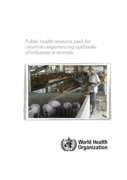
This resource pack was developed for the country offices of the World Health Organization and national Public Health institutions, as an overview of the key information needed for advising their Member States in response to questions raised on human health due to influenza outbreaks or detections in
...

Cholera is a major health risk in many parts of the world, affecting millions of people every year. Since mid-2021, the world has been facing an acute upsurge of the 7th cholera pandemic, which is characterized by the number, size and concurrence of multiple outbreaks, the spread to areas that had b
...

The Commission on Macroeconomics and Health (CMH) was established by World Health Organization Director-General Gro Harlem Brundtland in January 2000 to assess the place of health in global economic development. Although health is widely understood to be both a central goal and an important outcome
...

World Vision’s Gender Equality and Social Inclusion (GESI) approach actively strives to examine, question, and change harmful social norms and power imbalances as a means of reaching gender equality and social inclusion objectives in a programme area.
This reference guide is designed to help WASH
...
