
Filter
1912
Text search:
TB
screening
Featured
214
573
Language
1749
47
42
39
23
9
8
7
5
3
3
3
2
2
2
2
1
1
1
1
1
1
1
1
1
1
1
1
1
1
1
1
1
1
1
1
1
1
1
1
1
Document type
1203
273
227
71
69
29
23
6
3
3
1
1
Countries / Regions
121
85
72
61
48
47
44
42
39
38
38
37
35
30
29
25
25
25
24
24
23
22
19
19
19
16
16
16
16
13
12
12
12
12
11
10
10
9
7
7
7
6
6
6
5
5
5
5
4
4
4
4
4
3
3
3
3
3
3
3
3
3
2
2
2
2
2
2
2
2
2
2
2
2
2
2
2
2
1
1
1
1
1
1
1
1
1
1
1
1
1
1
1
1
1
1
1
1
1
1
1
1
1
1
1
1
1
1
1
1
Authors & Publishers
189
103
91
49
45
37
36
34
24
20
18
18
18
17
17
16
15
14
14
14
13
13
13
12
12
12
11
10
10
10
9
9
9
9
9
9
8
8
8
8
8
8
7
7
7
7
6
6
6
6
6
6
6
6
6
5
5
5
5
5
5
5
5
5
5
5
5
5
5
5
5
5
5
4
4
4
4
4
4
4
4
4
4
4
4
4
4
4
4
4
3
3
3
3
3
3
3
3
3
3
3
3
3
3
3
3
3
3
3
3
3
3
3
3
3
3
3
3
3
3
3
3
3
3
3
3
3
3
3
3
3
3
3
3
3
3
3
3
3
3
3
2
2
2
2
2
2
2
2
2
2
2
2
2
2
2
2
2
2
2
2
2
2
2
2
2
2
2
2
2
2
2
2
2
2
2
2
2
2
2
2
2
2
2
2
2
2
2
2
2
2
2
2
2
2
2
2
2
2
2
2
2
2
2
2
2
2
2
2
2
2
2
2
2
2
2
2
2
2
2
2
2
2
2
2
2
2
2
2
2
2
2
2
2
2
2
2
2
2
2
2
2
2
2
2
2
2
2
2
2
2
2
2
2
2
2
2
2
2
2
2
2
2
2
2
2
2
2
2
2
2
2
1
1
1
1
1
1
1
1
1
1
1
1
1
1
1
1
1
1
1
1
1
1
1
1
1
1
1
1
1
1
1
1
1
1
1
1
1
1
1
1
1
1
1
1
1
1
1
1
1
1
1
1
1
1
1
1
1
1
1
1
1
1
1
1
1
1
1
1
1
1
1
1
1
1
1
1
1
1
1
1
1
1
1
1
1
1
1
1
1
1
1
1
1
1
1
1
1
1
1
1
1
1
1
1
1
1
1
1
1
1
1
1
1
1
1
1
1
1
1
1
1
1
1
1
1
1
1
1
1
1
1
1
1
1
1
1
1
1
1
1
1
1
1
1
1
1
1
1
1
1
1
1
1
1
1
1
1
1
1
1
1
1
1
1
1
1
1
1
1
1
1
1
1
1
1
1
1
1
1
1
1
1
1
1
1
1
1
1
1
1
1
1
1
1
1
1
1
1
1
1
1
1
1
1
1
1
1
1
1
1
1
1
1
1
1
1
1
1
1
1
1
1
1
1
1
1
1
1
1
1
1
1
1
1
1
1
1
1
1
1
1
1
1
1
1
1
1
1
1
1
1
1
1
1
1
1
1
1
1
1
1
1
1
1
1
1
1
1
1
1
1
1
1
1
1
1
1
1
1
1
1
1
1
1
1
1
1
1
1
1
1
1
1
1
1
1
1
1
1
1
1
1
1
1
1
1
1
1
1
1
1
1
1
1
1
1
1
1
1
1
1
1
1
1
1
1
1
1
1
1
1
1
1
1
1
1
1
1
1
1
1
1
1
1
1
1
1
1
1
1
1
1
1
1
1
1
1
1
1
1
1
1
1
1
1
1
1
1
1
1
1
1
1
1
1
1
1
1
1
1
1
1
1
1
1
1
1
1
1
1
1
1
1
1
1
1
1
1
1
1
1
1
1
1
1
1
1
1
1
1
1
1
1
1
1
1
1
1
1
1
1
1
1
1
1
1
1
1
1
1
1
1
1
1
1
1
1
1
1
1
1
1
1
1
1
1
1
1
1
1
1
1
1
1
1
1
1
1
1
1
1
1
1
1
1
1
1
1
1
1
1
1
1
1
1
1
1
1
1
1
1
1
1
1
1
1
1
1
1
1
1
1
1
1
1
1
1
1
1
1
1
1
1
1
1
1
1
1
1
1
1
1
1
1
1
1
1
1
1
1
1
1
1
1
1
1
1
1
1
1
1
1
1
1
1
1
1
1
1
1
1
1
1
1
1
1
1
1
1
1
1
1
1
1
1
1
1
1
1
1
1
1
1
1
1
1
1
1
1
1
1
1
1
1
1
1
1
1
1
1
1
1
1
1
1
1
1
1
1
1
1
1
1
1
1
1
1
1
1
1
1
1
1
1
1
1
1
1
1
1
1
1
1
1
1
1
1
1
1
1
1
1
1
1
1
1
1
1
1
1
1
1
1
1
1
1
1
1
1
1
1
1
1
1
1
1
1
1
1
1
1
1
1
1
1
1
1
1
1
1
1
1
1
1
1
1
1
1
1
1
1
1
1
1
1
1
1
1
1
1
1
1
1
1
1
1
1
1
1
1
1
1
1
1
1
1
1
1
1
1
1
1
1
1
1
1
1
1
1
1
1
1
1
1
1
1
1
1
1
1
1
1
1
1
1
1
1
1
1
1
1
1
1
1
1
1
1
1
1
1
1
1
1
1
1
1
1
1
1
1
1
1
1
1
1
1
1
1
1
1
1
1
1
1
1
1
1
1
1
1
1
1
1
1
1
1
1
1
1
1
1
1
1
1
1
1
1
1
1
1
1
1
1
1
1
1
1
1
1
1
1
1
1
1
1
1
1
1
1
1
1
1
1
1
1
1
1
1
1
1
1
1
1
1
1
1
1
1
1
1
1
1
1
1
1
1
1
1
1
1
1
1
1
1
1
1
1
1
1
1
1
1
1
1
1
1
1
1
1
1
1
1
1
1
1
1
1
1
1
1
1
1
1
1
1
1
1
1
1
1
1
1
1
1
1
1
1
1
1
1
1
1
1
1
1
1
1
1
1
1
1
1
1
1
1
1
1
1
1
1
1
1
1
1
1
1
1
1
1
1
1
1
1
1
1
1
1
1
1
1
1
1
1
1
1
1
1
1
1
1
1
1
1
1
1
1
1
1
1
1
1
1
1
1
1
1
1
1
1
1
1
1
1
1
1
1
1
1
1
1
1
1
1
1
1
1
1
1
1
1
1
1
1
1
1
1
1
1
1
1
1
1
1
1
1
1
1
1
1
1
1
1
1
1
1
1
1
1
1
1
1
1
1
1
1
1
1
1
1
1
1
1
1
1
1
1
1
1
1
1
1
1
1
1
1
1
1
1
1
1
1
1
1
1
1
1
1
1
1
1
1
1
1
1
1
1
1
1
1
1
1
1
1
1
1
1
1
1
1
1
1
1
1
1
1
1
1
1
1
1
1
1
1
1
1
1
1
1
1
1
1
1
1
1
1
1
1
1
1
1
1
1
1
1
1
1
1
1
1
1
1
1
1
1
1
1
1
1
1
1
1
1
1
1
1
1
1
1
1
1
1
1
1
1
1
1
1
1
1
1
1
1
1
1
1
1
1
1
1
1
1
1
1
1
1
1
1
1
1
1
1
1
1
1
1
1
1
1
1
1
1
1
1
1
1
1
1
1
1
1
1
1
1
1
1
1
1
1
1
1
1
1
1
1
1
1
1
1
1
1
1
1
1
1
1
1
1
1
1
1
1
1
1
1
1
1
1
1
1
1
1
1
1
1
1
1
1
1
1
1
1
1
1
1
1
1
1
1
1
1
1
1
1
1
1
1
1
1
1
1
1
1
1
1
1
1
1
1
1
1
1
1
1
1
1
1
1
1
1
1
1
1
1
1
1
1
1
1
1
1
1
1
1
1
1
1
1
1
1
1
1
1
1
1
1
1
1
1
1
1
1
1
1
1
1
1
1
1
1
1
1
1
1
1
1
1
1
1
1
1
1
1
1
1
1
1
1
1
1
1
1
1
1
1
1
1
1
1
1
1
1
1
1
1
1
1
1
1
1
1
1
1
1
1
1
1
1
1
1
1
1
1
1
1
1
1
1
1
1
1
1
1
1
1
1
1
1
1
1
1
1
1
1
1
1
1
1
1
1
1
1
1
1
1
1
1
1
1
1
1
1
1
1
1
1
1
1
1
1
1
1
1
1
1
1
1
1
1
1
1
1
1
1
1
1
1
1
1
1
1
1
1
1
1
1
1
1
Publication Years
453
1295
162
2
Category
906
151
74
58
38
32
26
Toolboxes
461
240
86
41
41
37
37
27
26
26
21
19
19
15
14
10
9
7
7
6
4
3
3
1
1

Glob Heart . 2020 Oct 13;15(1):69. doi: 10.5334/gh.891.

As a result of Russia’s invasion of Ukraine, the people of Ukraine, especially the most vulnerable, are paying an enormous price. Lives and livelihoods are being lost, with more than ten million people forced from their homes— and their country—in search of safety. The war has unleashed catast
...
rophic damage to the country’s economy and threatens lasting increases in poverty and societal upheaval. The scale of the war and the devastation it has caused have jeopardized Ukraine’s hard-fought development gains, through destruction of production and property, disruption of trade, diminished investment due to amplified uncertainty, and erosion of human capita
more
The African Region has been experiencing unprecedented health challenges due to the Coronavirus disease 2019 (COVID-19) pandemic, which have compounded the already difficult task the Region was facing in moving towards universal health coverage (UHC) attainment.

The objective of Health in the Americas: Overview of the Region of the Americas in the Context of the COVID-19 Pandemic is to respond to the need to address important public health issues in an increasingly timely manner, while serving as a platform with a close focus on specific issues of regional
...
importance. This 2022 edition is the second in its new format, providing an overview of the analysis, as well as an in-depth description of the key issues related to COVID-19 in the Region of the Americas. This overview is supported by the Health in the Americas+ virtual platform, which offers interactive resources for data analysis and allows for the comparison of information disaggregated by subregions and countries.
more

These guidelines provide updated evidence-based recommendations on the priority HCV-related topics from the 2018 WHO Guidelines for the care and treatment of persons diagnosed with chronic hepatitis C infection and the 2017 WHO Guidelines on hepatitis B and C testing. These priority areas are:
...
direct-acting antiviral (DAA) treatment of adolescents and children ages ≥3 years of age
simplified HCV service delivery (decentralization, integration and task sharing)
HCV diagnostics – use of point-of-care (POC) HCV ribonucleic acid (RNA) assays and reflex HCV RNA testing.
These guidelines also update existing chapters without new recommendations, such as the inclusion of new manufacturers’ protocols on the use of dried blood spot (DBS) for HCV RNA testing and new data to inform the limit of detection for HCV RNA assays as a test of cure, in addition to their use for diagnosis.
more

Essential health care service disruption due to COVID-19: lessons for sustainability in Nigeria
AHOP National Centre based in Nigeria
World Health Organization WHO, Regional Office Africa
(2022)
C_WHO
The brief concludes that sustaining the continuity of EHS requires policies that ensure a whole-society and systems strengthening approach. This involves increased health care investment, community engagement, disease control regulations, and multisector approaches to improve resilience, EHS quality
...
, and equity.
more
Sector Environmental Guidelines, Full technical Update

Atlas of African Health Statistics 2022: Health situation analysis of the WHO African Region
Since 2019, we have been implementing Phase 2 of the regional Transformation Agenda, which informs and aligns with the global WHO Transformation, to ensure WHO is accountable, driven by re- sults and provid
...
ing value for money in the pursuit of better health. Our global priority in this period is to contribute to delivering on the triple billion targets of expanding universal health coverage, protecting people from emergencies, and promoting health and well-being for people across the Region.
This year’s Atlas of African Health Statistics is being produced in the context of the COVID-19 pandemic that we have been expe- riencing for over two years. The ongoing coronavirus pandemic, together with other health emergencies in the WHO African Re- gion, is yet again testing the strength and resilience of our health systems. Indeed, the impact of COVID-19 is visible in the disruption of services. The report also presents the latest data for more than 50 health-related indicators of the Sustainable Development Goals and WHO’s “triple billion” targets and provides comprehensive country-level statistics using the results chain of the AFRO frame- work of actions for strengthening health systems to achieve UHC and the health-related SDGs.
more

The World Health Organization's fourth Country Cooperation Strategy 2022-2026 is an outcome of a consultative process with inputs from the Ministry of Health, various agencies in the health sector, and other relevant stakeholders. It has been developed to provide strategic direction and support towa
...
rd achieving the priorities of the Government of the Kingdom of Eswatini.
It is designed to support the strengthening of health systems and services toward the attainment of Universal Health
Coverage (UHC) and the Sustainable Development Goals targets. The CCS 2022-2026 also presents the collaborative
agenda between the Kingdom of Eswatini and the three levels of WHO, aligns with the strategic priorities of WHO’s
13th General Programme of Work (2019 – 2025), as well as Eswatini’s United Nations Sustainable Development Cooperation Framework (UNSDCF) 2021-2025
more

This report provides a review and analysis of the research landscape for three diseases – Chagas disease, human African trypanosomiasis and leishmaniasis – that disproportionately afflict poor and remote populations with limited access to health services. It represents the work of the disease re
...
ference group on Chagas Disease, Human African Trypanosomiasis and Leishmaniasis (DRG3) which was established to identify key research priorities through review of research evidence and input from stakeholders' consultations.
more
This was a Phase 3, multi-center, randomized, open-label, parallel-group, active control study where 273 male and female patients with first stage Trypanosoma brucei gambiense HAT were treated at six sites: one trypanosomiasis reference center in Angola, one hospital in South Sudan, and four hospita
...
ls in the Democratic Republic of the Congo between August 2005 and September 2009 to support the registration of pafuramidine for treatment of first stage HAT in collaboration with the United States Food and Drug Administration. Patients were treated with either 100 mg of pafuramidine orally twice a day for 10 days or 4 mg/kg pentamidine intramuscularly once daily for 7 days to assess the efficacy and safety of pafuramidine versus pentamidine. Pregnant and lactating women as well as adolescents were included.
more
Arsenical monotherapies were previously very successful for treating human African trypanosomiasis (HAT).
Melarsoprol resistance emerged as early as the 1970s and was widespread by the late 1990s.
Melarsoprol resistance represents the only example of widespread drug resistance in HAT patients wher
...
e the genetic mechanism has been established.
The current goal of elimination of HAT as a public health problem by 2020 may be undermined by the emergence and spread of resistance to current or new drugs.
Insights into potential resistance mechanisms for current and new drugs will facilitate predictions of the likelihood of resistance and will also facilitate rational approaches to minimizing, monitoring, and tackling the future emergence of resistance.
more

Leishmaniasis is a climate-sensitive disease. Changes in temperature, rainfall, and humidity can have strong impacts on
the sandfly vector, altering their distribution and influencing their survival and population sizes. Increased temperatures shorten vector development time, reduce Leishmania para
...
site incubation time, and increase vector biting rates, allowing transmission
in areas not previously endemic for the disease. Poor and
marginalized communities will be hit disproportionately harder by
the effects of climate change, and droughts, famines, and floods
can also lead to displacement and migration of immunologically
naive people to areas where leishmaniasis is endemic, posing a
threat of leishmaniasis outbreaks.
more

During the year 2022, COVID-19 continued to be a significant challenge in Eritrea as in many other countries across the world. As COVID-19 devastated communities around the world, WHO worked with the MoH to strengthen the National and Sub-National health systems in order to meet community needs and
...
mitigate the devastation during the pandemic and beyond.
One of the major achievements in the year 2022 was the beginning of the journey towards validation of
the elimination of mother to child transmission of HIV, syphilis, and hepatitis B. This is the culmination of years
of commitment and determination by the political leadership, national and international partnerships to
reduce the associated indices to levels that qualify for elimination.
more
Un comité OMS d’experts sur la trypanosomiase humaine africaine (THA) : lutte et surveillance, s’est réuni à Genève (Suisse), du 22 au 26 avril 2013. Le Dr H. Nakatani, sous-directeur général pour le VIH/SIDA, la tuberculose, le paludisme et les maladies tropicales négligées, a ouvert la
...
réunion au nom du Dr M. Chan, directeur-général de l’OMS.
La THA est une maladie qui afflige les populations rurales de l’Afrique, là où prolifère la mouche tsé-tsé (ou glossine), vecteur des trypanosomes qui en sont la cause. On distingue deux formes de THA : la forme à T. b. gambiense ou forme gambienne, endémique en Afrique de l’Ouest et en Afrique centrale et qui
représente actuellement 95 % des cas, et la forme à T. b. rhodesiense ou forme rhodésienne, endémique en Afrique de l’Est et en Afrique australe, à laquelle sont dus les 5 % restants.
more

In response to the recent publication “Is onchocerciasis elimination in Africa feasible by 2025: a perspective based on lessons learnt from the African control programmes” by Dadzie et al., it is important to clarify and highlight the positive and unequivocal research and operational contributio
...
ns from the American experience towards the worldwide elimination of human onchocerciasis (river blindness).
more
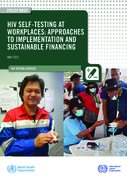
Countries are making progress toward the global goal of 95% of people living with HIV knowing their status by 2025. However, considerable gaps remain in achieving these goals globally. Men in high HIV burden settings and men from key populations in all settings are consistently less likely to know t
...
heir HIV status than women. Globally, 78% of men ages 15 years and older who are living with HIV are aware of their HIV status, compared with 86% of women with HIV of these ages.
Offering HIV testing services, including HIV self-testing, at formal and informal workplaces has emerged as an effective, acceptable and feasible approach for reaching men. A 2018 World Health Organization (WHO) and International Labour Organization (ILO) policy brief provides key guiding principles for HIVST implementation at workplaces. Building on the 2018 policy brief, this brief captures early experience with HIVST implementation at workplaces and discusses emerging approaches of sustainable financing that can be adapted for HIV self-testing at workplaces.
The primary audiences for this policy brief are ministries of health and labour, national HIV programmes, employers’ organizations, workers’ organizations (labour unions), enterprises, implementing partners, including civil society organizations, and health insurance agencies.
more

An interregional meeting on leishmaniasis among neighbouring endemic
countries in the Eastern Mediterranean, African and European regions was organized by the World Health Organization (WHO) Regional Office for the Eastern
Mediterranean in Amman, Jordan, from 23 to 25 September 2018. The meeting w
...
as attended by representatives from the health ministries of Albania, Georgia, Greece, Iran (Islamic Republic of), Iraq, Jordan, Lebanon, Morocco, Pakistan, Saudi Arabia, Sudan, Syrian Arab Republic and Tunisia. Representatives from Afghanistan, Algeria and Libya were unable to attend. The Secretariat comprised staff from WHO headquarters, WHO regional offices in the Eastern Mediterranean, Africa and Europe, WHO country offices in Iraq, Pakistan, Syrian Arab Republic and Yemen, and WHO temporary advisors from Spain and Tunisia.
more

The WHO continuously reviews available data on SARS-CoV-2 variants of concern. For this version, the global epidemiological
situation of the COVID-19 pandemic as of 21 January 2022 – at a time when the Omicron VOC had been identified in 171
countries across all six WHO Regions and was rapidly re
...
placing Delta worldwide – was considered Omicron has a substantial growth advantage, higher secondary attack rates and a higher observed reproduction number than Delta.
There is now significant evidence that immune evasion contributes to the rapid spread of Omicron. Other factors may be a shorter
serial interval (by about 0.8 to 1.2 days compared to Delta) and potential increased intrinsic transmission fitness . There is
growing evidence that with Omicron, there is lower vaccine effectiveness (VE) against infection and symptomatic disease soon after vaccination compared to Delta. There is also evidence of accelerated waning of VE over time of the primary series against infection and symptomatic disease for the studied vaccines. Further studies are required to better understand the drivers of transmission and declining incidence in various settings. These factors include the intrinsic transmission fitness properties of the virus, degree of immune evasion, vaccination coverage and level of vaccine-derived and post-infection immunity, levels of social mixing and degree of application of public health and social measures (PHSM).
more
