Filter
2896
Text search:
public
health
emergencies
Featured
371
707
Language
2736
129
99
66
59
42
27
18
12
10
9
8
6
6
6
6
6
5
5
5
4
4
4
4
4
4
4
3
3
3
3
3
2
2
2
2
2
2
2
2
2
2
2
2
2
2
2
2
1
1
1
1
1
1
1
1
1
1
1
1
1
1
1
Document type
1211
531
496
247
204
63
54
41
18
17
8
3
1
1
Countries
189
87
68
68
67
60
54
51
50
48
47
44
40
40
37
36
34
33
27
27
26
24
24
22
22
21
20
20
19
19
19
18
17
17
16
14
14
13
12
12
12
12
11
11
11
11
11
10
10
10
10
9
9
9
9
8
8
8
7
7
7
6
6
6
6
6
6
6
5
5
5
4
4
4
4
4
3
3
3
3
3
3
3
3
3
3
3
3
3
3
3
2
2
2
2
2
2
2
2
2
2
2
2
1
1
1
1
1
1
1
1
1
1
1
1
1
1
1
1
1
1
1
1
1
1
1
1
1
Authors & Publishers
555
104
99
91
72
70
45
44
30
26
25
22
22
22
21
18
17
17
16
16
12
12
11
11
11
10
10
10
10
10
10
9
9
9
9
9
9
9
9
8
8
8
8
8
8
8
8
8
7
7
7
7
7
7
7
7
7
6
6
6
6
6
6
6
6
6
6
6
6
6
5
5
5
5
5
5
5
5
5
5
5
5
5
5
5
5
5
5
5
5
5
4
4
4
4
4
4
4
4
4
4
4
4
4
4
4
4
4
4
4
4
4
4
4
4
4
4
3
3
3
3
3
3
3
3
3
3
3
3
3
3
3
3
3
3
3
3
3
3
3
3
3
3
3
3
3
3
3
3
3
3
3
3
3
3
3
3
3
3
3
3
3
3
3
3
3
3
3
3
3
3
3
3
3
3
3
2
2
2
2
2
2
2
2
2
2
2
2
2
2
2
2
2
2
2
2
2
2
2
2
2
2
2
2
2
2
2
2
2
2
2
2
2
2
2
2
2
2
2
2
2
2
2
2
2
2
2
2
2
2
2
2
2
2
2
2
2
2
2
2
2
2
2
2
2
2
2
2
2
2
2
2
2
2
2
2
2
2
2
2
2
2
2
2
2
2
2
2
2
2
2
2
2
2
2
2
2
2
2
2
2
2
2
2
2
2
2
2
2
2
2
2
2
2
2
2
2
2
2
2
2
2
2
2
2
2
2
2
2
2
2
2
2
2
2
2
2
2
2
2
2
2
2
2
2
2
2
2
2
2
2
2
2
1
1
1
1
1
1
1
1
1
1
1
1
1
1
1
1
1
1
1
1
1
1
1
1
1
1
1
1
1
1
1
1
1
1
1
1
1
1
1
1
1
1
1
1
1
1
1
1
1
1
1
1
1
1
1
1
1
1
1
1
1
1
1
1
1
1
1
1
1
1
1
1
1
1
1
1
1
1
1
1
1
1
1
1
1
1
1
1
1
1
1
1
1
1
1
1
1
1
1
1
1
1
1
1
1
1
1
1
1
1
1
1
1
1
1
1
1
1
1
1
1
1
1
1
1
1
1
1
1
1
1
1
1
1
1
1
1
1
1
1
1
1
1
1
1
1
1
1
1
1
1
1
1
1
1
1
1
1
1
1
1
1
1
1
1
1
1
1
1
1
1
1
1
1
1
1
1
1
1
1
1
1
1
1
1
1
1
1
1
1
1
1
1
1
1
1
1
1
1
1
1
1
1
1
1
1
1
1
1
1
1
1
1
1
1
1
1
1
1
1
1
1
1
1
1
1
1
1
1
1
1
1
1
1
1
1
1
1
1
1
1
1
1
1
1
1
1
1
1
1
1
1
1
1
1
1
1
1
1
1
1
1
1
1
1
1
1
1
1
1
1
1
1
1
1
1
1
1
1
1
1
1
1
1
1
1
1
1
1
1
1
1
1
1
1
1
1
1
1
1
1
1
1
1
1
1
1
1
1
1
1
1
1
1
1
1
1
1
1
1
1
1
1
1
1
1
1
1
1
1
1
1
1
1
1
1
1
1
1
1
1
1
1
1
1
1
1
1
1
1
1
1
1
1
1
1
1
1
1
1
1
1
1
1
1
1
1
1
1
1
1
1
1
1
1
1
1
1
1
1
1
1
1
1
1
1
1
1
1
1
1
1
1
1
1
1
1
1
1
1
1
1
1
1
1
1
1
1
1
1
1
1
1
1
1
1
1
1
1
1
1
1
1
1
1
1
1
1
1
1
1
1
1
1
1
1
1
1
1
1
1
1
1
1
1
1
1
1
1
1
1
1
1
1
1
1
1
1
1
1
1
1
1
1
1
1
1
1
1
1
1
1
1
1
1
1
1
1
1
1
1
1
1
1
1
1
1
1
1
1
1
1
1
1
1
1
1
1
1
1
1
1
1
1
1
1
1
1
1
1
1
1
1
1
1
1
1
1
1
1
1
1
1
1
1
1
1
1
1
1
1
1
1
1
1
1
1
1
1
1
1
1
1
1
1
1
1
1
1
1
1
1
1
1
1
1
1
1
1
1
1
1
1
1
1
1
1
1
1
1
1
1
1
1
1
1
1
1
1
1
1
1
1
1
1
1
1
1
1
1
1
1
1
1
1
1
1
1
1
1
1
1
1
1
1
1
1
1
1
1
1
1
1
1
1
1
1
1
1
1
1
1
1
1
1
1
1
1
1
1
1
1
1
1
1
1
1
1
1
1
1
1
1
1
1
1
1
1
1
1
1
1
1
1
1
1
1
1
1
1
1
1
1
1
1
1
1
1
1
1
1
1
1
1
1
1
1
1
1
1
1
1
1
1
1
1
1
1
1
1
1
1
1
1
1
1
1
1
1
1
1
1
1
1
1
1
1
1
1
1
1
1
1
1
1
1
1
1
1
1
1
1
1
1
1
1
1
1
1
1
1
1
1
1
1
1
1
1
1
1
1
1
1
1
1
1
1
1
1
1
1
1
1
1
1
1
1
1
1
1
1
1
1
1
1
1
1
1
1
1
1
1
1
1
1
1
1
1
1
1
1
1
1
1
1
1
1
1
1
1
1
1
1
1
1
1
1
1
1
1
1
1
1
1
1
1
1
1
1
1
1
1
1
1
1
1
1
1
1
1
1
1
1
1
1
1
1
1
1
1
1
1
1
1
1
1
1
1
1
1
1
1
1
1
1
1
1
1
1
1
1
1
1
1
1
1
1
1
1
1
1
1
1
1
1
1
1
1
1
1
1
1
1
1
1
1
1
1
1
1
1
1
1
1
1
1
1
1
1
1
1
1
1
1
1
1
1
1
1
1
1
1
1
1
1
1
1
1
1
1
1
1
1
1
1
1
1
1
1
1
1
1
1
1
1
1
1
1
1
1
1
1
1
1
1
1
1
1
1
1
1
1
1
1
1
1
1
1
1
1
1
1
1
1
1
1
1
1
1
1
1
1
1
1
1
1
1
1
1
1
1
1
1
1
1
1
1
1
1
1
1
1
1
1
1
1
1
1
1
1
1
1
1
1
1
1
1
1
1
1
1
1
1
1
1
1
1
1
1
1
1
1
1
1
1
1
1
1
1
1
1
1
1
1
1
1
1
1
1
1
1
1
1
1
1
1
1
1
1
1
1
1
1
1
1
1
1
1
1
1
1
1
1
1
1
1
1
1
1
1
1
1
1
1
1
1
1
1
1
1
1
1
1
1
1
1
1
1
1
1
1
1
1
1
1
1
1
1
1
1
1
1
1
1
1
1
1
1
1
1
1
1
1
1
1
1
1
1
1
1
1
1
1
1
1
1
1
1
1
1
1
1
1
1
1
1
1
1
1
1
1
1
1
1
1
1
1
1
1
1
1
1
1
1
1
1
1
1
1
1
1
1
1
1
1
1
1
1
1
1
1
1
1
1
1
1
1
1
1
1
1
1
1
1
1
1
1
1
1
1
1
1
1
1
1
1
1
1
1
1
1
1
1
1
1
1
1
1
1
1
1
1
1
1
1
1
1
1
1
1
1
1
1
1
1
1
1
1
1
1
1
1
1
1
1
1
1
1
1
1
1
1
1
1
1
1
1
1
1
1
1
1
1
1
1
1
1
1
1
1
1
1
1
1
1
1
1
1
1
1
1
1
1
1
1
1
1
1
1
1
1
1
1
1
1
1
1
1
1
1
1
1
1
1
1
1
1
1
1
1
1
1
1
1
1
1
1
1
1
1
1
1
1
1
1
1
1
1
1
1
1
1
1
1
1
1
1
1
1
1
1
1
1
1
1
1
1
1
1
1
1
1
1
1
1
1
1
1
1
1
1
1
1
1
1
1
1
1
1
1
1
1
1
1
1
1
1
1
1
1
1
1
1
1
1
1
1
1
1
1
1
1
1
1
1
1
1
1
1
1
1
1
1
1
1
1
1
1
1
1
1
1
1
1
1
1
1
1
1
1
1
1
1
1
1
1
1
1
1
1
1
1
1
1
1
1
1
1
1
1
1
1
1
1
1
1
1
1
1
1
1
1
1
1
1
1
1
1
1
1
1
1
1
1
1
1
1
1
1
1
1
1
1
1
1
1
1
1
1
1
1
1
1
1
1
1
1
1
1
1
1
1
1
1
1
1
1
1
1
1
1
1
1
1
1
1
1
1
1
1
1
1
1
1
1
1
1
1
1
1
1
1
1
1
1
1
1
1
1
1
1
1
1
1
1
1
1
1
1
1
1
1
1
1
1
1
1
1
1
1
1
1
1
1
1
1
1
1
1
1
1
1
1
1
1
1
1
1
1
1
1
1
1
1
1
1
1
1
Publication Years
1258
1378
247
12
1
Category
952
393
175
169
164
67
23
1
Toolboxes
426
201
178
172
112
105
100
88
85
85
75
65
50
47
45
44
40
38
38
32
32
26
20
15
2
1
1
This manual has been developed to guide rapid risk assessment of acute public health risks from any type of hazard in response to requests from Member States of the World
...
Health Organization (WHO). The manual is aimed primarily at national departments with health-protection responsibilities, National Focal Points (NFPs) for the International Heath Regulations (IHR) and WHO staff. It should also be useful to others who join multidisciplinary risk assessment teams, such as clinicians, field epidemiologists, veterinarians, chemists, food-safety specialists.
more

This Interim Guidance outlines how key public health and social measures needed to reduce the risk of COVID-19 spread and the impact of the disease can be adapted for use in low capacity and humanit
...
arian settings. The recommendations outlined here need to be adjusted to the scale of transmission, context and resources, in order to achieve the objective of managing COVID-19, namely to reduce transmission and facilitate the detection and management of infected and exposed individuals within the population. The Guidance is intended for humanitarian and development actors of all operational levels working with communities ocal authorities involved in COVID-19 preparedness and response operations in these settings, in support of national and local governments and plans. Additional considerations for support to residents of urban informal settlements and slums are available in Annex 1.
more
Areas for action include: increasing prioritisation and awareness of dementia; reducing the risk of dementia; diagnosis, treatment and care; support for dementia carers; strengthening information systems for dementia; and research and innovation.
Making the Case for Alcohol as a Public Health Threat in the Region. The purpose of this document is to explain the need for making alcohol a top public
...
health priority in the region and the need for national and regional action. Current evidence-based research shows that alcohol consumption and drinking patterns in the Americas are at damaging levels, with the region surpassing global averages for many alcohol related problems.
more
Considerations for implementing and adjusting public health and social measures in the context of COVID-19
recommended
interim guidance, 14 June 2021
This document is intended for national authorities and decision makers in countries that have introduced large scale public health and social measures. It offers guid
...
ance for adjusting public health and social measures, while managing the risk of a resurgence of cases.
Available in English, Arabic, Chinese, French, Russian and Spanish
more
Mental Health and Psychosocial Support in Humanitarian Emergencies: What Should Humanitarian Health Actors Know?
recommended
IASC Reference Group for Mental Health and Psychosocial Support
Inter-Agency Standing Committee
(2010)
C1
This document is for humanitarian health actors working at national and sub-national level in countries facing humanitarian emergencies. It applies to Hea
...
lth Cluster partners, including governmental and non-governmental health service providers.
Based on the IASC Guidelines on Mental Health and Psychosocial Support in Emergency Settings (IASC, 2007), it gives an overview of essential knowledge that humanitarian health actors should have about mental health and psychosocial support (MHPSS) in humanitarian emergencies.
This document by the IASC Reference Group for Mental Health and Psychosocial Support was developed in consultation with the IASC Global Health Cluster.
more


The document is a practical toolkit that provides guidance for healthcare facilities on how to prepare for emergencies, including pandemics and other disasters. It explains how to conduct risk assessments using an all-hazards approach, helping facil
...
ities identify potential threats such as natural disasters, technical failures, and disease outbreaks. The text outlines how to develop emergency preparedness and pandemic plans, including key elements like communication, staffing, resource management, and coordination with local, state, and federal authorities. It also describes the four phases of emergency management—mitigation, preparedness, response, and recovery—and emphasizes continuous evaluation and improvement. Overall, the document aims to help healthcare organizations ensure continuity of care and protect patients and staff during emergencies.
more
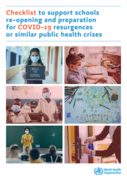
The checklist is aligned with, and builds upon, existing COVID-19-related WHO guidelines and is structured around protective measures related to: 1) hand hygiene and respiratory etiquette; 2) physical distancing; 3) use of masks in schools; 4) environmental cleaning and ventilation; and 5) respectin
...
g procedures for isolation of all people with symptoms. The checklist is designed to support policy-makers, staff and officials from the education and health sectors, local authorities, school principals/leaders and administrators, teachers’ unions, community leaders, school staff, teachers, parents and caregivers.
more
Community Assessment For Public Health Emergency Response (Casper) Toolkit; third edition 3.2
recommended
2nd edition
For the control of vectors and pests of public health importance. Sixth edition
This report documents the secondary humanitarian problems and impacts of large-scale Ebola outbreak on the different humanitarian sectors, to provide a non-exhaustive plan to help future responders. A large scale Ebola outbreak, in this document, refers to an epidemic with an unprecedented scale, ge
...
ographical spread and duration.
more

The WHO’s Early Warning, Alert and Response System (EWARS) is a tool used in emergencies such as conflicts or natural disasters to quickly detect and respond to disease outbreaks. It helps set up simple and reliable surveillance systems even in pl
...
aces without stable electricity or internet, using kits that include phones, laptops, and solar chargers. EWARS supports national health authorities during crises and can later be integrated into the regular health surveillance system.
more
8 January 2021
Sequencing enabled the world to rapidly identify SARS-CoV-2 and develop diagnostic tests and other tools for outbreak management. Continued genome sequencing supports the monitoring of the disease’s spread and evolution of the virus. Accelerated integration of genome sequencing int
...
o the practices of the global health community is required if we want to be better prepared for the future threats. This document provides guidance for laboratories on maximizing the impact of SARS-CoV-2 sequencing now and other emerging pathogens in the future.
more

The purpose of the toolkit is to bring together existing learning and guidance as a starting point for stakeholders to begin SRH preparedness work. Within the SRH sector the field of preparedness is relatively new and growing. More collective effort is required to further evaluate the impact of prep
...
aredness efforts and push the field forward. This effort is a first attempt at a draft guidance for SRH preparedness, and is intended for field testing. The toolkit recognizes the longstanding work of the field of emergency and disaster risk management, and endeavors to bridge that work with the human rights-oriented and peoplecentered field of sexual and reproductive health.
more
Learnings from the COVID-19 evidence response and recommendations for the future.
Reflections and recommendations from the evidence synthesis community.