
Filter
344
Text search:
United
Nations
High
Commissioner
for
Human
Rights
Featured
Recommendations
34
New Publications
94
Language
Document type
No document type
203
Studies & Reports
64
Guidelines
34
Manuals
15
Strategic & Response Plan
14
Training Material
6
Fact sheets
4
Situation Updates
3
Resource Platforms
1
Countries / Regions
Syria
19
Global
18
Western and Central Europe
13
Ukraine
11
Myanmar / Burma
11
South Sudan
7
Zambia
7
Latin America and the Carribbean
7
Venezuela
6
Uganda
5
India
5
Nepal
5
Kenya
5
Bangladesh
5
Malawi
5
Liberia
4
South Africa
4
Africa
4
Nigeria
3
Congo, Democratic Republic of
3
Lebanon
3
Tanzania
3
Indonesia
3
Sudan
3
Brazil
3
Yemen
3
South–East Asia Region
3
Eastern Europe
3
Russia
3
Guinea
2
Sierra Leone
2
Senegal
2
Ethiopia
2
Philippines
2
Jordan
2
Germany
2
Thailand
2
Mozambique
2
Portugal
2
Morocco
1
Cameroon
1
Ghana
1
Somalia
1
Argentina
1
Eswatini/ Swaziland
1
North Macedonia
1
Hungary
1
Croatia
1
Colombia
1
Greece
1
Angola
1
Lesotho
1
Mexico
1
West and Central Africa
1
Eastern Europe and Central Asia
1
Asia
1
Albania
1
Southern Africa
1
Laos
1
Estonia
1
Iran
1
Kyrgyzstan
1
Georgia
1
Jamaica
1
Norway
1
Authors & Publishers
Publication Years
Category
Countries
86
Key Resources
43
Women & Child Health
26
Public Health
14
Clinical Guidelines
14
Capacity Building
4
Pharmacy & Technologies
1
Toolboxes
Conflict
50
Disability
36
Mental Health
34
Refugee
33
COVID-19
24
HIV
23
TB
20
Global Health Education
9
Planetary Health
6
Health Financing Toolbox
6
Natural Hazards
5
Ebola & Marburg
4
Rapid Response
3
Caregiver
3
NTDs
3
Polio
2
Zika
2
Specific Hazards
2
AMR
1
NCDs
1
2.0 Rapid Response
1

WHO’s Country Cooperation Strategy (CCS) defines the Organization’s medium-term vision for working in and with a particular country. The CCS, developed in the context of global and national health priorities, examines the overall health situatio
...




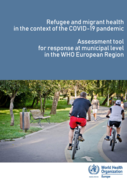
This assessment tool is to support municipalities and local authorities in identifying the risks and vulnerabilities that refugees and migrants face and to identify gaps where possible methods to minimize the impact of the pandemic exist so that they can be prioritized within local policy processes.
...
Interim guidanceAnnex to: Policy considerations for implementing a risk-based approach to international travel in the context of COVID-19, 2 July 2021
Drawing light from the pandemic: A new strategy for health and sustainable development (2021)
Available in English, French, German and Russian
Examining the needs of at‐risk youth in the Middle East and North Africa: A multi‐method landscape analysis and systematic literature review
The key updates include: content update in various sections based on new evidence; design changes for enhanced usability; a streamlined and simplified clinical assessment that includes an algorithm for
...

The magnitude and complexity of these mental health conditions caused by prolonged and extensive trauma requires a diagnosis fitting the unique context of the Syrian conflict. Over half a million people have been killed since the beginning of the conflict in 2011, and more than 6.4 million are inter
...

A year ago, the second Special Session of the World Health Assembly (WHASS) unanimously agreed to start a diplomatic process for a new binding instrument aimed at ensuring the international community is better prepared
...
The SPPCHS project worked with the Ministry of Home Affairs to design a peer education program for prisons to provide knowledge, skills, and tools to prevent and respond to tuberculosis (TB) and HIV in prisons. AIDSFree held two training of trainers
...


This Toolkit aims to support the understanding and implementation of integrated mental health programs in humanitarian settings. It provides a framework for essential steps and components, with associated key guidance and resources, that strengthen
...

In response to COVID-19, countries around the world have implemented several public health and social measures (PHSM), such as movement restrictions, closure of schools and businesses, and international travel restrictions.1 As the local epidemiology of the disease changes, countries will adjust (i.
...
