Filter
233
Text search:
Countdown
to
2015
Featured
5
64
Language
Document type
123
84
7
5
4
4
3
2
1
Countries
32
11
11
8
7
7
6
5
5
5
4
4
4
4
4
4
4
3
3
2
2
2
2
2
2
2
1
1
1
1
1
1
1
1
1
1
1
1
1
1
1
1
1
1
1
1
Authors & Publishers
Publication Years
Category
111
26
10
6
5
1
Toolboxes
38
27
11
10
6
4
3
2
2
2
1
1
1
1
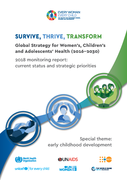
2018 monitoring report: current status and strategic priorities
The report sets out the status of women’s, children’s and adolescents’ health, and on health systems and social and environmental determinants. Regional dashboards on 16 key indicators highlight where progress is being made o ...
The report sets out the status of women’s, children’s and adolescents’ health, and on health systems and social and environmental determinants. Regional dashboards on 16 key indicators highlight where progress is being made o ...

This document puts forward the joint position and vision of an expert, global, multistakeholder working group on implementing Kangaroo Mother Care (KMC) for all preterm or low birth weight (LBW) infants as the foundation for small and/or sick newborn care within maternal, newborn, and child health p
...
Development assistance for health (DAH) is an important part of financing healthcare in low- and middle-income countries. We estimated the gross disbursement of DAH of the 29 Development Assistance Committee (DAC) member countries of the Organisation for Economic Co-operation and Development (OECD)
...

Development assistance for health (DAH)
plays a vital role in supporting health programmes in lowand middle-income countries. While DAH has historically
focused on infectious diseases and maternal and child
health, there is a lack of comprehensive analysis of DAH
trends, strategic shifts and the
...

Improving the survival chances and quality of life of women, newborns, and children remains an urgent global challenge. Since 2012, substantial progress has been made in reducing maternal and under-5 deaths, and a only handful of countries are on target to
...
Int. J. Environ. Res. Public Health 2021, 18(24), 13339; https://doi.org/10.3390/ijerph182413339
The climate crisis threatens to exacerbate numerous climate-sensitive health risks, including heatwave mortality, malnutrition from reduced crop yield
...

Drawing on the World Health Organization’s package of NCD best buys, the report demonstrates how these evidence-based measures can help countries reduce premature deaths, strengthen health systems, and advance progress towards the Sustainable Development Goals. It provides policymakers, donors, ad
...
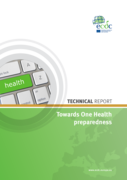
Climate change, increasing population densities, and intensified globalisation in trade, travel and migration are among the most important factors shaping the 21st century. Each impacts upon population health and the risk of infectious disease, particularly those originating at the human-animal-envi
...

Noncommunicable diseases (NCDs) (e.g., cardiovascular diseases, cancers, diabetes, and chronic respiratory diseases) and mental health conditions (e.g., Alzheimer’s disease and related dementias, depression, anxiety, autism spectrum disorders) are the world’s leading cause of preventable illness
...
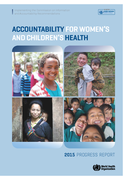
Progress Report


Marco Schäferhoff and colleagues critique funding estimates for the maternal and child health Millennium Development Goals, and make recommendations for improving the tracking of financing flows and estimating the costs of scaling up interventions for mothers and children.