
Filter
203
Text search:
BBC
Featured
15
58
Language
Document type
108
51
16
13
4
3
3
2
2
1
Countries / Regions
11
11
10
8
7
7
6
6
5
5
5
4
4
4
4
4
3
3
3
3
3
3
3
3
3
3
2
2
2
2
2
2
2
2
2
2
2
2
2
2
1
1
1
1
1
1
1
1
1
1
1
1
1
1
1
1
1
1
1
1
1
1
Authors & Publishers
Publication Years
Category
81
10
3
2
1
Toolboxes
43
17
15
13
12
8
7
6
5
5
4
3
3
3
2
2
2
1
1
1
1
Key Considerations
This brief focuses on cross-border movement in Eastern and Southern Africa (ESA) and its implications for development of risk communication and community engagement (RCCE) strategies aimed at preventing transmission of COVID-19 in the ESA region. Given the extensive risk of cross
...
The COVID-19 pandemic has exacerbated and added yet another layer of vulnerability to an already dire web of vulnerabilities of girls in the African continent, which constitute about 49% of the total child population. Critically, gender equality and girls’ multidimensional vulnerability have been
...
The report examines how people with mental health conditions are often shackled by families in their own homes or in overcrowded and unsanitary institutions, against their will, due to widespread stigma and a lack of mental health services.
Many are forced to eat, sleep, urinate, and defecate in t
...
With about 24 million of Yemen’s 30 million people in need of some form of assistance, the United Nations calls Yemen the world’s worst humanitarian crisis. Cholera and other disease outbreaks are common, malnutrition is widespread, water is scarce, and the healthcare system is crumbling, with o
...
The COVID-19 pandemic’s immediate costs, measured in lives lost and damaged, have been appalling and continue to rise. In addition, its effects on individuals’ livelihoods and economies around the world have been deep and are likely to be long lasting. While saving lives was the near-exclusive f
...


This paper reviews the effects of vertical responses to COVID-19 on health systems, services, and people’s access to and use of them in LMICs, where historic and ongoing under-investments heighten vulnerability to a multiplicity of health threats. We use the term ‘vertical response’ to describ
...
A practitioner’s guide to the principles of COVID-19 vaccine communications.
The factors that lead people to make choices to take vaccines are nuanced and affected by how they see the world, their perceptions of the choices people like them will make, who they trust, their perceptions of risk,
...
Policy brief, 24 July 2020
The COVID-19 pandemic has affected older people disproportionately, especially those living in long-term care facilities. In many countries, evidence shows that more than 40% of COVID-19 related deaths have been linked to long-term care facilities, with figures being as h
...
Background paper 10
The Independent Panel for Pandemic Preparedness and Response
May 2021
People-centered approaches that help communities maintain protective behaviours and follow guidelines set out by public health and government agencies are more important than ever. The evidence is clear, communities play a role in preventing and controlling epidemics and they are best able to take a
...

Has the world worked together to tackle the coronavirus? July 2021. This research paper assesses how the global community has responded to calls for greater solidarity in tackling the COVID-19 pandemic, and presents the insights of key stakeholders and experts in global health governance, health sec
...


Over the past two decades, Afghanistan has depended on international donor support to fund essential services like health care. But this donor support has been falling for years and will likely to continue do so—perhaps precipitously—following the announcement by United States President Joe Bide
...
On February 29, 2020, the United States and the Taliban signed an agreement outlining a phased withdrawal of US forces from Afghanistan in exchange for Taliban commitments not to allow attacks on the US or its allies from Afghan territory. The troop withdrawal is expected to take place in parallel w
...
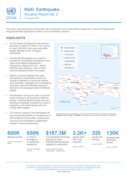
On 25 August, UN agencies and partners launched a US$187.3 million Flash Appeal to reach 500,000 of the most vulnerable people affected by the 14 August earthquake.
Around 650,000 people are in need of emergency humanitarian assistance in the three most affected departments – Grand’Anse, Nipp
...
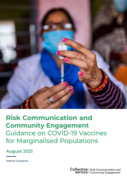
This inter-agency guidance document aims to supplement the COVAX demand creation package for COVID-19 vaccines with key considerations for humanitarian contexts and marginalized populations with specific access and communication needs.
21 Sept.2021
Analysis of fake news disseminated during the COVID-19 pandemic in Brazil
