
Filter
2306
Text search:
southern
africa
Featured
196
515
Language
2172
96
37
36
29
24
9
8
5
4
4
4
4
3
3
3
3
3
3
3
2
2
2
2
2
2
2
2
2
2
2
2
2
2
1
1
1
1
1
1
1
1
1
1
1
1
1
1
1
1
1
1
1
1
Document type
1177
615
184
108
86
50
30
17
14
11
5
4
2
Countries / Regions
147
117
114
106
96
89
89
77
77
64
52
51
51
49
48
46
43
37
34
33
28
28
28
27
26
25
23
23
22
19
16
15
15
14
12
12
11
11
11
10
10
10
9
9
9
9
8
8
8
8
7
7
7
7
6
6
6
6
6
5
5
5
4
4
4
4
4
4
3
3
3
3
3
3
3
3
3
3
3
3
3
2
2
2
2
2
2
2
2
2
2
2
2
1
1
1
1
1
1
1
1
1
1
1
1
1
1
1
1
1
1
1
1
1
1
1
1
1
Authors & Publishers
176
124
74
73
67
56
52
40
36
29
28
27
26
19
19
18
17
13
13
13
13
12
12
12
11
11
11
10
10
9
9
8
8
8
8
8
8
8
7
7
7
7
6
6
6
6
6
6
6
5
5
5
5
5
5
5
5
5
5
5
5
5
5
5
4
4
4
4
4
4
4
4
4
4
4
4
4
4
4
4
4
4
4
4
4
4
4
4
4
4
4
4
4
4
3
3
3
3
3
3
3
3
3
3
3
3
3
3
3
3
3
3
3
3
3
3
3
3
3
3
3
3
3
3
3
3
3
3
3
3
3
3
3
3
3
3
3
3
3
3
3
3
3
3
3
3
3
3
3
3
3
3
3
3
3
3
3
3
3
3
3
3
3
3
2
2
2
2
2
2
2
2
2
2
2
2
2
2
2
2
2
2
2
2
2
2
2
2
2
2
2
2
2
2
2
2
2
2
2
2
2
2
2
2
2
2
2
2
2
2
2
2
2
2
2
2
2
2
2
2
2
2
2
2
2
2
2
2
2
2
2
2
2
2
2
2
2
2
2
2
2
2
2
2
2
2
2
2
2
2
2
2
2
2
2
2
2
2
2
2
2
2
2
2
2
2
2
2
2
2
2
2
2
2
2
2
2
2
2
2
2
2
2
2
2
2
2
2
2
2
2
2
2
2
2
2
2
2
2
2
2
2
2
2
2
2
2
2
2
2
2
2
1
1
1
1
1
1
1
1
1
1
1
1
1
1
1
1
1
1
1
1
1
1
1
1
1
1
1
1
1
1
1
1
1
1
1
1
1
1
1
1
1
1
1
1
1
1
1
1
1
1
1
1
1
1
1
1
1
1
1
1
1
1
1
1
1
1
1
1
1
1
1
1
1
1
1
1
1
1
1
1
1
1
1
1
1
1
1
1
1
1
1
1
1
1
1
1
1
1
1
1
1
1
1
1
1
1
1
1
1
1
1
1
1
1
1
1
1
1
1
1
1
1
1
1
1
1
1
1
1
1
1
1
1
1
1
1
1
1
1
1
1
1
1
1
1
1
1
1
1
1
1
1
1
1
1
1
1
1
1
1
1
1
1
1
1
1
1
1
1
1
1
1
1
1
1
1
1
1
1
1
1
1
1
1
1
1
1
1
1
1
1
1
1
1
1
1
1
1
1
1
1
1
1
1
1
1
1
1
1
1
1
1
1
1
1
1
1
1
1
1
1
1
1
1
1
1
1
1
1
1
1
1
1
1
1
1
1
1
1
1
1
1
1
1
1
1
1
1
1
1
1
1
1
1
1
1
1
1
1
1
1
1
1
1
1
1
1
1
1
1
1
1
1
1
1
1
1
1
1
1
1
1
1
1
1
1
1
1
1
1
1
1
1
1
1
1
1
1
1
1
1
1
1
1
1
1
1
1
1
1
1
1
1
1
1
1
1
1
1
1
1
1
1
1
1
1
1
1
1
1
1
1
1
1
1
1
1
1
1
1
1
1
1
1
1
1
1
1
1
1
1
1
1
1
1
1
1
1
1
1
1
1
1
1
1
1
1
1
1
1
1
1
1
1
1
1
1
1
1
1
1
1
1
1
1
1
1
1
1
1
1
1
1
1
1
1
1
1
1
1
1
1
1
1
1
1
1
1
1
1
1
1
1
1
1
1
1
1
1
1
1
1
1
1
1
1
1
1
1
1
1
1
1
1
1
1
1
1
1
1
1
1
1
1
1
1
1
1
1
1
1
1
1
1
1
1
1
1
1
1
1
1
1
1
1
1
1
1
1
1
1
1
1
1
1
1
1
1
1
1
1
1
1
1
1
1
1
1
1
1
1
1
1
1
1
1
1
1
1
1
1
1
1
1
1
1
1
1
1
1
1
1
1
1
1
1
1
1
1
1
1
1
1
1
1
1
1
1
1
1
1
1
1
1
1
1
1
1
1
1
1
1
1
1
1
1
1
1
1
1
1
1
1
1
1
1
1
1
1
1
1
1
1
1
1
1
1
1
1
1
1
1
1
1
1
1
1
1
1
1
1
1
1
1
1
1
1
1
1
1
1
1
1
1
1
1
1
1
1
1
1
1
1
1
1
1
1
1
1
1
1
1
1
1
1
1
1
1
1
1
1
1
1
1
1
1
1
1
1
1
1
1
1
1
1
1
1
1
1
1
1
1
1
1
1
1
1
1
1
1
1
1
1
1
1
1
1
1
1
1
1
1
1
1
1
1
1
1
1
1
1
1
1
1
1
1
1
1
1
1
1
1
1
1
1
1
1
1
1
1
1
1
1
1
1
1
1
1
1
1
1
1
1
1
1
1
1
1
1
1
1
1
1
1
1
1
1
1
1
1
1
1
1
1
1
1
1
1
1
1
1
1
1
1
1
1
1
1
1
1
1
1
1
1
1
1
1
1
1
1
1
1
1
1
1
1
1
1
1
1
1
1
1
1
1
1
1
1
1
1
1
1
1
1
1
1
1
1
1
1
1
1
1
1
1
1
1
1
1
1
1
1
1
1
1
1
1
1
1
1
1
1
1
1
1
1
1
1
1
1
1
1
1
1
1
1
1
1
1
1
1
1
1
1
1
1
1
1
1
1
1
1
1
1
1
1
1
1
1
1
1
1
1
1
1
1
1
1
1
1
1
1
1
1
1
1
1
1
1
1
1
1
1
1
1
1
1
1
1
1
1
1
1
1
1
1
1
1
1
1
1
1
1
1
1
1
1
1
1
1
1
1
1
1
1
1
1
1
1
1
1
1
1
1
1
1
1
1
1
1
1
1
1
1
1
1
1
1
1
1
1
1
1
1
1
1
1
1
1
1
1
1
1
1
1
1
1
1
1
1
1
1
1
1
1
1
1
1
1
1
1
1
1
1
1
1
1
1
1
1
1
1
1
1
1
1
1
1
1
1
1
1
1
1
1
1
1
1
1
1
1
1
1
1
1
1
1
1
1
1
1
1
1
1
1
1
1
1
1
1
1
1
1
1
1
1
1
1
1
1
1
1
1
1
1
1
1
1
1
1
1
1
1
1
1
1
1
1
1
1
1
1
1
1
1
1
1
1
1
1
1
1
1
1
1
1
1
1
1
1
1
1
1
1
1
1
1
1
1
1
1
1
1
1
1
1
1
1
1
1
1
1
1
1
1
1
1
1
1
1
1
1
1
1
1
1
1
1
1
1
1
1
1
1
1
1
1
1
1
1
1
1
1
1
1
1
1
1
1
1
1
1
1
1
1
1
1
1
1
1
1
1
1
1
1
1
1
1
1
1
1
1
1
1
1
1
1
1
1
1
1
1
1
1
1
1
1
1
1
1
1
1
1
1
1
1
1
1
1
1
1
1
1
1
1
1
1
1
1
1
1
1
1
1
1
1
1
1
1
1
1
1
1
1
1
1
1
1
1
1
1
1
1
1
1
1
1
1
1
1
1
1
1
1
1
1
1
1
1
1
1
1
1
1
1
1
1
1
1
1
1
1
1
1
1
1
1
1
1
1
1
1
1
1
1
1
1
1
1
1
1
1
1
1
1
1
1
1
1
1
1
1
1
1
1
1
1
1
1
1
1
1
1
1
1
1
1
1
1
1
1
1
1
1
1
1
1
1
1
1
1
1
1
1
1
1
1
1
1
1
1
1
1
1
1
1
1
1
1
1
1
1
1
1
1
1
1
1
1
1
1
1
1
1
1
1
1
1
1
1
1
1
1
1
1
1
1
1
1
1
1
1
1
1
1
1
1
1
1
1
1
1
1
1
1
1
1
1
1
1
1
1
1
1
1
1
1
1
1
1
1
1
1
1
1
1
1
1
1
1
1
1
1
1
1
1
1
1
1
1
1
1
1
1
1
1
1
1
1
1
1
1
1
1
1
1
1
1
1
1
1
1
1
1
1
1
1
1
1
1
1
1
1
1
1
1
1
1
1
1
1
1
1
1
1
1
1
1
1
1
1
1
1
1
1
1
1
1
1
1
1
1
1
1
1
1
1
1
1
1
1
1
1
1
1
1
1
1
1
1
1
1
1
1
1
1
1
1
1
1
1
1
1
1
1
1
1
1
1
1
1
1
1
1
1
1
1
1
1
1
1
1
1
1
1
1
1
1
1
1
1
1
1
1
1
1
1
1
1
1
1
1
1
1
1
1
1
1
1
1
1
1
1
1
1
1
1
1
1
1
1
1
1
1
1
1
1
1
1
1
1
1
1
1
1
1
1
1
1
1
1
1
1
1
1
1
1
1
1
1
1
1
1
1
1
1
1
1
1
1
1
1
1
1
1
1
1
1
1
1
1
1
1
1
1
1
1
1
1
1
1
1
1
1
1
1
1
1
1
1
1
1
1
1
1
1
1
1
1
1
1
1
1
1
1
1
1
1
1
1
1
1
1
1
1
1
1
1
1
1
1
1
1
1
1
1
1
1
1
1
1
1
1
1
1
1
1
1
1
1
1
1
1
1
1
1
1
1
1
1
1
1
1
1
1
1
1
1
1
1
1
1
1
1
1
1
1
1
1
1
1
1
1
1
1
1
1
1
1
1
1
1
1
1
1
1
1
1
1
1
1
1
1
1
1
1
1
1
1
1
1
1
1
1
1
1
1
1
1
1
1
1
1
1
1
1
1
1
1
1
1
1
1
1
1
1
1
1
1
1
1
1
1
1
1
1
1
1
1
1
1
1
1
1
1
1
1
1
1
1
1
1
1
1
1
1
1
1
1
1
1
1
1
1
1
1
1
1
1
1
1
1
1
1
1
1
1
1
1
1
1
1
1
1
1
1
1
1
1
1
1
1
1
1
1
1
1
1
1
1
1
1
1
1
1
1
1
1
1
1
1
1
1
1
1
1
1
1
1
1
1
1
1
1
1
1
1
1
1
1
1
1
1
1
1
1
1
1
1
1
1
1
1
1
1
1
1
1
1
1
1
1
1
1
1
1
1
1
1
1
1
1
1
1
1
1
1
1
1
1
1
1
1
1
1
1
1
1
1
1
1
1
1
1
1
1
1
1
1
1
1
1
1
1
1
1
1
1
1
1
1
1
1
1
1
1
1
1
1
1
1
1
1
1
1
1
1
1
1
1
1
1
1
1
1
1
1
1
1
1
1
1
1
1
1
1
1
1
1
1
1
1
1
1
1
1
1
1
1
1
1
1
1
1
1
1
1
1
1
1
1
1
1
1
1
1
1
1
1
1
1
1
1
1
1
Publication Years
771
1352
171
11
1
Category
1011
113
113
110
104
30
14
Toolboxes
230
202
139
104
103
100
96
63
59
55
51
48
40
40
32
29
29
27
21
16
14
14
13
8
5
2
1
As a result of Russia’s invasion of Ukraine, the people of Ukraine, especially the most vulnerable, are paying an enormous price. Lives and livelihoods are being lost, with more than ten million people forced from their homes— and their country—in search of safety. The war has unleashed catast
...
rophic damage to the country’s economy and threatens lasting increases in poverty and societal upheaval. The scale of the war and the devastation it has caused have jeopardized Ukraine’s hard-fought development gains, through destruction of production and property, disruption of trade, diminished investment due to amplified uncertainty, and erosion of human capita
more

Climate change is already having severe impacts across our planet, bringing new and previously unimaginable challenges to the people least responsible for greenhouse gas emissions.
This report, the first we’ve released jointly in the history of our organizations, provides a sobering review of h
...
ow just one of those challenges – the increase in deadly heat-waves – threatens to drive new emergency needs in the not-so-distant future.
more

Conflict, climate change, the COVID-19 pandemic, and the economic effects of the Ukraine crisis are interacting to create new and worsen existing hunger hotspots, reversing the gains families had made to escape poverty.

Ces projets de programme prototype (curriculum) de niveau régional destinés à l’enseignement et à la formation des
infi rmiers et des sages-femmes sont en partie une étape vers la création d’un moyen de mise en œuvre des résolutions
prises par l’Assemblée mondiale de la Santé (AMS)
...
(la plus récente étant WHA 64.7, 2011) à intérêt régional et des
orientations stratégiques mondiales et régionales visant à renforcer la contribution des infi rmiers et des sages-femmes
dans le développement des systèmes de santé. Ces cursus sont également compatibles avec la « Feuille de route pour la
mise à l’échelle des ressources humaines pour la santé (RHS) en vue d’améliorer la dispense des services de santé dans
la région Afrique 2012-2025 » adoptée lors de la 62e session du Comité régional des ministres africains de la santé en
2012. L’un des six domaines stratégiques fi gurant sur la feuille de route est la mise à l’échelle de l’enseignement et de la
formation des travailleurs de la santé.
more
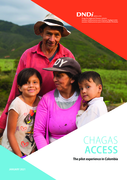
Over 6 million people worldwide are infected with Trypanosoma cruzi, the protozoan that causes Chagas disease. Endemic in 21 Latin American countries, the disease can be transmitted by vector insects called triatomines — also known as “kissing bugs” —, foods or beverages contaminated with th
...
e parasite, blood transfusions, organ transplants, or congenitally during pregnancy or delivery.
more

Access to health workers who are fit for purpose, motivated and protected is a fundamental force of health service delivery and the achievement of universal health coverage and the health and health-related Sustainable Development Goals. Data and knowledge of the distribution, skill mix and future d
...
evelopment needs of the health workforce can mean the difference between enabling or impeding health systems performance, inclusive economic growth and global health security preparedness and response
more

There has been important progress for the rights of adolescent girls and women in recent decades, yet millions still struggle to
access the nutritious diets, essential nutrition services and nutrition and care practices they need to prevent malnutrition.
Undernutrition, micronutrient deficiencies
...
and anaemia amplify gender inequalities by lowering learning potential, wages and life opportunities for adolescent girls and women, weakening their immunity to infections, and increasing their risk of lifethreatening complications during pregnancy and childbirth.
more

In Control: A Practical Handbook for Professionals Working in Health Emergencies Internationally RKI
The greatest risk to persons engaging in international medical emergency response is poor preparation.
The In Control handbook hopes to provide a remedy.
At the time of writing, we are living through the Coronavirus (COVID-19) pandemic, a health emergency that disregards physical borders, brin
...
gs into focus social inequalities and affects people on every continent. This shared challenge requires unprecedented measures and the collaboration of the brightest minds to support global health protection through this crisis and beyond. Healthcare infrastructures have to be strengthened, public health capacities and processes upgraded, medical countermeasures and vaccinations found and psychosocial side-effects treated.
Solidarity is the normative order of the day and the human species has to collaborate to face this invisible threat. Hiding and living in fear is not an option in this interconnected world. We have both a responsibility and an opportunity to make substantial contributions to a safer, healthier and more sustainable future for us all.
The existence of this handbook is an impressive example of solidarity. Over 50 authors from more than 15 institutes and organisations have come together voluntarily within a very short time to make their expertise available and enable cross-sectoral thinking. Knowledge is bundled, resources are combined, information gaps are filled. The In Control handbook is not a theoretical treatise of possible dangers, but a collection of subject-matter expertise, written by experts and practitioners who have shaped health topics over the past 20 years in the most diverse corners of the world.
The Centre for International Health Protection at the Robert Koch Institute (RKI) is collaborating with its partners and investing heavily in the build-up of operational know-how and capacity to support health crisis response abroad. This is done by preparing and enabling professionals to deploy safely across the world to assist those in need. In Control addresses the multi-faceted challenges of an international deployment. Readers will find not only technical medical information, but also insights into, for example, the fragility of our environment, the cultural differences that influence risk communication or the dilemmas arising from social distancing. Legal principles are highlighted, along with ethical guidance to ensure that our actions and decisions correspond to the highest moral standards.
more

The 2018 global health financing report presents health spending data for all WHO Member States between 2000 and 2016 based on the SHA 2011 methodology. It shows a transformation trajectory for the global spending on health, with increasing domestic public funding and declining external financing. T
...
his report also presents, for the first time, spending on primary health care and specific diseases and looks closely at the relationship between spending and service coverage
more
To assess the impact of the COVID-19 pandemic on health and HIV expenditure, UNAIDS carried out a modelling study on fiscal space for health and HIV. From a sample of 28 countries, three countries—the Democratic Republic of the Congo, Jamaica, and Lesotho—were selected to capture health and HIV
...
expenditure impacts across countries with especially marked differences in burdens of disease (including HIV prevalence), HIV donor dependency, level of economic development, and geographic location. While the three-country sample is too small to permit findings to be generalized to other countries, these analyses are useful for informing UNAIDS’ work to identify some policy positions to minimize the COVID-19 pandemic’s impact on the HIV response.
more

Financing Global Health 2013: Transition in an Age of Austerity, IHME’s fifth annual report on global health expenditure, depicts financing trends that underline the resilience of development assistance for health. This year’s updated estimates show that despite lackluster economic growth and fi
...
scal cutbacks in many developed countries, total assistance remained steady, reaching an all-time high of $31.3 billion in 2013. While annual increases have leveled off since 2010, continued international funding is a sign of the international development community’s enduring support for global health.
The report also shows shifts in sources of financing. As funding from many bilateral donors and development banks has declined, growth in funding from the GAVI Alliance, the Global Fund to Fight AIDS, Tuberculosis and Malaria, non-governmental organizations, and the UK government is counteracting these cuts. Development assistance for different health issues is tracked up to 2011, revealing that the greatest increase in funding was for maternal, newborn, and child health.
more
Financing Global Health 2015 is the seventh edition of IHME’s annual series on global health financing. This report captures trends in development assistance for health (DAH) and government health expenditure as source (GHE-S) in low- and middle-income countries. Annually updated GHE-S and DAH est
...
imates are produced to aid decision-makers and other global health stakeholders in identifying funding gaps and invesment opportunities vital to improving population health. This year, IHME made a number of improvements to the data collection and methods implemented to generate Financing Global Health estimates.
more

The World Heart Federation (WHF) is a leading global advocate for stronger legislation and policies regarding cardiovascular disease (CVD) and its risk factors, including raised cholesterol. The present Cholesterol Advocacy Toolkit 2022 provides WHF member organizations with information as well as p
...
ractical tools to
support cholesterol advocacy at the local and regional levels.
more

Hepatitis B (HBV) infection is a major public health problem and cause of chronic liver disease.
The 2024 HBV guidelines provide updated evidence-informed recommendations on key priority topics. These include expanded and simplified treatment criteria for adults but now also for adolescents; expa
...
nded eligibility for antiviral prophylaxis for pregnant women to prevent mother-to-child transmission of HBV; improving HBV diagnostics through use of point-of-care HBV DNA viral load and reflex approaches to HBV DNA testing; who to test and how to test for HDV infection; and approaches to promote delivery of high-quality HBV services, including strategies to promote adherence to long-term antiviral therapy and retention in care.
The 2024 guidelines include 11 updated chapters with new recommendations and also update existing chapters without new recommendations, such as those on treatment monitoring and surveillance for liver cancer.
more

Evidence shows that oral pre-exposure prophylaxis (PrEP) reduces the risk of contracting HIV during sexual intercourse by more than 90% when taken daily. It is for this reason the National HIV Prevention Strategy 2015-2020 (2018 Revision) emphasises the role of preexposure prophylaxis (PrEP) in
...
reducing new HIV infections in Malawi.
The Ministry of Health has prioritised PrEP use among the populations most at-risk of HIV infection in Malawi: young women ages 10 to 24 years, sero-discordant couples, female sex workers, men who have sex with men, and other priority populations (such as members of the uniformed services, prisoners, and mobile populations).
more
Namibia has a two-tier health system: public health under the Ministry of Health and Social Services (MoHSS) and the private health service. MoHSS‘ vision is to be the leading provider of quality health care and social services according to international set standards. Since Namibia’s independe
...
nce, the government adopted Primary Health Care (PHC) as the approach to providing health service and as a key strategy in attaining the goal of health. Good health is also strengthened by the Sustainable Development Goals (SDGs). The SDGs provide a road map for human development and, among others, systematically address the social determinants of health. Notable is Goal 3, which focuses on good health and well-being.
more

The Ministry of Education, Arts and Culture (MoEAC) has been implementing the Integrated School Health Programme in various forms since before the country attained political independence in 1990. School health goes beyond the physical health of the learner, in that it includes the holistic wellbeing
...
of the individual learner, meaning that the school environment should be safe and conducive to learning. The National Safe Schools Framework (NSSF) is an exciting dimension of the Integrated School Health Programme. The Programme focuses on promoting the health, safety and wellbeing of learners and other school stakeholders in Namibia, and the NSSF was developed to provide practical guidance to the schools and school stakeholders on how to systematically improve the standards of school safety, and how to develop a culture of care in any school.
more
A planner’s guide to proposal development for national school-based deworming programs
Breakthrough innovations have come to light that have proved to be more than 95% effective in preventing HIV infection with injections just twice a year. Once a year might even be possible. They could also be key for 40 million people living with HIV around the world who need better options for trea
...
tment. It’s not a cure or a vaccine, but it could be a game-changer if made accessible to all who could benefit.
more
