
Filter
2420
Text search:
drinking
water
Featured
236
848
Language
2320
72
52
51
31
19
11
10
8
8
7
6
6
6
5
5
4
4
4
3
3
3
3
2
2
2
2
2
2
2
2
2
1
1
1
1
1
1
1
1
1
1
1
1
1
1
1
1
1
1
1
1
1
1
1
1
1
1
1
Document type
1397
360
251
122
96
62
62
31
16
14
6
2
Countries
175
89
79
74
71
66
63
62
60
48
42
39
39
39
36
35
34
33
30
30
29
28
25
24
22
22
21
20
19
16
14
14
14
13
12
12
12
11
11
10
10
10
9
8
8
8
7
7
7
7
7
7
7
6
6
5
5
5
5
4
4
4
4
4
4
4
3
2
2
2
2
2
2
2
2
2
2
2
2
2
2
2
2
1
1
1
1
1
1
1
1
1
1
1
1
1
1
1
1
1
1
1
1
1
1
1
1
Authors & Publishers
213
127
91
78
60
53
52
52
50
27
24
19
17
15
15
15
14
13
13
12
12
11
10
10
10
9
9
9
9
8
8
8
8
8
8
8
8
8
8
7
7
7
7
7
7
7
7
7
7
7
6
6
6
6
6
6
6
6
6
6
6
6
6
5
5
5
5
5
5
5
5
5
5
5
5
5
5
5
5
4
4
4
4
4
4
4
4
4
4
4
4
4
4
4
4
4
4
4
4
4
4
4
4
4
4
4
4
4
4
4
4
4
4
4
4
4
4
4
4
4
4
4
3
3
3
3
3
3
3
3
3
3
3
3
3
3
3
3
3
3
3
3
3
3
3
3
3
3
3
3
3
3
3
3
3
3
3
3
3
3
3
3
3
3
3
3
3
3
3
3
3
3
3
3
3
3
3
3
2
2
2
2
2
2
2
2
2
2
2
2
2
2
2
2
2
2
2
2
2
2
2
2
2
2
2
2
2
2
2
2
2
2
2
2
2
2
2
2
2
2
2
2
2
2
2
2
2
2
2
2
2
2
2
2
2
2
2
2
2
2
2
2
2
2
2
2
2
2
2
2
2
2
2
2
2
2
2
2
2
2
2
2
2
2
2
2
2
2
2
2
2
2
2
2
2
2
2
2
2
2
2
2
2
2
2
2
2
2
2
2
2
2
2
2
2
2
2
2
2
2
2
2
2
2
2
2
2
2
2
2
2
2
2
2
2
2
2
2
1
1
1
1
1
1
1
1
1
1
1
1
1
1
1
1
1
1
1
1
1
1
1
1
1
1
1
1
1
1
1
1
1
1
1
1
1
1
1
1
1
1
1
1
1
1
1
1
1
1
1
1
1
1
1
1
1
1
1
1
1
1
1
1
1
1
1
1
1
1
1
1
1
1
1
1
1
1
1
1
1
1
1
1
1
1
1
1
1
1
1
1
1
1
1
1
1
1
1
1
1
1
1
1
1
1
1
1
1
1
1
1
1
1
1
1
1
1
1
1
1
1
1
1
1
1
1
1
1
1
1
1
1
1
1
1
1
1
1
1
1
1
1
1
1
1
1
1
1
1
1
1
1
1
1
1
1
1
1
1
1
1
1
1
1
1
1
1
1
1
1
1
1
1
1
1
1
1
1
1
1
1
1
1
1
1
1
1
1
1
1
1
1
1
1
1
1
1
1
1
1
1
1
1
1
1
1
1
1
1
1
1
1
1
1
1
1
1
1
1
1
1
1
1
1
1
1
1
1
1
1
1
1
1
1
1
1
1
1
1
1
1
1
1
1
1
1
1
1
1
1
1
1
1
1
1
1
1
1
1
1
1
1
1
1
1
1
1
1
1
1
1
1
1
1
1
1
1
1
1
1
1
1
1
1
1
1
1
1
1
1
1
1
1
1
1
1
1
1
1
1
1
1
1
1
1
1
1
1
1
1
1
1
1
1
1
1
1
1
1
1
1
1
1
1
1
1
1
1
1
1
1
1
1
1
1
1
1
1
1
1
1
1
1
1
1
1
1
1
1
1
1
1
1
1
1
1
1
1
1
1
1
1
1
1
1
1
1
1
1
1
1
1
1
1
1
1
1
1
1
1
1
1
1
1
1
1
1
1
1
1
1
1
1
1
1
1
1
1
1
1
1
1
1
1
1
1
1
1
1
1
1
1
1
1
1
1
1
1
1
1
1
1
1
1
1
1
1
1
1
1
1
1
1
1
1
1
1
1
1
1
1
1
1
1
1
1
1
1
1
1
1
1
1
1
1
1
1
1
1
1
1
1
1
1
1
1
1
1
1
1
1
1
1
1
1
1
1
1
1
1
1
1
1
1
1
1
1
1
1
1
1
1
1
1
1
1
1
1
1
1
1
1
1
1
1
1
1
1
1
1
1
1
1
1
1
1
1
1
1
1
1
1
1
1
1
1
1
1
1
1
1
1
1
1
1
1
1
1
1
1
1
1
1
1
1
1
1
1
1
1
1
1
1
1
1
1
1
1
1
1
1
1
1
1
1
1
1
1
1
1
1
1
1
1
1
1
1
1
1
1
1
1
1
1
1
1
1
1
1
1
1
1
1
1
1
1
1
1
1
1
1
1
1
1
1
1
1
1
1
1
1
1
1
1
1
1
1
1
1
1
1
1
1
1
1
1
1
1
1
1
1
1
1
1
1
1
1
1
1
1
1
1
1
1
1
1
1
1
1
1
1
1
1
1
1
1
1
1
1
1
1
1
1
1
1
1
1
1
1
1
1
1
1
1
1
1
1
1
1
1
1
1
1
1
1
1
1
1
1
1
1
1
1
1
1
1
1
1
1
1
1
1
1
1
1
1
1
1
1
1
1
1
1
1
1
1
1
1
1
1
1
1
1
1
1
1
1
1
1
1
1
1
1
1
1
1
1
1
1
1
1
1
1
1
1
1
1
1
1
1
1
1
1
1
1
1
1
1
1
1
1
1
1
1
1
1
1
1
1
1
1
1
1
1
1
1
1
1
1
1
1
1
1
1
1
1
1
1
1
1
1
1
1
1
1
1
1
1
1
1
1
1
1
1
1
1
1
1
1
1
1
1
1
1
1
1
1
1
1
1
1
1
1
1
1
1
1
1
1
1
1
1
1
1
1
1
1
1
1
1
1
1
1
1
1
1
1
1
1
1
1
1
1
1
1
1
1
1
1
1
1
1
1
1
1
1
1
1
1
1
1
1
1
1
1
1
1
1
1
1
1
1
1
1
1
1
1
1
1
1
1
1
1
1
1
1
1
1
1
1
1
1
1
1
1
1
1
1
1
1
1
1
1
1
1
1
1
1
1
1
1
1
1
1
1
1
1
1
1
1
1
1
1
1
1
1
1
1
1
1
1
1
1
1
1
1
1
1
1
1
1
1
1
1
1
1
1
1
1
1
1
1
1
1
1
1
1
1
1
1
1
1
1
1
1
1
1
1
1
1
1
1
1
1
1
1
1
1
1
1
1
1
1
1
1
1
1
1
1
1
1
1
1
1
1
1
1
1
1
1
1
1
1
1
1
1
1
1
1
1
1
1
1
1
1
1
1
1
1
1
1
1
1
1
1
1
1
1
1
1
1
1
1
1
1
1
1
1
1
1
1
1
1
1
1
1
1
1
1
1
1
1
1
1
1
1
1
1
1
1
1
1
1
1
1
1
1
1
1
1
1
1
1
1
1
1
1
1
1
1
1
1
1
1
1
1
1
1
1
1
1
1
1
1
1
1
1
1
1
1
1
1
1
1
1
1
1
1
1
1
1
1
1
1
1
1
1
1
1
1
1
1
1
1
1
1
1
1
1
1
1
1
1
1
1
1
1
1
1
1
1
1
1
1
1
1
1
1
1
1
1
1
1
1
1
1
1
1
1
1
1
1
1
1
1
1
1
1
1
1
1
1
1
1
1
1
1
1
1
1
1
1
1
1
1
1
1
1
1
1
1
1
1
1
1
1
1
1
1
1
1
1
1
1
1
1
1
1
1
1
1
1
1
1
1
1
1
1
1
1
1
1
1
1
1
1
1
1
1
1
1
1
1
1
1
1
1
1
1
1
1
1
1
1
1
1
1
1
1
1
1
1
1
1
1
1
1
1
1
1
1
1
1
1
1
1
1
1
1
1
1
1
1
1
1
1
1
1
1
1
1
1
1
1
1
1
1
1
1
1
1
1
1
1
1
1
1
1
1
1
1
1
1
1
1
1
1
1
1
1
1
1
1
1
1
1
1
1
1
1
1
1
1
1
1
1
1
1
1
1
1
1
1
1
1
1
1
1
1
1
1
1
1
1
1
1
1
1
1
1
1
1
1
1
1
1
1
1
1
1
1
1
1
1
1
1
1
1
1
1
1
1
1
1
1
1
1
1
1
1
1
1
1
1
1
1
1
1
1
1
1
1
1
1
1
1
1
1
1
1
1
1
1
1
1
1
1
1
1
1
1
1
1
1
1
1
1
1
1
1
1
1
1
1
1
1
1
1
1
1
1
1
1
1
1
1
1
1
1
1
1
1
1
1
1
1
1
1
1
1
1
1
1
1
1
1
1
1
1
1
1
1
1
1
1
1
1
1
1
1
1
1
1
1
1
1
1
1
1
1
1
1
1
1
1
1
1
1
1
1
1
1
1
1
1
1
1
1
1
1
1
1
1
1
1
1
1
1
1
1
1
1
1
1
1
1
1
1
1
1
1
1
1
Publication Years
626
1509
270
15
Category
1185
279
120
106
99
57
12
Toolboxes
163
154
104
100
91
78
77
70
63
59
59
58
53
38
32
29
27
22
13
13
13
10
9
6
5
4
2

Census data shows that Myanmar can harness a double dividend – both youth and gender. This year’s annual report provides many facets of the journey to gender equality. It tells a story of widening horizons for women and girls who are capable in their own right. It is also a story of women fulfil
...
ling their reproductive rights, and of couples having access to family planning choices.
more

Report on Main Findings
The review encompasses three complementary components: 1) a review of published literature 2000-2015 on NCDs and their risk factors; 2) qualitative interviews with key actors engaged in NCD research in Myanmar; and 3) additional reviews of Myanmar ethical committee inqui ... ries and postgraduate research on NCDs in Myanmar. This report outlines the key findings from the three components including a synthesis of the key outcomes from the literature review and qualitative interviews, and an assessment of the gaps in the evidence against a framework of evidence needs. more
The review encompasses three complementary components: 1) a review of published literature 2000-2015 on NCDs and their risk factors; 2) qualitative interviews with key actors engaged in NCD research in Myanmar; and 3) additional reviews of Myanmar ethical committee inqui ... ries and postgraduate research on NCDs in Myanmar. This report outlines the key findings from the three components including a synthesis of the key outcomes from the literature review and qualitative interviews, and an assessment of the gaps in the evidence against a framework of evidence needs. more

Project Programs:
A. Medical Care Program
B. Community Health Promotion and Prevention Program
C. Maternal and Child Health Program
Target Population: 228,000 people living within the Mon, Kayah, Kayan, Karen,Shan, Kachin, Pa O, Chin and Arakan areas
Projec ... t Duration:January to December 2016 more
A. Medical Care Program
B. Community Health Promotion and Prevention Program
C. Maternal and Child Health Program
Target Population: 228,000 people living within the Mon, Kayah, Kayan, Karen,Shan, Kachin, Pa O, Chin and Arakan areas
Projec ... t Duration:January to December 2016 more
The National Disaster Management Plan (NDMP) provides a framework and direction to the government agencies for all phases of disaster management cycle. The NDMP is a “dynamic document” in the sense that it will be periodically improved keeping up with the emerging global best practices and knowl
...
edge base in disaster management. It is in accordance with the provisions of the Disaster Management Act, 2005, the guidance given in the National Policy on Disaster Management, 2009 (NPDM), and the established national practices.
more

In April and May 2015, Nepal was hit by two major earthquakes killing around 9,000 people and leaving many thousands more injured and homeless.
To optimize the speed and volume of critical humanitarian assistance, the HCT has developed this Plan to:
1. Reach a common understanding of earth ... quake risk to ensure early action is taken when required.
2. Establish a minimum level of earthquake preparedness across clusters.
3. Build the basis for a joint HCT response strategy to meet the needs of affected people in the first 6 weeks to 3 months of a response.
4. Define considerations for detailed contingency planning on the basis of the worst-case scenario, especially around access and logistics. more
To optimize the speed and volume of critical humanitarian assistance, the HCT has developed this Plan to:
1. Reach a common understanding of earth ... quake risk to ensure early action is taken when required.
2. Establish a minimum level of earthquake preparedness across clusters.
3. Build the basis for a joint HCT response strategy to meet the needs of affected people in the first 6 weeks to 3 months of a response.
4. Define considerations for detailed contingency planning on the basis of the worst-case scenario, especially around access and logistics. more

Planning and Implementation Training. Myanmar
This training module on resilient development planning in Myanmar consists of a 2.5 hours session, at the end of which, the participants will:
a) Have a common understanding on development and disaster linkages.
b) Be able to identify the ... various factors which contribute towards disaster risk including climate change in Myanmar.
c) Be able to identify measures for risk resilient development process in Myanmar.
The three main learning units include:
1. Disaster and development linkages.
2. Components and drivers of disaster risk including climate change.
3. Mainstreaming disaster and climate risk reduction into development. more
This training module on resilient development planning in Myanmar consists of a 2.5 hours session, at the end of which, the participants will:
a) Have a common understanding on development and disaster linkages.
b) Be able to identify the ... various factors which contribute towards disaster risk including climate change in Myanmar.
c) Be able to identify measures for risk resilient development process in Myanmar.
The three main learning units include:
1. Disaster and development linkages.
2. Components and drivers of disaster risk including climate change.
3. Mainstreaming disaster and climate risk reduction into development. more
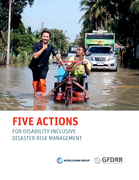
A recent survey of the literature and experience identified five broad actions that development institutions and governments, as well as their partners and stakeholders, can take to improve disability-inclusive disaster risk management. Those five actions are:
- Include persons with disabilitie ... s as valued stakeholders in disaster risk management activities
- Help remove barriers to the full participation of persons with disabilities
- Increase awareness among governments and their partners of the safety and security needs of persons with disabilities
- Collect data that is disaggregated by disability
- Ensure that new construction, rehabilitation and reconstruction are accessible to persons with disabilities more
- Include persons with disabilitie ... s as valued stakeholders in disaster risk management activities
- Help remove barriers to the full participation of persons with disabilities
- Increase awareness among governments and their partners of the safety and security needs of persons with disabilities
- Collect data that is disaggregated by disability
- Ensure that new construction, rehabilitation and reconstruction are accessible to persons with disabilities more

This Manual is primarily intended for community level volunteers trained in Community Based Disaster Risk Management (CBDRM) and CBDRM Practitioners and Professionals.
The year of publication is not specified in the document.
The year of publication is not specified in the document.

This handbook presents basic content and tips for implementing a school-based risk reduction programme. It is organised into five modules: its importance; approach and process; activities to benefit children up to five years old; activities for students aged 5–17; and activities for young people a
...
nd volunteers aged 17–24.
A generic framework for school-based risk reduction initiatives is illustrated in a diagram on p.10. The Comprehensive School Safety framework suggests a series of continuing activities that include: identifying the hazards in and around a school; conducting drills; preparing contingency and disaster management plans by involving parents, teachers and students; and building on the capacities of an institution and individuals to cope with the challenges during an unforeseen event. It also consists of three pillars: safe learning facilities; school disaster management; and risk reduction and resilience education. more
A generic framework for school-based risk reduction initiatives is illustrated in a diagram on p.10. The Comprehensive School Safety framework suggests a series of continuing activities that include: identifying the hazards in and around a school; conducting drills; preparing contingency and disaster management plans by involving parents, teachers and students; and building on the capacities of an institution and individuals to cope with the challenges during an unforeseen event. It also consists of three pillars: safe learning facilities; school disaster management; and risk reduction and resilience education. more

Natural Disaster Management Law, Myanmar
(2013)
C1
(The Pyidaungsu Hluttaw Law No. 21,2013)

Guideline on Inclusive Disaster Risk Reduction: Early Warning and Accessible Broadcasting
Dion, Betty; Qureshi, Aqeel
Global Alliance on Accessible Technologies and Environments (GAATES), Asia Pacific Broadcasting Union, Asia Disaster Preparedness Center
(2014)
C1
- Build community resilience to coastal hazards by improving capacity of inclusive disaster management systems.
- Reduce the mortality rate of persons with disabilities in situations of risk.
- Raise awareness about inclusive policies, practices and disaster risk reduction strategies that address
...
the accessibility of communication, shelter, transportation and early warning systems.
- Foster collaboration between disaster preparedness organizations, broadcasters and organizations of persons with disabilities to mainstreaming disability issues in disaster risk reduction strategies.
- Build the capacity of disaster management organizations, governments, broadcasters and built environment practitioners by providing technical specifications on accessible communications and the design of accessible shelters and the built environment.
more

The BRACED Myanmar Alliance was a three-year project aiming to ‘build the resilience of 350,000 people across Myanmar to climate extremes’. The project worked in 7 states, 8 townships and 155 communities. The main impact for project populations was intended to be ‘improved well-being and reduc
...
ed loss and damage despite climate shocks’, and the project sought to do this by addressing immediate hazard-related needs at community level while encouraging longer-term solutions driven and delivered by communities and subnational and national government.
Community Resilience Assessments (CRAs) were the first activities delivered as part of the project, and the list of community-identified needs became the basis from which local-level project interventions were selected. The selection typically involved an infrastructure requirement (linked to addressing a natural hazard, and sometimes shared between communities); a package of livelihood support (assets and trainings); capacity-building on climate change/resilience topics; and village savings and loans association (VSLA) support. A particular emphasis was placed on women’s empowerment, and leadership trainings and support to women’s self-help groups were provided. more
Community Resilience Assessments (CRAs) were the first activities delivered as part of the project, and the list of community-identified needs became the basis from which local-level project interventions were selected. The selection typically involved an infrastructure requirement (linked to addressing a natural hazard, and sometimes shared between communities); a package of livelihood support (assets and trainings); capacity-building on climate change/resilience topics; and village savings and loans association (VSLA) support. A particular emphasis was placed on women’s empowerment, and leadership trainings and support to women’s self-help groups were provided. more
This is the Technical Annex for the BRACED report: Measuring changes in household resilience as a result of BRACED activities in Myanmar.
The purpose of this document is to provide a comprehensive overview of existing institutional arrangement for disaster management in Myanmar at all levels with an aim to make information available to all stakeholders involved in disaster risk management in Myanmar.
The scope of the Guidance is primarily the education in rural settings in Myanmar, but it covers some of the issues which have pan Myanmar implication and relevance. Considering the importance, complexity and vastness of the subject, similar type of initiatives on urban school and education system a
...
nd other issues needs to be taken up in future.
The Guidance has four sections namely Introduction to this Guidance, Rationale for Mainstreaming DRR in the Education Sector, How to Mainstream Disaster Risk Reduction in Reconstruction Process of Education Sector in Myanmar and Creating an Enabling Environment for Safer Education. The Guidance also includes good practices of various agencies involved in Cyclone Nargis education sector recovery as example.
No publication year indicated. more
The Guidance has four sections namely Introduction to this Guidance, Rationale for Mainstreaming DRR in the Education Sector, How to Mainstream Disaster Risk Reduction in Reconstruction Process of Education Sector in Myanmar and Creating an Enabling Environment for Safer Education. The Guidance also includes good practices of various agencies involved in Cyclone Nargis education sector recovery as example.
No publication year indicated. more

Joint data assessment by the Central Statistical Organization and UNDP
The report shows that the National Statistical System of Myanmar has some work ahead of it in terms of preparing for the monitoring of the SDG indicators. Only 44 of the SDG indicators are currently produced and readily avai ... lable at the national level. However, the good news is that many (97) of the missing indicators can be computed from existing data sources – often with little effort - and don’t require any additional data collection. The report concludes that Myanmar is in a decent position to start monitoring the SDGs, and should start as soon as possible in putting its existing data to full use for the SDGs. more
The report shows that the National Statistical System of Myanmar has some work ahead of it in terms of preparing for the monitoring of the SDG indicators. Only 44 of the SDG indicators are currently produced and readily avai ... lable at the national level. However, the good news is that many (97) of the missing indicators can be computed from existing data sources – often with little effort - and don’t require any additional data collection. The report concludes that Myanmar is in a decent position to start monitoring the SDGs, and should start as soon as possible in putting its existing data to full use for the SDGs. more

The strategic priorities of the CCS 2014–2018 are:
(1) Strengthening the health system.
(2) Enhancing the achievement of communicable disease control targets.
(3) Controlling the growth of the noncommunicable disease burden.
(4) Promoting health throughout the life course.
... (5) Strengthening capacity for emergency risk management and surveillance systems for various health threats. more
(1) Strengthening the health system.
(2) Enhancing the achievement of communicable disease control targets.
(3) Controlling the growth of the noncommunicable disease burden.
(4) Promoting health throughout the life course.
... (5) Strengthening capacity for emergency risk management and surveillance systems for various health threats. more
March - June 2018
Myanmar introduced Child Death Surveillance and Response (CDSR) in 2015 as an initiative to reduce child (under-5) mortality, an initiative that will contribute to the country’s efforts to meet the Sustainable Development Goals (SDG). Technical Guidelines for CDSR were devel ... oped in 2015 followed by the development of Training Package in 2016. An Implementation Plan was made in 2016; and this led to all townships implementing CDSR in early 2017. After one year of implementation an assessment was carried out in early 2018.
The assessment was conducted in 3 region/states – Ayeyarwaddy, Magway, Shan South, with information gathered from the state/region, district, township and basic health unit levels. In addition a caretaker interview was conducted to see health-seeking behavior. In addition to these three regions/states, information was also gathered from three other regions/states but only at the region/state level – Mandalay, Yangon, Kachin. more
Myanmar introduced Child Death Surveillance and Response (CDSR) in 2015 as an initiative to reduce child (under-5) mortality, an initiative that will contribute to the country’s efforts to meet the Sustainable Development Goals (SDG). Technical Guidelines for CDSR were devel ... oped in 2015 followed by the development of Training Package in 2016. An Implementation Plan was made in 2016; and this led to all townships implementing CDSR in early 2017. After one year of implementation an assessment was carried out in early 2018.
The assessment was conducted in 3 region/states – Ayeyarwaddy, Magway, Shan South, with information gathered from the state/region, district, township and basic health unit levels. In addition a caretaker interview was conducted to see health-seeking behavior. In addition to these three regions/states, information was also gathered from three other regions/states but only at the region/state level – Mandalay, Yangon, Kachin. more

Civil Society Organisations’ contribution towards community engagement to access and demand health services and encourage communities to practice appropriate health-seeking behaviour in Mon and Chin States
The following report is a study of 14 villages under the Collective Voices project (Nov ... ember 2015-December 2017) in the states of Mon and Chin. The objectives of the study were:
(1) to explore Village Health Committee (VHC) members, Basic Health Staff (BHS), and community members’ perceptions on community engagement in seeking and demanding health care and
(2) to describe health-seeking behaviours relating to Maternal, Newborn, and Child Health and hygiene practices among target beneficiaries. more
The following report is a study of 14 villages under the Collective Voices project (Nov ... ember 2015-December 2017) in the states of Mon and Chin. The objectives of the study were:
(1) to explore Village Health Committee (VHC) members, Basic Health Staff (BHS), and community members’ perceptions on community engagement in seeking and demanding health care and
(2) to describe health-seeking behaviours relating to Maternal, Newborn, and Child Health and hygiene practices among target beneficiaries. more
