Filter
2165
Text search:
community
event
based
surveillance
Featured
267
543
Language
Document type
877
418
415
182
179
34
28
24
4
1
1
1
Countries
142
63
57
56
55
41
41
41
36
35
30
29
27
27
26
26
25
25
25
21
21
21
21
21
20
20
18
17
16
15
11
11
11
11
10
10
10
9
9
8
7
7
7
7
6
6
6
6
6
5
5
5
5
4
4
4
4
3
3
3
3
3
3
2
2
2
2
2
2
2
2
2
2
2
2
2
2
2
2
1
1
1
1
1
1
1
1
1
1
1
1
1
1
1
1
1
1
1
1
1
1
1
1
1
1
1
1
1
1
1
1
1
Authors & Publishers
Publication Years
Category
624
221
184
174
98
38
29
Toolboxes
236
139
124
120
104
97
95
85
72
70
55
52
50
45
39
38
33
32
31
29
29
21
14
13
4
1
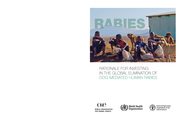
Rabies is a global public health problem with important socioeconomic impacts. Human rabies is preventable; almost all cases are transmitted through the bite of a rabid dog. Elimination of human rabies is possible. Technical support and tools are available. This report covers:
- Why investment ...
- Why investment ...

It provides insight into WHO’s work that aims to improve the health of the people of the United Republic of Tanzania in collaboration with key stakeholders.

WHO‘s Global Strategy to Accelerate the Elimination of Cervical Cancer, launched today, outlines three key steps: vaccination, screening and treatment. Successful implementation of all three could reduce more than 40% of new cases of the disease and 5 million related deaths by 2050.
A public health emergency operation center (PHEOC) serves as a hub for better coordinating the preparation, response, and recovery for public health emergencies. A functional PHEOC is critical for the implementation of the International Health Regulations (IHR 2005). The Framework for a Public Healt
...

In 2015, to advance the global and national response to antimicrobial resistance (AMR), the World Health Assembly issued resolution WHA68.7 calling for all Member States to develop AMR national action plans that address the five objectives of the World Health Organization Global Action Plan (GAP) by
...
Ukrainian decentralization reform has increased and democratized local government responsibility for health care at the level of local government closest to communities and has increased regional and local government responsibility for public health. Decentralization affects health system reform in
...
The indicators and questions in this document are designed for use by national AIDS programmes and partners to assess the state of a country’s HIV and AIDS response, and to measure progress towards achieving national HIV targets. Countries are encouraged to integrate these indicators and questions
...

An interregional meeting on leishmaniasis among neighbouring endemic
countries in the Eastern Mediterranean, African and European regions was organized by the World Health Organization (WHO) Regional Office for the Eastern
Mediterranean in Amman, Jordan, from 23 to 25 September 2018. The meeting w
...

Annual and medium-term budget preparation processes are the platforms through which specific plans are transformed into actual resource allocation decisions. The aim of this Process Guide is to support key stakeholders involved in these processes (such as the Cabinet, Ministries of Finance and Healt
...

This country cooperation strategy (CCS) outlines how the World Health Organization (WHO) will work with the Lao People’s Democratic Republic over the next five years (2024–2028), supporting the implementation of the five-year health sector development plans and the Health Sector Reform Strategy
...

An estimated 1.3 billion people globally experience significant disability. This figure has grown over the last decade and will continue to rise due to demographic and epidemiological changes. In 2022, the World Health Organization launched the Global report on health equity for persons with disabil
...

The World Health Organization provides regional and national strategies and operational plans that aim to support countries in work to achieve measles control and elimination. These are guided by high level frameworks including the Immunization Agenda 2030 and the Measles and Rubella Strategic Frame
...

The indicators and questions in this document are designed for use by national AIDS programmes and partners to assess the state of a country’s HIV and AIDS response, and to measure progress towards achieving national HIV targets. Countries are encouraged to integrate these indicators and questions
...

Indicators and questions to monitor progress towards the Global AIDS Strategy 2026-2031 targets
Health care-associated infections (HAI) are one of the most common adverse events in care delivery and a major public health problem with an impact on morbidity, mortality and quality of life. At any one time, up to 7% of patients in developed and 10% in developing countries will acquire at least on
...

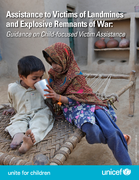
This document is one of eight PDF documents that comprise the Guidance on Child-focused Victim
Assistance. All are available in PDF at