
Filter
1617
Text search:
gender-based
violence
Featured
150
473
Language
Document type
828
320
160
111
85
37
34
27
9
2
1
1
Countries
82
69
58
48
47
44
41
39
37
33
32
31
30
29
28
28
28
27
25
23
21
20
18
18
17
17
16
16
16
13
13
12
12
12
12
10
10
9
9
8
8
8
8
7
7
7
7
6
6
6
6
5
5
5
5
4
4
4
4
4
4
3
3
3
3
3
3
2
2
2
2
2
2
2
2
2
2
1
1
1
1
1
1
1
1
1
1
1
1
1
1
1
1
1
1
1
1
1
1
Authors & Publishers
Publication Years
Category
709
176
140
60
32
29
Toolboxes
191
178
133
116
99
93
39
28
22
20
19
18
10
9
6
5
3
3
2
2
2
2
2
1
1
1
1

Children with disabilities are particularly vulnerable in humanitarian settings, yet they are often not able to access the services and protection they need. While multiple factors create these barriers, a major cause is how data about children with disabilities is collected and mapped. Data collect
...

The 2030 health-related Sustainable Development Goals call on countries to end AIDS as a public health threat and also to achieve universal health coverage. The World Health Organization (WHO) promotes primary health care (PHC) as the key mechanism for achieving universal health coverage, and the PH
...

This report synthesizes the state of knowledge on the interlinkages between environmental degradation climate change conflict and mobility in the East and Horn of Africa, focusing on Burundi, Djibouti, Ethiopia, Kenya, Somalia, South Sudan, Tanzania, and Uganda.

the Pocket Guide includes
information on HIV clinical care; growth and development; mental health; child protection;
counselling and communication; disclosure; loss, grief, and bereavement; adherence; sexual
and reproductive health; transition of care; support systems; and monitoring and evaluati
...

a comprehensive guide
for the HCPs who work in counselling and psychological care of children and adoles-
cents. The Handbook includes information on HIV clinical care; growth and development;
mental health; child protection; counselling and communication; disclosure; loss, grief,
and bereavemen
...


Guidance on Disability Inclusion for GBV Partners in Lebanon.

Guidance on Disability Inclusion for GBV Partners in Lebanon


Guidance on Disability Inclusion for GBV Partners in Lebanon Toolkit
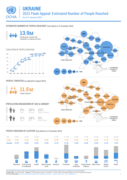
UKRAINE 2022 Flash Appeal: Estimated Number of People Reached by Cluster & Oblast
Guidance on Disability Inclusion for GBV Partners in Lebanon: Outreach, Safe Identification and Referral of Women, Children, and Youth with Disabilities is designed to support frontline workers, community volunteers, and mobilizers and their supervisors who are working in GBV prevention and response
...
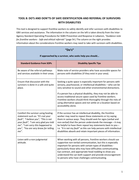
Guidance on Disability Inclusion for GBV Partners in Lebanon

Guidance on Disability Inclusion for GBV Partners in Lebanon
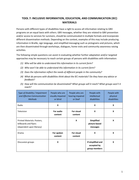
Guidance on Disability Inclusion for GBV Partners in Lebanon
