
Filter
2469
Text search:
disability
policies
Featured
210
607
Language
2406
66
64
38
33
22
17
12
7
5
5
5
4
4
4
4
4
4
4
3
3
3
3
3
3
3
3
3
3
2
2
2
2
2
2
2
2
2
2
1
1
1
1
1
1
1
1
1
1
1
1
1
1
Document type
1444
417
262
154
127
34
13
11
4
1
1
1
Countries
140
80
67
63
60
55
53
48
44
44
43
43
36
36
34
31
30
27
26
26
26
25
24
24
23
23
20
18
18
17
15
12
10
10
10
9
8
8
8
8
8
7
7
7
7
7
7
7
6
6
6
6
6
6
5
5
5
5
4
4
4
4
4
4
3
3
3
3
3
3
3
3
2
2
2
2
2
2
2
2
2
2
2
2
2
2
1
1
1
1
1
1
1
1
1
1
1
1
1
1
1
1
1
1
1
1
1
1
1
1
1
1
1
1
1
1
1
1
Authors & Publishers
325
114
93
80
65
55
48
38
21
21
21
20
20
18
17
15
15
15
15
15
13
12
11
11
11
10
10
9
9
9
9
9
9
8
8
8
7
7
7
7
7
7
7
7
6
6
6
6
6
6
6
5
5
5
5
5
5
5
5
5
5
5
5
5
5
5
5
5
5
5
5
5
5
4
4
4
4
4
4
4
4
4
4
4
4
4
4
4
4
4
4
4
4
4
4
4
4
4
4
4
4
4
4
4
4
3
3
3
3
3
3
3
3
3
3
3
3
3
3
3
3
3
3
3
3
3
3
3
3
3
3
3
3
3
3
3
3
3
3
3
3
3
3
3
3
3
3
3
3
3
3
3
3
3
3
3
2
2
2
2
2
2
2
2
2
2
2
2
2
2
2
2
2
2
2
2
2
2
2
2
2
2
2
2
2
2
2
2
2
2
2
2
2
2
2
2
2
2
2
2
2
2
2
2
2
2
2
2
2
2
2
2
2
2
2
2
2
2
2
2
2
2
2
2
2
2
2
2
2
2
2
2
2
2
2
2
2
2
2
2
2
2
2
2
2
2
2
2
2
2
2
2
2
2
2
2
2
2
2
2
2
2
2
2
2
2
2
2
2
2
2
2
2
2
2
2
2
2
2
1
1
1
1
1
1
1
1
1
1
1
1
1
1
1
1
1
1
1
1
1
1
1
1
1
1
1
1
1
1
1
1
1
1
1
1
1
1
1
1
1
1
1
1
1
1
1
1
1
1
1
1
1
1
1
1
1
1
1
1
1
1
1
1
1
1
1
1
1
1
1
1
1
1
1
1
1
1
1
1
1
1
1
1
1
1
1
1
1
1
1
1
1
1
1
1
1
1
1
1
1
1
1
1
1
1
1
1
1
1
1
1
1
1
1
1
1
1
1
1
1
1
1
1
1
1
1
1
1
1
1
1
1
1
1
1
1
1
1
1
1
1
1
1
1
1
1
1
1
1
1
1
1
1
1
1
1
1
1
1
1
1
1
1
1
1
1
1
1
1
1
1
1
1
1
1
1
1
1
1
1
1
1
1
1
1
1
1
1
1
1
1
1
1
1
1
1
1
1
1
1
1
1
1
1
1
1
1
1
1
1
1
1
1
1
1
1
1
1
1
1
1
1
1
1
1
1
1
1
1
1
1
1
1
1
1
1
1
1
1
1
1
1
1
1
1
1
1
1
1
1
1
1
1
1
1
1
1
1
1
1
1
1
1
1
1
1
1
1
1
1
1
1
1
1
1
1
1
1
1
1
1
1
1
1
1
1
1
1
1
1
1
1
1
1
1
1
1
1
1
1
1
1
1
1
1
1
1
1
1
1
1
1
1
1
1
1
1
1
1
1
1
1
1
1
1
1
1
1
1
1
1
1
1
1
1
1
1
1
1
1
1
1
1
1
1
1
1
1
1
1
1
1
1
1
1
1
1
1
1
1
1
1
1
1
1
1
1
1
1
1
1
1
1
1
1
1
1
1
1
1
1
1
1
1
1
1
1
1
1
1
1
1
1
1
1
1
1
1
1
1
1
1
1
1
1
1
1
1
1
1
1
1
1
1
1
1
1
1
1
1
1
1
1
1
1
1
1
1
1
1
1
1
1
1
1
1
1
1
1
1
1
1
1
1
1
1
1
1
1
1
1
1
1
1
1
1
1
1
1
1
1
1
1
1
1
1
1
1
1
1
1
1
1
1
1
1
1
1
1
1
1
1
1
1
1
1
1
1
1
1
1
1
1
1
1
1
1
1
1
1
1
1
1
1
1
1
1
1
1
1
1
1
1
1
1
1
1
1
1
1
1
1
1
1
1
1
1
1
1
1
1
1
1
1
1
1
1
1
1
1
1
1
1
1
1
1
1
1
1
1
1
1
1
1
1
1
1
1
1
1
1
1
1
1
1
1
1
1
1
1
1
1
1
1
1
1
1
1
1
1
1
1
1
1
1
1
1
1
1
1
1
1
1
1
1
1
1
1
1
1
1
1
1
1
1
1
1
1
1
1
1
1
1
1
1
1
1
1
1
1
1
1
1
1
1
1
1
1
1
1
1
1
1
1
1
1
1
1
1
1
1
1
1
1
1
1
1
1
1
1
1
1
1
1
1
1
1
1
1
1
1
1
1
1
1
1
1
1
1
1
1
1
1
1
1
1
1
1
1
1
1
1
1
1
1
1
1
1
1
1
1
1
1
1
1
1
1
1
1
1
1
1
1
1
1
1
1
1
1
1
1
1
1
1
1
1
1
1
1
1
1
1
1
1
1
1
1
1
1
1
1
1
1
1
1
1
1
1
1
1
1
1
1
1
1
1
1
1
1
1
1
1
1
1
1
1
1
1
1
1
1
1
1
1
1
1
1
1
1
1
1
1
1
1
1
1
1
1
1
1
1
1
1
1
1
1
1
1
1
1
1
1
1
1
1
1
1
1
1
1
1
1
1
1
1
1
1
1
1
1
1
1
1
1
1
1
1
1
1
1
1
1
1
1
1
1
1
1
1
1
1
1
1
1
1
1
1
1
1
1
1
1
1
1
1
1
1
1
1
1
1
1
1
1
1
1
1
1
1
1
1
1
1
1
1
1
1
1
1
1
1
1
1
1
1
1
1
1
1
1
1
1
1
1
1
1
1
1
1
1
1
1
1
1
1
1
1
1
1
1
1
1
1
1
1
1
1
1
1
1
1
1
1
1
1
1
1
1
1
1
1
1
1
1
1
1
1
1
1
1
1
1
1
1
1
1
1
1
1
1
1
1
1
1
1
1
1
1
1
1
1
1
1
1
1
1
1
1
1
1
1
1
1
1
1
1
1
1
1
1
1
1
1
1
1
1
1
1
1
1
1
1
1
1
1
1
1
1
1
1
1
1
1
1
1
1
1
1
1
1
1
1
1
1
1
1
1
1
1
1
1
1
1
1
1
1
1
1
1
1
1
1
1
1
1
1
1
1
1
1
1
1
1
1
1
1
1
1
1
1
1
1
1
1
1
1
1
1
1
1
1
1
1
1
1
1
1
1
1
1
1
1
1
1
1
1
1
1
1
1
1
1
1
1
1
1
1
1
1
1
1
1
1
1
1
1
1
1
1
1
1
1
1
1
1
1
1
1
1
1
1
1
1
1
1
1
1
1
1
1
1
1
1
1
1
1
1
1
1
1
1
1
1
1
1
1
1
1
1
1
1
1
1
1
1
1
1
1
1
1
1
1
1
1
1
1
1
1
1
1
1
1
1
1
1
1
1
1
1
1
1
1
1
1
1
1
1
1
1
1
1
1
1
1
1
1
1
1
1
1
1
1
1
1
1
1
1
1
1
1
1
1
1
1
1
1
1
1
1
1
1
1
1
1
1
1
1
1
1
1
1
1
1
1
1
1
1
1
1
1
1
1
1
1
1
1
1
1
1
1
1
1
1
1
1
1
1
1
1
1
1
1
1
1
1
1
1
1
1
1
1
1
1
1
1
1
1
1
1
1
1
1
1
1
1
1
1
1
1
1
1
1
1
1
1
1
1
1
1
1
1
1
1
1
1
1
1
1
1
1
1
1
1
1
1
1
1
1
1
1
1
1
1
1
1
1
1
1
1
1
1
1
1
1
1
1
1
1
1
1
1
1
1
1
1
1
1
1
1
1
1
1
1
1
1
1
1
1
1
1
1
1
1
1
1
1
1
1
1
1
1
1
1
1
1
1
1
1
1
1
1
1
1
1
1
1
1
1
1
1
1
1
1
1
1
1
1
1
1
1
1
1
1
1
1
1
1
1
1
1
1
1
1
1
1
1
1
1
1
1
1
1
1
1
1
1
1
1
1
1
1
1
1
1
1
1
1
1
1
1
1
1
1
1
1
1
1
1
1
1
1
1
1
1
1
1
1
1
1
1
1
1
1
1
1
1
1
1
1
1
1
1
1
1
1
1
1
1
1
1
1
1
1
1
1
1
1
1
1
1
1
1
1
1
1
1
1
1
1
1
1
1
1
1
1
1
1
1
1
1
1
1
1
1
1
1
1
1
1
1
1
1
1
1
1
1
1
1
1
1
1
1
1
1
1
1
1
1
1
1
1
1
1
1
1
1
1
1
1
1
1
1
1
1
1
1
1
1
1
1
1
1
1
1
1
1
1
1
1
1
1
1
1
1
1
1
1
1
1
1
1
1
1
1
1
1
1
1
1
1
1
1
1
1
1
1
1
1
1
1
1
1
1
1
1
1
1
1
1
1
1
1
1
1
1
1
1
1
1
1
1
1
1
1
1
1
1
1
1
1
1
1
1
1
1
1
1
1
1
1
1
1
1
1
1
1
1
1
1
1
1
1
1
1
1
1
1
1
1
1
1
1
1
1
1
1
1
1
1
1
1
1
1
1
1
1
1
1
1
1
1
1
1
1
1
1
1
1
1
1
1
1
1
1
1
1
1
1
1
1
1
1
1
1
1
1
1
1
1
1
Publication Years
1
700
1535
225
8
Category
909
204
173
165
145
32
9
Toolboxes
376
314
137
97
74
72
72
67
65
55
54
45
36
22
22
22
16
14
11
10
9
7
6
1
1
1

This Guide responds to requests from practitioners and country teams who have learned about the Nurturing care framework and want to understand how to adapt health and nutrition services to be supportive of nurturing care and strengthen caregivers’ capacity.

The sixteenth meeting of the Strategic and Technical Advisory Group for Neglected Tropical Diseases (STAG-NTD) was held as a hybrid meeting, 27–28 September 2022.
Dr Ren Minghui, Assistant Director-General, Universal Health Coverage/Communicable and Noncommunicable Diseases, welcomed participan
...
ts to the meeting. He said the World Health Organization’s Department of Control of Neglected Tropical Diseases (WHO/NTD) was in a state of transition. Following the death of the late esteemed Director Dr Mwelecele Ntuli Malecela earlier in the year, Dr Gautam Biswas had taken over as Acting Director but would soon retire; the appointment of a new Director was under way. Owing to rotation of STAG-NTD members, this would be the last meeting for some and the first meeting for several new participants. The work however would continue with the same commitment. Discussions over the next two days would focus on critical issues regarding recovery of NTD services following the disruptions caused by coronavirus disease (COVID-19), which had impacted many health services worldwide. He looked forward to receiving the advice and guidance of STAG-N
more

Despite the significant role of vector control in national leishmaniasis control programmes, the programmatic community perceives vector control as the weakest component of leishmaniasis control strategies in terms of resources, scientific evidence of the usefulness of interventions and capacity for
...
quality-assured implementation. Therefore, the main objective of this manual is to provide practical tools, techniques and procedures to strengthen sand fly control and surveillance in order to improve implementation of leishmaniasis control programmes. The manual provides a rationale for programme managers in different geographical regions on the types of vector control interventions to be used in different epidemiological and environmental settings and also how to measure their impact.
more
BMJ Glob Health 2017;2:e000345. doi:10.1136/bmjgh-2017-000345. WHO's 2020 milestones for Chagas disease include having all endemic Latin American countries certified with no intradomiciliary Trypanosoma cruzi transmission, and infected patients under care. Evaluating the variation in historical expo
...
sure to infection is crucial for assessing progress and for understanding the priorities to achieve these milestones.
more

This report provides a review and analysis of the research landscape for three diseases – Chagas disease, human African trypanosomiasis and leishmaniasis – that disproportionately afflict poor and remote populations with limited access to health services. It represents the work of the disease re
...
ference group on Chagas Disease, Human African Trypanosomiasis and Leishmaniasis (DRG3) which was established to identify key research priorities through review of research evidence and input from stakeholders' consultations.
more

Comprehensive Guidelines for Prevention and Control of Dengue and Dengue Haemorrhagic Fever -Revised and expanded edition
World Health Organization World Health Organization WHO Regional Office for South-East Asia
WHO Regional Office for South-East Asia
(2011)
CC
Revised and expanded version of the Guidelines

Access to health workers who are fit for purpose, motivated and protected is a fundamental force of health service delivery and the achievement of universal health coverage and the health and health-related Sustainable Development Goals. Data and knowledge of the distribution, skill mix and future d
...
evelopment needs of the health workforce can mean the difference between enabling or impeding health systems performance, inclusive economic growth and global health security preparedness and response
more
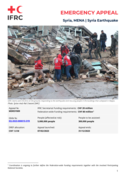
On 6 February at 4:17 am, a 7.8 degrees magnitude earthquake struck southern Turkey near Syria’s
northern border. The US Geological Survey said the earthquake was centered about 33 km (20 miles)
from Gaziantep, a major city and provincial capital. Tremors were felt as far away as Lebanon, Greece
...
,
Palestine, and the island of Cyprus. Another big earthquake was felt on the same day at around 1:24
pm local time, largely in the same affected areas. Aftershocks will continue to shake the area as fault
lines adjust to such a huge initial tremor. There’s even a risk—albeit a small one—of an aftershock
bigger than the original quake.
more

Chromoblastomycosis (CBM), represents one of the primary implantation mycoses caused by melanized fungi widely found in nature. It is characterized as a Neglected Tropical Disease (NTD) and mainly affects populations living in poverty with significant morbidity, including stigma and discrimination.
The purpose of this guide is to provide practical advice for health staff undertaking infectious disease preparedness and response activities to ensure that access to safe abortion care (SAC) is maintained when an infectious disease outbreak occurs. It is an operational guide which can serve to supp
...
ort health actors to maintain SAC services during outbreaks and ensure that necessary SAC considerations are integrated within outbreak responses; it is not a clinical guide. The locational focus of this document is humanitarian and fragile settings; however, recommendations may apply to infectious disease outbreaks in all low-resource populations. This guide is intended to complement Sexual and Reproductive Health and Rights During Infectious Disease Outbreaks: Operational Guidance for Humanitarian and Fragile Settings.
more
Rabies is entirely preventable, and vaccines, medicines, tools and technologies have long been available to prevent people from dying of dog-mediated rabies. Nevertheless, rabies still kills about 60 000 people a year, of whom over 40% are children under 15, mainly in rural areas of economically dis
...
advantaged countries in Africa and Asia. Of all human cases, up to 99% are acquired from the bite of an infected dog.
more

Regional implementation framework for elimination of cervical cancer as a public health problem: 2021–2030
recommended
Cervical cancer continues to be a significant public health problem and a major cause of premature mortality among women, disproportionately affecting the socioeconomically disadvantaged population in low- and middle-income countries (LMICs). In the absence of implementing the known evidence-based,
...
cost-effective interventions, the number of deaths per year is projected to reach approximately 416 000 globally in 2035. It was estimated in 2020 that 32% of incident cervical cancer cases and 34% of cervical cancer deaths in the world occurred in the 11 Member States of the WHO South-East Asia (SEA) Region. In 2020, 190 874 new cases and 116 015 deaths were estimated due to cervical cancer, which is the third commonest cancer in the Region
more
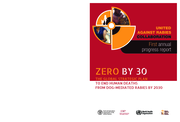
Rabies is entirely preventable, and vaccines, medicines, tools and technologies have long
been available to prevent people from dying of dog-mediated rabies. Nevertheless, rabies still
kills about 60 000 people a year, of whom over 40% are children under 15, mainly in rural areas
of economically
...
disadvantaged countries in Africa and Asia. Of all human cases, up to 99% are
acquired from the bite of an infected dog.
more

This training guide is designed to enable participants to understand the human rights perspective on migration, and how human rights laws and standards can be operationalized to make migration safer and an empowering experience for all. It provides an introduction to related principles and issues an
...
d is designed for persons with limited knowledge of human rights or migration.
The training guide contains session plans for the trainer and is supported by sample slide presentations and associated materials, including activities and handouts for participants, which are available electronically as individual components.
more
In 2014, an estimated 40 million women of reproductive age were infected with Schistosoma haematobium, S. japonicum and/or S. mansoni. In both 2003 and 2006, the World Health Organization (WHO) recommended that all schistosome-infected pregnant and breastfeeding women be offered treatment, with praz
...
iquantel, either individually or during treatment campaigns. In 2006, WHO also stated the need for randomized controlled trials to assess the safety and efficacy of such treatment. Some countries have yet to follow the recommendation on treatment and many programme managers and pregnant women in other countries remain reluctant to follow the recommended approach.
more

Promoting health and preventing disease is a critical component of the effort required to achieve Universal Health Coverage (UHC). to date, efforts to achieve UHC have focused mostly on strengthening health systems and their capacities to provide curative care. However, experience from the COVID-19
...
pandemic has reaffirmed the need for resilient health systems, emphasizing primary health care, including preventive and promotive health and well-being.
Emerging from the eye of the storm as the global health lead agency during the pandemic, WHO is equipped with the required insights and actions for a holistic approach to “building back fairer and better” after COVID-19.
The Healthier Populations (UHP) Cluster in the African Region is designed to support Pillar 3 of WHO’s 13th Global Programme of Work (GPW13) which aims to make 1 billion people healthier by reducing health inequities, preventing diseases and injuries, addressing health determinants, and promoting partnerships for collaborative actions amongst all stakeholders.
more

Improving the survival chances and quality of life of women, newborns, and children remains an urgent global challenge. Since 2012, substantial progress has been made in reducing maternal and under-5 deaths, and a only handful of countries are on target to meet the SDG targets in 2030. Yet, 5 millio
...
n children still die each year under the age of 5, and nearly half of those are newborns less than a month old. Worse still, the global maternal mortality ratio is going in the wrong direction.
A Decade of Progress and Action for the Future will examine the tenacity and innovation that helped us make gains, the lessons learned through monitoring, country-led adaptation and leadership, analysis, and reflection, as well as the approaches we must take to reinvigorate the momentum and global commitment to improving maternal and child survival. Increasing coverage, strengthening the quality of care, and enhancing equity will be tantamount to our global progress.
more

Integrating the prevention and control of noncommunicable diseases in HIV/AIDS, tuberculosis, and sexual and reproductive health programmes: implementation guidance
Accessed on 04.04.2023
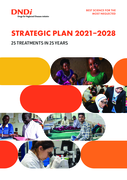
The Drugs for Neglected Diseases initiative (DNDi) is an international
non-profit organization that discovers, develops, and delivers safe,
effective, and affordable treatments for the most neglected patients
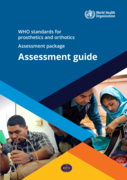
The Assessment package has been developed for countries to evaluate the implementation of the WHO Standards for prosthetics and orthotics. It enables identification of areas in need of strengthening and facilitates relevant planning. The complete Assessment package consists of four components: Asses
...
sment guide: gives directions on how to organize and implement the assessment. Assessment tool: Excel instrument used to carry out assessments and record results.
User manual: explains how the Assessment tool should be used.
Planning document: Excel file into which the recommendations that are generated by the Assessment tool can be pasted for easy use in subsequent planning.
more
