
Filter
623
Text search:
pharmacological
interventions
Featured
91
103
Language
Document type
310
123
88
54
17
15
10
3
3
Countries
38
33
19
17
17
11
10
8
8
7
7
7
7
6
5
5
5
5
4
4
4
3
3
3
3
3
2
2
2
2
2
2
2
2
1
1
1
1
1
1
1
1
1
1
1
1
1
1
1
1
1
1
1
1
1
1
1
1
1
1
1
1
1
1
1
Authors & Publishers
Publication Years
Category
154
82
56
32
8
8
5
Toolboxes
231
51
31
29
27
23
16
11
11
9
7
6
5
5
4
3
3
3
3
2
2
2
2
1

The reader acknowledges that this report is intended as an evidence-based asthma management strategy, for the use of health professionals and policy-makers. It is based, to the best of our knowledge, on current best evidence and medical knowledge and practice at the date of publication. When assessi
...

Asthma is a serious global health problem affecting all age groups. Its prevalence is increasing in many countries, espacially among children. Although some countries have seen a decline in hospitalizations and deaths from asthma, asthma still imposes an unacceptable burden on health care systems, a
...

This guideline includes 48 updated and new evidence-based recommendations related to MNS conditions. The guideline is targeted towards non-specialized health workers at primary- or secondary-level healthcare facilities, or those working at the district level including basic inpatient and outpatient
...
Mental disorders are a leading cause of the global burden of disease, and the provision of mental health services in developing countries remains very limited and far from equitable. Using the Creditor Reporting System, we estimate the amounts and patterns of development assistance for global mental
...

This document provides information for WHO Member States, particularly low-income and middle-income countries, to strengthen preparedness and response plans with regard to the social and mental health consequences of biological and chemical attacks.
A broad range of UNHCR’s key priorities overlap with MHPSS issues – for example, child protection and sexual and gender-based violence [SGBV] prevention and response.
Despite all these existent synergies, UNHCR’s current policies and guidelines do not sufficiently link with MHPSS principles.
...

Cancer
recommended
This volume presents the complex patterns of cancer incidence and death around the world and evidence on effective and cost-effective ways to control cancers. The Disease Control Priorities Volume 3 evaluation of cancer will indicate where cancer treatment is ineffective and wasteful, and offer alte
...

Disease Control Priorities, 3rdEdition: Volume 4.
Mental, neurological, and substance use disorders are common, highly disabling, and associated with significant premature mortality. The impact of these disorders on the social and economic well-beingof individuals, families, and societies is large
...

Standard Treatment Guideline




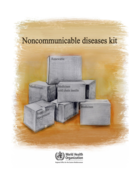
WHO has developed a new health kit to support treatment for chronic disease patients in emergency settings. The prevalence of NCDs is increasing worldwide, including in emergency/crisis-prone areas. Yet current humanitarian response has not accounted for this emerging burden. The NCD kit attends to
...

Epilepsies: diagnosis and management
recommended
Clinical guideline | Published: 11 January 2012 | nice.org.uk/guidance/cg137

BMJ 2009; 338 doi: https://doi.org/10.1136/bmj.b158 (Published 05 February 2009)
Cite this as: BMJ 2009;338:b158
Correspondence to: A Burns alistair.burns@manchester.ac.uk
