
Filter
749
Text search:
misinformation
Featured
92
97
Language
Document type
178
167
119
78
65
58
24
22
17
6
6
4
3
2
Countries
46
28
26
23
19
18
17
16
13
13
13
12
12
11
10
10
10
9
9
9
9
8
8
8
7
7
7
7
7
7
6
6
5
5
4
4
4
4
4
4
4
4
4
3
3
3
3
3
3
2
2
2
2
2
2
2
2
2
2
2
2
2
2
2
2
2
2
1
1
1
1
1
1
1
1
1
1
1
1
1
1
1
1
1
1
1
1
1
1
1
1
1
1
1
1
1
1
1
1
1
1
1
1
1
1
1
Authors & Publishers
Publication Years
Category
242
47
42
35
34
24
2
1
Toolboxes
326
56
32
28
25
21
21
18
15
15
14
14
13
9
8
7
6
6
6
6
5
5
4
4
1
With Safety Tips for Conducting Community Meetings
Updated July 2020
This document includes key Risk Communication and Community Engagement (RCCE) considerations during shifting lockdown measures, safety measures for conducting in-person community meetings, and a template that brings both of these
...

This document offers tools to help journalists practice responsible coverage of the pandemic using evidence-based information. It also proposes ways to approach coverage and encourages journalists to provide advice and solutions that can help reduce health risks and save lives.
The Country Readiness and Delivery(CRD) workstream which is part of the ACT Accelerator and is included in the SPRP– has developed a toolbox with guidance, tools and training.
8 February 2021
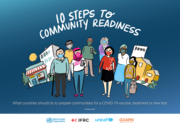
This document highlights 10 well established Risk Communication and Community Engagement (RCCE) principles that have proven their power. Together they put communities at the heart of the roll out of new vaccines, treatments and tests and promote trust, the critical ingredient for al
...
In this COVID-19 pandemic, timely access to accurate information can be the difference between life and death. The stakes are high in developing countries like Ethiopia where millions of people have limited access to information because of low media access, insufficientin
...
December 2020 — May 2021
WHO has a unique combination of technical public health and scientific expertise, and a global operational footprint, with field offices in more than 150 countries. In 2020, this global, technical, and operational reach meant WHO was able to support countries around the world in every aspect of COVI
...
The Access to COVID-19 Tools (ACT) Accelerator’s Country Readiness and Delivery workstream has released guidance on developing a national deployment and vaccination plan (NDVP) for COVID-19 vaccines. This course is intended to help national and sub-national focal points in countries develop the ND
...

Getting story ideas right -- Getting your sources right -- Getting your facts right -- Getting your report right -- Getting images and videos verified accurately -- Getting maps right -- Getting your language right
COVID 19 Vaccine Perceptions: A 15 country study
recommended
Initial public health responses to control the pandemic focused on promoting protective behaviors among the general population, including frequent hand washing, physical distancing and the use of face masks in public spaces However, many saw these only as interim measures to reduce the spread of the
...
This report describes findings from a telephone survey with 1,284 people conducted in February 2021. The survey examined how people respond to public health and social measures (PHSMs) to prevent COVID-19. The sample is representative of households with access to a landline or cell phone, but does n
...
Available in Chinese, English, French, Russian and Spanish; WHO and UNICEF policy brief, 19 April 2021
Persons with disabilities are disproportionately impacted by COVID-19, both directly because of infection, and indirectly because of restrictions to reduce the spread of the virus. Persons with di
...
COVID-19 is a pandemic that is currently ravaging the world. Infection rate is steadily increasingin Sub-Saharan Africa. Pregnant women and their infants may suffer severe illnesses due to theirlower immunity. This guideline prepares and equips clinicians working in the maternal and new-born section
...
