
Filter
2384
Text search:
behavior
Featured
142
655
Language
2167
102
92
60
26
24
13
11
11
8
6
3
3
3
3
3
3
2
2
2
1
1
1
1
1
1
1
1
1
1
1
1
1
1
1
1
1
1
1
1
1
1
Document type
1463
389
185
113
73
63
50
12
10
9
8
7
1
Countries
106
86
84
79
69
68
67
55
54
50
48
43
42
42
40
38
29
29
29
29
27
24
23
22
20
20
20
19
18
18
17
16
16
14
12
11
11
10
10
10
10
9
9
9
8
8
7
7
7
7
7
6
6
6
6
6
6
5
5
5
4
4
4
4
4
4
3
3
3
3
3
3
2
2
2
2
2
2
2
2
2
2
2
2
2
2
2
2
2
1
1
1
1
1
1
1
1
1
1
1
1
1
1
1
1
1
1
1
1
1
1
1
1
1
1
1
1
1
1
1
1
1
1
1
1
Authors & Publishers
117
114
108
88
45
41
38
37
36
32
27
24
21
21
20
18
16
16
16
15
15
14
13
13
11
11
11
11
11
10
10
10
9
8
8
8
8
7
7
7
7
7
7
6
6
6
6
6
6
6
6
6
6
5
5
5
5
5
5
5
5
5
5
5
5
4
4
4
4
4
4
4
4
4
4
4
4
4
4
4
4
4
4
4
4
4
4
4
4
4
4
4
4
4
4
4
4
4
4
4
3
3
3
3
3
3
3
3
3
3
3
3
3
3
3
3
3
3
3
3
3
3
3
3
3
3
3
3
3
3
3
3
3
3
3
3
3
3
3
3
3
3
3
3
3
3
3
3
3
3
3
3
3
3
3
3
3
3
3
3
3
3
3
3
3
3
3
3
3
3
3
3
3
3
2
2
2
2
2
2
2
2
2
2
2
2
2
2
2
2
2
2
2
2
2
2
2
2
2
2
2
2
2
2
2
2
2
2
2
2
2
2
2
2
2
2
2
2
2
2
2
2
2
2
2
2
2
2
2
2
2
2
2
2
2
2
2
2
2
2
2
2
2
2
2
2
2
2
2
2
2
2
2
2
2
2
2
2
2
2
2
2
2
2
2
2
2
2
2
2
2
2
2
2
2
2
2
2
2
2
2
2
2
2
2
2
2
2
2
2
2
2
2
2
2
2
2
2
2
2
2
2
2
2
2
2
2
2
2
2
2
2
2
2
2
2
2
2
2
2
2
2
2
2
2
2
2
2
2
2
2
2
2
2
2
2
2
2
2
2
2
2
2
2
2
2
2
2
2
2
2
2
2
2
2
2
2
2
2
2
2
2
2
2
2
2
2
2
2
1
1
1
1
1
1
1
1
1
1
1
1
1
1
1
1
1
1
1
1
1
1
1
1
1
1
1
1
1
1
1
1
1
1
1
1
1
1
1
1
1
1
1
1
1
1
1
1
1
1
1
1
1
1
1
1
1
1
1
1
1
1
1
1
1
1
1
1
1
1
1
1
1
1
1
1
1
1
1
1
1
1
1
1
1
1
1
1
1
1
1
1
1
1
1
1
1
1
1
1
1
1
1
1
1
1
1
1
1
1
1
1
1
1
1
1
1
1
1
1
1
1
1
1
1
1
1
1
1
1
1
1
1
1
1
1
1
1
1
1
1
1
1
1
1
1
1
1
1
1
1
1
1
1
1
1
1
1
1
1
1
1
1
1
1
1
1
1
1
1
1
1
1
1
1
1
1
1
1
1
1
1
1
1
1
1
1
1
1
1
1
1
1
1
1
1
1
1
1
1
1
1
1
1
1
1
1
1
1
1
1
1
1
1
1
1
1
1
1
1
1
1
1
1
1
1
1
1
1
1
1
1
1
1
1
1
1
1
1
1
1
1
1
1
1
1
1
1
1
1
1
1
1
1
1
1
1
1
1
1
1
1
1
1
1
1
1
1
1
1
1
1
1
1
1
1
1
1
1
1
1
1
1
1
1
1
1
1
1
1
1
1
1
1
1
1
1
1
1
1
1
1
1
1
1
1
1
1
1
1
1
1
1
1
1
1
1
1
1
1
1
1
1
1
1
1
1
1
1
1
1
1
1
1
1
1
1
1
1
1
1
1
1
1
1
1
1
1
1
1
1
1
1
1
1
1
1
1
1
1
1
1
1
1
1
1
1
1
1
1
1
1
1
1
1
1
1
1
1
1
1
1
1
1
1
1
1
1
1
1
1
1
1
1
1
1
1
1
1
1
1
1
1
1
1
1
1
1
1
1
1
1
1
1
1
1
1
1
1
1
1
1
1
1
1
1
1
1
1
1
1
1
1
1
1
1
1
1
1
1
1
1
1
1
1
1
1
1
1
1
1
1
1
1
1
1
1
1
1
1
1
1
1
1
1
1
1
1
1
1
1
1
1
1
1
1
1
1
1
1
1
1
1
1
1
1
1
1
1
1
1
1
1
1
1
1
1
1
1
1
1
1
1
1
1
1
1
1
1
1
1
1
1
1
1
1
1
1
1
1
1
1
1
1
1
1
1
1
1
1
1
1
1
1
1
1
1
1
1
1
1
1
1
1
1
1
1
1
1
1
1
1
1
1
1
1
1
1
1
1
1
1
1
1
1
1
1
1
1
1
1
1
1
1
1
1
1
1
1
1
1
1
1
1
1
1
1
1
1
1
1
1
1
1
1
1
1
1
1
1
1
1
1
1
1
1
1
1
1
1
1
1
1
1
1
1
1
1
1
1
1
1
1
1
1
1
1
1
1
1
1
1
1
1
1
1
1
1
1
1
1
1
1
1
1
1
1
1
1
1
1
1
1
1
1
1
1
1
1
1
1
1
1
1
1
1
1
1
1
1
1
1
1
1
1
1
1
1
1
1
1
1
1
1
1
1
1
1
1
1
1
1
1
1
1
1
1
1
1
1
1
1
1
1
1
1
1
1
1
1
1
1
1
1
1
1
1
1
1
1
1
1
1
1
1
1
1
1
1
1
1
1
1
1
1
1
1
1
1
1
1
1
1
1
1
1
1
1
1
1
1
1
1
1
1
1
1
1
1
1
1
1
1
1
1
1
1
1
1
1
1
1
1
1
1
1
1
1
1
1
1
1
1
1
1
1
1
1
1
1
1
1
1
1
1
1
1
1
1
1
1
1
1
1
1
1
1
1
1
1
1
1
1
1
1
1
1
1
1
1
1
1
1
1
1
1
1
1
1
1
1
1
1
1
1
1
1
1
1
1
1
1
1
1
1
1
1
1
1
1
1
1
1
1
1
1
1
1
1
1
1
1
1
1
1
1
1
1
1
1
1
1
1
1
1
1
1
1
1
1
1
1
1
1
1
1
1
1
1
1
1
1
1
1
1
1
1
1
1
1
1
1
1
1
1
1
1
1
1
1
1
1
1
1
1
1
1
1
1
1
1
1
1
1
1
1
1
1
1
1
1
1
1
1
1
1
1
1
1
1
1
1
1
1
1
1
1
1
1
1
1
1
1
1
1
1
1
1
1
1
1
1
1
1
1
1
1
1
1
1
1
1
1
1
1
1
1
1
1
1
1
1
1
1
1
1
1
1
1
1
1
1
1
1
1
1
1
1
1
1
1
1
1
1
1
1
1
1
1
1
1
1
1
1
1
1
1
1
1
1
1
1
1
1
1
1
1
1
1
1
1
1
1
1
1
1
1
1
1
1
1
1
1
1
1
1
1
1
1
1
1
1
1
1
1
1
1
1
1
1
1
1
1
1
1
1
1
1
1
1
1
1
1
1
1
1
1
1
1
1
1
1
1
1
1
1
1
1
1
1
1
1
1
1
1
1
1
1
1
1
1
1
1
1
1
1
1
1
1
1
1
1
1
1
1
1
1
1
1
1
1
1
1
1
1
1
1
1
1
1
1
1
1
1
1
1
1
1
1
1
1
1
1
1
1
1
1
1
1
1
1
1
1
1
1
1
1
1
1
1
1
1
1
1
1
1
1
1
1
1
1
1
1
1
1
1
1
1
1
1
1
1
1
1
1
1
1
1
1
1
1
1
1
1
1
1
1
1
1
1
1
1
1
1
1
1
1
1
1
1
1
1
1
1
1
1
1
1
1
1
1
1
1
1
1
1
1
1
1
1
1
1
1
1
1
1
1
1
1
1
1
1
1
1
1
1
1
1
1
1
1
1
1
1
1
1
1
1
1
1
1
1
1
1
1
1
1
1
1
1
1
1
1
1
1
1
1
1
1
1
1
1
1
1
1
1
1
1
1
1
1
1
1
1
1
1
1
1
1
1
1
1
1
1
1
1
1
1
1
1
1
1
1
1
1
1
1
1
1
1
1
1
1
1
1
1
1
1
1
1
1
1
1
1
1
1
1
1
1
1
1
1
1
1
1
1
1
1
1
1
1
1
1
1
1
1
1
1
1
1
1
1
1
1
1
1
1
1
1
1
1
1
1
1
1
1
1
1
1
1
1
1
1
1
1
1
1
1
1
1
1
1
1
1
1
1
1
1
1
1
1
1
1
1
1
1
1
1
1
1
1
1
1
1
1
1
1
1
1
1
1
1
1
1
1
1
1
1
1
1
1
1
1
1
1
1
1
1
1
1
1
1
1
1
1
1
1
1
1
1
1
1
1
1
1
1
1
1
1
1
1
1
1
1
1
1
1
1
1
1
1
1
1
1
1
1
1
1
1
1
1
1
1
1
1
1
1
1
1
1
1
1
1
1
1
1
1
1
1
1
1
1
1
1
1
1
1
1
1
1
1
1
1
1
1
1
1
1
1
1
1
1
1
1
1
1
1
1
1
1
1
1
1
1
1
1
1
1
1
1
1
1
1
1
1
1
1
1
1
1
1
1
1
1
1
1
1
1
1
1
1
1
1
1
1
1
1
1
1
1
1
1
1
1
1
1
1
1
1
1
1
1
1
1
1
1
1
1
1
1
1
1
1
1
1
1
1
1
1
1
1
1
1
1
1
1
1
1
1
1
1
1
1
1
1
1
1
1
1
1
1
1
1
1
1
1
1
1
1
1
1
1
1
1
1
1
1
1
1
1
1
1
1
1
1
1
1
1
1
1
1
1
1
1
1
1
1
1
1
1
1
1
1
1
1
1
1
1
1
1
1
1
1
1
1
1
1
1
1
1
1
1
1
1
1
1
1
1
1
1
1
1
1
1
1
1
1
1
1
1
1
1
1
1
1
1
1
1
1
1
1
1
1
1
1
1
1
1
1
1
1
1
1
1
1
1
1
1
1
1
1
1
1
1
1
1
1
1
1
1
1
1
1
1
1
1
1
1
1
1
1
1
1
1
1
1
1
1
1
1
1
1
1
1
1
1
1
1
1
1
1
1
1
1
1
1
1
1
1
1
1
1
1
1
1
1
1
1
1
1
1
1
1
1
1
1
1
1
1
1
1
1
1
1
1
1
1
1
1
1
1
1
1
1
1
1
1
1
1
1
1
1
1
1
1
1
1
1
1
1
1
1
1
1
1
1
1
1
1
1
1
1
1
1
1
1
1
1
1
1
1
1
1
1
1
1
1
1
1
1
1
1
1
1
1
1
1
1
1
1
1
1
1
1
1
1
1
1
1
1
1
1
1
1
1
1
1
1
1
1
1
1
1
1
1
1
1
1
1
1
1
1
1
1
1
1
1
1
1
1
1
1
1
1
1
1
1
1
1
1
1
1
1
1
1
1
1
1
1
1
1
1
1
1
1
1
1
1
1
1
1
1
1
1
1
1
1
1
1
1
1
1
1
1
1
1
1
1
1
1
1
1
1
1
1
1
1
1
1
1
1
1
1
1
1
1
1
1
1
1
1
1
1
1
1
1
1
1
1
1
1
1
1
1
1
1
1
1
1
1
1
1
1
1
1
1
1
1
1
1
1
1
1
1
1
1
1
1
1
1
1
1
1
1
1
1
1
1
1
1
1
1
1
1
1
1
1
1
1
1
1
1
1
1
1
1
1
1
1
1
1
1
1
1
1
1
1
1
1
1
1
1
1
1
1
1
1
1
1
1
1
1
1
1
1
1
1
1
1
1
1
1
1
1
1
1
1
1
1
1
1
1
1
1
1
1
1
1
1
1
1
1
1
1
1
1
1
1
1
1
1
1
1
1
1
1
1
1
1
1
1
1
1
1
1
1
1
1
1
1
1
1
1
1
1
1
1
1
1
1
1
1
1
1
1
1
1
1
1
1
1
1
1
1
1
1
1
1
1
1
Publication Years
518
1637
221
6
1
1
Category
1062
109
108
106
86
66
3
Toolboxes
416
161
80
74
67
66
54
52
51
48
47
43
31
26
26
23
20
19
18
18
18
16
16
9
6
1
Оценка потребностей и ресурсов в области охраны психического здоровья и психосоциальной поддержки
recommended
Данный документ предназначен в первую очередь для работников здравоохранения. Поскольку социальные детерминанты нарушений психического здоровья и психосоциальÐ
...
½ых проблем относятся ко многим различным секторам, каждый второй инструмент из предложенного набора охватывает вопросы оценки ОПЗПП, актуальные не только для здравоохранения, но и для других секторов. Настоящий документ призван помочь вам в сборе необходимой информации для того, чтобы оказывать более действенную поддержку людям, пострадавшим от гуманитарных кризисов.
Assessing mental health and psychosocial needs and resources: toolkit for humanitarian setting
more
Our goal at Voices for Georgia’s Children is to help decision-makers craft and implement policies that ensure Georgia’s children grow up to be healthy, educated and productive citizens. To that end, we have developed a comprehensive policy agenda focused on early childhood, child health and disc
...
onnected youth, which, if followed, can effectively prevent and offset some of the damaging experiences faced by our children. Many of our recommendations are aligned with those included in this policy brief.
more
Is the first appendix for the Psychological First Aid Field for Schools (PFA-S) Operations Guide. This appendix provides recommendations for school staff (including principals and administrators, teachers, health-related professionals, and support staff) on providing Psychological First Aid at a sch
...
ool.
more
Creating a Healing Environment - Volume II: Technical Papers
John Frederick
International Labour Organization IPEC & Trafficking in Children-South Asia (TICSA)
(2002)
C1
Psycho-Social Rehabilitation and Occupational Integration of Child Survivors of Trafficking and Other Worst Forms of Child Labour |
Traumatische Erlebnisse bei Kindern: Diagnostik und Psycho-Edukation
Regula Buchli; Carmen de Witt-Amrein; Fabienne Heiniger
Erziehungsdirektion Kanton Bern, Amt für Kindergarten, Volksschule und Beratung (AKVB)
(2017)
C2
Die aktuelle weltpolitische Lage führt dazu, dass immer mehr potentiell traumatisierte Kinder der Unterstützung von Fachleuten – auch in der psychologischen Grundversorgung - bedürfen. Traumata können bei Kindern aber auch durch Hospitalisationen und damit verbundene medizinische Eingriffe, Un
...
fälle o.ä. ausgeloest werden, wie im Folgenden beschrieben wird.
Die Diagnose von Traumafolgestörungen bei Kindern ist durch die Tatsache erschwert, dass sie eine Reihe unspezifischer und altersabhängiger Symptome zeigen, die auch bei anderen Störungen auftreten, was unter Umständen zu Fehldiagnosen (ADHS) führen kann.
Aus diesem Grund hat die vorliegende Arbeit zum Ziel, Fachpersonen eine Zusammenstellung grundlegender Informationen zur Entstehung und Diagnostik von Traumafolgestörungen sowie einen Überblick über gängige Diagnoseinstrumente zur Verfügung zu stellen.
more
This treatment guideline is intended to assist clinicians in the Behavioral Health department in treatment planning and service delivery for patients with Post Traumatic Stress Disorder (PTSD). It may also assist clinicians treating patients who have some of the signs and symptoms of PTSD but who do
...
not meet the full criteria of PTSD. The treatment guideline is not intended to cover every aspect of clinical practice, but to focus specifically on the treatment models and modalities that clinicians in our outpatient treatment setting could provide. These guidelines were developed through a process of literature review and discussion amongst clinicians in the Behavioral Health department and represent a consensus recommendation for service provision for this disorder. The guideline is intended to inform both clinical and administrative practices with the explicit goals of outlining treatment that is: effective, efficient, culturally relevant and acceptable to clinicians, program managers, and patients.
more

Tips for Helping a Child or Teen Recover from Trauma to help your child regain emotional balance, restore his or her trust in the world,and move on from the traumatic event.
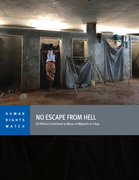
EU Policies Contribute to Abuse of Migrants in Libya
This report documents severe overcrowding, unsanitary conditions, malnutrition, and lack of adequate health care. Human Rights Watch found violent abuse by guards in four official detention centers in western Libya, including beatings and whippin
...
gs. Human Rights Watch witnessed large numbers of children, including newborns, detained in grossly unsuitable conditions in three out of the four detention centers. Almost 20 percent of those who reached Europe by sea from Libya in 2018 were children.
more

Communities can play a critical role in suicide prevention. Facilitating community engagement in suicide prevention is an important task. The toolkit is a step-by-step guide for communities to engage in suicide prevention activities and have ownership of the process and keep efforts sustained. It is
...
hoped that the pilot version will be used, after necessary adaptation, in many countries and contexts, so that the final product can be strengthened and become more effective and user-friendly.
more
This Review summarizes many of the persistent biological alterations associated with childhood maltreatment including changes in neuroendocrine and neurotransmitter systems and pro-inflammatory cytokines in addition to specific alterations in brain areas associated with mood regulation. Finally, I d
...
iscuss several candidate gene polymorphisms that interact with childhood maltreatment to modulate vulnerability to major depression and PTSD and epigenetic mechanisms thought to transduce environmental stressors into disease vulnerability.
Neuron Review, vol. 89, March 2, 2016 pp.892-909
more

Practice Parameter on Disaster Preparedness
Pfefferbaum, B., Shaw, J.A. & American Academy of Child and Adolescent Psychiatry (AACAP) Committee on Quality Issues (CQI)
American Academy of Child and Adolescent Psychiatry (AACAP)
(2013)
CC
AACAP OFFICIAL ACTION | This Practice Parameter identifies best approaches to the assessment and management of children and adolescents across all phases of a disaster. Delivered within a disaster system of care, many interventions are appropriate for implementation in the weeks and months after a d
...
isaster. These include psychological first aid, family outreach, psychoeducation, social support, screening, and anxiety reduction techniques. The clinician should assess and monitor risk and protective factors across all phases of a disaster. Schools are a natural site for conducting assessments and delivering services to children. Multimodal approaches using social support, psychoeducation, and cognitive behavioral techniques have the strongest evidence base. Psychopharmacologic interventions are not generally used but may be necessary as an adjunct to other interventions for children with severe reactions or coexisting psychiatric conditions
more

Early Childhood Matters is a journal about early childhood. It looks at specific issues regarding the development of young children, in particular from a psychosocial perspective. It is published twice per year by the Bernard van Leer Foundation.
On Page 54 of this issue the article titled: "Par
...
enting in times of war: supporting caregivers and children in crisis" can be found. In this article: Humanitarian interventions to support and guide parents and caregivers in times of war can mitigate the negative effects of violence and chaos on children and promote their resilience and development. This article highlights recent findings from the International Rescue Committee’s parenting programmes in Syria, underscoring the importance of such programmes not only in strengthening caregiving practices but also in addressing the psychological needs of parents.
more
This manual provides information and guidance for individuals concerned with the mental health needs of children who experience major disasters. This background, training, and experience will vary and may include health and mental health professionals, professional and paraprofessional social servic
...
e personnel, school and daycare personnel, clergy, volunteers, and parents.
more
The principle of “the best interest of the child” should guide decisions by politicians whenever
children are affected. This is one of the basic ideas in the UN Convention on the Rights
of the Child. Decision makers should assess the consequences for children before taking
action. Today, this
...
principle is not fully respected in European countries in relation to migrant
children.
more

The International Rescue Committee (IRC) and the United Nations Children’s Fund (UNICEF) have newly developed "Caring for Child Survivors of Sexual Abuse Guidelines" for health and psychosocial providers in humanitarian settings - “CCS Guidelines”. The CCS Guidelines are based on global resear
...
ch and evidence-based field practice, and bring a much-needed fresh and practical approach to helping child survivors, and their families, recover and heal from the oftentimes devastating impacts of sexual abuse. The guidelines walk the reader through the core knowledge, attitude and skill competencies required for service providers to effectively care for children and families affected by sexual abuse. In addition, the guidelines outline how to provide case management and basic psychosocial care for child survivors, as well as best practices for coordinating care.
more
The aim of this study is to research deeply on the post-traumatic stress disorder in sexually abused children. Proving the presence of forms of the disorder in children and the their treatment mode will be in the center of the study. The methods used to conduct this study will be a literature review
...
on the focused issue referring to reviews of articles which focus on the defined peer group. For the purpose we have selected only articles focusing on sexually abused children treated for post-traumatic stress disorder. The results of the study reveal that all forms of abuse could bring consequences on children, even more, posttraumatic stress is the language with which the victims communicate their sorrow in the most typical mode. Sexual abuse as one of the major forms of abuse, is among the most severe which cause irreversible consequences over a category of children. In conclusion we can assume that post-traumatic stress in sexually abused children might appear through the most severe forms of psychiatric and psychological symptoms and for the recovery and rehabilitation of the child in many cases the pharmacological treatment seems as the best choice for the child.
more

Background: Post-Traumatic Stress Disorder (PTSD) develops following some stressful events. There has been increasing recognition that children who have been exposed to traumatic events like child sexual abuse can develop post-traumatic stress disorder just like adults.
Objective: To determine prev
...
alence of PTSD in sexually abused children seen at the Gender Based Violence Recovery Centre at Kenyatta National Hospital.
Design: A cross sectional descriptive study.
Setting: Gender Based Violence Recovery Centre – Kenyatta National Hospital. Subjects One hundred and forty-nine (n = 149) sexually abused children were recruited in the study.
more

White Paper from the National Child Traumatic Stress Network Refugee Trauma Task Force

Around the world, approximately 1 in 45 children are on the move – nearly 50 million boys and girls that have migrated across borders or been forcibly displaced within their own countries.1 Climate-related events
and their impacts are already contributing significantly to these staggering numbers
...
,with 14.7 million people facing new internal displacement as a result of weather-related disasters in 2015 alone. The annual average
since 2008 is higher still, at 21.5 million, equivalent to almost 2,500 people being displaced every single day.2
more
