
Filter
2983
Text search:
inclusive
health
Featured
239
715
Language
2660
164
142
137
49
45
28
14
6
5
5
4
4
4
4
3
3
3
3
3
3
3
3
3
3
3
3
3
2
2
2
2
2
2
2
2
1
1
1
1
1
1
1
1
1
1
1
1
1
1
1
1
Document type
1459
611
372
199
191
54
53
26
8
4
3
1
1
Countries
180
85
77
76
70
59
58
57
55
49
48
48
47
44
40
39
39
37
35
33
33
30
28
28
28
27
25
25
22
22
19
19
18
17
17
16
16
16
16
15
15
15
13
13
13
12
12
12
11
11
11
10
10
10
10
9
8
8
8
8
8
7
7
7
7
7
6
6
6
5
5
5
5
4
4
4
3
3
3
3
3
3
3
3
3
3
3
2
2
2
2
2
2
2
2
2
2
2
2
2
2
2
1
1
1
1
1
1
1
1
1
1
1
1
1
1
1
1
1
1
1
1
Authors & Publishers
301
97
84
80
72
56
55
44
33
31
29
28
27
26
18
18
16
16
15
15
14
13
13
13
12
12
12
12
11
11
11
11
11
11
11
10
10
10
9
9
9
8
8
8
8
8
8
8
8
8
8
8
7
7
7
7
7
7
7
7
7
7
6
6
6
6
6
6
6
6
6
6
6
6
6
6
5
5
5
5
5
5
5
5
5
5
5
5
5
5
5
5
5
5
5
5
4
4
4
4
4
4
4
4
4
4
4
4
4
4
4
4
4
4
4
4
4
4
4
4
4
4
4
4
4
4
4
4
4
4
4
3
3
3
3
3
3
3
3
3
3
3
3
3
3
3
3
3
3
3
3
3
3
3
3
3
3
3
3
3
3
3
3
3
3
3
3
3
3
3
3
3
3
3
3
3
3
3
3
3
3
3
3
3
3
3
3
3
2
2
2
2
2
2
2
2
2
2
2
2
2
2
2
2
2
2
2
2
2
2
2
2
2
2
2
2
2
2
2
2
2
2
2
2
2
2
2
2
2
2
2
2
2
2
2
2
2
2
2
2
2
2
2
2
2
2
2
2
2
2
2
2
2
2
2
2
2
2
2
2
2
2
2
2
2
2
2
2
2
2
2
2
2
2
2
2
2
2
2
2
2
2
2
2
2
2
2
2
2
2
2
2
2
2
2
2
2
2
2
2
2
2
2
2
2
2
2
2
2
2
2
2
2
2
2
2
2
2
2
2
2
2
2
2
2
2
2
2
2
2
2
2
2
2
2
2
2
2
2
2
2
2
2
2
2
2
2
2
2
2
2
2
2
2
2
2
2
2
2
1
1
1
1
1
1
1
1
1
1
1
1
1
1
1
1
1
1
1
1
1
1
1
1
1
1
1
1
1
1
1
1
1
1
1
1
1
1
1
1
1
1
1
1
1
1
1
1
1
1
1
1
1
1
1
1
1
1
1
1
1
1
1
1
1
1
1
1
1
1
1
1
1
1
1
1
1
1
1
1
1
1
1
1
1
1
1
1
1
1
1
1
1
1
1
1
1
1
1
1
1
1
1
1
1
1
1
1
1
1
1
1
1
1
1
1
1
1
1
1
1
1
1
1
1
1
1
1
1
1
1
1
1
1
1
1
1
1
1
1
1
1
1
1
1
1
1
1
1
1
1
1
1
1
1
1
1
1
1
1
1
1
1
1
1
1
1
1
1
1
1
1
1
1
1
1
1
1
1
1
1
1
1
1
1
1
1
1
1
1
1
1
1
1
1
1
1
1
1
1
1
1
1
1
1
1
1
1
1
1
1
1
1
1
1
1
1
1
1
1
1
1
1
1
1
1
1
1
1
1
1
1
1
1
1
1
1
1
1
1
1
1
1
1
1
1
1
1
1
1
1
1
1
1
1
1
1
1
1
1
1
1
1
1
1
1
1
1
1
1
1
1
1
1
1
1
1
1
1
1
1
1
1
1
1
1
1
1
1
1
1
1
1
1
1
1
1
1
1
1
1
1
1
1
1
1
1
1
1
1
1
1
1
1
1
1
1
1
1
1
1
1
1
1
1
1
1
1
1
1
1
1
1
1
1
1
1
1
1
1
1
1
1
1
1
1
1
1
1
1
1
1
1
1
1
1
1
1
1
1
1
1
1
1
1
1
1
1
1
1
1
1
1
1
1
1
1
1
1
1
1
1
1
1
1
1
1
1
1
1
1
1
1
1
1
1
1
1
1
1
1
1
1
1
1
1
1
1
1
1
1
1
1
1
1
1
1
1
1
1
1
1
1
1
1
1
1
1
1
1
1
1
1
1
1
1
1
1
1
1
1
1
1
1
1
1
1
1
1
1
1
1
1
1
1
1
1
1
1
1
1
1
1
1
1
1
1
1
1
1
1
1
1
1
1
1
1
1
1
1
1
1
1
1
1
1
1
1
1
1
1
1
1
1
1
1
1
1
1
1
1
1
1
1
1
1
1
1
1
1
1
1
1
1
1
1
1
1
1
1
1
1
1
1
1
1
1
1
1
1
1
1
1
1
1
1
1
1
1
1
1
1
1
1
1
1
1
1
1
1
1
1
1
1
1
1
1
1
1
1
1
1
1
1
1
1
1
1
1
1
1
1
1
1
1
1
1
1
1
1
1
1
1
1
1
1
1
1
1
1
1
1
1
1
1
1
1
1
1
1
1
1
1
1
1
1
1
1
1
1
1
1
1
1
1
1
1
1
1
1
1
1
1
1
1
1
1
1
1
1
1
1
1
1
1
1
1
1
1
1
1
1
1
1
1
1
1
1
1
1
1
1
1
1
1
1
1
1
1
1
1
1
1
1
1
1
1
1
1
1
1
1
1
1
1
1
1
1
1
1
1
1
1
1
1
1
1
1
1
1
1
1
1
1
1
1
1
1
1
1
1
1
1
1
1
1
1
1
1
1
1
1
1
1
1
1
1
1
1
1
1
1
1
1
1
1
1
1
1
1
1
1
1
1
1
1
1
1
1
1
1
1
1
1
1
1
1
1
1
1
1
1
1
1
1
1
1
1
1
1
1
1
1
1
1
1
1
1
1
1
1
1
1
1
1
1
1
1
1
1
1
1
1
1
1
1
1
1
1
1
1
1
1
1
1
1
1
1
1
1
1
1
1
1
1
1
1
1
1
1
1
1
1
1
1
1
1
1
1
1
1
1
1
1
1
1
1
1
1
1
1
1
1
1
1
1
1
1
1
1
1
1
1
1
1
1
1
1
1
1
1
1
1
1
1
1
1
1
1
1
1
1
1
1
1
1
1
1
1
1
1
1
1
1
1
1
1
1
1
1
1
1
1
1
1
1
1
1
1
1
1
1
1
1
1
1
1
1
1
1
1
1
1
1
1
1
1
1
1
1
1
1
1
1
1
1
1
1
1
1
1
1
1
1
1
1
1
1
1
1
1
1
1
1
1
1
1
1
1
1
1
1
1
1
1
1
1
1
1
1
1
1
1
1
1
1
1
1
1
1
1
1
1
1
1
1
1
1
1
1
1
1
1
1
1
1
1
1
1
1
1
1
1
1
1
1
1
1
1
1
1
1
1
1
1
1
1
1
1
1
1
1
1
1
1
1
1
1
1
1
1
1
1
1
1
1
1
1
1
1
1
1
1
1
1
1
1
1
1
1
1
1
1
1
1
1
1
1
1
1
1
1
1
1
1
1
1
1
1
1
1
1
1
1
1
1
1
1
1
1
1
1
1
1
1
1
1
1
1
1
1
1
1
1
1
1
1
1
1
1
1
1
1
1
1
1
1
1
1
1
1
1
1
1
1
1
1
1
1
1
1
1
1
1
1
1
1
1
1
1
1
1
1
1
1
1
1
1
1
1
1
1
1
1
1
1
1
1
1
1
1
1
1
1
1
1
1
1
1
1
1
1
1
1
1
1
1
1
1
1
1
1
1
1
1
1
1
1
1
1
1
1
1
1
1
1
1
1
1
1
1
1
1
1
1
1
1
1
1
1
1
1
1
1
1
1
1
1
1
1
1
1
1
1
1
1
1
1
1
1
1
1
1
1
1
1
1
1
1
1
1
1
1
1
1
1
1
1
1
1
1
1
1
1
1
1
1
1
1
1
1
1
1
1
1
1
1
1
1
1
1
1
1
1
1
1
1
1
1
1
1
1
1
1
1
1
1
1
1
1
1
1
1
1
1
1
1
1
1
1
1
1
1
1
1
1
1
1
1
1
1
1
1
1
1
1
1
1
1
1
1
1
1
1
1
1
1
1
1
1
1
1
1
1
1
1
1
1
1
1
1
1
1
1
1
1
1
1
1
1
1
1
1
1
1
1
1
1
1
1
1
1
1
1
1
1
1
1
1
1
1
1
1
1
1
1
1
1
1
1
1
1
1
1
1
1
1
1
1
1
1
1
1
1
1
1
1
1
1
1
1
1
1
1
1
1
1
1
1
1
1
1
1
1
1
1
1
1
1
1
1
1
1
1
1
1
1
1
1
1
1
1
1
1
1
1
1
1
1
1
1
1
1
1
1
1
1
1
1
1
1
1
1
1
1
1
1
1
1
1
1
1
1
1
1
1
1
1
1
1
1
1
1
1
1
1
1
1
1
1
1
1
1
1
1
1
1
1
1
1
1
1
1
1
1
1
1
1
1
1
1
1
1
1
1
1
1
1
1
1
1
1
1
1
1
1
1
1
1
1
1
1
1
1
1
1
1
1
1
1
1
1
1
1
1
1
1
1
1
1
1
1
1
1
1
1
1
1
1
1
1
1
1
1
1
1
1
1
1
1
1
1
1
1
1
1
1
1
1
1
1
1
1
1
1
1
1
1
1
1
1
1
1
1
1
1
1
1
1
1
1
1
1
1
1
1
1
1
1
1
1
1
1
1
1
1
1
1
1
1
1
1
1
1
1
1
1
1
1
1
1
1
1
1
1
1
1
1
1
1
1
1
1
1
1
1
1
1
1
1
1
1
1
1
1
1
1
1
1
1
1
1
1
1
1
1
1
1
1
1
1
1
1
1
1
1
1
1
1
1
1
1
1
1
1
1
1
1
1
1
1
1
1
1
1
1
1
1
1
1
1
1
1
1
1
1
1
1
1
1
1
1
1
1
1
1
1
1
1
1
1
1
1
1
1
1
1
1
1
1
1
1
1
1
1
1
1
1
1
1
1
1
1
1
1
1
1
1
1
1
1
1
1
1
1
1
1
1
1
1
1
1
1
1
1
1
1
1
1
1
1
1
1
1
1
1
1
1
1
1
1
1
1
1
1
1
1
1
1
1
1
1
1
1
1
1
1
1
1
1
1
1
1
1
1
1
1
1
1
1
1
1
1
1
1
1
1
1
1
1
1
1
1
1
1
1
1
1
1
1
1
1
1
1
1
1
1
1
1
1
1
1
1
1
1
1
1
1
1
1
1
1
1
1
1
1
1
1
1
1
1
1
1
1
1
1
1
1
1
1
1
1
1
1
1
1
1
1
1
1
1
1
1
1
1
1
1
1
1
1
1
1
1
1
1
1
1
1
1
1
1
1
1
1
1
1
1
1
1
1
1
1
1
1
1
1
1
1
1
1
1
1
1
1
1
1
1
1
1
1
1
1
1
1
1
1
1
1
1
1
1
1
1
1
1
1
1
1
1
1
1
1
1
1
1
1
1
1
1
1
1
1
1
1
1
1
1
1
1
1
1
1
1
1
1
1
1
1
1
1
1
1
1
1
1
1
1
1
1
1
1
1
1
1
1
1
1
1
1
1
1
1
1
1
1
1
1
1
1
1
1
1
1
1
1
1
1
1
1
1
1
1
1
1
1
1
1
1
1
1
1
1
1
1
1
1
1
1
1
1
1
1
1
1
1
1
1
1
1
1
1
1
1
1
1
Publication Years
1167
1662
149
5
Category
1148
216
174
130
96
41
12
Toolboxes
428
335
200
176
121
108
89
80
68
68
59
53
51
50
49
36
33
30
24
19
13
11
9
7
7
2
1

The main objective of this guidance is to provide scientific advice on public health principles and considerations for infection and prevention control of COVID-19 in migrant and refugee reception and detention centres in the European Union and Euro
...
pean Economic Area (EU/EEA) and the United Kingdom (UK).
more

The COVID-19 pandemic has been a formative experience for all humanity and a health emergency of global proportions, presenting a huge challenge to national leaders, health systems, and citizens. Th
...
e findings of a new report by the OSCE Office for Democratic Institutions and Human Rights (ODIHR) shows that it has also been a test to our democracies and the respect for human rights to which countries across the OSCE committed many years ago.
more
In most contexts, the social stigma surrounding mental health issues exists because of cultural norms and a lack of understanding of mental health’s complexities and realities, resulting in isolat
...
ion, increased vulnerability, and lack of support for people with mental health problems.
This stigma has been exacerbated during COVID-19, as more people may need mental health or psycho-social support but cannot access it due to the cessation of in-person services and limited remote care option
more
UNICEF Annual Report 2017 - Burkina Faso
- Healthcare policy for children
- Food insecurity
- Community health strategy
- National child protection system
etc.
7 Febr. 2021
As COVID-19 continues to wreak havoc in countries – decimating people’s livelihoods, and leaving health systems struggling to provide healthcare and vaccines for the entire population - governments and donors should look to the Chu
...
rch as a partner. The essential Church networks, trusted and rooted in local communities, can reach the most vulnerable people and remote places where governments often struggle to reach. DR Congo is among several countries where the Catholic Church is the main provider of community health services, particularly in more remote areas.
more
To help trainers to create awareness,attitude and skills in waste handlers in day to day management of medical waste in health care settings.
In the region, it is estimated that there are over 650 million persons with disabilities. However, without accurate, timely and disaggregated data, countries are unable to develop effective policies and programmes, monitor the wellbeing of persons with disabilities and evaluate the equity and impact
...
of development efforts. This endangers country commitments to ‘leave no one behind’ and undermines their obligations to the Convention on the Rights of Persons with Disabilities.
This groundbreaking report demonstrates the importance of ensuring data is inclusive and provides recommendations for immediate action in order to improve the collection, analysis and reporting of disability data. We hope this report will be used as a tool for future advocacy and ultimately better data for all.
more

27 April 2022 Chronic land degradation: UN offers stark warnings and practical remedies in Global Land Outlook 2. GLO2 offers hundreds of examples from around the world that demonstrate the potential of land restoration.
The way land resources – soil, water and biodiversity – are currently mi
...
smanaged and misused threatens the health and continued survival of many species on Earth, including our own, warns a stark new report from the United Nations Convention to Combat Desertification (UNCCD).
It also points decision makers to hundreds of practical ways to effect local, national and regional land and ecosystem restoration.
more
Female genital mutilation is a harmful traditional practice that violates girls’ right to health
and overall well-being. Most research cites social acceptance, marriageability, community
belonging, proof of virginity, curbing promiscuity, hygien
...
e, and religion as motivations for the
practice. It is generally assumed that individual attitudes of parents and other family mem-
bers have an impact on decisions related to the cutting of girls, and that such attitudes are
influenced by social norms. The aim of this study is to understand how parental attitudes
towards the practice of female genital mutilation influence decision making related to the cut-
ting of girls.
more

National Disability Mainstreaming Strategy and Implementation Plan (NDMS&IP) 2018-2023
Department of Disability and elderly affairs
Ministry of Gender, Children, Disability and Social Welfare
(2019)
CC
The NDMS&IP focuses on mainstreaming disability to promote equitable access to services in the six thematic areas of health, education, livelihoods, empowerment, and social inclusion and cross-cutting issues.
The first part of the NDMS&IP outlines
...
incongruences between national and sectoral policies and pieces of legislation on one hand, and practice on the other and identifies key priority areas/themes of the strategy,
medium-term outcomes and strategies for each identified priority area/ theme. This process is largely informed by key findings and recommendations from a study on the Situation of Persons with Disabilities
in Malawi (CBMM/NAD, 2011). The study provides background descriptive information on existing national and sectoral policy and legal framework, level of access by children, adult women and males with disabilities to services in the areas of education, health, livelihoods and other social services as well as of participation by persons with disabilities through self-representation in development activities at various levels. A review of relevant documents at the international level further describes the disability situation in Malawi in the global context.
The second part of the NDMS&IP consists of the operational matrix, (Annex 1), a monitoring and evaluation framework (Annex 2) and budget estimates (Annex 3). This part outlines specific actions by various actors both in the public, private and civil society sectors to prioritise disability in their routine policy, programming, resource mobilisation and allocation, monitoring, evaluation and reporting routines. The action plan lays out priority sectors and concrete actions by setting out implementation schedules, defining targets, assigning responsibility to key duty bearers and rights holders for coordination, decision-making, monitoring and reporting, mobilisation and allocation and control of resources.
more
This Urban Flood Risk Handbook: Assessing Risk and Identifying Interventions is a roadmap for conducting an urban flood risk assessment in any city in the world. It includes practical guidance for a flood risk assessment project, covering the key hazard and risk modeling stages as well as the evalua
...
tion of different flood-mitigating infrastructure intervention options and management of the project. The Handbook has been developed based on lessons learned from implementing urban flood risk assessments around the world in a diversity of contexts. It is intended for a wide variety of practitioners: project managers, city officials, and anyone else interested in conducting a strategic study of a city's flood risk and developing potential solutions for it. We expect this Handbook tocontribute to the understanding of urban flood risk, make this specialized knowledge more accessible to a wider public, and support the process of building cities that are not only capable of withstanding floods but also provide safe, inclusive, and sustainable environments for all their residents.
more
Healthy Settings, a key component of Malawi’s Health Sector Strategic Plan (HSSP) 2011–2016, is the World Health Organization’s (WHO) holistic community-led approach to achieving
...
health improvement by addressing social determinants of health, an approach which is central to the current WHO framework on integrated people-centred health services. Healthy Settings projects by their construct have many different components which vary from one group and community to another depending on their priorities: from housing, hospital improvements and waste management to “softer” interventions like leadership skills training and health promotion. It can be challenging to find relevant indicators to monitor and assess the impact of such a complex holistic project, this paper explores if social capital data can provide useful impact assessment indicators at the start of such a project.
more
This report is from the National study on living conditions among people
with disabilities carried out in Nepal in 2014-2015. The study was carried
out as a household survey with two-stage stratified sampling, including a screening/listing procedure using the Washington Group on Disability
Statis
...
tics 6 questions, one Household questionnaire administered to
households with (Case HHs) and without disabled members (Control
HHs), one Individual Case questionnaire administered to individuals who were found to qualify as being disabled in the screening (Case
individuals), and an Individual Control questionnaire administered to
matched non-disabled individuals in the Control HHs (Control individuals). The study covers a range of indicators on level of living, such as socioeconomic indicators, economic activity, income, ownership and infrastructure, health (including reproductive health), access to health information, access to services, education, access to information, social participation, and exposure to discrimination and abuse (see all
questionnaires in Appendix).
more
Accessed: 27.04.2020
Leaving no one behind in the Covid-19 Pandemic: a call for urgent global action to include migrants & refugees in the Covid-19 response
People on the move, whether they are economic migrants or forcibly displaced persons such asylum seekers, refugees, and internally displa
...
ced persons (hereafter called migrants & refugees), should be explicitly included in the responses to the coronavirus disease 2019 pandemic. This global public health emergency brings into focus, and may exacerbate, the barriers to healthcare these populations face. Many migrant & refugee populations live in conditions where physical distancing and recommended hygiene measures are particularly challenging. The Covid-19 pandemic reveals the extent of marginalisation migrant & refugee populations face. From an enlightened self-interest perspective, the Covid-19 disease outbreak control measures will only be successful if all populations are included in the response. It is counter- productive to exclude migrant & refugee populations from the preparedness and response to the Covid-19 pandemic.
more

The objectives of the research presented in this report were to identify case studies of community-led HIV-related health and social inclusion service delivery organizations in eastern and southern Africa; describe the typologies of the services pro
...
vided; and identify evidence of their service delivery and contribution beyond HIV, including advancing universal health coverage.
more
Drugs and medical supplies are dispensed at the cutting edge level of the interface between the public health system and the people. Availability or lack of it brings either credit or discredit to the public
...
health system. The primary reason for holding stocks of medicines and medical supplies in a proper scientific manner is to ensure continuous and uninterrupted availability to prevent stock-outs, especially of critical items of supply while at the same time ensuring that stocks of medicines do not get expired. An efficient inventory management is a pre-requisite for optimal stock management. It enables the management of health facilities to know the current pattern of consumption of drug trends over a period of time and also variances. The environmental control of the drugs and other medical supplies play an important role to keep the products' efficacy intact. Some medicines and vaccines need special storage temperature, otherwise, there may be wastage. The quality of the medicines can be adversely affected by poor storage, transportation and distribution. Thus, maintaining proper storage condition for health commodities is vital for ensuring their quality. So, by this training, CDMU wants to educate different people dealing with medicines and equip them for the roles they have to perform efficiently so that the wastage does not take place or can be minimized.
more
Migrants in an irregular situation: access to healthcare in 10 European Union Member States
recommended
European Union Agency for Fundamental Rights
(2011)
CC2
This report explores the access to healthcare granted to irregular migrants in 10 EU Member States. It focuses on migrants who are present in an irregular situation, namely those who do not fulfil conditions for entry, stay or residence. Through interviews with a range of different sources including
...
public authorities at the national and local level, health professionals, non-governmental organisations (NGOs) providing helathcare and irregular migrants themselves, this report documents the legal, economic and practical obstacles that hinder migrants' access to healthcare.
For versions in French, Polish, German and Swedish check also http://fra.europa.eu/de/publication/2012/migranten-einer-irregulren-situation-zugang-zu-medizinischer-versorgung-zehn
more

A THESIS SUBMITTED IN PARTIAL FULFILMENT OF THE REQUIREMENTS FOR THE DEGREE OF MASTER IN PUBLIC HEALTH OF THE UNIVERSITY OF NAMIBIA
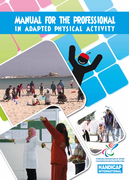
Manual for the professional in Adapted Physical Activity
Lucile Peynot; Thomas Chantereault and Ezzedine Bouzid
Handicap International; Tunesian Federation of sport for persons with disabilities
(2011)
C1
Detailed adapted physical activities are provided with practical guides, group sport guides and assessment tools in order to promote a more inclusive society through sports

The survey is representative of the Union Territory, its states and regions and urban and rural areas. It was conducted in all the districts and in 296 of the 330 townships of Myanmar. A total of 13,730 households were interviewed. It collects data on the occupations of people, how much income they
...
earn, and how they use this to meet the food, housing, health, education and other needs of their families. The main focus of the survey is to produce estimates of poverty and living conditions, to provide core data inputs into the System of National Accounts and the Consumer Price Index and to support monitoring of the Sustainable Development Goals.
more
