
Filter
2164
Text search:
Diagnostic
Testing
of
Children
Featured
281
578
Language
2087
50
35
27
12
12
9
8
3
2
2
2
2
2
1
1
1
1
1
1
1
1
1
1
1
1
1
1
Document type
1105
378
333
125
106
45
34
24
4
4
1
1
1
1
Countries
130
101
67
59
55
52
51
47
47
46
43
43
38
36
32
29
27
24
24
22
20
19
17
16
16
14
13
13
12
11
11
10
8
8
8
8
8
7
7
7
7
7
6
6
6
6
5
5
5
4
4
4
4
4
4
3
3
3
3
3
3
3
3
3
3
2
2
2
2
2
2
2
2
2
2
2
2
2
2
2
1
1
1
1
1
1
1
1
1
1
1
1
1
1
1
1
1
1
1
1
1
1
1
1
1
1
Authors & Publishers
386
130
63
60
49
41
36
36
34
25
24
21
17
14
13
13
12
11
11
11
11
10
9
9
9
9
9
8
8
8
8
8
8
8
7
7
7
7
6
6
6
6
6
6
6
6
5
5
5
5
5
5
5
5
5
5
5
5
5
5
5
5
5
5
5
4
4
4
4
4
4
4
4
4
4
4
4
4
4
4
4
4
4
4
4
4
4
4
4
4
3
3
3
3
3
3
3
3
3
3
3
3
3
3
3
3
3
3
3
3
3
3
3
3
3
3
3
3
3
3
3
3
3
3
3
3
3
3
3
3
3
3
3
3
2
2
2
2
2
2
2
2
2
2
2
2
2
2
2
2
2
2
2
2
2
2
2
2
2
2
2
2
2
2
2
2
2
2
2
2
2
2
2
2
2
2
2
2
2
2
2
2
2
2
2
2
2
2
2
2
2
2
2
2
2
2
2
2
2
2
2
2
2
2
2
2
2
2
2
2
2
2
2
2
2
2
2
2
2
2
2
2
2
2
2
2
2
2
2
2
2
2
2
2
2
2
2
2
2
2
2
2
2
2
2
2
2
2
2
2
2
2
2
2
2
2
2
2
2
2
2
2
1
1
1
1
1
1
1
1
1
1
1
1
1
1
1
1
1
1
1
1
1
1
1
1
1
1
1
1
1
1
1
1
1
1
1
1
1
1
1
1
1
1
1
1
1
1
1
1
1
1
1
1
1
1
1
1
1
1
1
1
1
1
1
1
1
1
1
1
1
1
1
1
1
1
1
1
1
1
1
1
1
1
1
1
1
1
1
1
1
1
1
1
1
1
1
1
1
1
1
1
1
1
1
1
1
1
1
1
1
1
1
1
1
1
1
1
1
1
1
1
1
1
1
1
1
1
1
1
1
1
1
1
1
1
1
1
1
1
1
1
1
1
1
1
1
1
1
1
1
1
1
1
1
1
1
1
1
1
1
1
1
1
1
1
1
1
1
1
1
1
1
1
1
1
1
1
1
1
1
1
1
1
1
1
1
1
1
1
1
1
1
1
1
1
1
1
1
1
1
1
1
1
1
1
1
1
1
1
1
1
1
1
1
1
1
1
1
1
1
1
1
1
1
1
1
1
1
1
1
1
1
1
1
1
1
1
1
1
1
1
1
1
1
1
1
1
1
1
1
1
1
1
1
1
1
1
1
1
1
1
1
1
1
1
1
1
1
1
1
1
1
1
1
1
1
1
1
1
1
1
1
1
1
1
1
1
1
1
1
1
1
1
1
1
1
1
1
1
1
1
1
1
1
1
1
1
1
1
1
1
1
1
1
1
1
1
1
1
1
1
1
1
1
1
1
1
1
1
1
1
1
1
1
1
1
1
1
1
1
1
1
1
1
1
1
1
1
1
1
1
1
1
1
1
1
1
1
1
1
1
1
1
1
1
1
1
1
1
1
1
1
1
1
1
1
1
1
1
1
1
1
1
1
1
1
1
1
1
1
1
1
1
1
1
1
1
1
1
1
1
1
1
1
1
1
1
1
1
1
1
1
1
1
1
1
1
1
1
1
1
1
1
1
1
1
1
1
1
1
1
1
1
1
1
1
1
1
1
1
1
1
1
1
1
1
1
1
1
1
1
1
1
1
1
1
1
1
1
1
1
1
1
1
1
1
1
1
1
1
1
1
1
1
1
1
1
1
1
1
1
1
1
1
1
1
1
1
1
1
1
1
1
1
1
1
1
1
1
1
1
1
1
1
1
1
1
1
1
1
1
1
1
1
1
1
1
1
1
1
1
1
1
1
1
1
1
1
1
1
1
1
1
1
1
1
1
1
1
1
1
1
1
1
1
1
1
1
1
1
1
1
1
1
1
1
1
1
1
1
1
1
1
1
1
1
1
1
1
1
1
1
1
1
1
1
1
1
1
1
1
1
1
1
1
1
1
1
1
1
1
1
1
1
1
1
1
1
1
1
1
1
1
1
1
1
1
1
1
1
1
1
1
1
1
1
1
1
1
1
1
1
1
1
1
1
1
1
1
1
1
1
1
1
1
1
1
1
1
1
1
1
1
1
1
1
1
1
1
1
1
1
1
1
1
1
1
1
1
1
1
1
1
1
1
1
1
1
1
1
1
1
1
1
1
1
1
1
1
1
1
1
1
1
1
1
1
1
1
1
1
1
1
1
1
1
1
1
1
1
1
1
1
1
1
1
1
1
1
1
1
1
1
1
1
1
1
1
1
1
1
1
1
1
1
1
1
1
1
1
1
1
1
1
1
1
1
1
1
1
1
1
1
1
1
1
1
1
1
1
1
1
1
1
1
1
1
1
1
1
1
1
1
1
1
1
1
1
1
1
1
1
1
1
1
1
1
1
1
1
1
1
1
1
1
1
1
1
1
1
1
1
1
1
1
1
1
1
1
1
1
1
1
1
1
1
1
1
1
1
1
1
1
1
1
1
1
1
1
1
1
1
1
1
1
1
1
1
1
1
1
1
1
1
1
1
1
1
1
1
1
1
1
1
1
1
1
1
1
1
1
1
1
1
1
1
1
1
1
1
1
1
1
1
1
1
1
1
1
1
1
1
1
1
1
1
1
1
1
1
1
1
1
1
1
1
1
1
1
1
1
1
1
1
1
1
1
1
1
1
1
1
1
1
1
1
1
1
1
1
1
1
1
1
1
1
1
1
1
1
1
1
1
1
1
1
1
1
1
1
1
1
1
1
1
1
1
1
1
1
1
1
1
1
1
1
1
1
1
1
1
1
1
1
1
1
1
1
1
1
1
1
1
1
1
1
1
1
1
1
1
1
1
1
1
1
1
1
1
1
1
1
1
1
1
1
1
1
1
1
1
1
1
1
1
1
1
1
1
1
1
1
1
1
1
1
1
1
1
1
1
1
1
1
1
1
1
1
1
1
1
1
1
1
1
1
1
1
1
1
1
1
1
1
1
1
1
1
1
1
1
1
1
1
1
1
1
1
1
1
1
1
1
1
1
1
1
1
1
1
1
1
1
1
1
1
1
1
1
1
1
1
1
1
1
1
1
1
1
1
1
1
1
1
1
1
1
1
1
1
1
1
1
1
1
1
1
1
1
1
1
1
1
1
1
1
1
1
1
1
1
1
1
1
1
1
1
1
1
1
1
1
1
1
1
1
1
1
1
1
1
1
1
1
1
1
1
1
1
1
1
1
1
1
1
1
1
1
1
1
1
1
1
1
1
1
1
1
1
1
1
1
1
1
1
1
1
1
1
1
1
1
1
1
1
1
1
1
1
1
1
1
1
1
1
1
1
1
1
1
1
1
1
1
1
1
1
1
1
1
1
1
1
1
1
1
1
1
1
1
1
1
1
1
1
1
1
1
1
1
1
1
1
1
1
1
1
1
1
1
1
1
1
1
1
1
1
1
1
1
1
1
1
1
1
1
1
1
1
1
1
1
1
1
1
1
1
1
1
1
1
1
1
1
1
1
1
1
1
1
1
1
1
1
1
1
1
1
1
1
1
1
1
1
1
1
1
1
1
1
1
1
1
1
1
1
1
1
1
1
1
1
1
1
1
1
1
1
1
1
1
1
1
1
1
1
1
1
1
1
1
1
1
1
1
1
1
1
1
1
1
1
1
1
1
1
1
1
1
1
1
1
1
1
1
1
1
1
1
1
1
1
1
1
1
1
1
1
1
1
1
1
1
1
1
1
1
1
1
1
1
1
1
1
1
1
1
1
1
1
1
1
1
1
1
1
1
1
1
1
1
1
1
1
1
1
1
1
1
1
1
1
1
1
1
1
1
1
1
1
1
1
1
1
1
1
1
1
1
1
1
1
1
1
1
1
1
1
1
1
1
1
1
1
1
1
1
1
1
1
1
1
1
1
1
1
1
Publication Years
680
1298
171
15
Category
891
255
117
86
53
31
31
1
Toolboxes
299
144
121
117
112
79
62
51
47
40
39
35
35
31
31
31
28
22
21
16
15
10
8
5
1
Latent Tuberculosis Infection : Updated and consolidated guidelines for programmatic management
recommended
The consolidated guidelines are expected to provide the basis and rationale for the development of national guidelines for LTBI management, adapted to the national and local epidemiology of TB, the
...
availability of resources, the health infrastructure and other national and local determinants. The guidelines are to be used primarily in national TB and HIV control programmes, or their equivalents in ministries of health, and for other policy-makers working on TB and HIV and infectious diseases. They are also appropriate for officials in other line ministries with work in the areas of health.
more

Due to high routine vaccination coverage, overall counts of diphtheria case have significantly declined in the Western Pacific Region recently. However, diphtheria is still prevalent in several countries and areas
...
of the Region and remains a public health issue due to its high case fatality rate.
This Field Guide for Preparedness and Response to Diphtheria Outbreaks in the Western Pacific Region is a reference resource for Member States to develop national guidelines adapted to their local context. Countries may also use this Guide to facilitate outbreak preparedness and public health responses to reduce morbidity and mortality due to diphtheria.
more

Global tuberculosis report 2025
recommended
The WHO Global tuberculosis report 2025 provides a comprehensive and up-to-date assessment of the TB epidemic and of progress in prevention, diagnosis and treatment
...
of the disease, at global, regional and country levels. This is done in the context of global TB commitments, strategies and targets.
The 2025 edition of the report is, as usual, based primarily on data gathered by WHO from national ministries of health in annual rounds of data collection. In 2025, 184 countries and areas with more than 99% of the world’s population and TB cases reported data.
more
This document is an evidence-based policy for the implementation of sound tuberculosis (TB) infection control by all stake- holders. It recommends a combination of measures aimed at reducing the ris
...
k of TB transmission within populations. The emphasis is on early and rapid diagnosis, and proper management of TB patients.
more
The WHO Cholera Vaccine Position Paper (August 2017) highlights the importance of oral cholera vaccines (OCVs) as a key tool in outbreak response and prevention, alongside water, sanitation, and hygiene (WASH) measures. It recommends OCVs for high-r
...
isk populations, endemic areas, and humanitarian crises, emphasizing their effectiveness in reducing cases and mortality. The paper discusses two types of OCVs (Dukoral®, Shanchol™, Euvichol®) and supports the WHO-managed vaccine stockpile for rapid deployment in cholera-prone regions.
more
As the Burundi refugee crisis enters its fourth year, some 430,000 Burundian refugees are being hosted across the region by the governments and people of Tanzania, Rwanda, the Democratic Republic of
...
the Congo, and Uganda. Although the spectre of mass violence in Burundi has receded, with the political situation still unresolved and the persistence of significant human rights concerns, refugee arrivals are expected to continue in 2018, albeit at lower levels than in previous years.
more

It provides insight into WHO’s work that aims to improve the health of the people of the United Republic of Tanzania in collaboration with key st
...
akeholders.
more
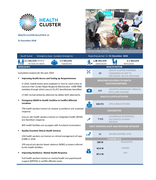
Emergency WASH in Health Facilities in Conflict Affected Locations 756 health workers trained on disease surveillance and outbreak response.
Around 142 health workers trained on integrated health (WASH and Nutrition) response. 405 health facilities are equipped with functional incinerators.
Qual
...
ity Essential Clinical Health Services 194 health workers are trained on clinical management of rape (CMR) in 2018. 259 sexual and gender based violence (SGBV) survivors referred to the health facilities.
Improving Resilience- Mental Health Response 514 health workers trained on mental health and psychosocial support (MPHSS) in conflict affected areas.
more
Securing the future from drug-resistant infections
Interagency Coordination Group on Antimicrobial Resistance IAGG
World Health Organisation WHO
(2019)
C_WHO
Antimicrobial resistance is a global crisis that threatens a century of progress in health and achievement of the Sustainable Development Goals. There is no time to wait. Unless the world acts urgen
...
tly, antimicrobial resistance will have disastrous impact within a generation.
more

1 June 2020
Countries around the world are facing the challenge of increased demand for care of people with COVID-19, compounded by fear, misinformation and limitations on movement that disrupt the
...
delivery of health care for all conditions. Maintaining essential health services: operational guidance for the COVID-19 context recommends practical actions that countries can take at national, subregional and local levels to reorganize and safely maintain access to high-quality, essential health services in the pandemic context. It also outlines sample indicators for monitoring essential health services, and describes considerations on when to stop and restart services as COVID-19 transmission recedes and surges. This document expands on the content of pillar 9 of the COVID-19 strategic preparedness and response plan, supersedes the earlier Operational guidance for maintaining essential health services during an outbreak, and complements the recently-released Community-based health care, including outreach and campaigns, in the context of the COVID-19 pandemic. It is intended for decision-makers and managers at the national and subnational levels.
This is an update to COVID-19: Operational guidance for maintaining essential health services during an outbreak: Interim guidance, 25 March 2020
more
There is no secret to our procedure: the daily scanning of the literature helps us to stay afloat in the never-ending waves of new publications about SARS-CoV-2 and COVID-19. Many papers discussed i
...
n the Top 10 will eventually make it into subsequent editions of COVID Reference.
more

The Global Strategy for Tuberculosis Research and Innovation will support the efforts of governments and other stakeholders to accelerate TB research and innovation, and improve equitable access to the benefits
...
of research.
Availabl in Arabic, Chinese, English, French, Spanish and Russian
more

There is a broad consensus nowadays that the Earth is warming up as a result of greenhouse gas emissions caused by anthropogenic activities. It is also clear that current trends in the fields of ene
...
rgy, development and population growth will lead to continuous and ever more dramatic climate change. This is bound to affect the fundamental prerequisites for maintaining good health: clean air and water, sufficient food and adequate housing. The planet will warm up gradually, but the consequences of the extreme weather conditions such as frequent
storms, floods, droughts and heat-waves will have sudden onset and acute repercussions. It is widely accepted that climate change will have an impact on the spread of infectious diseases in Europe, which is likely to bring about new public health risks in the majority of cases. Transmission of infectious diseases depends on a number of factors, including climate and environmental elements. Foodborne and waterborne diseases, for instance, are associated with high temperatures. Disease-transmitting vectors (e.g. mosquitoes, sandflies and ticks) are highly sensitive to climate conditions, including temperature and humidity; their geographical distribution will widen as climate conditions change, potentially allowing them to spread into regions where they are not currently able to live.
The primary purpose of this manual on climate change and infectious diseases is to raise the awareness and the level of knowledge of health workers at national, regional and local levels in the former Yugoslav Republic of Macedonia on the health risks associated with climate change and infectious diseases. This manual was devel-
oped as part of the WHO Regional Office for Europe project, Protecting health from climate change: a seven–country initiative, implemented with financial support from the German Federal Ministry for the Environment, Nature Conservation and Nuclear Safety.
more

This Commission report aims to contribute to a new era of multilateral cooperation based on strong UN institutions to reduce the dangers of COVID-19, forestall the next pandemic, and enable the worl
...
d to achieve the agreed goals of sustainable development, human rights, and peace that governments are committed to pursue as members of the UN. We address this Commission report to the UN member states, the UN agencies and multilateral institutions, and multilateral processes such as the G20 and the G7.
more

This report compiles data for the first time on the far-reaching consequences of uncontrolled hypertension, including heart attacks, strokes and premature death, along with substantial economic losses for communities and countries. It also contains
...
information on the global, regional and country-level burden of hypertension and progress of control efforts.
more

Previous advocacy efforts have achieved tangible goals in terms garnering political commitments
to increase financing for TB—as seen at the 2018 UN High-Level Meeting on TB. The challenge
now is to ensure that these commitments are actually met within a global biomedical research
ecosystem that
...
is designed and incentivized to prioritize the health needs of wealthy populations
more
Ethiopia has been repeatedly affected by conflict, flooding, drought, and disease outbreaks in the past years. As of January 2024, the country is actively responding to the longest recorded cholera outbreak which started in August 2022, recurrent me
...
asles outbreaks which started in August 2021, and the highest number of malaria cases reported since 2017. The El Niño phenomenon is expected to cause further havoc up to July 2024, by causing drought in some parts of the country, and flooding in others. Food insecurity due to lost harvest and livestock is aggravating already high malnutrition rates, negatively impacting morbidity and mortality.
The Health Cluster is closely collaborating with the Ministry of Health (MOH) to prepare for, prevent, and respond to public health emergencies by mobilizing resources to enable health partners to provide life-saving health services to vulnerable populations.
In an environment with ever-increasing needs and decreased funding, the below priorities for 2024 and 2025 have been identified: 1 Strengthen advocacy for longer-term, development funding to address root causes of recurrent disease outbreaks, including through the Humanitarian-Development-Peace Nexus 2 Advocate for increased access to quality health services, with a strong focus on:
sexual and reproductive health services (including for survivors of sexual and gender-based violence)
inclusion of people with disabilities, older people, and people living with HIV
remote populations through inclusion of Mobile Health Teams (MHT) as part of the health system 3 Standardize health services provided by Health Cluster partners through the implementation of Essential Health Care packages, aligned with existing MOH guidance, aimed at ensuring quality service delivery for affected populations, especially at community level 4 Strengthen quality of, and access to data for needs analysis and informed decision-making 5 Strengthen subnational coordination, with increased focus on zones and local health partners
more

Addressing comorbidities and risk factors for tuberculosis (TB) is a crucial component of the World Health Organization (WHO)’s End TB Strategy. This WHO operational handbook on tuberculosis. Module 6: tuberculosis and comorbidities aims to suppor
...
t countries in scaling up people-centred care, based on the latest WHO recommendations on TB and key comorbidities, and drawing upon additional evidence, best practices and inputs from various experts and stakeholders obtained during WHO processes. It is intended for use by people working in ministries of health, particularly TB programmes and the relevant departments or programmes responsible for comorbidities and health-related risk factors for TB such as HIV, diabetes, undernutrition, substance use, and tobacco use, as well as programmes addressing mental health and lung health. This operational handbook is a living document and will include a separate section for each of the key TB comorbidities or health-related risk factors. The third edition includes guidance for HIV-associated TB, mental health conditions and diabetes, which are three conditions strongly associated with TB and which result in higher mortality, poorer TB treatment outcomes and negatively impact health-related quality of life. The operational handbook aims to facilitate early detection, proper assessment and adequate management of people affected by TB and comorbidities. Full implementation of this guidance is expected to have a significant impact on TB treatment outcomes and health-related quality of life for people affected by TB.
more

World malaria report 2024
recommended
New data from the WHO reveal that an estimated 2.2 billion cases of malaria and 12.7 million deaths have been averted since 2000, but the disease remains a serious global health threat, particularly in the WHO African Region. According to WHO’s la
...
test World malaria report, there were an estimated 263 million cases and 597 000 malaria deaths worldwide in 2023. This represents about 11 million more cases in 2023 compared to 2022, and nearly the same number of deaths. Approximately 95% of the deaths occurred in the WHO African Region, where many at risk still lack access to the services they need to prevent, detect and treat the disease.
more
During the reporting period, significant progress was made in strengthening the mpox response across the continent. The lessons learned and challenges identified during the joint mpox continental intra-action review (IAR), which took place successfully in December 2024 in Addis Ababa have guided the
...
development of the action plan for the response to the mpox epidemic in January and February 2025.
more
