
Filter
1831
Text search:
Bangladesh
Featured
169
532
Language
Document type
995
392
204
92
46
32
29
14
11
6
6
2
1
Countries
287
135
111
56
55
42
27
25
21
20
19
16
16
15
15
13
12
12
12
11
11
11
11
10
9
9
8
8
8
8
8
8
8
7
7
7
7
6
6
6
6
6
6
6
5
5
4
4
4
4
4
4
4
3
3
3
3
3
3
3
3
2
2
2
2
2
2
2
2
2
2
1
1
1
1
1
1
1
1
1
1
1
1
1
1
1
1
1
1
1
1
1
1
1
1
1
1
1
1
1
Authors & Publishers
Publication Years
Category
550
178
176
146
114
53
15
Toolboxes
139
136
117
109
106
72
59
59
48
40
36
34
32
32
30
24
24
23
21
20
11
9
8
5
3
2
BMJ Global Health, Vol.5 No. 12Spatial subdivision of the camp (‘sectoring’) was able to ‘flatten the curve’, reducing peak infection by up to 70% and delaying peak infection by up to several months. The use of face masks coupled with the efficient isolation of infected individuals reduced t
...

In Control. A Practical Handbook for Professionals Working in Health Emergencies Internationally
recommended
In Control imparts knowledge, provokes reflection and triggers curiosity. The first half of the book provides an overview of the organisations, principles, frameworks and themes that every professional deploying to health emergencies should be aware of. The second half of the book provides practical
...

English Analysis on World about Disaster Management and Protection and Human Rights; published on 12 Jan 2021 by IFRC

This paper reviews the effects of vertical responses to COVID-19 on health systems, services, and people’s access to and use of them in LMICs, where historic and ongoing under-investments heighten vulnerability to a multiplicity of health threats. We use the term ‘vertical response’ to describ
...
It will be updated continuously.
Details of COVID-19 availability in all ten ASEAN countries and another 30 Asian nations.
Due to the developing situation in China and Asia concerning the Coronavirus, we will be operating this article as a running live update service to keep businesses involved in
...
COVID-19 has heavily emphasized how contact tracing is crucial for managing outbreaks, and as part of the strategy for adjusting, and eventually lifting, lockdowns and other stringent public health and social measures. As the pandemic develops further, it will be a core measure to manage further wav
...

Developing countries face disastrous healthcare setbacks, hunger and huge international debt as covid-19’s ‘final wave’

Oxfam’s report found that Covid-19 has the potential to increase economic inequality in almost every country at once, the first time this has happened since records began over a century ago. It sets out how a rigged economy is enabling a super-rich elite to amass wealth in the middle of the worst
...
Meeting Report 27-29 October 2020
The overall goal of the meeting was to discuss recent changes in treatment regimens and diagnostics for drug-resistant TB and to determine how these impact on the definition of XDR-TB, with a view to revising this definition. The pre-existing definition of XDR-TB w
...


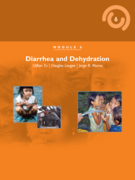
Poor sanitary conditions in disaster-stricken areas result in higher risk for diarrheal illness in vulnerable populations, especially children. This disease negatively impacts the nutritional status of affected children and causes significant morbidity and mortality. Early di
...

This Guidance Document provides practical assistance to Country Offices scaling up programmes to manage SAM in young children. It outlines a step-by-step process through which countries can analyse their current situation, identify barriers and bottlenecks through the MoRES approach, and plan action
...
Ce guide sur la tuberculose résistante est un outil pratique destiné à aider les agents de santé à prendre en charge le malade du point de vue clinique et opérationnel en mettant l’accent sur la décision thérapeutique, la mise en œuvre et le suivi du régime court de 9 mois pour le traite
...

31 Janaury 2021
SCORE for health data technical package. The first global assessment on the status and capacity of health information systems in 133 countries, covering 87% of the global population.
It identifies gaps and provides guidance for investment in areas that can have the greatest impact
...

In its report from 2014, the Working Group outlines the various factors influencing vaccine acceptance or refusal, and what can be done to create social norms around vaccine acceptance and to encourage the general public regarding the necessity of vaccination.
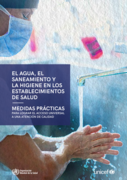

According to WHO, around 22% of adults in conflict settings have mental health conditions.
This is almost triple to non-conflict settings. There is no generally accepted estimate for children but it is clear that children who are refugees, IDPs or who live in conflict settings have high levels of m
...
El Manuel Esfera
recommended
J of Pharm Policy and Pract 14, 27 (2021). https://doi.org/10.1186/s40545-021-00309-8
