
Filter
1599
Text search:
radio
programme
Featured
140
516
Language
Document type
965
212
160
96
85
33
25
15
2
2
2
1
Countries
65
62
53
52
50
49
47
42
41
40
39
37
32
29
29
27
27
26
25
25
24
21
21
19
19
18
17
16
16
13
12
11
11
11
11
10
10
9
9
8
8
8
8
8
7
7
7
6
5
5
5
4
4
4
4
4
4
3
3
3
3
3
3
3
3
2
2
2
2
2
2
2
2
2
1
1
1
1
1
1
1
1
1
1
1
1
1
1
1
1
1
1
1
1
1
1
1
1
1
1
1
1
1
1
Authors & Publishers
Publication Years
Category
831
118
71
58
54
19
1
Toolboxes
152
103
85
77
63
42
38
35
35
28
26
24
24
23
23
22
16
13
12
12
11
10
10
5
3
2
1
PLOSONE| https://doi.org/10.1371/journal.pone.0204882October17,2018
This report reviews the latest evidence on what works to reduce HIV-related stigma and discrimination through key programmes to reduce stigma and discrimination and increase access to justice in the six settings of focus for the Global Partnership. It includes guidance for national governments and k
...

COVID-19: Travel, Points of Entry and Border Health
Plusieurs membres du réseau CDAC (Communicating with Disaster Affected Communities, Communication avec les communautés sinistrées) ont reconnu le besoin de gérer les rumeurs durant leurs missions afin de prévenir la perte de vies et d’alléger les souffrances. En particulier, Internews avec l
...

Sudan recorded the first COVID-19 case on 13 March 2020 and, at the beginning of July, the Federal Ministry of Health had confirmed that nearly 10,000 people had contracted the virus, including over 600 who died from the disease across the country. Although more than 70 per cent of the confirmed cas
...

Across Zimbabwe, 7 million people in urban and rural areas are in urgent need of humanitarian assistance, compared to 5.5 million in August 2019. Since the launch of the Revised Humanitarian Appeal in August 2019, circumstances for millions of Zimbabweans have worsened. Drought and crop failure, exa
...

The Government of Republic of Zambia reported the first confirmed cases of COVID-19 on 18th March 2020. As of April 27th, 2020, there were 89 confirmed cases, three deaths and 42 recoveries. Confirmed cases are located in three provinces: Lusaka (83 cases), Copperbelt province (5 cases) and Central
...
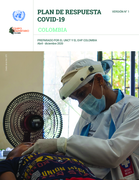
Este plan está basado en las demandas y necesidades del Gobierno de Colombia al Sistema de las Naciones Unidas (SNU), bajo el liderazgo de la Oficina de la Coordinadora Residente, para complementar los esfuerzos nacionales de la respuesta a la COVID-19. Asimismo, se encuentra alineado con los princ
...

Visite au sein des Fondations Ad Lucem et Promhandicam
3ieme edition. Vol.1:
Ce guide rassemble des documents existants liés à la santé mentale et au soutien psychosocial (MHPSS) relatifs à la crise du COVID-19, ainsi que d'autres ressources applicables au contexte. Il est divisé en différentes sections en fonction des « espaces de nouvelle vulnérabilité » inhéren
...

According to the Report, cascading and interlinked crises are putting the 2030 Agenda for Sustainable Development in grave danger, along with humanity’s very own survival. The Report highlights the severity and magnitude of the challenges before us. The confluence of crises, dominated by COVID-19,
...
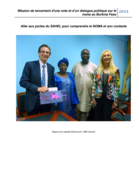
Cette mission menée conjointement par la représentante du Ministère de la Santé en charge du projet, la
responsable EVIPNet de l’OMS à Genève et le directeur de la fondation Winds of Hope visait à établir le lien entre
le Ministère de la Santé et les différentes parties prenantes du B
...

Ethiopia saw a six-fold increase in confirmed COVID-19 cases between June and August, with 5,689 cases by end June compared to 34,058 cases as of 19 August. Ethiopia also registered more than 13,000 recoveries and more than 600 deaths. As of the last week of August, Ethiopia was leading eastern Afri
...

In India, in response to the above and guided by our counterparts in the government of India, the UN agencies have developed the Novel Coronavirus Disease Joint Health Response Plan by UN Agencies and Partners, led by WHO-India, in close collaboration with the Ministry of Health and Family Welfare,
...
Mozambique registered its first COVID-19 case on 22 March 2020 and since then numbers have steadily grown over the following three months with cases now reported in all provinces. In response, a level 3 State of emergency was enacted on 1 April 2020 and has been extended until 29 July 2020, with mea
...
Au cours des derniers mois, la situation sécuritaire et humanitaire s'est rapidement détériorée dans les régions du Nord, du CentreNord, du Sahel, de la Boucle du Mouhoun et de l’Est du Burkina Faso. Cette dégradation a entraîné un accroissement substantiel des déplacements internes et ag
...
Le Plan de réponse humanitaire (PRH) 2020 a été révisé et publié en mai 2020 afin d’intégrer l’impact de l’épidémie de COVID-19 sur les besoins humanitaires existants et sur les activités des partenaires humanitaires.
Dans le contexte de l’épidémie de COVID-19, la portée de lâ€
...
Le Burkina Faso est un pays sahélien sans littoral d’une superficie de 274 000 km2 et une
population estimée à 17,4 millions d’habitants en 2013 avec une croissance démographique de
3,1%. C’est l’un des pays les plus pauvres du monde avec un Produit intérieur brut par tête de
684 US
...
