
Filter
938
Text search:
fertility
change
Featured
54
345
Language
Document type
666
136
60
30
24
8
7
2
2
1
1
1
Countries
63
44
44
43
41
36
34
34
32
30
30
28
27
26
25
17
16
14
13
12
12
11
9
9
9
8
7
7
6
6
5
5
4
3
3
3
3
3
3
2
2
2
2
2
2
2
2
2
2
2
2
1
1
1
1
1
1
1
1
1
1
1
1
1
1
1
1
1
1
1
1
1
1
Authors & Publishers
Publication Years
Category
606
89
48
29
23
17
Toolboxes
45
28
24
21
21
17
13
12
12
9
8
7
7
6
6
5
5
4
3
1
1
1
1
1
1
1

To understand the patterns of Rwanda’s achievements in health development, it is important to explore how Rwanda addresses the Social Determinants of Health (SDH) particularly those related to routine conditions in which people are born, live and work. It is in this particular context that a case
...
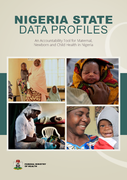
Nigeria is Africa’s most populous nation and accounts for nearly one quarter of the continent’s maternal, newborn and child deaths. In the spirit of the global Countdown to 2015 for Maternal, Newborn and Child Health and the Nigerian Saving One Million Lives Initiative, these state data profiles
...
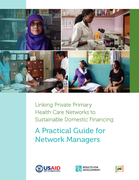
The guide helps network managers and technical experts navigate the steps necessary for gathering, structuring, analyzing and reporting information needed to make strategic plans that improve sustainability and equity.


Lancet Neurol. 2019 Apr;18(4):357-375. doi: 10.1016/S1474-4422(18)30454-X. Epub 2019 Feb 14.

This 10th edition of the Institute for Health Metrics and Evaluation’s annual Financing Global Health report provides the most up-to-date estimates of development assistance for health, domestic spending on health, health spending on two key infectious diseases – malaria and HIV/AIDS – and fut
...
The world’s population is projected to grow from 7.7 billion in 2019 to 8.5 billion in 2030 (10% increase), and further to 9.7 billion in 2050 (26%) and to 10.9 billion in 2100 (42%). The population of sub-Saharan Africa is projected to double by 2050 (99%). Other region
...

Malnutrition in childhood and pregnancy has many adverse consequences for child survival and long-term well-being. It
also has far-reaching consequences for human capital, economic productivity, and national development overall. The
consequences of malnutrition should be a significant concern for
...


Country Strategic Plan Evaluations (CSPEs) encompass the WFP strategy and entirety of WFP activities during a specific period. Their purpose is twofold: 1) to provide evaluation evidence and learning on WFP's performance for country-level strategic decisions, specifically for developing the next Cou
...
Data Collection: Recommended Surgical and Anaesthesia Care Indicators
By almost any measure, human health is better now than at any time in history. Life expectancy has soared from 47 years in 1950–1955, to 69 years in 2005–2010, and death rates in children younger than 5 years of age have decreased substantially, from 214 per thousand live births in 1950–1955,
...
The CAP is instrumental in managing the transition towards a sustainable food system and in strengthening the efforts of European farmers to contribute to the EU’s climate objectives and to protect the environment. Eco-schemes are a new instrument in the CAP to support this transition.

This booklet presents key messages for action, summarized from a set of
chapters on different environmental health issues.
Constraints, Technologies, Policies and Processes
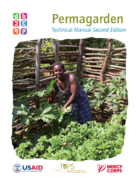
2nd edition. This Permagarden Technical Manual is a resource for agriculture project staff implementing home garden projects with farmers. The manual explains how the permagarden method addresses soil health, water management and crop protection to create a year-round productive home garden. It incl
...

The Department of Health (DOH) has developed a National Integrated Sexual and Reproductive Health and Rights (SRHR) Policy.1 This policy addresses the many cross-cutting issues relating to SRH service provision, drawing together the principles, rights, and guidance for planning and implementation th
...
