
Filter
1249
Text search:
drug
utilization
Featured
112
493
Language
Document type
790
190
144
51
40
12
9
8
3
1
Countries
121
69
65
62
48
43
34
34
33
32
32
28
27
27
24
19
16
16
16
14
12
12
12
11
11
10
10
10
8
6
6
6
5
5
5
5
5
4
4
4
4
4
3
3
3
3
3
2
2
2
2
2
2
1
1
1
1
1
1
1
1
1
1
1
1
1
1
1
1
1
1
1
1
1
1
1
1
Authors & Publishers
Publication Years
Category
753
65
64
37
29
12
8
Toolboxes
83
77
71
47
43
41
30
20
18
17
14
14
12
10
9
8
8
6
5
4
3
3
3
1

Value in Health Regional Issues 4 C (2014) 37-40



National Tuberculosis and Leprosy Conrol Programme


Review Article: Journal of Nutritional Health & Food Science
Vitamin Deficiency and Tuberculosis: Need for Urgent Clinical Page 1- 6
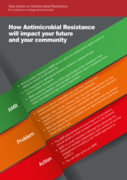
Take Action on Antimicrobial Resistance.For students in college and university
This is a booklet that is suitable for readers with a developed intellect. It is well summarized in a way that captures the most important facts to remember and actions to take against AMR.
Reporting Period 2010-2011

An Independent Report
of the West Africa Commission on Drugs

Formularies are lists of antibiotics that are suggested for certain healthcare settings. In developing a recommended formulary, countries should consider the needs of patients and facilities where they receive care. For example, clinicians in rural or primary health centers may need wide access to f
...

JIMSA Jan.-March 2015 Vol. 28 no.1 p.47-50e

The WHO Global Burden of Disease (GBD) study measures the burden of
disease using the disability-adjusted life year metric (DALY). The DALY metric
was developed to assess the burden of disease consistently across diseases,
risk factors and regions. A consistent and comparative description of the
...

In aquaculture, antibiotics have been used mainly for therapeutic purposes and as prophylactic agents. The contribution to antimicrobial resistance of antibiotics used in aquaculture is reviewed here, using a risk analysis framework. Some recommendations on responsible conduct in this context are pr
...
Stenotrophomonas maltophiliais a nonfermenting Gram-negative rod that is ubiquitous in nature (predominantly occurring in aquatic environments and on plants). Biochemically, it iscatalase positive and oxidase negative, and it produces acid frommaltose (hence the name“maltophilia”). Due to it
...
