
Filter
1458
Text search:
besoins
Featured
124
322
Language
Document type
692
238
229
107
70
45
42
11
9
9
3
1
Countries
144
135
91
77
61
44
43
39
35
31
30
27
22
20
20
17
14
10
9
8
6
6
6
4
3
3
3
3
3
3
3
3
3
2
2
2
2
2
2
2
2
2
1
1
1
1
1
1
1
1
1
1
1
1
1
1
1
1
Authors & Publishers
Publication Years
Category
600
162
93
85
48
29
17
Toolboxes
147
89
74
64
60
46
37
34
33
28
27
26
25
23
17
17
15
14
9
6
5
5
4
2
1
1
The number of new Ebola infections in Sierra Leone is declining, despite the outbreak continuing to claim lives. New cases have dropped to around 9-12 per week, according to recent WHO figures. There were over 500 cases per week at the height of the crisis around late November 2014.
The impact on t
...

The NACS User’s Guide is a series of modules that provide program managers and implementers with a package of essential information and resources. These modules are living documents and will be updated as appropriate when new evidence, guidelines, or field experience emerges. Additional modules ar
...
This manual has been developed to guide rapid risk assessment of acute public health risks from any type of hazard in response to requests from Member States of the World Health Organization (WHO). The manual is aimed primarily at national departments with health-protection responsibilities, Nationa
...
The Multi-Cluster/Sector Initial Rapid Assessment (MIRA) is a joint needs assessment tool that can be used in sudden onset emergencies, including IASC System-Wide Level 3 Emergency Responses (L3 Responses).

The Health Equity Assessment Toolkit (HEAT) is a software application for use on desktop or laptop computers and mobile devices (minimum screen size of 7.9 inches recommended). It was developed to facilitate the assessment of within-country health inequalities. The Built-in Database Edition, Version
...
The purpose of this field guide is to provide field staff with simple direction for the planning, design and conducting of participatory assessment. The document provides basic tips to help teams to better structure the identification of data sources, conducting focus groups, reporting of outcomes a
...
Rapid Assessment Guide for Psychosocial Support and Violence Prevention in Emergencies and Recovery
recommended
This guide provides standards and directions on how to carry out rapid needs assessment for Psychosocial Support (PSS) and Violence Prevention (VP) initiatives including child protection and sexual and gender-based violence. In particular, this rapid assessment tool is designed to help gather data i
...
Version 2 (unedited). The Basic Needs Analysis (BNA) is a multi-sector needs analysis approach that can be applied in both sudden onset and protracted emergencies. The methodology comprises the Guidance (this document) presenting the conceptual BNA framework and related processes, and a Toolbox, whi
...
The Facilitator’s Guide for the basic-needs based Response Options Analysis and Planning (ROAP) is a step-by-step guide comprising tools and templates to carry out a multi-sectoral response analysis and planning of response options, in a sudden-onset or chronic crisis.
Being that so, the Guide i
...
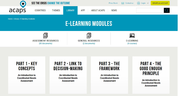
An introduction to Coordinated Needs Assessment in 6 parts:
Part 1: Key concepts
Part 2: Link to Decision-making
Part 3: The Framework
Part 4: The Good Enough Principle
Part 5: The assessment cycle
Part 6: Basic Principles
Much remains unknown about displaced communities in out-of-camp areas as identification constraints hinder knowledge on the overall situation and preeminent needs of an area. When compared to regularly monitored in-camp populations, less is known about the health, sanitation, livelihoods, food secur
...
The compendium compiles practical case studies on the use of Geospatial Artificial Intelligence (GeoAI) to enhance disaster risk reduction and emergency response across diverse geographic and institutional contexts.
The compendium features selected case studies submitted by twenty-seven Regional Su
...
WHO subsequently developed a standardized methodology for risk assessments, based on the Rapid Risk Assessment of Acute Public Health Events manual. To attain the highest possible level of objectivity, accuracy and reproducibility, the standardized RRA approach is applied by those conducting public
...
The Feedback Starter-Kit responds to key questions ( ) and provides the most important tips ( ) for setting up and running a simple feedback mechanism. At the end of this document there is an overview of the templates needed to plan the mechanism and collect, answer, analyse and share community feed
...
Combined questionnaire Core

These pages contain links to critical guidelines, technical documents, tools and resources needed to investigate and respond to outbreaks.

El documento presenta un marco estratégico de la Organización Mundial de la Salud para la gestión de riesgos relacionados con emergencias y desastres en el sector de la salud. Destaca que estos eventos (como epidemias, desastres naturales o conflictos) tienen un impacto significativo en la salud,
...
