Filter
329
Text search:
Davies,
T.
Featured
26
43
Language
Document type
146
98
52
13
9
4
4
2
1
Countries / Regions
18
9
8
8
7
6
5
5
4
4
3
3
3
2
2
2
2
2
2
2
2
2
2
1
1
1
1
1
1
1
1
1
1
1
1
1
1
1
1
1
1
1
1
1
1
1
1
Authors & Publishers
Publication Years
Category
54
32
29
12
9
3
1
Toolboxes
48
40
27
26
24
21
18
15
15
13
9
7
4
4
3
2
2
2
1
1
1
1
Learning from earthquake relief and recovery operations
Special issue: WHO South-East Asia Journal of Public Health -Vol. 5, Issue 1, April 2016.This special This issue contains a rich collection of articles, demonstrating the encouraging scientific momentum to address the growing burden of diabetes in the region

Report of a World Health Organization and International Diabetes Federation meeting
This manual is for the beginner/intermediate and advanced EHA courses run by Channel Research on behalf of ALNAP. It is supported by a course specific set of case studies and exercises and by a bibliography of evaluation references
A toolkit for behavioural and social communication in outbreak response


With this World Health Day, WHO is drawing attention to a group of diseases that are spread by insects and other vectors, the heavy health and economic burdens they impose, and what needs to be done to reduce these burdens. Many of these diseases have been historically confined to distinct geographi
...
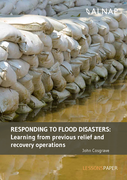
This paper presents lessons learned from previous flood responses in developing countries, based on a structured review of the literature. It is intended for people working in relief and recovery operations who have to decide if, when and how to intervene after a flood.

Disaster Recovery Toolkit

Disaster Recovery Toolkit
Disaster Recovery Toolkit

Disaster Recovery Toolkit
This paper has been commissioned by RedR to identify gaps in skills, technology, and knowledge in urban humanitarian response in order to inform RedR’s project Ready to Respond which is looking to address these gaps in two specific areas:
Water supply, sanitation, and hygiene; Shelter res
...

To better adapt current case management practices and address excess mortality in otherwise treatable
cases will require better knowledge of the demographic characteristics of the patients and comorbidities
which can make severe dehydration harder to tolerate physiologically. With this in mind, a
...
Article published in: Journal of Intensive Care (2015) 3:16