
Filter
3833
Text search:
people
living
with
HIV
Featured
382
1148
Language
3691
95
74
72
43
34
21
18
8
6
5
5
4
4
4
4
4
4
4
4
4
3
3
3
3
3
3
2
2
2
2
2
2
2
2
2
2
2
2
1
1
1
1
1
1
1
1
1
1
1
1
1
1
1
1
1
1
1
1
Document type
2252
604
421
151
138
96
88
24
19
17
9
4
1
1
1
Countries
174
164
147
127
105
104
102
93
89
81
79
75
73
66
66
62
59
58
54
51
47
41
40
39
38
38
35
30
30
28
27
25
23
22
22
20
20
19
18
17
16
15
14
12
11
11
11
11
9
8
8
8
8
7
7
7
7
7
6
6
6
6
5
5
5
5
5
4
4
4
4
4
3
3
3
3
3
3
3
3
3
3
3
3
2
2
2
2
2
2
2
2
2
2
2
2
2
2
2
1
1
1
1
1
1
1
1
1
1
1
1
1
1
1
1
1
1
1
1
1
1
1
1
1
1
1
1
1
1
1
1
Authors & Publishers
425
151
151
130
123
94
83
71
51
49
49
40
32
28
24
24
23
23
22
21
21
21
20
19
18
17
16
16
15
15
15
13
13
13
13
13
12
12
12
12
12
11
10
10
10
10
10
9
9
9
9
9
9
9
8
8
8
8
8
8
8
8
8
8
8
8
8
8
8
8
8
8
7
7
7
7
7
7
7
7
7
7
7
7
7
7
7
6
6
6
6
6
6
6
6
6
6
6
6
6
6
6
6
6
6
5
5
5
5
5
5
5
5
5
5
5
5
5
5
5
5
5
5
5
5
5
4
4
4
4
4
4
4
4
4
4
4
4
4
4
4
4
4
4
4
4
4
4
4
4
4
4
4
4
4
4
4
4
4
4
4
4
4
4
4
4
4
4
4
4
4
4
4
4
4
4
4
4
4
4
4
4
4
4
4
4
4
3
3
3
3
3
3
3
3
3
3
3
3
3
3
3
3
3
3
3
3
3
3
3
3
3
3
3
3
3
3
3
3
3
3
3
3
3
3
3
3
3
3
3
3
3
3
3
3
3
3
3
3
3
3
3
3
3
3
3
3
2
2
2
2
2
2
2
2
2
2
2
2
2
2
2
2
2
2
2
2
2
2
2
2
2
2
2
2
2
2
2
2
2
2
2
2
2
2
2
2
2
2
2
2
2
2
2
2
2
2
2
2
2
2
2
2
2
2
2
2
2
2
2
2
2
2
2
2
2
2
2
2
2
2
2
2
2
2
2
2
2
2
2
2
2
2
2
2
2
2
2
2
2
2
2
2
2
2
2
2
2
2
2
2
2
2
2
2
2
2
2
2
2
2
2
2
2
2
2
2
2
2
2
2
2
2
2
2
2
2
2
2
2
2
2
2
2
2
2
2
2
2
2
2
2
2
2
2
2
2
2
2
2
2
2
2
2
2
2
2
2
2
2
2
2
2
2
2
2
2
2
2
2
2
2
2
2
2
2
2
2
2
2
2
2
2
2
2
2
2
2
2
2
2
2
2
2
2
2
2
2
2
2
2
2
2
2
2
2
2
2
2
2
2
2
2
2
2
2
2
2
2
2
2
2
2
2
2
2
2
2
2
2
2
2
2
2
2
2
2
2
2
2
2
2
2
2
2
2
2
2
2
2
1
1
1
1
1
1
1
1
1
1
1
1
1
1
1
1
1
1
1
1
1
1
1
1
1
1
1
1
1
1
1
1
1
1
1
1
1
1
1
1
1
1
1
1
1
1
1
1
1
1
1
1
1
1
1
1
1
1
1
1
1
1
1
1
1
1
1
1
1
1
1
1
1
1
1
1
1
1
1
1
1
1
1
1
1
1
1
1
1
1
1
1
1
1
1
1
1
1
1
1
1
1
1
1
1
1
1
1
1
1
1
1
1
1
1
1
1
1
1
1
1
1
1
1
1
1
1
1
1
1
1
1
1
1
1
1
1
1
1
1
1
1
1
1
1
1
1
1
1
1
1
1
1
1
1
1
1
1
1
1
1
1
1
1
1
1
1
1
1
1
1
1
1
1
1
1
1
1
1
1
1
1
1
1
1
1
1
1
1
1
1
1
1
1
1
1
1
1
1
1
1
1
1
1
1
1
1
1
1
1
1
1
1
1
1
1
1
1
1
1
1
1
1
1
1
1
1
1
1
1
1
1
1
1
1
1
1
1
1
1
1
1
1
1
1
1
1
1
1
1
1
1
1
1
1
1
1
1
1
1
1
1
1
1
1
1
1
1
1
1
1
1
1
1
1
1
1
1
1
1
1
1
1
1
1
1
1
1
1
1
1
1
1
1
1
1
1
1
1
1
1
1
1
1
1
1
1
1
1
1
1
1
1
1
1
1
1
1
1
1
1
1
1
1
1
1
1
1
1
1
1
1
1
1
1
1
1
1
1
1
1
1
1
1
1
1
1
1
1
1
1
1
1
1
1
1
1
1
1
1
1
1
1
1
1
1
1
1
1
1
1
1
1
1
1
1
1
1
1
1
1
1
1
1
1
1
1
1
1
1
1
1
1
1
1
1
1
1
1
1
1
1
1
1
1
1
1
1
1
1
1
1
1
1
1
1
1
1
1
1
1
1
1
1
1
1
1
1
1
1
1
1
1
1
1
1
1
1
1
1
1
1
1
1
1
1
1
1
1
1
1
1
1
1
1
1
1
1
1
1
1
1
1
1
1
1
1
1
1
1
1
1
1
1
1
1
1
1
1
1
1
1
1
1
1
1
1
1
1
1
1
1
1
1
1
1
1
1
1
1
1
1
1
1
1
1
1
1
1
1
1
1
1
1
1
1
1
1
1
1
1
1
1
1
1
1
1
1
1
1
1
1
1
1
1
1
1
1
1
1
1
1
1
1
1
1
1
1
1
1
1
1
1
1
1
1
1
1
1
1
1
1
1
1
1
1
1
1
1
1
1
1
1
1
1
1
1
1
1
1
1
1
1
1
1
1
1
1
1
1
1
1
1
1
1
1
1
1
1
1
1
1
1
1
1
1
1
1
1
1
1
1
1
1
1
1
1
1
1
1
1
1
1
1
1
1
1
1
1
1
1
1
1
1
1
1
1
1
1
1
1
1
1
1
1
1
1
1
1
1
1
1
1
1
1
1
1
1
1
1
1
1
1
1
1
1
1
1
1
1
1
1
1
1
1
1
1
1
1
1
1
1
1
1
1
1
1
1
1
1
1
1
1
1
1
1
1
1
1
1
1
1
1
1
1
1
1
1
1
1
1
1
1
1
1
1
1
1
1
1
1
1
1
1
1
1
1
1
1
1
1
1
1
1
1
1
1
1
1
1
1
1
1
1
1
1
1
1
1
1
1
1
1
1
1
1
1
1
1
1
1
1
1
1
1
1
1
1
1
1
1
1
1
1
1
1
1
1
1
1
1
1
1
1
1
1
1
1
1
1
1
1
1
1
1
1
1
1
1
1
1
1
1
1
1
1
1
1
1
1
1
1
1
1
1
1
1
1
1
1
1
1
1
1
1
1
1
1
1
1
1
1
1
1
1
1
1
1
1
1
1
1
1
1
1
1
1
1
1
1
1
1
1
1
1
1
1
1
1
1
1
1
1
1
1
1
1
1
1
1
1
1
1
1
1
1
1
1
1
1
1
1
1
1
1
1
1
1
1
1
1
1
1
1
1
1
1
1
1
1
1
1
1
1
1
1
1
1
1
1
1
1
1
1
1
1
1
1
1
1
1
1
1
1
1
1
1
1
1
1
1
1
1
1
1
1
1
1
1
1
1
1
1
1
1
1
1
1
1
1
1
1
1
1
1
1
1
1
1
1
1
1
1
1
1
1
1
1
1
1
1
1
1
1
1
1
1
1
1
1
1
1
1
1
1
1
1
1
1
1
1
1
1
1
1
1
1
1
1
1
1
1
1
1
1
1
1
1
1
1
1
1
1
1
1
1
1
1
1
1
1
1
1
1
1
1
1
1
1
1
1
1
1
1
1
1
1
1
1
1
1
1
1
1
1
1
1
1
1
1
1
1
1
1
1
1
1
1
1
1
1
1
1
1
1
1
1
1
1
1
1
1
1
1
1
1
1
1
1
1
1
1
1
1
1
1
1
1
1
1
1
1
1
1
1
1
1
1
1
1
1
1
1
1
1
1
1
1
1
1
1
1
1
1
1
1
1
1
1
1
1
1
1
1
1
1
1
1
1
1
1
1
1
1
1
1
1
1
1
1
1
1
1
1
1
1
1
1
1
1
1
1
1
1
1
1
1
1
1
1
1
1
1
1
1
1
1
1
1
1
1
1
1
1
1
1
1
1
1
1
1
1
1
1
1
1
1
1
1
1
1
1
1
1
1
1
1
1
1
1
1
1
1
1
1
1
1
1
1
1
1
1
1
1
1
1
1
1
1
1
1
1
1
1
1
1
1
1
1
1
1
1
1
1
1
1
1
1
1
1
1
1
1
1
1
1
1
1
1
1
1
1
1
1
1
1
1
1
1
1
1
1
1
1
1
1
1
1
1
1
1
1
1
1
1
1
1
1
1
1
1
1
1
1
1
1
1
1
1
1
1
1
1
1
1
1
1
1
1
1
1
1
1
1
1
1
1
1
1
1
1
1
1
1
1
1
1
1
1
1
1
1
1
1
1
1
1
1
1
1
1
1
1
1
1
1
1
1
1
1
1
1
1
1
1
1
1
1
1
1
1
1
1
1
1
1
1
1
1
1
1
1
1
1
1
1
1
1
1
1
1
1
1
1
1
1
1
1
1
1
1
1
1
1
1
1
1
1
1
1
1
1
1
1
1
1
1
1
1
1
1
1
1
1
1
1
1
1
1
1
1
1
1
1
1
1
1
1
1
1
1
1
1
1
1
1
1
1
1
1
1
1
1
1
1
1
1
1
1
1
1
1
1
1
1
1
1
1
1
1
1
1
1
1
1
1
1
1
1
1
1
1
1
1
1
1
1
1
1
1
1
1
1
1
1
1
1
1
1
1
1
1
1
1
1
1
1
1
1
1
1
1
1
1
1
1
1
1
1
1
1
1
1
1
1
1
1
1
1
1
1
1
1
1
1
1
1
1
1
1
1
1
1
1
1
1
1
1
1
1
1
1
1
1
1
1
1
1
1
1
1
1
1
1
1
1
1
1
1
1
1
1
1
1
1
1
1
1
1
1
1
1
1
1
1
1
1
1
1
1
1
1
1
1
1
1
1
1
1
1
1
1
1
1
1
1
1
1
1
1
1
1
1
1
1
1
1
1
1
1
1
1
1
1
1
1
1
1
1
1
1
1
1
1
1
1
1
1
1
1
1
1
1
1
1
1
1
1
1
1
1
1
1
1
1
1
1
1
1
1
1
1
1
1
1
1
1
1
1
1
1
1
1
1
1
1
1
1
1
1
1
1
1
1
1
1
1
1
1
1
1
1
1
1
1
1
1
1
1
1
1
1
1
1
1
1
1
1
1
1
1
1
1
1
1
1
1
1
1
1
1
1
1
1
1
1
1
1
1
1
1
1
1
1
1
1
1
1
1
1
1
1
1
1
1
1
1
1
1
1
1
1
1
1
1
1
1
1
1
1
1
1
1
1
1
1
1
1
1
1
1
1
1
1
1
1
1
1
1
1
1
1
1
1
1
1
1
1
1
1
1
1
1
1
1
1
1
1
1
1
1
1
1
1
1
1
1
1
1
1
1
1
1
1
1
1
1
1
1
1
1
1
1
1
1
1
1
1
1
1
1
1
1
1
1
1
1
1
1
1
1
1
1
1
1
1
1
1
1
1
1
1
1
1
1
1
1
1
1
1
1
1
1
1
1
1
1
1
1
1
1
1
1
1
1
1
1
1
1
1
1
1
1
1
1
1
1
1
1
1
1
1
1
1
1
1
1
1
1
1
1
1
1
1
1
1
1
1
1
1
1
1
1
1
1
1
1
1
1
1
1
1
1
1
1
1
1
1
1
1
1
1
1
1
1
1
1
1
1
1
1
1
1
1
1
1
1
1
1
1
1
1
1
1
1
1
1
1
1
1
1
1
1
1
1
1
1
1
1
1
1
1
1
1
1
1
1
1
1
1
1
1
1
1
1
1
1
1
1
1
1
1
1
1
1
1
1
1
1
1
1
1
1
1
1
1
1
1
1
1
1
1
1
1
1
1
1
1
1
1
1
1
1
1
1
1
1
1
1
1
1
1
1
1
1
1
1
1
1
1
1
1
1
1
1
1
1
1
1
1
1
1
1
1
1
1
1
1
1
1
1
1
1
1
1
1
1
1
1
1
1
1
1
1
1
1
1
1
1
1
1
1
1
1
1
1
1
1
1
1
1
1
1
1
1
1
1
1
1
1
1
1
1
1
1
1
1
1
1
1
1
1
1
1
1
1
1
1
1
1
1
1
1
1
1
1
1
1
1
1
1
1
1
1
1
1
1
1
1
1
1
1
1
1
1
1
1
1
1
1
1
1
1
1
1
1
1
1
1
1
1
1
1
1
1
1
1
1
1
1
1
1
1
1
1
1
1
1
1
1
1
1
1
1
1
1
1
1
1
1
1
1
1
1
1
1
1
1
1
1
1
1
1
1
1
1
1
1
1
1
1
1
1
1
1
1
1
1
1
1
1
1
1
1
1
1
1
1
1
1
1
1
1
1
1
1
1
1
1
1
1
1
1
1
1
1
1
1
1
1
1
1
1
1
1
1
1
1
1
1
1
1
1
1
1
1
1
1
1
1
1
1
1
1
1
1
1
1
1
1
1
1
1
1
1
1
1
1
1
1
1
1
1
1
1
1
1
1
1
1
1
1
1
1
1
1
1
1
1
1
1
1
1
1
1
1
1
1
1
1
1
1
1
1
1
1
1
1
1
1
1
1
1
1
1
1
1
1
1
1
1
1
1
1
1
1
1
1
1
1
1
1
1
1
1
1
1
1
1
1
1
1
1
1
1
1
1
1
1
1
1
1
1
1
1
1
1
1
1
1
1
1
1
1
1
1
1
1
1
1
1
1
1
1
1
Publication Years
1064
2444
313
11
1
Category
1814
267
242
171
157
117
22
3
Toolboxes
384
363
210
202
113
92
85
67
66
65
58
47
44
43
41
37
35
33
28
27
23
14
14
9
4
1

• Clashes continued between the Syrian Democratic Forces (SDF), the Syrian Arab Army (SAA), and Turkish backed forces, concentrated around the M4 highway and Tal Tamer district in Al-Hasakeh. Further displacement was reported.
• Several civilian casualties occurred due to improvised explosive
...
devices (IEDs) in Afrin, Quamishli, and along the Tell Abiad-Ras al-Ain corridor. On 16 November, a car bomb in Al Bab, Aleppo reportedly killed 14 people and injured 27, including civilians.
• On 13 November, Alouk water station was repaired following reconnection of the Debarseyah supply line, again restoring water to 460,000 people in Al-Hasakeh city and surrounding areas
more
Making education more inclusive requires schools and education authorities to remove the barriers to education experienced by the most excluded children - often the poorest, children with disabilities, children without family care, girls, or childre
...
n from minority groups. Also included in the text are examples of children from very remote areas, girls excluded from school, children from ethnic groups, children with language barriers, and children in countries affected by conflict.
more
Cholera is a diarrhoeal disease that is usually contracted when drinking water contaminated with Vibrio cholerae bacteria. The fight against this disease requires a multidisciplinary approach that combines a water, hygiene and sanitation (WaSH) resp
...
onse with a monitoring system, improved water supply and quality, sanitation and hygiene, and a health response with the treatment of the disease itself.
more

Prioritise education in conflict-affected areas:
Across the world 28 million1 primary school-age children living in conflict-affected countries are
out-of-school, and they form half of the world’s total out-of-school population. During conflict,
...
infrastructure assets such as schools are damaged or completely destroyed during fighting. Children
may choose to stay away from school due to their and their family’s safety fears in the midst of
conflict, or the need to supplement their family’s income amidst conflict-related financial loss.
Children who are internally displaced by conflict face a particularly challenging task accessing
education due to the specific conditions created by their displacement, such as loss of livelihoods
making school fees hard to find, and discrimination from host communities. Children caught in
conflict are being deprived of their right to education2 and denied the opportunity to benefit from the
protective and life-sustaining mechanisms of education.
more
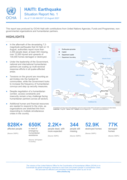
A 7.2-magnitude earthquake struck southwestern Haiti at 8:30am local time at a depth of around 10km. The epicentre was recorded around 12km northeast of SaintLouis-du-Sud, about 125km west of the capital Port-au-Prince.
● In the aftermath of the devastating 7.2-magnitude earthquake that hit Hai
...
ti on 14 August, authorities report more than 2,200 people dead, at least 344 missing, over 12,000 injured and upwards of 130,000 homes damaged or destroyed.
more
It is impossible to address the many complex needs of respiratory virus surveillance with a single surveillance system. Multiple systems, investigations and studies must each be fit-for-purpose to specific priority surveillance objectives, and only
...
together can they provide essential information to policy-makers. In essence, each surveillance approach fit together as “tiles in a mosaic” that provides a complete picture of respiratory viruses and the impact of associated illnesses and interventions at the country level. This mosaic framework demonstrates how surveillance approaches may be implemented as coordinated and collaborative systems, well-matched to specific priority objectives.
more
The Core Set of Indicators and respective Indicator Data Sheets aim to pave the way towards a common understanding, greater consistency and comparability across countries and alignment of results chains of German Development Cooperation in the field of health and social health protection
...
with the internationally recognized health systems framework of WHO and International Health Partnership (IHP+).
more
Nutrition Cluster Handbook
recommended
Josephine Ippe, Diane Holland, Leah Richardson, et al.
The Global Nutrition Cluster, UNICEF
(2013)
C1
The purpose of the handbook is to provide those involved in nutrition coordination with relevant tools, guidance, information and resources to support their roles in facilitating predictable, coordinated and effective preparation for, and responses
...
to, nutrition needs in humanitarian emergencies. Rather than being prescriptive, the handbook aims to raises key issues encountered to date.
more
This guideline provides health policy-makers and decision-makers in health professional training institutions with advice on the rationale for health-care providers’ use of counselling skills to address sexual health concerns in a primary health c
...
are setting
more
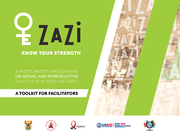
This toolkit has been developed by the ZAZI campaign for use by peer educators, community outreach workers, faith-based organisations, and traditional health practitioners to help facilitate participatory discussions on sexual and reproductive health with
...
women aged between 20 and 49 years of age. The toolkit is divided in 10 content sections
more
El Niño conditions persisting during the 2015/16 planting season have caused the worst drought in 35 years in Southern Africa, resulting in a second consecutive failed harvest. This has created severe food shortages and compounded existing vulnerabilities. Since July 2016, Namibia and Botswana have
...
declared national drought emergencies, in addition to the declarations made earlier by Lesotho, Malawi, Swaziland and Zimbabwe. Madagascar issued a letter of solidarity with the SADC Appeal, and Mozambique has maintained a red alert in affected areas.
more
WHO published and launched the third part of the Wheelchair Service Training Package (WSTP) series consisting of two sub-packages: the Wheelchair Service Training Package for Managers (WSTPm) and the Wheelchair Service Training Package for Stakeholders (WSTPs). WHO recognises that in order to develo
...
p an effective and sustainable wheelchair service provision; managers and stakeholders need to be informed about the importance and benefit of a proper wheelchair service provision. The training manuals and introductory folder comes with 8 GB PenDrive, which contains A to Z of the wheelchair provision.
more

MYANMAR/BURMA Breaking Barriers: Advocating Sexual and Reproductive Health and Rights
McGuin, Rachael; Nang Lao Liang Won (Researcher)
Asian-Pacific Resource and Research Centre for Women (ARROW)
(2016)
C1
arrow country studies
Political developments in Myanmar/Burma prompted the Asian-Pacific Resource and Research Centre for Women (ARROW) in 2013 to undertake a small-scale scoping study to re-evaluate and refine its advocacy strategies for sexual and reproductive health and rights (SRHR), and to s ... trengthen partnerships for advocacy with civil society organisations (CSO) working on SRHR in the country. The study aimed to identify the status of and the potential for SRHR advocacy by CSOs in Central Myanmar/Burma and in Eastern states along the Thai-Myanmar/Burma border, and increase the current knowledge base on SRHR issues, gaps, and challenges. more
Political developments in Myanmar/Burma prompted the Asian-Pacific Resource and Research Centre for Women (ARROW) in 2013 to undertake a small-scale scoping study to re-evaluate and refine its advocacy strategies for sexual and reproductive health and rights (SRHR), and to s ... trengthen partnerships for advocacy with civil society organisations (CSO) working on SRHR in the country. The study aimed to identify the status of and the potential for SRHR advocacy by CSOs in Central Myanmar/Burma and in Eastern states along the Thai-Myanmar/Burma border, and increase the current knowledge base on SRHR issues, gaps, and challenges. more

An evaluation of WFP’s operation. Evaluation Report
The Protracted Relief and Recovery Operation (PRRO) main components include: relief assistance; food assistance for assets (FFA); nutrition support to women, children and HIV/TB patients; sc ... hool feeding (SF) and capacity building. The evaluation scope covers the design phase and all activities up to this evaluation (January 2013-September 2016). Since the PRRO was extended through December 2017, the purpose is not as a final evaluation, but to provide results on achievements that can inform current and future operations more
The Protracted Relief and Recovery Operation (PRRO) main components include: relief assistance; food assistance for assets (FFA); nutrition support to women, children and HIV/TB patients; sc ... hool feeding (SF) and capacity building. The evaluation scope covers the design phase and all activities up to this evaluation (January 2013-September 2016). Since the PRRO was extended through December 2017, the purpose is not as a final evaluation, but to provide results on achievements that can inform current and future operations more

This document has been developed to provide training and guidance to be able to understand what are human rights, what human rights mean for people’s lives, as well as the actions that can be taken by individuals and groups to respect and promote
...
human rights.
more

This document is produced by the Humanitarian Country Team and the United Nations Resident
Coordinator’s Office in Mozambique, with the support of the United Nations Office for the Coordination of
Humanitarian Affairs (OCHA). The projects reflec
...
ted here support the national government. It covers the
period from November 2018 to June 2019. The Plan has been revised in March 2019 to incorporate the
immediate response to needs arising from the impact of Cyclone Idai.
more

Kenya reported its first case of COVID-19 on 12 March 2020 and, as at 7 April 2020, 172 cases had been confirmed and 6 deaths reported. The Government of Kenya has taken a number of measures to curb the spread of the virus, including implementing a curfew, restricting movement out and into four coun
...
ties, including Nairobi Metropolitan, and closing most of the urban and rural markets to enforce social distancing. However, these measures, along with the global economic shock caused by the pandemic, are expected to generate new needs, requiring an immediate and urgent response.
more

The purpose of the toolkit is to bring together existing learning and guidance as a starting point for stakeholders to begin SRH preparedness work. Within the SRH sector the field of preparedness is relatively new and growing. More collective effort is required to further evaluate the impact of prep
...
aredness efforts and push the field forward. This effort is a first attempt at a draft guidance for SRH preparedness, and is intended for field testing. The toolkit recognizes the longstanding work of the field of emergency and disaster risk management, and endeavors to bridge that work with the human rights-oriented and peoplecentered field of sexual and reproductive health.
more
31 March 2021
This article is part of a series of explainers on vaccine development and distribution. Learn more about vaccines – from how they work and how they’re made to ensuring safety and equitable access – in WHO’s Vaccines Explained series.
Countries around the world are rolling ou
...
t COVID-19 vaccines, and a key topic of interest is their safety. Vaccine safety is one of WHO’s highest priorities, and we’re working closely with national authorities to develop and implement standards to ensure that COVID-19 vaccines are safe and effective.
more

UNHCR’s Public Health Strategy 2021-2025 is based on the lessons learnt, and builds on the achievements, of the Global Strategy for Public Health 2014-2018.
Progress was made on policies favouring inclusion and integration into national systems3 with
...
92% of 48 operations surveyed reporting refugees having access to national primary health care facilities under the same conditions as nationals and 96% reporting refugees having access to all relevant vaccines under the same conditions as nationals. While many refugee hosting countries have policies that allow refugees to access national health services, many face partial access, prohibitive out-of-pocket expenditures and other barriers including distance to facilities, language and provider acceptance. Furthermore, more work is needed on strengthening these systems to be able to meet the needs of both host communities and refugees.
more
