
Filter
2760
Text search:
demographic
and
health
survey
Featured
119
1042
Language
2648
74
34
19
14
10
9
4
3
2
1
1
1
1
1
Document type
1899
504
119
85
67
43
17
13
8
3
1
1
Countries / Regions
152
133
130
102
98
94
91
90
81
81
79
72
71
68
67
64
62
50
50
48
43
38
34
33
31
30
27
26
26
25
22
22
19
17
17
17
15
13
11
11
11
10
9
9
9
8
8
8
7
7
7
7
7
7
6
6
6
6
6
6
6
6
5
5
5
4
4
4
4
4
3
3
3
3
3
3
3
3
2
2
2
2
2
2
2
2
2
2
2
1
1
1
1
1
1
1
1
1
1
1
1
1
1
1
1
1
1
1
1
1
1
1
1
1
1
1
1
1
1
1
1
1
1
Authors & Publishers
202
106
74
67
64
62
54
51
45
31
31
25
24
22
20
18
17
16
15
15
14
13
13
11
11
11
11
10
10
10
10
9
9
9
9
9
9
8
7
7
7
7
7
7
7
7
7
7
7
7
7
7
7
7
6
6
6
6
6
6
6
6
6
6
5
5
5
5
5
5
5
5
5
5
5
5
5
5
5
5
5
5
5
5
4
4
4
4
4
4
4
4
4
4
4
4
4
4
4
4
4
4
4
4
4
4
4
4
4
4
3
3
3
3
3
3
3
3
3
3
3
3
3
3
3
3
3
3
3
3
3
3
3
3
3
3
3
3
3
3
3
3
3
3
3
3
3
3
3
3
3
3
3
3
3
3
3
3
3
3
3
3
3
3
3
3
3
3
3
3
3
3
3
3
3
3
3
3
3
3
3
2
2
2
2
2
2
2
2
2
2
2
2
2
2
2
2
2
2
2
2
2
2
2
2
2
2
2
2
2
2
2
2
2
2
2
2
2
2
2
2
2
2
2
2
2
2
2
2
2
2
2
2
2
2
2
2
2
2
2
2
2
2
2
2
2
2
2
2
2
2
2
2
2
2
2
2
2
2
2
2
2
2
2
2
2
2
2
2
2
2
2
2
2
2
2
2
2
2
2
2
2
2
2
2
2
2
2
2
2
2
2
2
2
2
2
2
2
2
2
2
2
2
2
2
2
2
2
2
2
2
2
2
2
2
2
2
2
2
2
2
2
2
2
2
2
2
2
2
2
2
2
2
2
2
2
2
2
2
2
2
2
2
2
2
2
2
2
2
2
2
2
2
2
2
2
2
2
2
2
2
2
2
2
2
2
2
2
2
2
2
1
1
1
1
1
1
1
1
1
1
1
1
1
1
1
1
1
1
1
1
1
1
1
1
1
1
1
1
1
1
1
1
1
1
1
1
1
1
1
1
1
1
1
1
1
1
1
1
1
1
1
1
1
1
1
1
1
1
1
1
1
1
1
1
1
1
1
1
1
1
1
1
1
1
1
1
1
1
1
1
1
1
1
1
1
1
1
1
1
1
1
1
1
1
1
1
1
1
1
1
1
1
1
1
1
1
1
1
1
1
1
1
1
1
1
1
1
1
1
1
1
1
1
1
1
1
1
1
1
1
1
1
1
1
1
1
1
1
1
1
1
1
1
1
1
1
1
1
1
1
1
1
1
1
1
1
1
1
1
1
1
1
1
1
1
1
1
1
1
1
1
1
1
1
1
1
1
1
1
1
1
1
1
1
1
1
1
1
1
1
1
1
1
1
1
1
1
1
1
1
1
1
1
1
1
1
1
1
1
1
1
1
1
1
1
1
1
1
1
1
1
1
1
1
1
1
1
1
1
1
1
1
1
1
1
1
1
1
1
1
1
1
1
1
1
1
1
1
1
1
1
1
1
1
1
1
1
1
1
1
1
1
1
1
1
1
1
1
1
1
1
1
1
1
1
1
1
1
1
1
1
1
1
1
1
1
1
1
1
1
1
1
1
1
1
1
1
1
1
1
1
1
1
1
1
1
1
1
1
1
1
1
1
1
1
1
1
1
1
1
1
1
1
1
1
1
1
1
1
1
1
1
1
1
1
1
1
1
1
1
1
1
1
1
1
1
1
1
1
1
1
1
1
1
1
1
1
1
1
1
1
1
1
1
1
1
1
1
1
1
1
1
1
1
1
1
1
1
1
1
1
1
1
1
1
1
1
1
1
1
1
1
1
1
1
1
1
1
1
1
1
1
1
1
1
1
1
1
1
1
1
1
1
1
1
1
1
1
1
1
1
1
1
1
1
1
1
1
1
1
1
1
1
1
1
1
1
1
1
1
1
1
1
1
1
1
1
1
1
1
1
1
1
1
1
1
1
1
1
1
1
1
1
1
1
1
1
1
1
1
1
1
1
1
1
1
1
1
1
1
1
1
1
1
1
1
1
1
1
1
1
1
1
1
1
1
1
1
1
1
1
1
1
1
1
1
1
1
1
1
1
1
1
1
1
1
1
1
1
1
1
1
1
1
1
1
1
1
1
1
1
1
1
1
1
1
1
1
1
1
1
1
1
1
1
1
1
1
1
1
1
1
1
1
1
1
1
1
1
1
1
1
1
1
1
1
1
1
1
1
1
1
1
1
1
1
1
1
1
1
1
1
1
1
1
1
1
1
1
1
1
1
1
1
1
1
1
1
1
1
1
1
1
1
1
1
1
1
1
1
1
1
1
1
1
1
1
1
1
1
1
1
1
1
1
1
1
1
1
1
1
1
1
1
1
1
1
1
1
1
1
1
1
1
1
1
1
1
1
1
1
1
1
1
1
1
1
1
1
1
1
1
1
1
1
1
1
1
1
1
1
1
1
1
1
1
1
1
1
1
1
1
1
1
1
1
1
1
1
1
1
1
1
1
1
1
1
1
1
1
1
1
1
1
1
1
1
1
1
1
1
1
1
1
1
1
1
1
1
1
1
1
1
1
1
1
1
1
1
1
1
1
1
1
1
1
1
1
1
1
1
1
1
1
1
1
1
1
1
1
1
1
1
1
1
1
1
1
1
1
1
1
1
1
1
1
1
1
1
1
1
1
1
1
1
1
1
1
1
1
1
1
1
1
1
1
1
1
1
1
1
1
1
1
1
1
1
1
1
1
1
1
1
1
1
1
1
1
1
1
1
1
1
1
1
1
1
1
1
1
1
1
1
1
1
1
1
1
1
1
1
1
1
1
1
1
1
1
1
1
1
1
1
1
1
1
1
1
1
1
1
1
1
1
1
1
1
1
1
1
1
1
1
1
1
1
1
1
1
1
1
1
1
1
1
1
1
1
1
1
1
1
1
1
1
1
1
1
1
1
1
1
1
1
1
1
1
1
1
1
1
1
1
1
1
1
1
1
1
1
1
1
1
1
1
1
1
1
1
1
1
1
1
1
1
1
1
1
1
1
1
1
1
1
1
1
1
1
1
1
1
1
1
1
1
1
1
1
1
1
1
1
1
1
1
1
1
1
1
1
1
1
1
1
1
1
1
1
1
1
1
1
1
1
1
1
1
1
1
1
1
1
1
1
1
1
1
1
1
1
1
1
1
1
1
1
1
1
1
1
1
1
1
1
1
1
1
1
1
1
1
1
1
1
1
1
1
1
1
1
1
1
1
1
1
1
1
1
1
1
1
1
1
1
1
1
1
1
1
1
1
1
1
1
1
1
1
1
1
1
1
1
1
1
1
1
1
1
1
1
1
1
1
1
1
1
1
1
1
1
1
1
1
1
1
1
1
1
1
1
1
1
1
1
1
1
1
1
1
1
1
1
1
1
1
1
1
1
1
1
1
1
1
1
1
1
1
1
1
1
1
1
1
1
1
1
1
1
1
1
1
1
1
1
1
1
1
1
1
1
1
1
1
1
1
1
1
1
1
1
1
1
1
1
1
1
1
1
1
1
1
1
1
1
1
1
1
1
1
1
1
1
1
1
1
1
1
1
1
1
1
1
1
1
1
1
1
1
1
1
1
1
1
1
1
1
1
1
1
1
1
1
1
1
1
1
1
1
1
1
1
1
1
1
1
1
1
1
1
1
1
1
1
1
1
1
1
1
1
1
1
1
1
1
1
1
1
1
1
1
1
1
1
1
1
1
1
1
1
1
1
1
1
1
1
1
1
1
1
1
1
1
1
1
1
1
1
1
1
1
1
1
1
1
1
1
1
1
1
1
1
1
1
1
1
1
1
1
1
1
1
1
1
1
1
1
1
1
1
1
1
1
1
1
1
1
1
1
1
1
1
1
1
1
1
1
1
1
1
1
1
1
1
1
1
1
1
1
1
1
1
1
1
1
1
1
1
1
1
1
1
1
1
1
1
1
1
1
1
1
1
1
1
1
1
1
1
1
1
1
1
1
1
1
1
1
1
1
1
1
1
1
1
1
1
1
1
1
1
1
1
1
1
1
1
1
1
1
1
1
1
1
1
1
1
1
1
1
1
1
1
1
1
1
1
1
1
1
1
1
1
1
1
1
1
1
1
1
1
1
1
1
1
1
1
1
1
1
1
1
1
1
1
1
1
1
1
1
1
1
1
1
1
1
1
1
1
1
1
1
1
1
1
1
1
1
1
1
1
1
1
1
1
1
1
1
1
1
1
1
1
1
1
1
1
1
1
1
1
1
1
1
1
1
1
1
1
1
1
1
1
1
1
1
1
1
1
1
1
1
1
1
1
1
1
1
1
1
1
1
1
1
1
1
1
1
1
1
1
1
1
1
1
1
1
1
1
1
1
1
1
1
1
1
1
1
1
1
1
1
1
1
1
1
1
1
1
1
1
1
1
1
1
1
1
1
1
1
1
1
1
1
1
1
1
1
1
1
1
1
1
1
1
1
1
1
1
1
1
1
1
1
1
1
1
1
1
1
1
1
1
1
1
1
1
1
1
1
1
1
1
1
1
1
1
1
1
1
1
1
1
1
1
1
1
1
1
1
1
1
1
1
1
1
1
1
1
1
1
1
1
1
1
1
1
1
1
1
1
1
1
1
1
1
1
1
1
1
1
1
1
1
1
1
1
1
1
1
1
1
1
1
1
1
1
1
1
1
1
1
1
1
1
1
1
1
1
1
1
1
1
1
1
1
1
1
1
1
1
1
1
1
1
1
1
1
1
1
1
1
1
1
1
1
1
1
1
1
1
1
1
1
1
1
1
1
1
1
1
1
1
1
1
1
1
1
1
1
1
1
1
1
1
1
1
1
1
1
1
1
1
1
1
1
1
1
1
1
1
1
1
1
1
1
1
1
1
1
1
1
1
1
1
1
1
1
1
1
1
1
1
1
1
1
1
1
1
1
1
1
1
1
1
1
1
1
1
1
1
1
1
1
1
1
1
1
1
1
1
1
1
1
1
1
1
1
1
1
1
1
1
1
1
1
1
1
1
1
1
1
1
1
1
1
1
1
1
1
1
1
1
1
1
1
1
1
1
1
1
1
1
1
1
1
1
1
1
1
1
1
1
1
1
1
1
1
1
1
1
1
1
1
1
1
1
1
1
1
1
1
1
1
1
1
1
1
1
1
1
1
1
1
1
1
1
1
1
1
1
1
1
1
1
1
1
1
1
1
1
1
1
1
1
1
1
1
1
1
1
1
1
1
1
1
1
1
1
1
1
1
1
1
1
1
1
1
1
1
1
1
1
1
1
1
1
1
1
1
1
1
1
1
1
1
1
1
1
1
1
1
1
1
1
1
1
1
1
1
1
1
1
1
1
1
1
1
1
1
1
1
1
1
1
1
1
1
1
1
1
1
1
1
1
1
1
1
1
1
1
1
1
1
1
1
1
1
1
1
1
1
1
1
1
1
1
1
1
1
1
1
1
1
1
1
1
1
1
1
1
1
1
1
1
1
1
1
1
1
1
1
1
1
1
1
1
1
1
1
1
1
1
1
1
1
1
1
1
1
1
1
1
1
1
1
1
1
1
1
1
1
1
1
1
1
1
1
1
1
1
1
1
1
1
1
1
1
1
1
1
1
1
1
1
1
1
1
1
1
1
1
1
1
1
1
1
1
1
1
1
1
1
1
1
1
1
1
1
1
1
1
1
1
1
1
1
1
1
1
1
1
1
1
1
1
1
1
1
1
1
1
1
1
1
1
1
1
1
1
1
1
1
1
1
1
1
1
1
1
1
1
1
1
1
1
1
1
1
1
1
1
1
1
1
1
1
1
1
1
1
1
1
1
1
1
1
1
1
1
1
1
1
1
1
1
1
1
1
1
1
1
1
1
1
1
1
1
1
1
1
1
1
1
1
1
1
1
1
1
1
1
1
1
1
1
1
1
1
1
1
1
1
1
1
1
1
1
1
1
1
1
1
1
1
1
1
1
1
1
1
1
1
1
1
1
1
1
1
1
1
1
1
1
1
1
1
1
1
1
1
1
1
Publication Years
540
2020
194
4
2
Category
1802
128
124
89
74
20
4
Toolboxes
148
144
99
96
69
63
50
48
46
42
35
35
30
29
21
16
16
12
11
8
6
6
5
3
2
The Regional strategy for measles control recommends that a second opportunity for measles immunization be provided to all children irrespective of their vaccination status or history of clinical measles. The preferred method of provision of a second opportunity is through Supplemental Immunization
...
Activities (SIAs) targeting children 9 months to 14 years in catch-up campaigns and 9 months to 4 or 5 years during periodic follow-up campaigns
more

A lack of knowledge about the threat of vaccine-preventable diseases, risks and benefits of vaccines, mistrust of government and health workers, po
...
or service delivery and alternative health or religious beliefs play a role in lower uptake of some vaccines. These challenges underscore the importance of early integration and investment in a thoughtful communication plan for immunization programmes. This World Health Organization (WHO) report presents communication guidance and specific considerations for countries that plan to introduce human papillomavirus (HPV) vaccine into their national immunisation programme as part of an effort to prevent cervical cancer.
more

The review’s objectives are to review progress in TB control with emphasis on DOTS strategy implementation, summarize the experience, lessons learnt and methods of work and to make recommendations
...
for international donors, technical agencies and the Ministry of Health.
more
Epilepsy
World Health Organization
(2004)
C_WHO
Brief review of selected topics
The following pages provide a focus on selected areas in relation to neurology. The specialists who contributed the reviews are listed in the Project Team and Partners
Neurology Atlas (2004)
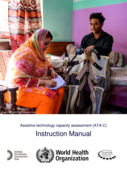
The assistive technology capacity assessment (ATA-C) is a system-level tool to evaluate a country’s capacity to finance, regulate, procure and provide assistive technology. It can be used for awareness raising, policy
...
and programme design, and ongoing monitoring and evaluation. This manual provides guidance and practical information on the ATA-C implementation process. The ATA-C is intended to be implemented by an experienced team, in collaboration with relevant ministries and users’ organizations.
more

Recency assays use one or more biomarkers to identify whether HIV infection in a person is recent (usually within a year or less) or longstanding. Recency assays have been used to estimate incidence in representative cross-sectional surveys and in e
...
pidemiological studies to better understand the patterns and distributions of new and longstanding HIV infections.
This technical guidance outlines best practices regarding the appropriate use of HIV recency assays for surveillance purposes and updates 2011 technical guidance from the World Health Organization (WHO) and the Joint United Nations Programme on HIV/AIDS (UNAIDS) on the use of HIV recency assays.
more

Yaws is a disfiguring non-venereal disease caused by infection with the spirochaete. Treponema pallidum subspecies pertenue which is closely related to the causative agent of syphilis and those of the other endemic treponematoses, bejel
...
and pinta. The disease is endemic in certain areas of the World Health Organization (WHO) African, South-East Asia and Western Pacific regions. Of the neglected tropical diseases identified for elimination and eradication, yaws is one of two diseases targeted for eradication. In 1949, the Second World Health Assembly adopted resolution WHA2.36, which addresses yaws, bejel and pinta as major public health problems that need attention.
more
WHO recommends that pre-exposure prophylaxis (PrEP) be offered as an additional prevention choice for HIV-negative individuals at substantial risk of HIV infection as part of combination prevention approaches.
HIV drug resistance has been rarely reported among PrEP users who tested HIV positive i
...
n randomized controlled trials or open-label studies. However, PrEP-selected HIV drug resistance could potentially negatively impact the effectiveness of treatment options among PrEP users who acquire HIV, since there is a potential for overlapping resistance profiles between antiretroviral drugs used for both PrEP and first-line antiretroviral therapy.
more
Interim guidance for entomologists.
This document describes selected sampling methods that can be used to conduct surveillance of Aedes mosquitoes, pupae and oviposition. It is intended for qualified entomologists at national
...
and sub-national level who are responsible for the surveillance of local Aedes populations.
more

World report on child injury prevention
World Health Organization (WHO), the United Nations Children’s Fund (UNICEF)
Peden, Margie et al.
(2008)
C_WHO
Every year, around 830 000 children die from unintentional or "accidental" injuries. The vast majority of these injuries occur in low-income and middle-income countries. However, dozens of prevention strategies
...
and programmes exist. If they were integrated into other child survival programmes and implemented on a larger scale, many of these deaths and much of the injury-related disability could be prevented.
The report documents the magnitude, risks and prevention measures for child injuries globally –particularly for drowning, burns, road traffic injuries, falls and poisoning. more
The report documents the magnitude, risks and prevention measures for child injuries globally –particularly for drowning, burns, road traffic injuries, falls and poisoning. more

National Malaria Elimination Strategic Plan (NMESP) 2024–2028
National Malaria Elimination Programme (NMEP)
Ghana Health Service - Ministry of Health, Ghana
(2023)
C2
The National Malaria Elimination Strategic Plan (NMESP) 2024–2028 of Ghana outlines the country’s roadmap to shift from malaria control to elimination. Despite major progress—like reducing malaria deaths from nearly 2,800 in 2012 to 151 in 2022—malaria remains a major public
...
health challenge in Ghana.
The plan aims to reduce malaria deaths by 90% and cases by 50% by 2028 (compared to 2022), and to eliminate malaria entirely in 21 low-burden districts. It includes a mix of interventions such as insecticide-treated nets, indoor residual spraying, seasonal chemoprevention, malaria vaccination, and strong surveillance systems.
The strategy is tailored to the local malaria burden, promotes community engagement, relies on multisectoral partnerships, and ensures adequate resource mobilization. Its ultimate goal is to protect Ghana’s population, improve public health, and support the country’s socioeconomic development.
more

Program Implementation Manual (PIM)
The Save One Million Lives Program for Results (SOML PforR) is a Federal Government of Nigeria maternal and child health program, supported by the World Bank ... , which provides incentives based on achievement of results (health outcomes) and helps to drive institutional processes needed to achieve these results. This Program Implementation Manual provides a description of the program and operational guidelines for effective implementation. The Manual contains guidelines and procedures relating to disbursements and fund flows, institutional arrangements, financial management as well as monitoring and evaluation, while providing clear definition of the roles and responsibilities of all stakeholders. more
The Save One Million Lives Program for Results (SOML PforR) is a Federal Government of Nigeria maternal and child health program, supported by the World Bank ... , which provides incentives based on achievement of results (health outcomes) and helps to drive institutional processes needed to achieve these results. This Program Implementation Manual provides a description of the program and operational guidelines for effective implementation. The Manual contains guidelines and procedures relating to disbursements and fund flows, institutional arrangements, financial management as well as monitoring and evaluation, while providing clear definition of the roles and responsibilities of all stakeholders. more

The strategic priorities of the CCS 2014–2018 are:
(1) Strengthening the health system.
(2) Enhancing the achievement of communicable disease control targets.
(3) Controlling the growth of the noncommunicable disease burden.
(4 ... ) Promoting health throughout the life course.
(5) Strengthening capacity for emergency risk management and surveillance systems for various health threats. more
(1) Strengthening the health system.
(2) Enhancing the achievement of communicable disease control targets.
(3) Controlling the growth of the noncommunicable disease burden.
(4 ... ) Promoting health throughout the life course.
(5) Strengthening capacity for emergency risk management and surveillance systems for various health threats. more

The importance of robust mortality surveillance systems cannot be overstated in an era marked by increasing global health challenges where health threats loom large
...
and population dynamics continue to evolve. Accurate and timely mortality data is essential for identifying trends and detecting emerging health threats, evaluating the impact of interventions, and guiding evidence-based policy decisions.
This framework outlines a holistic approach to strengthening routine mortality surveillance systems, considering the unique contextual factors and challenges faced by African countries. It emphasizes the importance of establishing efficient data collection mechanisms, enhancing data quality and completeness, and promoting data sharing and collaboration among stakeholders.
Moreover, the framework recognizes the pivotal role of technology in the integration of data from fragmented mortality data sources. It highlights the potential of innovative data capture methods, advanced analytics, and real-time reporting systems to enhance mortality data’s accuracy, efficiency, and timeliness.
The continental framework for mortality surveillance aligns with Africa CDC’s mission and strategic goal by serving as a fundamental component in strengthening public health systems, enhancing disease surveillance capacities and capabilities, informing evidence-based policies and interventions, and promoting collaboration and coordination among African countries to address health challenges and improve health outcomes on the continent.
The successful implementation of this framework requires collective commitment and concerted efforts from governments, health institutions, and the international community. We hope this document will serve as a catalyst for transformative change, enabling countries to build resilient mortality surveillance systems that protect public health, save lives, and contribute to evidence-based decision-making.
more
The burden of severe asthma in sub-Saharan Africa: Findings from the African Severe Asthma Project
Kirenga, B.J.; Chakaya, J.; Yimer, G. et al.
Journal of Allergy and Clinical Immunology: Global
(2024)
CC
Severe asthma is associated with high morbidity, mortality, and health care utilization, but its burden in Africa is unknown. This article wants to determine the burden (prevalence,
mortality,
...
and activity and work impairment) of severe asthma in 3 countries in East Africa: Uganda, Kenya, and Ethiopia using the American Thoracic Society/European Respiratory Society case definition of severe asthma.
more

2nd edition. The interagency field handbook on malaria control was developed to set out effective malaria control responses in humanitarian emergencies, particularly during the acute phase when reliance on international humanitarian assistance is greatest. This second edition represents a thorough u
...
pdating and revision of the first edition. The structure remains similar, but includes an additional chapter on humanitarian coordination. All chapters have been revised to reflect changes in best practices, improvements in technologies, availability of new tools, and changes in WHO recommendations.
more

The Global status report on violence prevention 2014, which reflects data from 133 countries, is the first report of its kind to assess national efforts to address interpersonal violence, namely child maltreatment, youth violence, intimate partner and
...
sexual violence, and elder abuse. Jointly published by WHO, the United Nations Development Programme, and the United Nations Office on Drugs and Crime, the report reviews the current status of violence prevention efforts in countries, and calls for a scaling up of violence prevention programmes; stronger legislation and enforcement of laws relevant for violence prevention; and enhanced services for victims of violence.
You can download summaries in different languages, single chapters and graphics
more
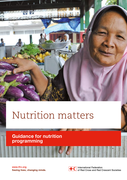
This guidance highlights tangible, evidence-based priority actions in health and WASH programs to achieve the Global Targets for nutrition. Throughout the guidance the importance of cross-sectoral c
...
ollaboration within and outside the Red Cross Red Crescent Movement to holistically address nutrition is emphasised.
more
Application of a One Health approach .
The present guidance was developed with the support of the WHO Advisory Group on Integrated Surveillance of Antimicrobial Resistance (AGISAR) to assist countries and
...
other stakeholders in the establishment and development of programmes of integrated surveillance of antimicrobial resistance in the foodborne bacteria (i.e., bacteria commonly transmitted by food) by taking a One Health approach.
more
This guidance is intended for use in developing standalone TB strategic plans, or TB interventions as part of multidisease or health sector plans. It describes key considerations and steps for strat
...
egic planning for TB in line with the World Health Organization’s End TB strategy, and the proposed structure of the NSP. The target audience of this publication are all stakeholders involved in national strategic planning for TB (e.g., ministry of health, other government ministries, private sector, civil society, affected communities, academic and research institutions, and technical and funding partners).
The current document is an update to the 2015 Toolkit to develop a national strategic plan for TB prevention, care and control.
more
