
Filter
2527
Text search:
sensitivity
Featured
293
592
Language
2424
59
57
30
30
22
17
10
9
6
5
5
5
4
4
3
3
3
3
3
3
3
2
2
2
2
2
2
2
2
2
2
2
2
2
2
2
2
2
2
1
1
1
1
1
1
1
1
1
1
1
1
1
1
Document type
1265
467
417
170
83
53
40
13
9
5
3
1
1
Countries
150
123
68
53
52
50
42
39
38
38
37
35
35
34
33
31
31
28
28
25
23
23
21
20
19
19
18
16
16
16
15
15
14
14
13
11
11
10
10
10
9
9
9
8
8
8
8
7
7
6
6
6
6
5
5
5
5
5
4
4
4
4
4
3
3
3
3
3
3
3
3
3
3
3
3
3
3
3
2
2
2
2
2
2
2
2
2
2
2
2
2
2
2
2
2
2
1
1
1
1
1
1
1
1
1
1
1
1
1
1
1
1
1
1
1
1
1
1
1
1
1
1
1
Authors & Publishers
369
125
87
58
51
49
46
33
22
21
19
15
14
13
13
12
12
11
11
11
10
10
10
9
9
9
8
8
8
8
8
8
7
7
7
7
7
7
6
6
6
6
6
6
6
6
6
6
6
5
5
5
5
5
5
5
5
5
5
5
4
4
4
4
4
4
4
4
4
4
4
4
4
4
4
4
4
4
4
4
4
4
4
4
4
4
4
4
4
4
4
4
3
3
3
3
3
3
3
3
3
3
3
3
3
3
3
3
3
3
3
3
3
3
3
3
3
3
3
3
3
3
3
3
3
3
3
3
3
3
3
3
3
3
2
2
2
2
2
2
2
2
2
2
2
2
2
2
2
2
2
2
2
2
2
2
2
2
2
2
2
2
2
2
2
2
2
2
2
2
2
2
2
2
2
2
2
2
2
2
2
2
2
2
2
2
2
2
2
2
2
2
2
2
2
2
2
2
2
2
2
2
2
2
2
2
2
2
2
2
2
2
2
2
2
2
2
2
2
2
2
2
2
2
2
2
2
2
2
2
2
2
2
2
2
2
2
2
2
2
2
2
2
2
2
2
2
2
2
2
2
2
2
2
2
2
2
2
2
2
2
2
2
2
2
2
2
2
2
2
2
2
2
2
2
2
2
2
2
2
2
2
2
2
2
2
2
2
2
2
2
2
2
1
1
1
1
1
1
1
1
1
1
1
1
1
1
1
1
1
1
1
1
1
1
1
1
1
1
1
1
1
1
1
1
1
1
1
1
1
1
1
1
1
1
1
1
1
1
1
1
1
1
1
1
1
1
1
1
1
1
1
1
1
1
1
1
1
1
1
1
1
1
1
1
1
1
1
1
1
1
1
1
1
1
1
1
1
1
1
1
1
1
1
1
1
1
1
1
1
1
1
1
1
1
1
1
1
1
1
1
1
1
1
1
1
1
1
1
1
1
1
1
1
1
1
1
1
1
1
1
1
1
1
1
1
1
1
1
1
1
1
1
1
1
1
1
1
1
1
1
1
1
1
1
1
1
1
1
1
1
1
1
1
1
1
1
1
1
1
1
1
1
1
1
1
1
1
1
1
1
1
1
1
1
1
1
1
1
1
1
1
1
1
1
1
1
1
1
1
1
1
1
1
1
1
1
1
1
1
1
1
1
1
1
1
1
1
1
1
1
1
1
1
1
1
1
1
1
1
1
1
1
1
1
1
1
1
1
1
1
1
1
1
1
1
1
1
1
1
1
1
1
1
1
1
1
1
1
1
1
1
1
1
1
1
1
1
1
1
1
1
1
1
1
1
1
1
1
1
1
1
1
1
1
1
1
1
1
1
1
1
1
1
1
1
1
1
1
1
1
1
1
1
1
1
1
1
1
1
1
1
1
1
1
1
1
1
1
1
1
1
1
1
1
1
1
1
1
1
1
1
1
1
1
1
1
1
1
1
1
1
1
1
1
1
1
1
1
1
1
1
1
1
1
1
1
1
1
1
1
1
1
1
1
1
1
1
1
1
1
1
1
1
1
1
1
1
1
1
1
1
1
1
1
1
1
1
1
1
1
1
1
1
1
1
1
1
1
1
1
1
1
1
1
1
1
1
1
1
1
1
1
1
1
1
1
1
1
1
1
1
1
1
1
1
1
1
1
1
1
1
1
1
1
1
1
1
1
1
1
1
1
1
1
1
1
1
1
1
1
1
1
1
1
1
1
1
1
1
1
1
1
1
1
1
1
1
1
1
1
1
1
1
1
1
1
1
1
1
1
1
1
1
1
1
1
1
1
1
1
1
1
1
1
1
1
1
1
1
1
1
1
1
1
1
1
1
1
1
1
1
1
1
1
1
1
1
1
1
1
1
1
1
1
1
1
1
1
1
1
1
1
1
1
1
1
1
1
1
1
1
1
1
1
1
1
1
1
1
1
1
1
1
1
1
1
1
1
1
1
1
1
1
1
1
1
1
1
1
1
1
1
1
1
1
1
1
1
1
1
1
1
1
1
1
1
1
1
1
1
1
1
1
1
1
1
1
1
1
1
1
1
1
1
1
1
1
1
1
1
1
1
1
1
1
1
1
1
1
1
1
1
1
1
1
1
1
1
1
1
1
1
1
1
1
1
1
1
1
1
1
1
1
1
1
1
1
1
1
1
1
1
1
1
1
1
1
1
1
1
1
1
1
1
1
1
1
1
1
1
1
1
1
1
1
1
1
1
1
1
1
1
1
1
1
1
1
1
1
1
1
1
1
1
1
1
1
1
1
1
1
1
1
1
1
1
1
1
1
1
1
1
1
1
1
1
1
1
1
1
1
1
1
1
1
1
1
1
1
1
1
1
1
1
1
1
1
1
1
1
1
1
1
1
1
1
1
1
1
1
1
1
1
1
1
1
1
1
1
1
1
1
1
1
1
1
1
1
1
1
1
1
1
1
1
1
1
1
1
1
1
1
1
1
1
1
1
1
1
1
1
1
1
1
1
1
1
1
1
1
1
1
1
1
1
1
1
1
1
1
1
1
1
1
1
1
1
1
1
1
1
1
1
1
1
1
1
1
1
1
1
1
1
1
1
1
1
1
1
1
1
1
1
1
1
1
1
1
1
1
1
1
1
1
1
1
1
1
1
1
1
1
1
1
1
1
1
1
1
1
1
1
1
1
1
1
1
1
1
1
1
1
1
1
1
1
1
1
1
1
1
1
1
1
1
1
1
1
1
1
1
1
1
1
1
1
1
1
1
1
1
1
1
1
1
1
1
1
1
1
1
1
1
1
1
1
1
1
1
1
1
1
1
1
1
1
1
1
1
1
1
1
1
1
1
1
1
1
1
1
1
1
1
1
1
1
1
1
1
1
1
1
1
1
1
1
1
1
1
1
1
1
1
1
1
1
1
1
1
1
1
1
1
1
1
1
1
1
1
1
1
1
1
1
1
1
1
1
1
1
1
1
1
1
1
1
1
1
1
1
1
1
1
1
1
1
1
1
1
1
1
1
1
1
1
1
1
1
1
1
1
1
1
1
1
1
1
1
1
1
1
1
1
1
1
1
1
1
1
1
1
1
1
1
1
1
1
1
1
1
1
1
1
1
1
1
1
1
1
1
1
1
1
1
1
1
1
1
1
1
1
1
1
1
1
1
1
1
1
1
1
1
1
1
1
1
1
1
1
1
1
1
1
1
1
1
1
1
1
1
1
1
1
1
1
1
1
1
1
1
1
1
1
1
1
1
1
1
1
1
1
1
1
1
1
1
1
1
1
1
1
1
1
1
1
1
1
1
1
1
1
1
1
1
1
1
1
1
1
1
1
1
1
1
1
1
1
1
1
1
1
1
1
1
1
1
1
1
1
1
1
1
1
1
1
1
1
1
1
1
1
1
1
1
1
1
1
1
1
1
1
1
1
1
1
1
1
1
1
1
1
1
1
1
1
1
1
1
1
1
1
1
1
1
1
1
1
1
1
1
1
1
1
1
1
1
1
1
1
1
1
1
1
1
1
1
1
1
1
1
1
1
1
1
1
1
1
1
1
1
1
1
1
1
1
1
1
1
1
1
1
1
1
1
1
1
1
1
1
1
1
1
1
1
1
1
1
1
1
1
1
1
1
1
1
1
1
1
1
1
1
1
1
1
1
1
1
1
1
1
1
1
1
1
1
1
1
1
1
1
1
1
1
1
1
1
1
1
1
1
1
1
1
1
1
1
1
1
1
1
1
1
1
1
1
1
1
1
1
1
1
1
1
1
1
1
1
1
1
1
1
1
1
1
1
1
1
1
1
1
1
1
1
1
1
1
1
1
1
1
1
1
1
1
1
1
1
1
1
1
1
1
1
1
1
1
1
1
1
1
1
1
1
1
1
1
1
1
1
1
1
1
1
1
1
1
1
1
1
1
1
1
1
1
1
1
1
1
1
1
1
1
1
1
1
1
1
1
1
1
1
1
1
1
1
1
1
1
1
1
1
1
1
1
1
1
1
1
1
1
1
1
1
1
1
1
1
1
1
1
1
1
1
1
1
1
1
1
1
1
1
1
1
1
1
1
1
1
1
1
1
1
1
1
1
1
1
1
1
1
1
1
1
1
1
1
1
1
1
1
1
1
1
1
1
1
1
1
1
1
1
1
1
1
1
1
1
1
1
1
1
1
1
1
1
1
1
1
1
1
1
1
1
1
1
1
1
1
1
1
1
1
1
1
1
1
1
1
1
1
1
1
1
1
1
1
1
1
1
1
1
1
1
1
1
1
1
1
1
1
1
1
1
1
1
1
1
1
1
1
1
1
1
1
1
1
1
1
1
1
1
1
1
1
1
1
1
1
1
1
1
1
1
1
1
1
1
1
1
1
1
1
1
1
1
1
1
1
1
1
1
1
1
1
1
1
1
1
1
1
1
1
1
1
1
1
1
1
1
1
1
1
1
1
1
1
1
1
1
1
1
1
1
1
1
1
1
1
1
1
1
1
1
1
1
1
1
1
1
1
1
1
1
1
1
1
1
1
1
1
1
1
1
1
1
1
1
1
1
1
1
1
1
1
1
1
1
1
1
1
1
1
1
1
1
1
1
1
1
1
1
1
1
1
1
1
1
1
1
1
1
1
1
1
1
1
1
1
1
1
1
1
1
1
1
1
1
1
1
1
1
1
1
1
1
1
1
1
1
1
1
1
1
1
1
1
1
1
1
1
1
1
1
1
1
1
1
1
1
1
1
1
1
1
1
1
1
1
1
1
1
1
1
1
1
1
1
1
1
1
1
1
1
1
1
1
1
1
1
1
1
1
1
1
1
1
1
1
1
1
1
1
1
1
1
1
1
1
1
1
1
1
1
1
1
1
1
1
1
1
1
1
1
1
1
1
1
1
1
1
1
1
1
1
1
1
1
1
1
1
1
1
1
1
1
1
1
1
1
1
1
1
1
1
1
1
1
1
1
1
1
1
1
1
1
1
1
1
1
1
1
1
1
1
1
1
1
1
1
1
1
1
1
1
1
1
1
1
1
1
1
1
1
1
1
1
1
1
1
1
1
1
1
1
1
1
1
1
1
1
1
1
1
1
1
1
1
1
1
1
1
1
1
1
1
1
1
1
1
1
1
1
1
1
1
1
1
1
1
1
1
1
1
1
1
1
1
1
1
1
1
1
1
1
1
1
1
1
1
1
1
1
1
1
1
1
1
1
1
1
1
1
1
1
1
1
1
1
1
1
1
1
1
1
1
1
1
1
1
1
1
1
1
1
1
1
1
1
1
1
1
1
1
1
1
1
1
1
1
1
1
1
1
1
1
1
1
1
1
1
1
1
1
1
1
1
1
1
1
1
1
1
1
1
1
1
1
1
1
1
1
1
1
1
1
1
1
1
1
1
1
1
1
1
1
1
1
1
1
1
1
1
1
1
1
1
1
1
1
1
1
1
1
1
1
1
Publication Years
748
1519
245
14
1
Category
818
268
154
138
117
63
46
Toolboxes
223
218
164
162
99
96
82
65
64
62
60
55
53
51
48
37
37
33
30
28
25
25
22
20
18

The development of water, sanitation and hygiene (WASH) in schools guidelines for TimorLeste is a landmark moment in our quest to make every school child-friendly – a place where every child can learn, play and grow with pride and dignity. The overarching goal is to improve health, boost education
...
achievement and promote gender equity in our schools.
The guidelines set clear levels of acceptable standards for water supply, provision of sanitation facilities and hygiene promotion in schools and provide a common framework and policy direction for all sub-sector actors. Therefore, all implementing agencies, managers, planners, architects, water and sanitation technicians, teaching staff, school directors, school boards, district WASH committees, local authorities and other relevant bodies should consult these guidelines, when making implementation plans. more
The guidelines set clear levels of acceptable standards for water supply, provision of sanitation facilities and hygiene promotion in schools and provide a common framework and policy direction for all sub-sector actors. Therefore, all implementing agencies, managers, planners, architects, water and sanitation technicians, teaching staff, school directors, school boards, district WASH committees, local authorities and other relevant bodies should consult these guidelines, when making implementation plans. more

Drinking-water quality regulations and standards developed or revised in accordance with this guidance will reflect the best practices identified in the WHO Guidelines for Drinking-water Quality to most effectively protect public health. Moreover, the regulations and standards will consider local ne
...
eds, priorities and capacities to ensure that they are realistic and appropriate. Topics covered include:
- Guiding principles
- Getting started
- Selecting parameters and parameter limits
- Setting out compliance monitoring requirements more
- Guiding principles
- Getting started
- Selecting parameters and parameter limits
- Setting out compliance monitoring requirements more
This guide is intended for people involved in the management and operation of small- to mediumsized organized water supply systems. The content has been developed with particular consideration for operational-level personnel with responsibility for chlorination (for example, water treatment plant op
...
erators and technicians). The material presented within this guide may also be relevant for engineers and representatives from public health, local government, non-governmental organizations, as well as any other individuals supporting water safety planning activities for the supply of safe drinking-water.
Part 1. Chlorination principles: Describes key chlorination concepts, providing a knowledge foundation for the implementation of effective chlorination practices.
Part 2. Chlorination practices: Describes the practical application of the concepts presented in Part 1, including calculations and procedures for safe and effective chlorination of drinking-water supplies. more
Part 1. Chlorination principles: Describes key chlorination concepts, providing a knowledge foundation for the implementation of effective chlorination practices.
Part 2. Chlorination practices: Describes the practical application of the concepts presented in Part 1, including calculations and procedures for safe and effective chlorination of drinking-water supplies. more

Census data shows that Myanmar can harness a double dividend – both youth and gender. This year’s annual report provides many facets of the journey to gender equality. It tells a story of widening horizons for women and girls who are capable in their own right. It is also a story of women fulfil
...
ling their reproductive rights, and of couples having access to family planning choices.
more
The primary objective of the 2015-16 MDHS project is to provide up-to-date estimates of basic demographic and health indicators. Specifically, the MDHS collected information on fertility levels, marriage, fertility preferences, awareness and use of family planning methods, breastfeeding practices, n
...
utrition, maternal and child health and mortality, awareness and behavior regarding HIV/AIDS and other sexually transmitted infections (STIs), and other health-related issues such as smoking and knowledge of tuberculosis. As the 2015-16 MDHS is the first DHS survey in the country, trend analysis is not carried out in this report.
more
In many of Myanmar’s contested regions, healthcare services are provided through two parallel governance systems – by the government’s Ministry of Health, and by providers linked to ethnic armed organizations. Building upon efforts to build trust between these two actors following ceasefires s
...
igned in 2011 and 2012, the new National League for Democracy-led government offers an unprecedented opportunity to increase cooperation between these systems and to ensure health services reach Myanmar’s most vulnerable populations.
The report provides an overview of existing health service arrangements in these areas, from both the Ministry of Health and from ethnic and community-based health organizations. It then unpacks the concept of “convergence”, highlighting key opportunities and policy recommendations for both government and non-government actors. more
The report provides an overview of existing health service arrangements in these areas, from both the Ministry of Health and from ethnic and community-based health organizations. It then unpacks the concept of “convergence”, highlighting key opportunities and policy recommendations for both government and non-government actors. more
This baseline survey and report examine the Durable Peace Programme (DPP) in Myanmar, which delivers a broad range of activities. The report provides an insight into the current situation facing both internally displaced persons (IDPs) and conflict-affected non-IDP communities in Kachin state, Myanm
...
ar. It is based on a comprehensive and systematic research process involving just over 2,200 interviews conducted in 12 townships across Kachin. The research provides data and analysis on the socioeconomic situation, attitudes towards peace and conflict, gender dynamics, return and resettlement, among others. The Durable Peace Programme Consortium has decided to share the results of this baseline, as it provides insights into the Kachin context for interested stakeholders, and also to encourage cooperation and information sharing. The report adopts a highly visual approach to communicate the large amount of data collected.
more

National strategy on the management of disaster and climate induced internal displacement (NSMDCIID)
This strategy has been developed with a view to managing climate-induced internal displacement (CIID) in a comprehensive and rights-based manner. It is part of the action plan for the Government of Bangladesh (GoB) to implement the Sendai Framework.
The strategy focuses solely on internal disp ... lacements caused by climate-related disasters and not cross-border displacement issues. It aims to chalk out a comprehensive strategy covering all three phases of displacements: (i) pre-displacement; (ii) displacement phase; and (iii) post-displacement. The multidimensional characteristics of the Strategy require participation of all relevant ministries with a target to integrate the concerns of CIIDPs into the existing programmes of all these ministries. more
The strategy focuses solely on internal disp ... lacements caused by climate-related disasters and not cross-border displacement issues. It aims to chalk out a comprehensive strategy covering all three phases of displacements: (i) pre-displacement; (ii) displacement phase; and (iii) post-displacement. The multidimensional characteristics of the Strategy require participation of all relevant ministries with a target to integrate the concerns of CIIDPs into the existing programmes of all these ministries. more
The National Integrated Comprehensive Cholera Prevention and Control Plan (2017-2022) outlines Uganda's strategy to reduce cholera cases and mortality by 50% by 2022. The plan focuses on improving access to clean water, sanitation, and hygiene (WASH), strengthening disease surveillance, enhancing ca
...
se management, and implementing oral cholera vaccination (OCV) in high-risk areas. It emphasizes multi-sectoral collaboration, involving government agencies, NGOs, and local communities to ensure a sustainable response. Key interventions include community engagement, improved health services, and better outbreak preparedness, aiming for long-term cholera elimination in Uganda.
more
Myanmar is prone to various natural hazards that include earthquakes, floods, cyclones, droughts, fires, tsunamis, some of whichhave the potential to impact large numbers of people. In the event that large numbers of people are affected(such as was the case in 2008 following cyclone Nargis), the gov
...
ernment may decide to request international assistance to respond to the disaster.
The overall goal of the ERPP is to mitigate the impact of disasters and save as many lives as possible from preventable causes. It aims to ensure that effective and timely assistance is provided to people in need through effective coordination and communication on emergency preparedness and humanitarian response between members of the HCTin Myanmar. The approach has been developed in collaboration with the Government, to facilitate a coordinated and effective support to people affected by humanitarian crises.
more

This resource aims to provide relevant and practical guidance to DRR practitioners (policy and programme colleagues), on how to ensure inclusion - particularly of vulnerable groups - in Community-Based DRR (CBDRR) initiatives in Myanmar. It comprises an overall Framework for inclusive CBDRR and a nu
...
mber of tools/resources including: 1) a checklist for inclusion in the 7 steps of the CBDRR process, 2) a guideline for documenting inclusion, 3) a template for assessing inclusion and 4) a compendium of tools and guidelines relevant to inclusive CBDRR.
The Inclusive Framework and Toolkit for Community-Based DRR in Myanmar is a resource produced by the Myanmar Consortium for Community Resilience (MCCR), a consortium led by ActionAid, with ACF, HelpAge, Oxfam, Plan and UN-Habitat. more
The Inclusive Framework and Toolkit for Community-Based DRR in Myanmar is a resource produced by the Myanmar Consortium for Community Resilience (MCCR), a consortium led by ActionAid, with ACF, HelpAge, Oxfam, Plan and UN-Habitat. more

The purpose of this ‘Facilitator Guidebook’ is to help the Course Coordinator deliver and document consistently high-quality CBDRR training courses.
- Module 1: Understanding the Basics: introduces the participants to the basics of CBDRR implementation of MRCS, general aspects of CBDRR in ... the context of Myanmar.
- Module 2: Implementing the Program: introduces the participants to the 9 CBDRR steps that are followed by MRCS when implementing community- and school-based programs and key points.
- Module 3: Ensuring Sustainability: introduces the participants to two aspects that are often forgotten when it comes to program implementation.
- Module 4: Being a Facilitator:introduces the participants to facilitation skills and some exercises are carried out that willhelp the participants to be a facilitator of the course themselves in the end. more
- Module 1: Understanding the Basics: introduces the participants to the basics of CBDRR implementation of MRCS, general aspects of CBDRR in ... the context of Myanmar.
- Module 2: Implementing the Program: introduces the participants to the 9 CBDRR steps that are followed by MRCS when implementing community- and school-based programs and key points.
- Module 3: Ensuring Sustainability: introduces the participants to two aspects that are often forgotten when it comes to program implementation.
- Module 4: Being a Facilitator:introduces the participants to facilitation skills and some exercises are carried out that willhelp the participants to be a facilitator of the course themselves in the end. more
The need for a roadmap for risk assessment stemmed from the lack of standardised and systematic effort to national risk assessment effort to date. The road map details the process, activities necessary for each step and the availability and accessibility of technical and financial resources, and coo
...
rdination mechanisms for the implementation f a national risk assessment.
more
Green Climate Fund Proposal Toolkit 2017: Toolkit to develop a project proposal for the GCF
Fayolle, Virginie; Odianose, Serena
Acclimatise, Climate and Development Knowledge Network (CDKN)
(2017)
C1
The GCF aims to support developing countries in achieving a paradigm shift to low-emission and climate-resilient pathways. This is achieved by funding innovative and transformative lowemission (mitigation) and climate-resilient (adaptation) projects and programmes developed by the public and private
...
sectors to contribute to the implementation of national climate change priorities in developing countries. While it is relatively easy to tell what a mitigation project or programme is (i.e. its contribution to the reduction of greenhouse gases in the atmosphere, and/or whether it increases the capacity of an ecosystem to absorb them), the blurred line between a general development project and an adaptation project has been a contentious issue in the international climate finance debate. The relevant question is not whether a project is (also) a development project, but whether the project contributes to adaptation (i.e. what the adaptation/additionality argument is).
This toolkit helps governments and project developers understand how to fulfil the Green Climate Fund’s requirements when developing a fully-fledged funding proposal. more
This toolkit helps governments and project developers understand how to fulfil the Green Climate Fund’s requirements when developing a fully-fledged funding proposal. more
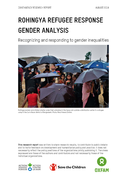
Rohingya Refugee Response Gender Analysis: Recognizing and responding to gender inequalities
Toma, Iulia; Chowdhury, Mita; Laiju, Mushfika; Gora, Nina; Padamada, Nicola
Oxfam, Action Against Hunger, Save the Children
(2018)
C1
This gender analysis was conducted to understand the different risks and vulnerabilities but also opportunities and skills for Rohingya and host community women, men, boys and girls. Data collection was conducted over three weeks from 8 April to 29 April 2018. The work aimed to identify the differen
...
t needs, concerns, risks and vulnerabilities of women, girls, boys and men in both Rohingya refugee communities and host communities in the Cox’s Bazar district of Bangladesh. The analysis shows various gaps in the humanitarian response for both communities, especially in terms of accountability, communication with affected communities and disaster preparedness, but also in equitable access to services, in particular for women and girls, and especially for the Rohingya community. The key findings are presented below, along with recommendations for action.
more
The Look Back Study (LBS) focuses on the water and sanitation and hygiene (WASH) component of the project but some additional information was collected along side the WASH data. This data has been compared to the baseline survey data that was reported at start of the project (see tables in annex D t
...
o this report).
more

Integrated Water Resources Management in Myanmar: Water usage and introduction to water quality criteria for lakes and rivers in Myanmar. Preliminary report
Mjelde, Marit; Ballot, Andreas; Swe, Thida; Eriksen, Tor Erik; Nesheim, Ingrid; Aung, Toe Toe
Norsk institutt for vannforskning (NIVA)
(2017)
C1
The purpose of the report is to present some first recommendation for the development of Myanmar ecological quality criteria using the system of the EU Water Framework Directive (EU WFD) as baseline, with main focus on the characterization and classification processes. As background for the recommen
...
dations we first give an overview of the main water use categories in Myanmar. We then provide preliminary suggestions for typology criteria and indices for assessing ecological status in lakes and rivers in Myanmar. The typology factors and physico-chemical parameters are based on common used factors in the EU countries. The biological elements include phytoplankton and aquatic macrophytes for lakes, and benthic invertebrates for rivers.
more

This assessment is the first of its kind to be conducted in the south-eastern region of Myanmar. It is an important contribution to ensuring the full inclusion of women and children in Myanmar’s political, social, and cultural systems, with a specific focus on the issue of gender-based violence (G
...
BV) and its impact on these groups in south-eastern Myanmar. The United Nations Population Fund (UNFPA) is grateful for the participation of women, men, boys and girls from Mon, Kayin and Kayah States for sharing their views and experiences during the study.
more
