
Filter
2522
Text search:
health
and
psychosocial
activities
Featured
283
637
Language
2457
56
38
30
29
14
11
7
5
4
4
3
3
3
3
3
3
2
2
2
2
2
2
2
2
2
2
1
1
1
1
1
1
1
1
1
1
1
Document type
1399
354
295
173
130
66
44
43
8
6
3
1
Countries
106
86
78
74
66
61
59
54
53
49
49
40
38
38
38
36
35
29
28
27
26
25
24
24
24
21
21
21
21
20
17
17
17
16
14
14
13
12
11
10
10
9
9
9
9
8
8
8
7
7
7
7
6
6
6
6
6
6
5
5
5
5
5
4
4
4
4
4
3
3
3
3
3
3
3
2
2
2
2
2
2
2
2
2
2
2
2
2
2
2
2
2
2
1
1
1
1
1
1
1
1
1
1
1
1
1
1
1
1
1
1
1
1
1
1
1
Authors & Publishers
306
103
76
66
57
56
52
49
42
39
38
36
32
25
22
20
19
19
19
18
18
17
16
16
15
15
14
13
13
12
12
11
11
11
10
9
9
9
9
9
8
8
8
8
7
7
7
7
7
7
6
6
6
6
6
6
6
6
6
6
6
6
6
6
6
6
5
5
5
5
5
5
5
5
5
5
5
5
5
5
5
5
5
5
5
5
4
4
4
4
4
4
4
4
4
4
4
4
4
4
4
4
4
4
4
4
4
4
4
4
4
4
4
4
4
4
4
4
3
3
3
3
3
3
3
3
3
3
3
3
3
3
3
3
3
3
3
3
3
3
3
3
3
3
3
3
3
3
3
3
3
3
3
3
3
3
3
3
3
3
3
3
3
3
3
3
3
2
2
2
2
2
2
2
2
2
2
2
2
2
2
2
2
2
2
2
2
2
2
2
2
2
2
2
2
2
2
2
2
2
2
2
2
2
2
2
2
2
2
2
2
2
2
2
2
2
2
2
2
2
2
2
2
2
2
2
2
2
2
2
2
2
2
2
2
2
2
2
2
2
2
2
2
2
2
2
2
2
2
2
2
2
2
2
2
2
2
2
2
2
2
2
2
2
2
2
2
2
2
2
2
2
2
2
2
2
2
2
2
2
2
2
2
2
2
2
2
2
2
2
2
2
2
2
2
2
2
2
2
2
2
2
1
1
1
1
1
1
1
1
1
1
1
1
1
1
1
1
1
1
1
1
1
1
1
1
1
1
1
1
1
1
1
1
1
1
1
1
1
1
1
1
1
1
1
1
1
1
1
1
1
1
1
1
1
1
1
1
1
1
1
1
1
1
1
1
1
1
1
1
1
1
1
1
1
1
1
1
1
1
1
1
1
1
1
1
1
1
1
1
1
1
1
1
1
1
1
1
1
1
1
1
1
1
1
1
1
1
1
1
1
1
1
1
1
1
1
1
1
1
1
1
1
1
1
1
1
1
1
1
1
1
1
1
1
1
1
1
1
1
1
1
1
1
1
1
1
1
1
1
1
1
1
1
1
1
1
1
1
1
1
1
1
1
1
1
1
1
1
1
1
1
1
1
1
1
1
1
1
1
1
1
1
1
1
1
1
1
1
1
1
1
1
1
1
1
1
1
1
1
1
1
1
1
1
1
1
1
1
1
1
1
1
1
1
1
1
1
1
1
1
1
1
1
1
1
1
1
1
1
1
1
1
1
1
1
1
1
1
1
1
1
1
1
1
1
1
1
1
1
1
1
1
1
1
1
1
1
1
1
1
1
1
1
1
1
1
1
1
1
1
1
1
1
1
1
1
1
1
1
1
1
1
1
1
1
1
1
1
1
1
1
1
1
1
1
1
1
1
1
1
1
1
1
1
1
1
1
1
1
1
1
1
1
1
1
1
1
1
1
1
1
1
1
1
1
1
1
1
1
1
1
1
1
1
1
1
1
1
1
1
1
1
1
1
1
1
1
1
1
1
1
1
1
1
1
1
1
1
1
1
1
1
1
1
1
1
1
1
1
1
1
1
1
1
1
1
1
1
1
1
1
1
1
1
1
1
1
1
1
1
1
1
1
1
1
1
1
1
1
1
1
1
1
1
1
1
1
1
1
1
1
1
1
1
1
1
1
1
1
1
1
1
1
1
1
1
1
1
1
1
1
1
1
1
1
1
1
1
1
1
1
1
1
1
1
1
1
1
1
1
1
1
1
1
1
1
1
1
1
1
1
1
1
1
1
1
1
1
1
1
1
1
1
1
1
1
1
1
1
1
1
1
1
1
1
1
1
1
1
1
1
1
1
1
1
1
1
1
1
1
1
1
1
1
1
1
1
1
1
1
1
1
1
1
1
1
1
1
1
1
1
1
1
1
1
1
1
1
1
1
1
1
1
1
1
1
1
1
1
1
1
1
1
1
1
1
1
1
1
1
1
1
1
1
1
1
1
1
1
1
1
1
1
1
1
1
1
1
1
1
1
1
1
1
1
1
1
1
1
1
1
1
1
1
1
1
1
1
1
1
1
1
1
1
1
1
1
1
1
1
1
1
1
1
1
1
1
1
1
1
1
1
1
1
1
1
1
1
1
1
1
1
1
1
1
1
1
1
1
1
1
1
1
1
1
1
1
1
1
1
1
1
1
1
1
1
1
1
1
1
1
1
1
1
1
1
1
1
1
1
1
1
1
1
1
1
1
1
1
1
1
1
1
1
1
1
1
1
1
1
1
1
1
1
1
1
1
1
1
1
1
1
1
1
1
1
1
1
1
1
1
1
1
1
1
1
1
1
1
1
1
1
1
1
1
1
1
1
1
1
1
1
1
1
1
1
1
1
1
1
1
1
1
1
1
1
1
1
1
1
1
1
1
1
1
1
1
1
1
1
1
1
1
1
1
1
1
1
1
1
1
1
1
1
1
1
1
1
1
1
1
1
1
1
1
1
1
1
1
1
1
1
1
1
1
1
1
1
1
1
1
1
1
1
1
1
1
1
1
1
1
1
1
1
1
1
1
1
1
1
1
1
1
1
1
1
1
1
1
1
1
1
1
1
1
1
1
1
1
1
1
1
1
1
1
1
1
1
1
1
1
1
1
1
1
1
1
1
1
1
1
1
1
1
1
1
1
1
1
1
1
1
1
1
1
1
1
1
1
1
1
1
1
1
1
1
1
1
1
1
1
1
1
1
1
1
1
1
1
1
1
1
1
1
1
1
1
1
1
1
1
1
1
1
1
1
1
1
1
1
1
1
1
1
1
1
1
1
1
1
1
1
1
1
1
1
1
1
1
1
1
1
1
1
1
1
1
1
1
1
1
1
1
1
1
1
1
1
1
1
1
1
1
1
1
1
1
1
1
1
1
1
1
1
1
1
1
1
1
1
1
1
1
1
1
1
1
1
1
1
1
1
1
1
1
1
1
1
1
1
1
1
1
1
1
1
1
1
1
1
1
1
1
1
1
1
1
1
1
1
1
1
1
1
1
1
1
1
1
1
1
1
1
1
1
1
1
1
1
1
1
1
1
1
1
1
1
1
1
1
1
1
1
1
1
1
1
1
1
1
1
1
1
1
1
1
1
1
1
1
1
1
1
1
1
1
1
1
1
1
1
1
1
1
1
1
1
1
1
1
1
1
1
1
1
1
1
1
1
1
1
1
1
1
1
1
1
1
1
1
1
1
1
1
1
1
1
1
1
1
1
1
1
1
1
1
1
1
1
1
1
1
1
1
1
1
1
1
1
1
1
1
1
1
1
1
1
1
1
1
1
1
1
1
1
1
1
1
1
1
1
1
1
1
1
1
1
1
1
1
1
1
1
1
1
1
1
1
1
1
1
1
1
1
1
1
1
1
1
1
1
1
1
1
1
1
1
1
1
1
1
1
1
1
1
1
1
1
1
1
1
1
1
1
1
1
1
1
1
1
1
1
1
1
1
1
1
1
1
1
1
1
1
1
1
1
1
1
1
1
1
1
1
1
1
1
1
1
1
1
1
1
1
1
1
1
1
1
1
1
1
1
1
1
1
1
1
1
1
1
1
1
1
1
1
1
1
1
1
1
1
1
1
1
1
1
1
1
1
1
1
1
1
1
1
1
1
1
1
1
1
1
1
1
1
1
1
1
1
1
1
1
1
1
1
1
1
1
1
1
1
1
1
1
1
1
1
1
1
1
1
1
1
1
1
1
1
1
1
1
1
1
1
1
1
1
1
1
1
1
1
1
1
1
1
1
1
1
1
1
1
1
1
1
1
1
1
1
1
1
1
1
1
1
1
1
1
1
1
1
1
1
1
1
1
1
1
1
1
1
1
1
1
1
1
1
1
1
1
1
1
1
1
1
1
1
1
1
1
1
1
1
1
1
1
1
1
1
1
1
1
1
1
1
1
1
1
1
1
1
1
1
1
1
1
1
1
1
1
1
1
1
1
1
1
1
1
1
1
1
1
1
1
1
1
1
1
1
1
1
1
1
1
1
1
1
1
1
1
1
1
1
1
1
1
1
1
1
1
1
1
1
1
1
1
1
1
1
1
1
1
1
1
1
1
1
1
1
1
1
1
1
1
1
1
1
1
1
1
1
1
1
1
1
1
1
1
1
1
1
1
1
1
1
1
1
1
1
1
1
1
1
1
1
1
1
1
1
1
1
1
1
1
1
1
1
1
1
1
1
1
1
1
1
1
1
1
1
1
1
1
1
1
1
1
1
1
1
1
1
1
1
1
1
1
1
1
1
1
1
1
1
1
1
1
1
1
1
1
1
1
1
1
1
1
1
1
1
1
1
1
1
1
1
1
1
1
1
1
1
1
1
1
1
1
1
1
1
1
1
1
1
1
1
1
1
1
1
1
1
1
1
1
1
1
1
1
1
1
1
1
1
1
1
1
1
1
1
1
1
1
1
1
1
1
1
1
1
1
1
1
1
1
1
1
1
1
1
1
1
1
1
1
1
1
Publication Years
779
1533
204
5
1
Category
872
186
142
121
108
84
5
2
Toolboxes
491
249
173
156
121
99
97
76
71
66
37
34
32
31
31
22
15
10
8
5
5
5
3
3
3
1

Countries, partners, and donors are committed to the global elimination of blinding trachoma by 2020.
Achieving this public health milestone requires more than funding; it requires
...
health personnel with the
right mix of skills, and well supported and managed health systems. Mass drug administration (MDA)
with Zithromax®, the Pfizer, Inc. donated antibiotic, is a key component of the SAFE strategy, endorsed
by the World Health Organization. There is growing
recognition that improving all aspects of MDA, from
planning to training, recording to reporting, and
receipt of drug to distribution (the supply chain), will
be necessary if MDA programmes are going to reduce
the community burden of Chlamydia trachomatis, and
eliminate trachoma as a cause of blindness by 2020.
more

Capacity Building for Physical Activity of Older People
German Gymnastics Federation (Deutscher Turner-Bund, DTB)
German Gymnastics Federation (Deutscher Turner-Bund, DTB)
(2014)
CC
The “ActiveAge Handbook” is an outcome of the “ActiveAge Project, which was carried out from January 2013 until June 2014 in the frame of “2012 Preparatory Actions in the Field of Sport” of the European Commission Directory General Education and
...
Cul-
ture (DG EAC) in cooperation with 13 European partners under the leadership of the German Gymnastic Federation (DTB). “ActiveAge” was set up as a transnational project that fosters the exchange of knowledge and experience to counteract the physical inactivity of elderly people through capacity building for physical activities and sport programs of aging people in well-
structured and wide-spread settings, with the starting point in sport-organizations.
The handbook is intended to be used as a guideline for further activities of the “European Platform Active Aging in Sport” (EPAAS), which will continue the mission of the ActiveAge Project. Furthermore the handbook should serve as well for any other stakeholder interested to promote physical activities and sport for elderly people.
more
Journal of the International AIDS Society 2017, 20(Suppl 4):21644
National AIDS Programme in Myanmar has made significant progress in scaling up antiretroviral treatment (ART) services and recognizes the importance of differentiated care for pe ... ople living with HIV. Indeed, long centred around the hospital and reliant on physicians, the country's HIV response is undergoing a process of successful decentralization with HIV care increasingly being integrated into other health services as part of a systematic effort to expand access to HIV treatment. This study describes implementation of differentiated care in Médecins Sans Frontières (MSF)‐supported programmes and reports its outcomes.
https://doi.org/10.7448/IAS.20.5.21644 more
National AIDS Programme in Myanmar has made significant progress in scaling up antiretroviral treatment (ART) services and recognizes the importance of differentiated care for pe ... ople living with HIV. Indeed, long centred around the hospital and reliant on physicians, the country's HIV response is undergoing a process of successful decentralization with HIV care increasingly being integrated into other health services as part of a systematic effort to expand access to HIV treatment. This study describes implementation of differentiated care in Médecins Sans Frontières (MSF)‐supported programmes and reports its outcomes.
https://doi.org/10.7448/IAS.20.5.21644 more
Fostering resilient development through integrated action plan
The Myanmar Action Plan on Disaster Risk Reduction, 2017 is a comprehensive and unified action plan for disaster risk reduction with prioritized interventions across Myanmar till 2020 ... . With a long term vision and considering deep-rooted underlying drivers of disaster risk, it has set an overall target for 2030. it aims to provide a base for mobilizing and leveraging, primarily, national and external resources and will provide a basis for result printed outcomes.
The action plan identifies 32 priority actions under four pillars: risk information and awareness; risk governance; risk mitigation; and preparedness and response, rehabilitation and reconstruction. For each priority action, objectives, activities, outputs, duration, lead agencies, and supporting partners have been identified. more
The Myanmar Action Plan on Disaster Risk Reduction, 2017 is a comprehensive and unified action plan for disaster risk reduction with prioritized interventions across Myanmar till 2020 ... . With a long term vision and considering deep-rooted underlying drivers of disaster risk, it has set an overall target for 2030. it aims to provide a base for mobilizing and leveraging, primarily, national and external resources and will provide a basis for result printed outcomes.
The action plan identifies 32 priority actions under four pillars: risk information and awareness; risk governance; risk mitigation; and preparedness and response, rehabilitation and reconstruction. For each priority action, objectives, activities, outputs, duration, lead agencies, and supporting partners have been identified. more
his revision to the Disaster Management Team’s (DMT) multi-sector response plan for COVID-19 is meant to align the multi-sector plan with the Department of Health’s COVID-19 Emergency Response Plan issued on 24 April 2020. Additionally, at the t
...
ime of this version, the Department of Education and Department for Community Development and Religion have also issued their own national COVID-19 response and recovery plans.
The Government’s plan maintains a health sector focus and plans for a ‘worst case’ scenario, articulating the process of progressing into containment and subsequently mitigation of community transmission and on to recovery. It presents an opportunity to improve the core capacities of the whole of government, to see where both health and non-health sectors fit in and respond in the immediate and medium terms, and to adapt to the ‘new normal’ that this coronavirus has inevitably presented
more

This regional action plan provides a broad framework for the regional level to assist governments in accelerating the implementation of existing international, regional and national commitments on ending FGM. Formulating the plan has provided an opp
...
ortunity for the region to identify broad priorities, initiate strategic actions and determine responsibilities among different actors. It also ensures that anti-FGM campaign activities are seen not as standalone efforts but rather as an integral part of the African Union’s discussions, in line with the African Union initiative on eliminating FGM (Saleema Initiative)
more
Evaluation of Community Management of Acute Malnutrition (CMAM)
Sheila Reed, Camille Eric Kouam, Krishna Belbase et al.
United Nations Children’s Fund (UNICEF) Evaluation Office
(2013)
This evaluation is the first systematic effort by UNICEF to generate evidence on how well its global as well as country level Community Management of Acute Malnutrition (CMAM) strategies have worked, including their acceptance and ownership in vario
...
us contexts and appropriateness of investments in capacity development and supply components. Overall, the evaluation recommends that UNICEF continue to promote and support CMAM as a viable approach to preventing and addressing severe acute malnutrition (SAM), with an emphasis on prevention through strengthening community outreach and integrating CMAM into national health systems and with other intervention
more

Cancer in sub-Saharan Africa
recommended
Lancet Oncol 2022; 23: e251–312Published OnlineMay 9, 2022 https://doi.org/10.1016/S1470-2045(21)00720-8
In sub-Saharan Africa (SSA), urgent action is needed to curb a growing crisis in cancer incidence and mortality.
Without rapid interventions
...
, data estimates show a major increase in cancer mortality from 520 348 in 2020 to about
1 million deaths per year by 2030. Here, we detail the state of cancer in SSA, recommend key actions on the basis of
analysis, and highlight case studies and successful models that can be emulated, adapted, or improved across the
region to reduce the growing cancer crises. Recommended actions begin with the need to develop or update national
cancer control plans in each country. Plans must include childhood cancer plans, managing comorbidities such as
HIV and malnutrition, a reliable and predictable supply of medication, and the provision of psychosocial, supportive,
and palliative care. Plans should also engage traditional, complementary, and alternative medical practices employed
by more than 80% of SSA populations and pathways to reduce missed diagnoses and late referrals. More substantial
investment is needed in developing cancer registries and cancer diagnostics for core cancer tests.
more
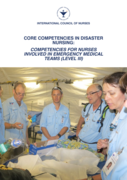
Over the last decade, there have been numerous disasters and major emergencies that have profoundly impacted the lives of millions of people worldwide. To support these crises, national and internat
...
ional emergency medical teams (EMTs) are often deployed to assist disaster affected populations. EMTs are teams of healthcare professionals composed most frequently of doctors, nurses, psychologists and others to provide direct clinical care to people affected by disasters and conflicts and to support local health systems. In agreement with the World Health Organization’s (WHO) Global Health Emergency Health Workforce programme, any health professional coming from another country to practice health care in a disaster setting must be part of a team that is qualified, trained, equipped, resourced, and meets minimum acceptable standards to practice.
more
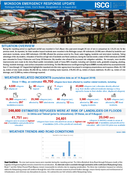
During the reporting period no significant rainfall was recorded in Cox’s Bazar: this past week brought 29 mm of rain in comparison to 115.25 mm for the previous week. As expected, far fewer weather hazard incidents were recorded in the Rohingya camps: 69 individuals (16 HH) were affected by lands
...
lide and wind-storm incidents, versus 660 individuals (155 HH) affected the previous week by fire, flood, water-logging, landslide and wind-storm incidents. Taking advantage of the dry weather, relocation of families at high risk of landslide and flood continues; during the last two weeks a total of 963 individuals (236 HH) were relocated to Camp 4 Extension and Camp 20 Extension. Dry weather also allowed for increased risk mitigation activities.
more
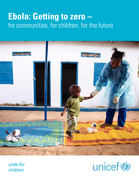
As slight hints of recovery begin to surface in West Africa, UNICEF is looking at the impact of Ebola on children and the response and work of the affected communities in the report, Ebola: Getting
...
to zero – for communities, for children for the future. The document traces some of the outbreak’s history along with the stories of survivors, health care workers and those working to make things better on the ground. The report also helps map out the actions that urgently must continue to help build resiliency and resuscitate basic services and systems decimated by Ebola.
more
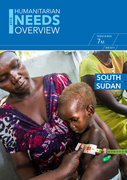
2018 South Sudan Humanitarian Needs Overview
recommended
This document provides the Humanitarian Country Team’s shared understanding of the crisis, including the most pressing
humanitarian needs and the estimated number of people who need assistance. It represents a consolidated evidence base
...
and
helps inform joint strategic response planning.
As the conflict in South Sudan enters its fifth year in 2018, the humanitarian crisis has continued to intensify and expand, on a costly trajectory for the country’s people and their outlook on the future. The compounding effects of widespread violence and sustained economic decline have further diminished the capacity of people to face threats to their health, safety and livelihoods. People in need of assistance and protection number 7 million, even as more than 2 million have fled to neighbouring countries.
more

While the full extent of Cyclone Ida’s impact is still being assessed, early reports indicate significant damage to infrastructure and livelihoods, with an estimated 3,000km2 of land submerged. Preliminary government reports as of 24 March indicat
...
e that more than 58,600 houses have been damaged, including 36,747 totally destroyed, 19,733 partially destroyed and 2,184 flooded. More than 500,000 hectares of crops have been damaged, which is expected to significantly increase food insecurity given that the flooding has coincided with the annual harvest season. More than 3,100 schools have been damaged, along with at least 45 health centres.
Nearly 110,000 people remained displaced in more than 130 accommodation centres – mostly schools and other public buildings – in Sofala (90), Manica (26), Zambezia (10) and Tete (4), where humanitarian needs are acute and both the risk of communicable disease outbreaks and protection risks – particularly for women and girls – are high
more

A comprehensive briefing by Half of Syria
April 2020
A comprehensive briefing on the critical challenges of the COVID-19 pandemic to Syrians, as reported by Syrian civil society organisations. These challenges have been collated following extensive interviews with the teams of member
...
and partner organisations working in the field in various sectors: health, child care, education, women’s empowerment, media and culture, research, human rights and accountability, relief and social services, and local governance.
This comprehensive briefing also include concrete recommendations formulated by the Syrian civil society.
more

A Capstone Project submitted in partial fulfillment of the requirements for the Master of Science Degree in Counselor Education at Winona State University | This article reviews the use of Art Therapy to treat children who suffer from Posttraumatic Stress Disorder. It explores the clinical need for
...
addressing trauma, including PTSD, and then reviews the effects of trauma on the brain, and how Art Therapy affects the brain. It also identifies mental health characteristics and needs for children diagnosed with PTSD.
more
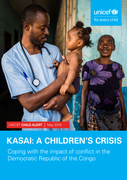
UNICEF CHILD ALERT May 2018
As part of a UNICEF series highlighting the challenges faced by children in current crisis situations, this Child Alert examines the situation of children affected by violent conflict in Kasai region, Democratic Republic of the Congo. The alert outlines what UNICEF ... and its partners have achieved to date in providing humanitarian assistance to children in Kasai affected by malnutrition and lack of access to health care, safe water and education. It calls upon all parties to the conflict – and the international community – to take urgent action protecting the lives and futures of children at risk, before it is too late. more
As part of a UNICEF series highlighting the challenges faced by children in current crisis situations, this Child Alert examines the situation of children affected by violent conflict in Kasai region, Democratic Republic of the Congo. The alert outlines what UNICEF ... and its partners have achieved to date in providing humanitarian assistance to children in Kasai affected by malnutrition and lack of access to health care, safe water and education. It calls upon all parties to the conflict – and the international community – to take urgent action protecting the lives and futures of children at risk, before it is too late. more

Many features of the environment have been found to exert an important influence on cardiovascular disease (CVD) risk, progression, and severity. Changes in the environment due to migration to different geographic locations, modifications in lifesty
...
le choices, and shifts in social policies and cultural practices alter CVD risk, even in the absence of genetic changes. Nevertheless, the cumulative impact of the environment on CVD risk has been difficult to assess
and the mechanisms by which some environment factors influence CVD remain obscure. Human environments are complex; and their natural, social and personal domains are highly variable due to diversity in human ecosystems, evolutionary histories, social structures, and individual choices. Accumulating evidence supports the notion that ecological features such as the diurnal cycles of
light and day, sunlight exposure, seasons, and geographic characteristics of the natural environment such altitude, latitude and greenspaces are important determinants of cardiovascular health and CVD risk. In highly developed societies, the influence of the natural environment is moderated by the physical characteristics of the social environments such as the built environment
and pollution, as well as by socioeconomic status and social networks. These attributes of the
social environment shape lifestyle choices that significantly modify CVD risk. An understanding
of how different domains of the environment, individually and collectively, affect CVD risk could
lead to a better appraisal of CVD, and aid in the development of new preventive and therapeutic
strategies to limit the increasingly high global burden of heart disease and stroke.
more

STANDARD OPERATING PROCEDURES - PREVENTION AND CARE FOR CHILD SURVIVORS
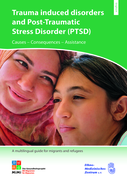
This guide aims to inform about these illnesses - so-called ‘trauma-induced disorders’ - in general and ‘post-traumatic stress disorder’ (PTSD) in particular. It is also designed to offer support in finding treatment
...
and counselling options.
more

International Journal of Integrated Care, 2025; 25(2): 5, 1–12. DOI: https://doi.org/10.5334/ijic.8920. Community-based intervention support plays a crucial role in enhancing
the lives of orphans and vulnerable children in Africa. Community-based
...
intervention
support needs to be integrated into a wider social service system. Further research
focusing on the cost of community-based intervention support and successful
programs for mainstreaming community-based intervention into a wider social
system is needed.
more
