
Filter
1293
Text search:
advocacy
brief
Featured
107
312
Language
Document type
701
217
147
87
59
42
24
8
5
2
1
Countries
63
41
32
29
28
27
27
27
23
22
21
21
20
18
17
17
17
16
15
15
15
14
13
13
12
12
12
12
10
9
8
8
8
8
7
7
6
6
5
5
5
5
4
4
4
4
3
3
3
3
3
3
3
2
2
2
2
2
2
2
2
2
2
2
2
2
2
2
2
2
2
1
1
1
1
1
1
1
1
1
1
1
1
1
1
1
1
1
1
1
1
1
1
Authors & Publishers
Publication Years
Category
385
122
99
92
55
42
3
1
Toolboxes
152
117
83
80
62
48
37
35
33
28
27
24
21
20
19
14
14
13
11
9
7
6
6
5
5
1

The document emphasizes integrating environmental considerations into nutrition programs. It introduces a screening tool piloted across ten projects to identify environmental risks and opportunities, fostering sustainable practices in food systems. The tool promotes collaboration, co-learning, and a
...

The workshop aimed to support countries in the prioritization and acceleration of NCD prevention and management with a specific focus on accelerating the prevention and control of hypertension and diabetes, identifying the most impactful NCD interventions within their context, closing the gaps in ca
...

This report includes analysis from informal regional consultations in the African Region, the Caribbean and North America, Latin America, South-East Asia Region, European Region, Eastern Mediterranean Region, alongside three forums in the Western Pacific Region. It analyses the overarching similarit
...

This report is one of the first major products of the newly established Precision Public Health Metrics unit of the UCN cluster of the WHO Regional Office for Africa. The report presents national trends in communicable and non-communicable disease burden and control in the WHO African region. It tra
...

The aim of this guidance manual is to introduce the user to project/programme plan- ning in a Red Cross Red Crescent environment. It describes the different stages of the planning phase of the “project/programme cycle” within the context of Results-Based Management (RBM). It also gives an overvi
...

Adolescence is a critical stage in life for physical, cognitive and emotional development, shaping future health and well-being. Comprehensive measurement of adolescent health is essential to prioritize health issues, guide interventions and track progress. However, global, regional and national ado
...

The WHO document "Integrating the prevention and control of noncommunicable diseases in HIV/AIDS, tuberculosis, and sexual and reproductive health programmes: implementation guidance" provides a framework for integrating noncommunicable diseases (NCDs) into existing health programs for HIV/AIDS, tub
...

Chronic kidney disease (CKD) is an important contributor to mortality from noncommunicable diseases. No decrease has been seen for CKD mortality contrary to many other important non-communicable diseases (e.g., cardiovascular disease). The prevalence of CKD and kidney failure are increasing all over
...

The document "Chronic Respiratory Diseases: A Handbook for Pharmacists" outlines the significant role pharmacists play in managing asthma and COPD, emphasizing patient education, disease prevention, medication management, and promoting healthy lifestyles. It highlights the importance of pharmacists
...
Over the past 20 years, the Global Initiative for Asthma (GINA) has regularly published and annually updated a global strategy for asthma management and prevention that has formed the basis for many national guidelines. However, uptake of existing guidelines is poor. A major revision of the GINA r
...
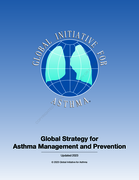
The 2023 update of the Global Strategy for Asthma Management and Prevention incorporates new scientific information about asthma based on a review of recent scientific literature by an international panel of experts on the GINA Science Committee. This comprehensive and practical resource about one o
...

National action plans on antimicrobial resistance (AMR) often overlook the critical intersection of gender, despite evidence that exposure and susceptibility to infection, health-seeking behaviours, as well as antimicrobial prescribing and use patterns are all influenced by gender.

About one fourth of the world’s population is estimated to have been infected with the tuberculosis (TB) bacilli, and about 5–10% of those infected develop TB disease in their lifetime. The risk for TB disease after infection depends on several factors, the most important being the person’s im
...

Asthma is a serious global health problem affecting all age groups. Its prevalence is increasing in many countries, espacially among children. Although some countries have seen a decline in hospitalizations and deaths from asthma, asthma still imposes an unacceptable burden on health care systems, a
...

Toolkit regarding Zika Virus

This integrated operational framework provides an overview of the connections between mental health, neurological and substance use (MNS) conditions, and their links to health, well-being and the broader public health and sustainable development agenda. The need for integrated approaches is increasi
...

An estimated 1.3 billion people globally experience significant disability. This figure has grown over the last decade and will continue to rise due to demographic and epidemiological changes. In 2022, the World Health Organization launched the Global report on health equity for persons with disabil
...

Women and children, especially pregnant girls and women, infants and young children and postpartum women, are populations that are extremely vulnerable in emergencies. Breastfeeding provides children with hydration, comfort, connection, high quality nutrition and protection against disease, shieldin
...

Challenges and Opportunities. This report presents a comprehensive assessment of the education and labor markets for nurses in the ECSA region. It documents the main challenges to train and deploy nurses and discusses opportunities for government and private sector employers to overcome these chall
...
